
Our projects
Explore Particip’s project experience across countries, sectors and areas of expertise.
Our references provide an overview of completed and ongoing assignments, including their objectives, geographic scope, duration and contract value.
Showing 131–140 of 513 references
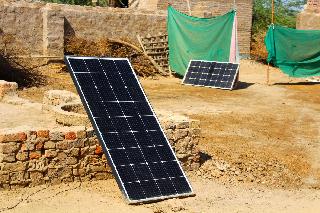
Evaluation of the Renewable Energy for Rural Development Phase II Plus (RERDII+) Irrigation Component, Mozambique
- 2026 – 2026
- under € 500,000
- Mozambique
This End-Term Evaluation (ETE) of the Renewable Energy for Rural Development Phase II Plus (RERDII+) irrigation component was both summative and formative in nature, with the overall purpose of assessing project performance, identifying results and generating learning for future solar-powered irrigation programming in Mozambique. The intervention was designed to strengthen agricultural productivity, climate resilience and rural development through the deployment of Solar-Powered Irrigation Systems (SPIS), while supporting farmer capacity development, institutional strengthening and market development for solar irrigation technologies.
The evaluation covered the implementation of the irrigation component implemented by Enabel in partnership with the National Irrigation Institute (INIR). The intervention focused on the provinces of Manica and Zambézia and aimed to promote sustainable uptake of solar irrigation through infrastructure deployment, financing and co-financing mechanisms, engagement with private suppliers, institutional capacity building and knowledge generation for future scaling.
Thematically, the evaluation assessed project performance against the OECD-DAC criteria of relevance, coherence, effectiveness, efficiency, impact and sustainability, while also examining cross-cutting issues including gender equality, youth inclusion, support to vulnerable farmers and environmental sustainability. Particular attention was given to efficiency and sustainability, in line with the Terms of Reference.
The evaluation involved key stakeholders at national, provincial and local levels, including Enabel, INIR, provincial and district authorities, private suppliers, financial actors, service providers and beneficiary farmers. The methodology combined a desk review of programme documentation, interviews with institutional and sector stakeholders, field visits in Manica Province, beneficiary consultations and case studies documenting farmer-level effects and lessons learned.
Through this approach, the evaluation assessed the relevance of solar irrigation to Mozambique’s agricultural and climate-resilience priorities, examined early effects on production, livelihoods and resilience, analysed financing and market development mechanisms, reviewed institutional and private sector roles, and identified lessons and recommendations to support future scaling of solar irrigation systems. The evaluation found that RERDII+ successfully demonstrated the potential of solar irrigation for rural development but highlighted the need for stronger financing mechanisms, institutional anchoring, post-installation support and market ecosystem development to ensure long-term sustainability.
- Partners:
- Particip (Lead), Technopolis Group
- Keywords:
- Energy, Infrastructure, Monitoring & Evaluation, Rural and urban development
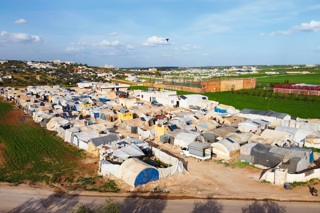
Final evaluation of the RE-INTEG Programme
- 2025 – 2026
- under € 500,000
- Somalia
RE-INTEG (“Enhancing Somalia’s responsiveness to the management and reintegration of mixed migration flows”) is a long-term EU Trust Fund for Africa (EUTF) programme in Somalia with a total budget of EUR 55 million, implemented from September 2016 to December 2025 across Somalia, including Somaliland and all Federal Member States. The programme supports a development-oriented response to displacement and mixed migration, aiming to strengthen stability and socio-economic recovery by improving absorption capacities and livelihood conditions in areas of return and departure. Its specific focus is on enabling sustainable and durable reintegration of refugees, returnees (including from Yemen, Kenya, Europe and other areas of departure) and IDPs, and helping to “anchor” populations within Somalia.
Operationally, RE-INTEG is structured around four broad result areas: (1) closing gaps in the management of refugees and returnees; (2) strengthening rule of law and governance through improved policies/legal frameworks for displacement and migration and enhanced cross-border cooperation; (3) improving access to basic services and livelihood opportunities in key areas of return/departure through area-based approaches implemented by multiple consortia; and (4) supporting Somalia’s COVID-19 response as an additional result introduced through a programme adjustment. Implementation is delivered through several major contracts involving partners such as IOM, UNHCR, IDLO, WHO and multiple NGOs/UN actors working on protection, services, livelihoods, and institutional capacity.
The final evaluation will provide an independent assessment of the programme’s performance and results, explain what has driven or constrained achievements, and generate lessons learned and actionable recommendations to inform ongoing implementation and future EU engagement on durable solutions and mixed migration management. It assesses RE-INTEG against the DAC criteria (relevance, coherence, efficiency, effectiveness, sustainability, and early signs of impact) plus EU added value, while also considering cross-cutting priorities (notably gender and environment/climate where relevant) and programme governance/coordination arrangements led by the EU Delegation with Somali counterparts and implementing partners.
- Keywords:
- Human rights, Monitoring & Evaluation

Technical Assistance to support traceability of deforestation- free agricultural value chains in Honduras
- 2025 – 2026
- under € 500,000
- Honduras
The project will give support IHCAFE and SAG to put in place a data collection campaign protocol and a robust management system to strengthen the existing national coffee farmer registry, with the end goal to support compliance with the EUDR and potential future market regulation, support sustainability and coffee producers livelihoods policies, and prepare avenue for expanding the mechanism to other deforestation risk commodities.
- Partners:
- Particip (Lead)
- Keywords:
- Agriculture, Environment

Mongolia Sustainable Forest Management and Bioeconomy Framework Loan
- 2025 – 2026
- under € 500,000
- Mongolia
The global objective is to support the Government of Mongolia with the formulation and design of the MONGOLIA SUSTAINABLE FOREST MANAGEMENT AND BIOECONOMY FRAMEWORK LOAN financed by the European Union and the European Investment Bank and possible other co-financing institutions under a blended financing arrangement.
The specific objectives are:
- conduct a comprehensive multi-disciplinary analysis of context, capacities, feasibility, risks, and vulnerabilities of the proposed investment programme;
- design an investment programme in the forest and agricultural sector for the abovementioned components paying due attention to the expected participation of European stakeholders and companies in its implementation;
- prepare the dedicated Environmental and Social Management Framework (ESMF);
- prepare a gender action plan related to the investment programme;
- draft the EIB application for an EU Technical Assistance and Investment grant supporting the investment programme;
- draft the Terms of Reference for the implementing consultant, i.e. the consultant facilitating the implementation of the investment programme in Mongolia.
- Partners:
- Particip (Lead)
- Keywords:
- Environment, Forestry
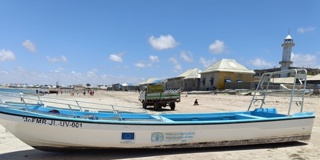
Evaluation of the Programme 'Inclusive Local and Economic Development - ILED' in Somalia (T05-EUTF-HOA-SO-57)
- 2025 – 2026
- under € 500,000
- Somalia
The 'Inclusive Local and Economic Development' (ILED) programme comprised 14 individual interventions in Somalia. The overall objective of ILED was to contribute to stability in Somalia by extending state authority and services, promoting local reconciliation and peacebuilding, creating inclusive economic opportunities, and protecting the most vulnerable. In line with this objective, the 14 interventions were organised under three thematic pillars: stabilisation and governance, inclusive and sustainable economic growth, and social safety nets. Using an integrated territorial approach, the programme was implemented in four strategic corridors of Somalia: Juba River, Shabelle River, Central-North, and Somaliland. ILED was financed by the EU Emergency Trust Fund for Africa with a total budget of almost 100 million EUR.
The evaluation was commissioned by the EU Delegation to Somalia. Its global objective was to provide the relevant services of the EU and interested stakeholders with an overall independent assessment of the performance of the ILED programme, paying particular attention to the results achieved and the underlying reasons of these achievements. It also sought to identify lessons learned, conclusions, and recommendations to improve current and future interventions. The object of evaluation was the programme level (rather than the individual interventions). The evaluation scope covered the entire implementation period from September 2018 to December 2025, all three thematic pillars, and all four geographic corridors.
The methodology to answer the six evaluation questions (EQs) relied on a reconstructed Theory of Change and a mixed methods (albeit predominantly qualitative) approach. After a comprehensive document review, the evaluation team conducted field missions in the four corridors of the programme in Somalia, as well as meetings in Nairobi. The evaluation findings were presented in a dissemination seminar in Mogadishu.
- Partners:
- Particip (Lead)
- Keywords:
- Governance, Industry & private sector development, Infrastructure, Monitoring & Evaluation, Rural and urban development
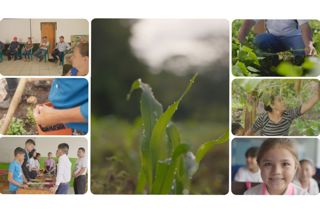
Supporting WFP’s Changing Lives Transformation Fund (CLTF) to Support Country Offices in the Design and Implementation of Impact Measurement Components
- 2023 – 2026
- under € 500,000
- Bangladesh, Chad, Kenya, Peru
The Changing Lives Transformation Fund (CLTF) of the World Food Programme (WFP) was established to provide selected WFP Country Offices (COs), via calls for proposals, with funding to better support governments to design and implement policies and programmes that improve the lives of the most vulnerable people.
The CLTF has three windows, under which a total of 10 country proposals were selected in 2023:
- Window 1: Transition (of populations from dependence on humanitarian assistance to increased self-sufficiency) - Chad, Kenya, Philippines.
- Window 2: Systems strengthening (better capacity and resilience of national programmes and systems) - Bangladesh, Iraq, Niger, Peru.
- Window 3: Climate adaptation - Ghana, Nicaragua, Tanzania.
For each window, the research team designed a global impact measurement framework comprising a theory of change, evaluation questions, indicators, and quantitative and qualitative methodologies for impact measurement. The team also assessed the feasibility of independent impact evaluations in all 10 country proposals.
5 COs were selected for further technical assistance for impact measurement: Chad and Kenya (under Window 1), and Bangladesh, Iraq and Peru (under Window 2). Together with each of these 5 COs, the team conducted research design workshops and developed country-specific concept notes on impact measurement questions and strategies. Finally, the team provided in-country support for baseline data collection and analysis to the COs in Chad, Kenya, Bangladesh and Peru.
- Partners:
- Particip (Lead), C4ED
- Keywords:
- Environment, Food and nutrition, Humanitarian aid, Monitoring & Evaluation, Training

Evaluation of the project Wehubit 2.0 (BEL22009)
- 2026 – 2026
- under € 500,000
- Africa
The Wehubit 2.0 programme is Enabel's flagship D4D/innovation programme working on Digital Social Innovations (DSIs). This independent evaluation assesses the performance of Wehubit 2.0 against its objectives, with a focus on relevance, coherence, efficiency, effectiveness, sustainability and impact. It follows Enabel’s evaluation standards and includes a field visit in Dakar (Senegal). The evaluation approach combines document review and stakeholder consultation to generate evidence-based findings and practical recommendations, and is implemented within the ToR’s fixed reporting milestones.
- Partners:
- Particip (Lead), Technopolis Group
- Keywords:
- Monitoring & Evaluation

Implementation of Communication, Sensitization and Visibility Strategy for A Jamaican Path from Hills to Ocean
- 2024 – 2026
- under € 500,000
- Jamaica
Increase Knowledge and Public Awareness of Integrated and Sustainable Landscape Management (ISLM) and Coastal Zone Management (CZM) to reduce the vulnerability of the Jamaican ecosystems from the hills to the ocean and strengthen the resilience of communities within the targeted watersheds against the adverse effects of climate change.
The specific objective was to undertake a communication campaign and public awareness programme, with the Hills to Ocean executing agency and implementing partners, as well as key stakeholders, primarily in the targeted project sites. The intent was to:
1. Improve citizen access to information on the purpose, activities, achievements, and funders of A Jamaican Path from Hills to Ocean project.
2. Increase citizen awareness of the benefits of ISLM and CZM.
3. Highlight to farmers, fisher-folks, and entrepreneurs in the project’s targeted communities the importance of adopting ISLM and CZM to protect livelihoods and the environment.
- Partners:
- Particip (Lead)
- Keywords:
- Communication & media, Environment
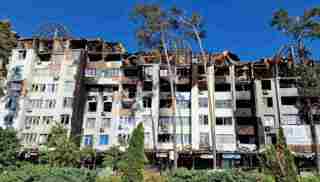
Services of Third-Party Monitoring Agency (TPMA) for the Housing Repair for People's Empowerment Project (HOPE)
- 2025 – 2026
- € 1 – 2 million
- Ukraine
The Government of Ukraine, with financial support from the World Bank-administered Ukraine Relief, Recovery, Reconstruction and Reform Trust Fund (URTF), is implementing the HOPE Project to facilitate the repair of partially damaged housing caused by the Russian Federation’s military aggression. The main objective of the assignment is to support the Government of Ukraine in supervising the HOPE Project by independently verifying, monitoring, and reporting on the implementation of Component 1. This includes assessing compliance with legal and World Bank standards, evaluating the eligibility and transparency of expenditures, tracking project results and impacts on beneficiaries, and collecting stakeholder feedback. Particip will conduct a comprehensive analysis of processes, identify gaps or risks, and provide recommendations to improve project delivery and advance its development goals.
The Project is managed through the Ministry for Communities and Territories Development (MCTD) and is structured around three main components, each contributing to housing recovery and institutional capacity building.
Component 1: Repair of Partially Damaged Residential Units (USD 590 million)
This component provides financial compensation to eligible households for the emergency repair of their single-family homes (SFHs) or apartments in multi-family buildings (MFBs) that sustained minor or medium damage. Applications are submitted via the national e-service platform (DIIA) or through local administrative service centers, with damage verified by local commissions.
- Subcomponent 1.1 (Minor Damage): Repairs up to UAH 200,000. Compensation is disbursed retroactively against reported expenses. At least 5% of completed repairs are verified.
- Subcomponent 1.2 (Medium Damage): Repairs up to UAH 350,000 for MFB units and UAH 500,000 for SFHs. Includes engineering safety checks, two-tranche payments, and verification of at least 10% of units.
To ensure integrity and compliance, Particip will be engaged to verify the implementation of Component 1, monitor the process at both national and local levels, and ensure alignment with Ukrainian legislation and World Bank safeguards.
Component 2: Design and Capital Repair of Partially Damaged Multi-Family Buildings (USD 200 million)
Focused on large-scale rehabilitation in up to five selected communities, this component includes:
- Component 2.1: Preparation of technical documentation for the capital repair of MFBs.
- Component 2.2: Execution of capital repairs for buildings selected under 2.1.
- Component 2.3: Technical assistance and capacity building to support integrated housing and urban recovery planning at the municipal level.
Component 3: Project Management and Capacity Strengthening
This component finances overall project coordination, monitoring, and capacity-building measures, including support to Particip.
- Partners:
- Particip (Lead)
- Keywords:
- Infrastructure, Monitoring & Evaluation

Evaluation of the EU support to the Water Convention - Phase 1 (2019-2021) and Phase 2 (2022-2024)
- 2025 – 2026
- under € 500,000
- Global
The EU has financed two global interventions to support the UNECE Water Conventiontion, with a particular emphasis on promoting accession and strengthening implementation. The evaluation covered Phase 1 (01/04/2019-30/06/2022) with a budget of EUR 2,350,000, and Phase 2 (01/07/2022-31/12/2024) with a budget of EUR 3,000,000. The scope was global and the evaluation covered the entire implementation periods of Phase 1 and Phase 2.
The ex-post evaluation’s overarching purpose was twofold: (i) provide EU services and stakeholders with an independent assessment of performance and levels of results achieved against expected objectives, and (ii) identify lessons learned, conclusions, and recommendations to inform improvements to ongoing and future support.
Evaluation focus:
- assessing the relevance and coherence of EU-supported components of the Convention’s work programme in both phases, with a particular focus on activities that facilitate accession and support implementation by new Parties;
- examining the efficiency and effectiveness of the Water Convention secretariat in implementing EU-supported components, including its capacity to respond to increasing demands; and
- drawing lessons and forward-looking recommendations for improving sustainability. A Theory of Change is to be developed considering causal and contextual assumptions as part of the assessment approach
- Partners:
- Photoshooters (Lead)
- Keywords:
- Environment, Monitoring & Evaluation