
Our projects
Explore Particip’s project experience across countries, sectors and areas of expertise.
Our references provide an overview of completed and ongoing assignments, including their objectives, geographic scope, duration and contract value.
Showing 181–190 of 516 references
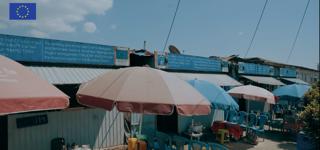
Final evaluation of 'Sustainable reintegration support to Ethiopian returnees from Europe and support to vulnerable displaced populations affected by COVID-19'
- 2025 – 2026
- under € 500,000
- Ethiopia
The Sustainable Reintegration Support to Ethiopian Returnees from Europe and to Vulnerable Displaced Populations Affected by COVID-19 (SRSERE) project was designed to promote the sustainable reintegration of Ethiopian returnees from Europe and to contribute to the development of a national reintegration system for Ethiopia. It also sought to provide ARRA (now RRS) with the financial, human, and technical resources necessary to strengthen services and address the needs of vulnerable displaced populations in Ethiopia affected by the COVID-19 pandemic.
The evaluation assessed the evidence on the extent to which, and through which mechanisms, the EU intervention contributed to the achievement of the intended results, and shall identify the factors that enabled or constrained progress. The global objective of this evaluation are twofold:
- To provide the European Union, relevant stakeholders, and the wider public with an independent overall assessment of the project’s performance, paying particular attention to results achieved at different levels against the expected objectives, and to the underlying factors explaining these results; and
- To identify key lessons learned, conclusions, and recommendations in order to inform decision-makers on how to improve future interventions.
The specific objectives of this evaluation are:
- To draw lessons that can be replicated in other EU-funded interventions on return and reintegration in Ethiopia, including for vulnerable returnees from Europe.
- To ensure accountability for the use of EU resources in relation to the results of the project.
- To report transparently on EU support to the migrant reintegration programme in Ethiopia and to assess the state of national referral systems at country level.
- Partners:
- Particip (Lead)
- Keywords:
- Monitoring & Evaluation

Support Facility on the Implementation of country allocations of the Human Rights and Democracy Thematic Programme
- 2023 – 2026
- € 500,000 – 1 million
- Global
The overall objective of the service contract was to enhance the implementation of EU actions promoting and protecting human rights and democracy in partner countries under the NDICI Human Rights and Democracy Thematic Programme.
This support aimed more specifically at ensuring the three following specific objectives:
1.) Provide technical support to EU staff and beneficiaries in the implementation of the Human Rights and Democracy Thematic Programme.
2.) Provide timely and accurate quality check of projects encoded in OPSYS.
3.) Produce ad hoc studies and/or evaluations related to results and/or the monitoring of the grants for CSOs at country level.
The global and specific objectives of this request for service contributed to the working principles of the NDICI Human Rights and Democracy Thematic Programme: The human rights-based approach and gender equality.
- Partners:
- Particip (Lead), EPRD, NCG Denmark
- Keywords:
- Civil society, Human rights

Technical Assistance for EU-Kenya Dialogue Facility
- 2021 – 2026
- € 2 – 5 million
- Kenya
The overall objective of the project is to promote sustainable and inclusive development by strengthening the cooperation and partnership dialogue between the European Union (EU), its Member States and the Republic of Kenya. The purpose of the assignment is to enhance the partnership, dialogue, joint analysis and exchange of experience between Kenya, the European Union’s and the EU Member States’, identifying common strategic interests in prioritised areas, outlining ways forward, strengthening the concepts and image of cooperation.
As part of its scope, the project supports the implementation of the following:
a) The High Level Strategic Dialogue between the European Union and the Republic of Kenya, launched on 21 June 2021 b) The Kenya MIP 2021-2027, setting out the EU priority areas for Kenya c) Developmental actions emancipating from the negotiations for an Economic Partnership Agreement (EPA) d) The Team Europe Initiatives on the Green Deal and the Human-Centered Digitalization e) The Global Gateway f) Public diplomacy activities, including on the Global Gateway and on the Delegation’s strategic communication objectives, in line with the new EU guidelines on strategic communication 2022
Results being achieved:
- Result 1: Improved sectoral and crosscutting policy dialogue between the European Union, its Member States and Kenya with an increase in awareness and understanding of relations, including political, development, trade, investments, social and people to people relations,
- Result 2: Communication with and outreach to the Government of Kenya, European Union and its Member States representations in Kenya, external partners and other actors, and appropriate visibility of the partnership. This result will be achieved in coordination with the ongoing Communication and Visibility contract;
- Result 3: Policy dialogue plans and projects are managed and supported effectively.
Projects implemented via the Dialogue Facility include the following (project no. and title):
1 Concept note for the EU-Kenya Trade and Investment Conference
2 Narrative for the Team Europe (TE) Initiative on a Human-Centred Digitalization in Kenya
3 Narrative for the TE Initiative on the Green Deal with Kenya
5 Mapping of the Climate Smart and Sustainable Agricultural Value Chains' interventions of the EU and its MS and their impact towards making a Green Economy in Kenya
6 Paper and workshop on ongoing interventions in the EU Trust Fund-supported Cross-Border Programme
7 Support the development of the Kenyan Blue Economy Strategy and its outreach
10 Mapping of Civil Society Organisations (CSO) and Networks involved in the MIP and TE priority areas and way forward for a structured Dialogue with the EU in Kenya
11 Situational Analysis on potential Urban Housing Practitioners for an African Network and support the development of a Network Strategy with outreach
12 Trade for Sustainable Development Gap Analysis
13 Study on Data Protection for the Office of the Data Protection Commissioner (ODPC)
14 TradeMark Africa (TMA) Funding Analysis and Recommendations
15 Support to the EU-Kenya Business Forum - April 2023
16 Analysis of the Kenyan Government Manifesto
17 Registration of a European Business Organisation (EBO) in Kenya
18 Support to the Climate Finance pillar of the Africa Climate Summit 2023
19 Support to the Climate Resilience and Adaptation pillar of the Africa Climate Summit 2023
20 CSO Training on EU Financial Procedures (Mar 2023)
25 Moderation of the Blue Economy Session at the Kenya Devolution Conference 2023
26 Support the Review of the National Energy Policy
28 Development of a Strategic Plan (2023-2027) for the State Department for Gender and Affirmative Action
29 Technical Assistance for pre-study of EU support for a Greenhouse Gases Emissions Measurement, Reporting and Verification (MRV) System in Kenya
30 Economic Partnership Agreement (EPA) sensitisation, policy paper for the creation of an EPA Domestic Advisory Group, and organization of Strategic Dialogues on Trade and Investment
33 Support to Young African Climate Leaders' Delegation to COP28 (Nov 2023)
34 Support to Post EPA Signing Event
36 Support to Children and Youth Major Group (CYMG) for the Global Youth Environment Assembly 2024 in Nairobi
38 Organization of Team Europe Initiative (TEI) Workshop on Digitilization
40 Communication Strategy: Promotion ideas and marketing strategies to deliver a winning football-themed Europe day campaign in partnership with the government of Kenya and the EU Member States
41 Support for implementation of the children’s theatre play “Leo’s search for a New Home” (creating outreach content relevant to the Green Deal TEI and campaign, the EU-Kenya Green Partnership and the UNEA6)
42 Support function for the Donors Partner Group (DPG) Secretariat
43 Media support for BlueInvest Conference
44 Support Judiciary NCAJ AC Strategy
45 Africa Digitalisation perception study
50 Launch Event for EU – Kenya Energy Project, “Green Resilient Electricity System” (May 2024)
54 Concept Note for 2nd Kenya Business Forum 2025
55 Political Economy Analysis on Transparency and Accountability in Kenya
57 Technical Assistance in the Establishment of EuroCham Kenya
60 Expert Assessment of gaps and needs for investment in digital infrastructure for last mile connectivity in Kenya
61 Drafting EPA Implementation Strategy for Kenya
62 Digital Skills
63 Anti-Counterfeit ACA
64 60 year diplomacy
65 Cradle Camp Turkana
66 EU Kenya Buisness Forum Event
67 CRA grant proposal
68 Borderlands programme
- Partners:
- Particip (Lead), Tetra Tech NL
- Keywords:
- Agriculture, Civil society, Communication & media, Environment, Governance, Rural and urban development, Trade

Traceability for export products and sustainability in Argentina
- 2023 – 2026
- € 500,000 – 1 million
- Argentina
Global objective
The global objective of the project is to strengthen the EU’s engagement with Argentina on external impacts of EU Green Deal policies and regulatory frameworks, with emphasis on the regulation on deforestation and forest degradation, through the use of EU’s digital tools.
Specific objective(s)
- Engage with key stakeholders in Argentina to enhance understanding and alleviate concerns on the objective and content of the identified regulations, with emphasis on deforestation and forest degradation;
- Identify the necessary steps to either implement or support already existing effective traceability systems for Argentinian exports to the EU market, taking into account the deforestation and forest degradation regulation;
- Identify the most relevant space-based technologies and data, including their combination, to be used to support Argentina’s effort to comply with the zero-deforestation supply chain regulation;
- Promote the use of already available technological tools within the public and private sector alike, in particular Copernicus-based imagery and support the development of ad-hoc services through the Copernicus Regional centres in Chile and Panama or through the JRC and the European Union Space Programme Agency-EUSPA;
- Promote the development of pilot projects and use cases to demonstrate the potential of using satellite-based technologies to develop traceability systems facilitating compliance with the Regulation as well as in other areas such as environmental protection;
- Support outreach efforts towards the main stakeholders to increase awareness among the main private and public stakeholders over the tools offered by the EU in support of Argentina and promote the uptake of EU Space technologies;
- Support the dialogue on space-based services with institutions, companies and CSOs through the organisation of high-level events, the creation and animation of cross-sectoral networks and promote synergies with similar EU-funded actions.
- Keywords:
- Agriculture, Communication & media, Forestry, Trade
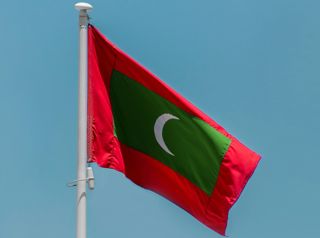
The overall objective of this assignment was to contribute to improving the electoral and democratic framework of Maldives during the inter-election period and raising awareness and understanding of the EU EOM recommendations and technical issues related to their implementation. In general, an EFM supports the consolidation of democracy, institution-building and democratic elections in Maldives in the context of the implementation of the 2023 EU EOM recommendations.
The specific objectives of the Mission included:
- Assess the state of play of the implementation of the recommendations of the 2023 EU EOM to Maldives;
- Assess any electoral reforms adopted since the last EOM or which are under consideration (e.g. draft legislation) or planned and the degree to which these reflect EOM recommendations and their alignment with international standards for democratic elections;
- Identify which EOM recommendations are most relevant to the prevailing country situation and the current phase of the electoral cycle;
- Generate additional impetus for – or contribute to ongoing debates on – electoral reform;
- Identify areas of agreement and disagreement on EU EOM recommendations among the stakeholders and any political, technical, financial obstacles to electoral reform;
- Propose actions to overcome obstacles to electoral reform, including measures to develop support for and national ownership of the recommendations;
- If helpful and requested, assist the EU Delegation, EEAS and INTPA in their assessment on whether ongoing cooperation and conflict prevention projects are addressing the recommendations made by EU EOMs. Based on a brief overview of existing programmes, provide needed information to support identification of potential additional election/democracy support action that could contribute to strengthening the implementation of the recommendations and/or to the overall improvement of the electoral framework;
- Contribute to analysis by the EU Delegation, EEAS and INTPA with information to originate any other possible EU actions that could contribute to strengthening the implementation of the recommendations and/or to the overall improvement of the electoral framework;
- Prepare/update with EU Delegation a follow-up plan to EU EOM recommendations.
- Keywords:
- Elections

Preparing the Improving Learning Outcomes in Secondary Education Sector Development Program
- 2023 – 2026
- under € 500,000
- Georgia
Particip provided this Transaction Technical Assistance (TRTA) to support the Government of Georgia and the ADB to prepare the Improving Learning Outcomes in Secondary Education Sector Development Program.
Through this program, the new secondary education curriculum was planned to be rolled out, and needs to increase the efficiency of the school system addressed. The program was intended to increase the effectiveness of the school funding model, the quality of teaching, and address equity and inclusion challenges in the secondary education system.
The TRTA team supported preparing a policy-based loan and a investment project loan component, further developing the program design, a detailed policy matrix, completing due diligence requirements and planning program implementation arrangements. This included analytical work, preparing technical, financial, economic, institutional, safeguards, gender and socioeconomic due diligence, as well as advise and assistance to ensure the investment project was ready for rapid start-up and smooth implementation.
- Partners:
- Particip (Lead), PMCG
- Keywords:
- Education

Evaluation of EU support to IPA Roma inclusion projects (2016-2023)
- 2023 – 2026
- under € 500,000
- Western Balkans
The evaluation covered all European Union (EU) external action support to IPA Roma inclusion projects in the Western Balkans and Türkiye between 2016 and 2023. The main objectives of this assignment were to: i) provide an independent and evidence-based assessment of the EU's past and current external action support in the area of Roma inclusion; and ii) provide lessons learnt and recommendations at EU level to inform ongoing and future decision-making in improving current and future EU strategies, programmes and actions on Roma inclusion.
The evaluation was centred around three main thematic areas:
- Civil rights (registration, data collection, monitoring, reporting, fight against discrimination and antigypsyism);
- Economic and social rights (health, employment, education and housing, including access to public services);
- Roma inclusion in governments' green and digital agendas.
Additionally, the evaluation addressed broader cross-cutting issues such as human rights, the need to ensure appropriate treatment for vulnerable groups including children, fight against environmental poverty and climate change, social inclusion and gender equality.
The analysis covered both spending and non-spending actions and examined all funding mechanisms and modalities of implementation used under IPA II and III.
- Partners:
- Particip (Lead)
- Keywords:
- Education, Governance, Human rights, Monitoring & Evaluation

Strategic Evaluation of the EU partnership with Mozambique (2014-2024)
- 2024 – 2026
- under € 500,000
- Mozambique
This evaluation had two overarching objectives. Firstly, it aimed to provide an independent and comprehensive assessment of the performance and strategic relevance of the European Union’s (EU) partnership with the Republic of Mozambique. Secondly, it sought to identify key lessons and produce forward-looking recommendations to inform responsible decision-makers – particularly within the European External Action Service and the Directorate-General for International Partnerships – on how to enhance the quality, coherence, and impact of the EU’s current and future strategies, programming, and actions in Mozambique.
Its specific objectives were as follows:
- To measure how the combination of different interventions are contributing to the expected EU strategic objectives at the country level, taking into consideration political diplomacy, policy dialogue, and financial assistance;
- To provide relevant external cooperation services of the European Union (EU) and the broader public with an independent assessment of the EU's past and current cooperation with the Republic of Mozambique from 2014 to 2024.
The analysis centred on six ‘domains’ (or ‘development challenges’): i) the path to a stable peace through the implementation of the 2019 Peace Agreement, ii) local violence and conflict in Cabo Delgado, iii) macroeconomic stability and public finance management in the aftermath of the 2016 ‘hidden loans’ case, iv) vulnerability to climate change and natural disasters, v) social and economic disparities within the population, and vi) foreign, domestic and private investment in Mozambique.
The evaluation identified conclusions, lessons learned, and examples of good practices regarding the achievement of the EU’s support to Mozambique. It also provided a set of targeted and practical forward-looking recommendations for the improvement of the programming, assistance, and implementation of current and future EU interventions in Mozambique under the new multi-annual financial period 2021-2027.
- Partners:
- Particip (Lead), ECDPM, MANCALA CONSULTORES S.L.

Mid-term evaluation of the Health Sector Support Program in Tunisia 'Essaha Aziza'
- 2024 – 2026
- under € 500,000
- Tunisia
The Health Sector Support Programme ('Essaha Aziza', financing agreement ENI/2016/39-819) was composed of two phases: the first phase started in 2017 with an overall budget of EUR 20 million and the second started in 2021 (following an extension in the form of a budget reinforcement decided in 2020), increasing the overall budget to EUR 70 million. Its general objective was to support Tunisia in improving healthy living conditions and promoting the well-being of all and at all ages. More specifically, the program aimed to improve the performance of the health system in Tunisia, particularly in terms of front-line services, surveillance, emergency, telemedicine and family, community and hospital care.
This evaluation was a "mid-term evaluation" and covered the period from the start of intervention activities in 2017 until mid-2023 (30/06/2023). Its aim was to provide an independent analysis of the programme's performance, highlighting the qualitative and quantitative results in relation to the objectives. More specifically, it assessed the relevance of the intervention's focus areas in light of the results obtained. It also verified the proper delivery of equipment (including destination, allocation, use, and associated training). Additionally, it evaluated the intervention's performance in terms of the results achieved and the resources allocated, as well as the satisfaction of users of frontline health services. The recommendations aimed to contribute to the reflection for the next strategic programming in the health sector and to inform future interventions by 2025/2026.
- Partners:
- Particip (Lead)
- Keywords:
- Health, Monitoring & Evaluation

Mid-term Evaluation of the 'Support to the Formalisation of the economy including social protection and support to Public Finance Management' Programme
- 2025 – 2026
- under € 500,000
- Angola
This mid-term evaluation concerned the Budget Support programme “Support to the Formalisation of the Economy Including Social Protection and Support to Public Finance Management.” The global objective of the evaluation was twofold:
To provide the relevant services of the European Union and interested stakeholders with an overall independent assessment of the programme’s performance, with particular attention to its different levels of results measured against expected objectives and the underlying factors influencing those results; and
To identify key lessons learned, conclusions, and related recommendations in order to inform decision-makers on how to improve current and future Budget Support programmes.
The evaluation delivered an independent assessment of the programme’s performance, effectiveness, and sustainability. It analysed how Budget Support inputs, policy dialogue, and complementary actions contributed to Angola’s formalisation and public finance management strategies. Particular attention was given to the evolving institutional context, data and governance gaps, and the relevance of the intervention logic in light of recent policy developments. The evaluation generated lessons, conclusions, and actionable recommendations to support better decision-making by Angolan authorities, the EU, and its partners.
- Partners:
- Particip (Lead), MANCALA CONSULTORES S.L.
- Keywords:
- Monitoring & Evaluation