
Nuestros proyectos
Explore la experiencia de Particip en proyectos desarrollados en distintos países, sectores y ámbitos de especialización.
Nuestras referencias ofrecen una visión general de las misiones finalizadas y en curso, incluidos sus objetivos, alcance geográfico, duración y valor contractual.
Mostrando 61–70 de 796 referencias
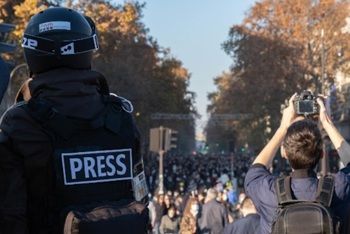
Supporting the Alliance for Democracy Development, in fostering independent and pluralistic media, access to information and the fight against disinformation in Panama, Costa Rica, Dominican Rep. and Ecuador.
- 2024 – 2027
- de 1 a 2 millones de €
- Costa Rica, Dominican Republic, Ecuador, Panama
The expected outputs of this contract are as follows:
- Knowledge based products (analysis and studies) on policy and the legal frameworks pertaining to
media regulation (including digital space), press freedom, journalists’ protection, and other related topics
in the ADD countries are produced;
- Policy and technical expertise and mentoring is provided for the design and development of policy and
legal frameworks pertaining to media regulation (including digital space), press freedom, journalists’
protection, and other related topics, in line with international standards and in respect of fundamental
human rights;
- Research and knowledge based products on information environments, including among others
stakeholder analyses, media sectoral political economy and ownership monitoring analyses, media
consumption analyses, information and communication trends, vulnerabilities and opportunities are
produced;
- Knowledge based products (analysis and studies) on monitoring of (foreign and domestic) information
manipulation trends on traditional and online media, notably on narratives, tactics, techniques and
impact, including through media monitoring, data analyses, investigative journalism, etc. are produced;
- Strengthened capacity of state and non-state (civil society, media, private sector, etc.) actors, on
information manipulation (foreign and domestic) analytical methods including narratives, tactics,
techniques and impact;
- Strengthened capacity of independent media actors to investigate, report, publish/broadcast fact based information;
- Strengthened capacity of fact-checking organisations to enhance their analytical, detection, debunking
and communication work on disinformation campaigns;
- Strengthened capacity of civil society organisations to conduct Media and Information Literacy
activities to broader public and to targeted stakeholders;
- Enhanced experience sharing, lessons learning within each focus country and across countries and
actors from the region.

Assessors for EU4CSO Call for Proposals Ukraine 2025
- 2026 – 2027
- menos de 500.000 €
- Ukraine
Project overview
This project supports the European Union in the implementation of the EU4CSOs in Ukraine – Call for Proposals 2025, financed under the Ukraine Facility. It focuses on the recruitment and deployment of experienced external assessors to carry out the technical and financial evaluation of grant applications submitted by civil society organisations (CSOs) across Ukraine. The initiative contributes to strengthening democratic resilience, inclusive governance, and civil society participation in the context of Ukraine’s ongoing war of aggression and its EU accession process.
Civil society plays a critical role in Ukraine’s recovery, reform, and European integration efforts. Through this call, the EU aims to support medium-sized, small, and grassroots CSOs—particularly those operating outside Kyiv—working in key priority areas such as women’s rights and gender equality, media and freedom of expression, human rights, social cohesion, and youth engagement.
General objective:
The general objective of the project is to ensure a high-quality, transparent, and policy-aligned selection of civil society actions funded under the EU4CSOs in Ukraine – Call for Proposals 2025, thereby contributing to the strengthening of a resilient, inclusive, and democratic Ukrainian society in line with EU values and accession requirements.
Specific objectives:
The specific objectives of the project are to:
-
Provide independent, impartial, and methodologically sound technical and financial assessments of concept notes and full grant applications submitted under the call, in accordance with EU guidelines and evaluation grids.
-
Support the Evaluation Committee and Contracting Authority by delivering clear, coherent, and well-substantiated assessments that enable informed funding decisions.
-
Ensure consistency, accuracy, and quality control across all evaluation outputs through effective coordination by a dedicated Team Leader.
-
Contribute to the selection of projects that demonstrate strong relevance, feasibility, cost-effectiveness, and alignment with EU priorities, including civil society development, democratic governance, gender equality, human rights, media freedom, social cohesion, and youth participation.
-
Uphold the principles of transparency, confidentiality, and absence of conflict of interest throughout the evaluation process, reinforcing the credibility and integrity of EU external assistance mechanisms.
Scope of activities:
Assessors work remotely and independently evaluate concept notes and full applications using the EU’s PROSPECT system. Each proposal is assessed by at least two experts, while the Team Leader coordinates the process, performs quality checks, consolidates results, and prepares summary tables and methodological notes. The outputs directly feed into the decision-making process of the Evaluation Committee and support the effective allocation of EU funding to civil society initiatives across Ukraine.

Support for environmental governance and the implementation of conservation policies within the framework of the EU-Congo Forest Partnership
- 2025 – 2027
- menos de 500.000 €
- Congo (Brazzaville)
The overall objective of this contract is to strengthen environmental governance and the sustainable management of natural resources in the Republic of Congo, by aligning national policies with international commitments and promoting the participation of all stakeholders.
Specific Objectives:
- SO1: The Nationally Determined Contribution (NDC) of the Republic of Congo is revised
- SO2: The implementing regulations of the Wildlife Law are developed and validated through a participatory process
- SO3: Steering and monitoring committees (COPIL) for the national components of ODEBAC and NaturAfrica are organized
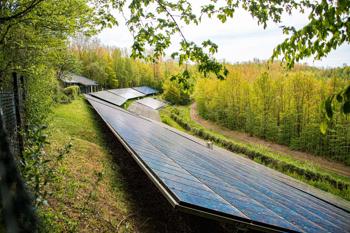
Provision of assistance for the technical and financial monitoring of ongoing projects funded from previous and on-going LIFE programmes and on thematic support.
- 2023 – 2027
- más de 10 millones de €
- Europe
LIFE is the main European Commission funding mechanism for improving the state of the environment in the European Union.
Particip GmbH is responsible for the management of the ELMEN EEIG. Particip provides the Administrative Team, the financial management, and one of the two Managing Directors of ELMEN EEIG, and is therefore responsible for ensuring an effective operation of business activities and the compliance with contractual requirements. The overall management tasks include budgeting, accounting and controlling, as well as guaranteeing high team performance and quality assurance.
The general objective of LIFE is to contribute to the implementation, updating and development of EU environmental and climate policy and legislation by co-financing projects with European added value. The general objectives of LIFE shall be pursued through four sub-programmes:
- Nature and biodiversity
- Circular economy and quality of life
- Climate change mitigation and adaptation
- Clean energy transition
The specific objectives of LIFE are:
- To contribute to the transition towards a resource-efficient, low-carbon and climate resilient economy, to the protection and improvement of the quality of the environment and to halting and reversing biodiversity loss, including the support of the Natura 2000 network and tackling the degradation of ecosystems;
- To improve the development, implementation and enforcement of Union environmental and climate change policy and legislation, and to act as a catalyst for, and promote, the integration and mainstreaming of environmental and climate objectives into other Union policies and public and private sector practice, including by increasing the public and private sector’s capacity;
- To support better environmental and climate governance at all levels, including better involvement of civil society, NGOs and local actors;
- To support the implementation of the 7th Environment Action Programme.
The ELMEN EEIG provides about 130 long-term experts specialised in monitoring and evaluation and in thematic fields related to EU environmental policy. The experts monitor more than 1000 projects that are financed via the LIFE instrument.
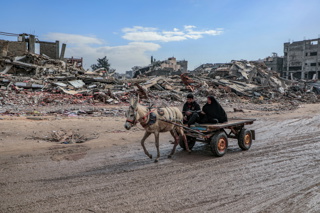
Corporate Emergency Evaluation of WFP’s Response in the State of Palestine
- 2026 – 2027
- menos de 500.000 €
- MENA
This independant Corporate Emergency Evaluation of WFP’s Response in the State of Palestine assesses WFP's emergency response strategy and interventions since the corporate scale up activation in 2023 until 2026.
The evaluation serves the double purpose of accountability (performance and result assessment) and learning (why certain results occurred or not, lessons and evidence for decision-making). It is envisioned that the evaluation will inform the design of the future engagement in the State of Palestine, which is scheduled for Executive Board consideration in June 2027.
Key sectors and activities include:
- Emergency preparedness and response, including cash-based transfers
- Nutrition and school feeding
- Social protection
- Livelihoods activities
- Institutional capacity strengthening
- Logistics, supply chains and on-demand services
Cross-cutting themes included: Gender equality and empowerment of women (GEEW), inclusion, accountability to affected populations (AAP), protection, conflict-sensitivity, and humanitarian principles.
The evaluation employs a mixed-method approach that triangulates qualitative and quantitative data from a variety of sources. For this purpose, the evaluation team is conducting interviews and focus group discussions with different stakeholders including WFP staff at HQ, regional and country level, WFP cooperating partners, donors, UN agencies, government entities and final beneficiaries.
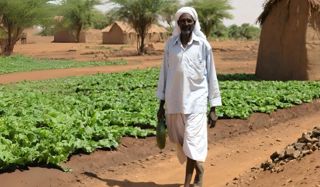
Sudan Somoud Enhancing Community Resilience (now called THABAT-stability) - Bank Support and Monitoring Agent
- 2024 – 2027
- de 500.000 € a 1 millón de €
- Sudan
The Project Development Objective (PDO) is to improve access to basic services and food security of Select Communities in the Republic of the Sudan. The project is designed to complement the current humanitarian aid to Sudan by laying a foundation for medium and longer term development support in areas with high concentration of IDPs. It builds for the future of Sudan by restoring access to basic services and food, protecting human capital, and enhancing communities’ resilience using a bottom-up approach. It is sequenced to first meet immediate basic service needs of vulnerable groups in areas of high IDP concentration and relative safety and accessibility, followed by community-led planning and implementation of medium-term basic services.
Project M&E efforts will be supplemented by BSMA to ensure WB oversight on the ground, given limited access for Bank personnel. To support the WB to fulfil its monitoring and supervision obligations in areas where its staff are unable to access project sites, the Bank engaged with BSMA with the objective of providing a monitoring layer to complement the monitoring activities of the Implementing Entities and ensure that Bank funds are utilized for the purposes specified in the grant agreement and project documents. The BSMA ’s services will include monitoring of all aspects of Project implementation, including:
- Implementation progress or completion status (including community selection and fund allocations, verification of stakeholder engagement activities, timeliness of implementation, physical verification of infrastructure and goods including quality, quantity, sizing/dimensions, etc. prepared as part of small-scale climate-resilient infrastructure development), and compliance that the physical implementation of projects (including physical verification of works/construction) is in accordance with signed contracts and approved safeguards instruments which are prepared based on the requirements of the WB safeguards policies, UNICEF/WFP policies and procedures and relevant laws and regulations of Government of Sudan.
- Monitoring of the Implementing Agencies’ implementing partners’ fiduciary compliance within the limits focused on site assessments as outlined below.
- On the environmental and social risk management (ESRM) side, the BSMA shall carry out verification of the degree of compliance with ESRM requirements as per the site ESRM instruments including site visits to construction sites, waste disposal sites aided, GMV Centres to comply with WB requirements. This will include monitoring compliance with the Environmental and Social Commitment Plan and more specifically the ESF instruments used in the project.
- Monitor functioning of the project’s grievance redress mechanism (GRM).
- Carry out physical verification with digital photographs of ongoing works and goods supplied, through geo-tagged information and support of smart technology, alerting the Bank and relevant Implementing Agency to deficiencies in quality and implementation and following up on the correction of these deficiencies.
- Compile lessons from activity verification, challenges faced and output monitoring to generate reports on lessons learned and recommendations for improving monitored projects.
The BSMA will also be responsible for monitoring any project activities to develop the capacity within the lowest level of governance structures to enable delivery of basic services – at the community and Locality level.
Provision of Third-Party Monitoring services for AICS multi-sectoral programme to strengthen the resilience of vulnerable populations in Afghanistan (AID 013073/01/0)
- 2025 – 2027
- menos de 500.000 €
- Afghanistan
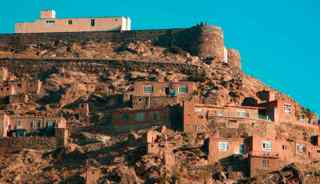
The project provides independent Third-Party Monitoring and Evaluation (TPME) services for the AICS funde multi-sectoral programme to strengthen the resilience of vulnerable populations in Afghanistan (013073/01/0). In a context marked by political uncertainty, economic decline, acute food insecurity, and strained health systems, the assignment ensures accountability and adaptive management of humanitarian interventions in health, nutrition, agriculture, and food security.
Particip designs and implements a robust Monitoring & Evaluation (M&E) framework that includes a baseline study, periodic monitoring on a four-monthly cycle, spot checks, and an end-line study. The monitoring system validates whether humanitarian goods and services are delivered as planned, assesses outcomes at the community level, and generates evidence-based recommendations for programme adaptation.
Target groups include beneficiaries (women, children, IDPs, returnees, persons with disabilities, and host communities), local service providers, implementing partner staff, and community leaders. Monitoring activities combine quantitative and qualitative methods, employing participatory approaches to capture lived experiences and ensure inclusivity, particularly for vulnerable groups.
Through regular monitoring reports, infographics, and learning loops, the project supports AICS Islamabad in strengthening oversight, ensuring compliance with humanitarian principles, and promoting transparency in hard-to-reach areas where direct donor access is limited

Capacity Development on Education Governance and Management in Lebanon
- 2025 – 2027
- de 500.000 € a 1 millón de €
- Lebanon
The project supports the Ministry of Education and Higher Education (MEHE) in implementing the Reform Road Map 2025, focusing on decentralized and digital education management. Particip will be responsible for gender-responsive capacity development of MEHE staff, Regional Education Offices (REOs) and schools. Planned activities include a needs assessment, design and delivery of MEHE-certified trainings for 120 participants and on-the-job coaching with a strong focus on female leadership and inclusive governance.
Expected Results:
- Conduct the first gender-responsive capacity needs assessment.
- Deliver MEHE-certified training to 120 staff on education governance and digital management.
- Integrate gender-transformative approaches into MEHE training programmes.
- Strengthen communication and reporting mechanisms between MEHE, REOs, and schools.

Bio-Waste 5 Regions Project (BW5R)
- 2024 – 2027
- de 500.000 € a 1 millón de €
- Serbia
The specific objective of this contract is to enhance the capacities of the national and local authorities in order to allow them to plan, organize and implement the introduction of bio(green)waste source separation into 25 targeted cities/municipalities across five waste management regions namely Subotica, Pančevo, Sremska Mitrovica (Srem-Mačva), Užice (Duboko) and Pirot.
The scope of the contract is to support introduction of home composting, separate collection and simple biological treatment of biowaste (inc. green waste) in 25 cities/municipalities across five waste management regions in Serbia.
The separation at source approach is as valid for bio-waste as it is for other recyclable materials.
Preparation for recycling, by the generator (source) of the waste consists of separating bioaste from other types of waste and either home composting or bringing to a shared site or putting out for collection.
Within the proposed approach, the home composting measure represents a package of support provided to citizens to prepare and treat bioaste at home. The EU suggests home composting in rural areas or areas where it is reasonable and realistically achievable, including educational programmes and composting advisors. The introduction of door-to-door collection and biological treatment by composting is envisaged at the municipal level. This would include collection from individual households (where home composting is not realistic), small businesses such are restaurants, groceries, super-markets and green markets, green waste from public places. Serbia already has some local PUCs conducting seasonal campaigns to collect green waste and agreements with some small businesses. The intention under this project is to systemize and increase the number of
campaigns.
Support to the Egyptian Irrigation Modernization to Enhance the Water Productivity programme
- 2024 – 2027
- de 500.000 € a 1 millón de €
- Egypt
The envisaged programme to be designed is foreseen to include:
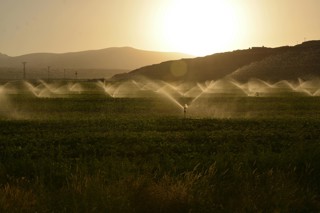
Component 1: Implementation of on-farm irrigation water management Infrastructure. This component is intended to support on-farm (marwa/mesqa) ++irrigation modernization++ in the Nile Valley (specific areas to be decided).
The component is divided into the following:
1. ++Rehabilitation++ of mesqa (tertiary) system, including pump stations, wherever feasible renewable energy pumps (mainly solar pumps) will be considered, while accounting for feasibility and sustainability measures.
2. Transformation from open marwa canals to a pressurized distribution system composed of buried PVC pipes and hydrants and installing ++modern irrigation system++ (drip or bubblers) in the farms.
3. Establishment of mesqa Water User Associations and ensuring their proper representation.
Component 2: ++Capacity building++ and participation for government staff and farmers in the project area. This component aims to improve stakeholders' knowledge through
1. Building the capacity of Water User Associations, and key farmers on operation and maintenance of modernized irrigations systems, marketing, accounting and management.
2. Building the capacity of Ministry of Water Resources and Irrigation officials in the field of design, implementation and operation of modern irrigation schemes, and improving their knowledge in the most recent technologies of water management and irrigation modernization.