
Nuestros proyectos
Explore la experiencia de Particip en proyectos desarrollados en distintos países, sectores y ámbitos de especialización.
Nuestras referencias ofrecen una visión general de las misiones finalizadas y en curso, incluidos sus objetivos, alcance geográfico, duración y valor contractual.
Mostrando 521–530 de 796 referencias

Non-proliferation and disarmament (NPD) monitoring system and logframe migration to OPSYS
- 2020 – 2021
- menos de 500.000 €
- Global
The overall objective of this assignment is to provide a sound basis for the future design, implementation, monitoring and reporting of results of NPD actions to the Commission, FPI.3 and implementing partners as represented by FPI.3.
The specific objectives are to:
- Develop an overall intervention logic and results framework for NPD as an area of FPI intervention, including core indicators.
- Propose an NPD action-level intervention logic and results framework template, including core indicators suitable for sub categories of interventions as relevant, while seeking: (1) Coherence with the overall intervention logic and results framework for NPD as an area of FPI intervention, and (2) Consideration of differences between the focus of different NPD actions and categories of NPD actions.

Mid-term evaluation of the "Sustainable Solutions" Action for the most vulnerable host populations, refugees and migrants in Djibouti.
- 2020 – 2021
- menos de 500.000 €
- Djibouti
The main objectives of this evaluation were to provide the relevant EU services, interested stakeholders and the Horn of Africa Trust Fund (HLTF) Monitoring and Lessons Learned System (including to illustrate through operational examples the mid-term evaluation of the UTF instrument) with the following information
- a comprehensive and independent analysis of the performance of the Sustainable Solutions for the Most Vulnerable Host Populations, Refugees and Migrants in Djibouti action, with particular attention to its intermediate results, in comparison with the expected objectives, and the reasons supporting these results;
- lessons learned, conclusions and associated recommendations, so as to improve, where appropriate, the implementation of the action and potential future interventions.
The evaluation analysed the action according to the five DAC evaluation criteria, namely: relevance, effectiveness, efficiency, sustainability and impact prospects. In addition, the evaluation followed two specific EU evaluation criteria:
- EU added value (insofar as the action brings additional benefits to those that would have resulted from member states' intervention alone};
- the coherence of the action itself with the EU strategy in Djibouti and under the EU Emergency Trust Fund, Horn of Africa window, with other EU policies and with other actions of member states and donors involved in the sector.
The evaluation team furthermore checked whether gender, environment and climate change issues have been incorporated; whether important SDGs and their interactions have been identified; whether the principle of "Leave No-One Behind", (see https://www.un.org/africarenewal/fr/magazine/avril-
2016/odd-don't-leave-none-behind) and a rights-based approach were taken into account in the identification/formulation of documents and to what extent these were reflected in the implementation, governance and monitoring of the action.

EU communication campaign in Djibouti: Visibility of the EU's actions for Women and Employment in the Republic of Djibouti
- 2019 – 2020
- menos de 500.000 €
- Djibouti
The overall objective of the campaign is to consolidate the EU’s image as the main partner for Djiboutians, focussing on the values of the EU, in particular the promotion of women's rights and sustainable development resulting in job creation.
The specific objectives of this contract are:
a) Design and implement a communication campaign focussing on EU assistance to sustainable development resulting in job creation. The campaign aims at strengthening the image of the EU as the main support partner of Djibouti. In this context the project will:
- Define the target audience and its size (core target of the campaign, main target, secondary target);
- Define the communication message(s) and axis of the campaign that will support the actions and communication tools for each identified target audience. These messages should contribute to: (i) publicise EU actions in the field of employment promotion; (ii) assess the relevant results of the actions carried out; (iii) to positively change the perception of the target audience on EU support in the field of knowledge building and job creation;
- Identify for the campaign, the choice of media and supports (based on the defined budget and characteristics of the target audience) that will be produced and disseminated in order to contribute to a positive change in the perception of the EU and the image that the target audience has of it;
- Define the provisional budget allowing to have a realistic global vision of the project by taking into account the selected supports;
- Define a retro-planning to highlight the essential steps of the communication campaign;
(b) Design and implement a communication campaign focussing on the values of the EU, in particular the defence of the rights of women and girls. The objective of the campaign is to consolidate the image of the EU as Djibouti’s main partner. In this context the project will:
- Define the target audience and its size (core target of the campaign, main target, secondary target);
- Define the target audience and its size (core target of the campaign, main target, secondary target);
- Define the communication message(s) and axis of the campaign that will support the actions and communication tools for each identified target audience. These messages should contribute to: (i) publicise EU actions in the field of employment promotion; (ii) assess the relevant results of the actions carried out; (iii) to positively change the perception of the target audience on EU support in the field of knowledge building and the defence of the rights of women and girls;
- Identify for the campaign, the choice of media and supports (based on the defined budget and characteristics of the target audience) that will be produced and disseminated in order to contribute to a positive change in the perception of the EU and the image that the target audience has of it;
- Define the provisional budget allowing to have a realistic global vision of the project by taking into account the selected supports;
- Define a retro-planning to highlight the essential steps of the communication campaign;
(c) Define indicators to monitor the achievement of the results listed above, which are measurable and objectively verifiable, half way through and at the end of the implementation period of the communication campaigns.
Final evaluation of the Gouvernance Support Programme
- 2019 – 2020
- menos de 500.000 €
- Ivory Coast
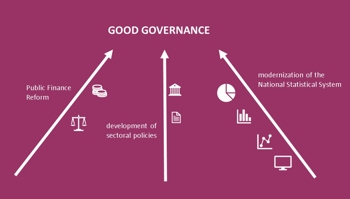
The overall objective of this programme was to contribute to the strengthening of the peace and recovery process in Côte d'Ivoire with a view to improving and promoting good governance. Situated at the crossroads of the main cross-cutting issues contained in the European Consensus on Development, the GAP supports the strengthening of governance in Côte d'Ivoire through 3 main components:
Axis 1. Support for the implementation of the Public Finance Reform for results-based budget management in line with the WAEMU Budget Reform.
- Component R1.1 - Institutional support to the Ministry of Economy and Finance (MEF) Component
- R.1.2 - Institutional support to pilot sectors of WAEMU reform: Component
- R1.3 - Support for institutional capacity building :
Axis 2. Support for the development of sectoral policies :
Contribution to the development of sectoral policies in certain key sectors that have a direct impact on poverty and the root causes of the crisis (health, education, water, sanitation, national identity/civil status, agriculture, rural land tenure, etc.), in line with the orientations taken in the framework of the WAEMU Reform, as well as in more cross-cutting sectors such as the environment (membership of FLEGT, Forest Law Enforcement, Governance and Trade), or decentralization :
Axis 3. Support for the modernization of the National Statistical System :
Institutional support to the National Institute of Statistics (NIS) in the implementation of the National Strategy for the Development of Statistics:
For the implementation of the GAP, in addition to equipment support granted to the structures involved in the PPPBSE chain and specific support to the Chamber of Accounts in the form of a PD, two technical assistance packages were mobilised, namely
- The Project to Support the Implementation of Results-Based Budget Management (PAGAR) for the "Reform of Public Financial Management" component; and ;
- the Project to Support the Planning and Statistics System (PAPS) for the components "Development of Sectoral Policies" and "Modernization of the National Statistical System (NSS)".
The assessment shows that the problems have been well targeted but less well addressed. Weaknesses were noted at the level of ownership of the programme by the ministries, the institutional anchoring of technical assistance, the synchronization of the two programmes, the monitoring of programme outputs, etc. The evaluation shows that the programme has been well targeted but less well addressed. All of these weaknesses have been identified and documented in the various evaluations and ROMs conducted on the project.
A mid-term evaluation with the main objective of providing stakeholders with an objective and reliable assessment of the implementation of the GAP with conclusions, recommendations, and lessons learned, likely to lead to proposals for updating, improving and revising the programme with a view to better implementation, based on the needs of the country and the performance achieved by the country in the governance sector was carried out from 23 November 2016 to 26 January 2017 by the evaluators of the DECG (Department of Evaluation and Management Control) of the National Authorizing Officer's Unit.
Evaluation of the Eastern Partnership Technical Assistance Trust Fund (EPTATF)
- 2020 – 2020
- menos de 500.000 €
- ENI East
The EPTATF was set up to accelerate the origination of operations in Eastern Partnership countries, and to improve the quality and development impact of the Bank's operations in the region. The establishment of the EPTATF was based on the assumption that technical assistance available at the time was inadequate to support the Bank’s operations in the region, particularly for small projects. It was set up to be complementary to the Neighbourhood Investment Facility (NIF) instrument and resources.
The purpose of the evaluation was to determine the extent to which the EPTATF has helped to improve EIB operations in Eastern Partnership countries since its establishment. Particip was expected to analyse the functioning of the EPTATF, its decision-making process, its governance arrangement and its organisation and performed a review of the EPTATF portfolio of TA operations.
The evaluation work encompassed the following main phases:
- Structuring phase: the evaluation team took ownership of the evaluation framework and approach, further amended and developed it, if deemed necessary.
- Data collection and analysis phase: this phase entailed a thorough desk review, data collection, validation and analysis. The analysis, focussing on 10 case studies of TA operations (at least three in Ukraine, and at least one in Armenia, Georgia, and Moldova) led up to the drafting of the Evaluation Report
- Preparation of the final report: the Team Leader participated in the presentation of the evaluation’s emerging findings to IG/EV and to the Evaluation Reference Group; and then drafted and finalised the Evaluation Report under the guidance of IG/EV

Provision of technical and capacity building services in Somalia and Somaliland under the Somalia Investment Climate Reform Program
- 2019 – 2020
- menos de 500.000 €
- Somalia
The Somalia Investment Climate Reform Program (the Project), which was implemented by the Equitable Finance and Innovation (EFI) VPU of the World Bank Group (WBG) sought to catalyze investment and enhance private sector-led economic growth and competitiveness through targeted investment climate reforms in Somalia.
This has been achieved through the implementation of economy-wide and selected sector-specific investment related reforms in Somalia. In order to: i) ensure a seamless transition from the just concluded first phase to second phase program, ii) sustain implementation of ongoing reforms (initiated under SICRP1); and iii) effectively kick start reform activities proposed under the new projects, to provide onsite support (in Mogadishu and Hargeisa) for the reforms and to build government capacity in Somalia throughout the first year of project implementation (July 2019 - June 2020). The project team has implemented measures geared towards providing longer-term on the ground support, capacity building, technical advice, and reform facilitation to the client.
Scope of the assignmet was to support the delivery of Somali Unlocking Sectoral Investment Project and the Somali Investment Climate Reform 2 (SUSIP and SICRP 2) objectives in Somalia and Somaliland.
++Key Deliverables++
- 2 to 3 key reforms under the Somali Unlocking Sectoral Investment Project and the Somali Investment Climate Reform 2 project
- Monthly progress reports, that showed activities accomplished/progressed, challenges with clear recommended next steps for the following months, as well as key issues needing management attention/action.
- Bi-weekly progress updates.
- Assignment completion report, that showed completion of all project deliverables and tasks, and showing lessons learnt recommendations for management as well as any other relevant observations.
- Deliverables under the specific terms of references for the required expertise.
Support for the EU communication programme in Turkey
- 2019 – 2020
- de 2 a 5 millones de €
- Türkiye
++Background:++ Turkey goes through a long and challenging process which requires alignment of its political, institutional, economic and social structures with those of the European Union. This process inevitably creates apprehensions, debate and intense questioning. Therefore, although this process is expected to take several years, it is important that Turkish citizens understand the benefits as well as the challenges of EU membership.
++Overall objective:++ to communicate the EU's policy objectives in Turkey, in view of providing accurate information on the EU, increasing understanding of the Turkish population of the EU-Turkey partnership and what the EU is doing in Turkey.
++Target groups:++ general public, young people, women, SMEs/Entrepreneurs, sceptics of EU integration (to be identified), multipliers, Civil society including NGOs, Policy makers, Opinion leaders, Economic actors and business associations, Media, including regional and local outlets, Universities and academics, International organisations.
++Purpose:++
- Promote the EU and its values – in particular civil and political rights - among the Turkish population with a particular focus on identified target audiences, notably young people (under the heading ‘Our Europe, Our Future’), and underline the practical benefits of adopting these values for the Turkish citizens.
- Disseminate information about what the EU is concretely doing for Turkish citizens through its financing instruments to key partners and policy-makers and enhance the visibility of EU-funded projects. This information will include facts and figures about EU funded projects as well as the impact and effect of these projects.
- Promote EU interests in Turkey, whether of an economic nature or aiming at a better understanding of EU policy positions.
- Dispel myths and misconceptions related to the EU and EU-Turkey relations and the accession process.

Preparation for Support to Property Rights in Albania
- 2018 – 2020
- menos de 500.000 €
- Albania
This project aimed to enhance the capacity of the relevant stakeholders to ensure proper administration, coordination and efficiency for compensation of former owners and finalization of immovable property
registration process.
The specific objectives of this contract were as follow:
- Identify key areas for immediate support and provide ad hoc advice on the compensation
scheme, legalization process and map digitalization
- Support the relevant stakeholders (Ministry of Justice and Ministry of Agriculture and Rural
Development, IPRO, ALUIZNI and ATP) to draft a Property Rights Reform roadmap in order
to address the key elements of the sector
- Prepare a set of recommendations to be addressed in the short and medium term in order to
prepare for the finalization of the compensation process and also finalize the immovable
property registry reform
- Prepare draft terms of reference for complementary technical assistance
- Draft a first assessment on the timeframe and necessary steps to be taken in order to prepare
for the implementation of the Land Parcel Identification System

Cyprus-Nicosia: Support to civil society organisations (CSOs) in the Turkish Cypriot community through, inter alia, tailor-made assistance, training, capacity building and networking with Greek Cypriot and other European Union CSOs
- 2015 – 2020
- de 2 a 5 millones de €
- Cyprus
The overall objective of the project of which this contract is a part is to strengthen the role of civil society in the Turkish Cypriot community as well as to promote EU values and the development of a conducive environment for the further development of trust, dialogue, co-operation and closer relationship between the Turkish Cypriot and Greek Cypriot communities and for the integration of Turkish Cypriot civil society into the wider Union by facilitating links with EU-wide NGOs and NGO networks.
The purposes of this contract are as follows:
- to increase and improve the capacity and actions of Turkish Cypriot CSOs;
- to increase collaboration and improve joint actions between Greek and Turkish Cypriot NGO;
- to strengthen CSOs role and civic engagement in the Turkish Cypriot community (TCc);
- to foster cooperation, support and exchange of best practices between TC CSOs and CSOs of the European Union as well as with EU-wide NGOs and NGOs networks.
External Evaluation of EU’s Support to Conflict Prevention and Peace Building (2013-2017)
- 2018 – 2020
- de 500.000 € a 1 millón de €
- Global
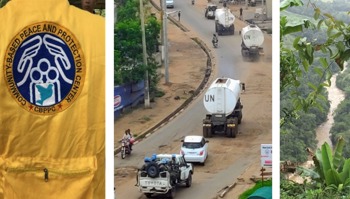
This evaluation took place in a context of a recent surge in violent conflicts and a renewed momentum on Conflict Prevention and Peacebuilding (CPPB) both at the EU and global level. Its purpose was to:
- provide the relevant EU Institutions and the wider public with an overall independent assessment of the EU support to CPPB focusing on the period 2013-2017; and
- identify key lessons, instil good practices, and produce recommendations to feed into ongoing and future approaches to EU’s engagement in the field of CPPB.
In particular, the evaluation will feed into the EU implementation of the Integrated Approach to Conflict and Crises and nurture future EU support to CPPB strategies and interventions.
The scope of the evaluation included:
- all relevant actions (including spending and non-spending activities) and all countries/regions which fall under the responsibility of DG DEVCO and DG NEAR (neighbourhood region only); and
- the work/engagement of EEAS related to them.
In terms of temporal scope, the evaluation focused on the period 2013-2018, but also took the period 2011-2012 into consideration in order to assess the evolution of EU support to CPPB.
Through the course of the evaluation, the evaluation team conducted 12 case studies (focusing on countries, regions and instruments) which were subject to an in-depth analysis, including eight field visits. Two surveys – one covering EU services in Brussels, the other covering EU Delegations/Offices worldwide – were also part of the data collection and analysis process. Findings from all evaluation activities were synthesized into a final report.
The final report is available online: https://ec.europa.eu/international-partnerships/external-evaluation-eus-support-conflict-prevention-and-peacebuilding-2013-2018_en