
Nuestros proyectos
Explore la experiencia de Particip en proyectos desarrollados en distintos países, sectores y ámbitos de especialización.
Nuestras referencias ofrecen una visión general de las misiones finalizadas y en curso, incluidos sus objetivos, alcance geográfico, duración y valor contractual.
Mostrando 471–480 de 796 referencias

Evaluation of Afghanistan WFP Country Strategic Plan 2018-2022
- 2020 – 2021
- menos de 500.000 €
- Afghanistan
This independent evaluation of WFP Country Strategic Plan in Afghanistan assessed the strategic positionning, added-value and results of WFP operations in the Country from 2018 à 2021.
The evaluation served the double purpose of accountability (performance and result assessment) and learning (why certain results occurred or not, lessons and evidence for decision-making about a potential scale-up). It aimed at informing the design of the next CSP for Afghanistan and will be presented to WFP Executive Board in November 2022.
For the purpose of the evaluation, the evaluation team performed a documentary review, interviews with different stakeholders including WFP staff at HQ, regional and country level, WFP cooperation partners, ministries as well as focus group discussions and interviews with beneficiaries in Afghanistan.
CSP key sectors and activities included:
- Emergency Response (general distribution, CBT)
- Malnutrition treatment and prevention (food distribution, school feeeding)
- Resilience (Food for Asset, infrastructure rehabilitation) and support to small-holder farmers.
- Capacity Strengthening
- Cross cutting themes: Gender Equality and Women Empowerment (GEWE), Humanitarian principles and protection, accountability to affected populations (AAP)
The evaluation used a mixed-method approach that triangulated qualitative and quantitative data from a variety of sources. A field mission took place in Afghanistan in April 2021.
Report available here: https://www.wfp.org/publications/evaluation-afghanistan-wfp-country-strategic-plan-2018-2022
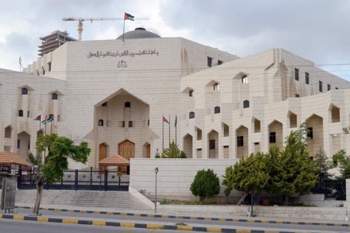
Mid term evaluation of the 'Support to the Rule of Law in Jordan' programme and formulation of a new action
- 2020 – 2021
- menos de 500.000 €
- Jordan
The main objectives of this evaluation were to provide the relevant services of the European Union and the interested stakeholders with:
- an overall independent assessment of the past performance of the programme to “Support the Rule of Law in Jordan”, paying particular attention to its intermediate results measured against its expected objectives; and the reasons underpinning such results;
- key lessons learned, conclusions and related recommendations in order to improve current and formulate a new Budget Support programme.
In particular, this evaluation aimed at assessing:
1. to what extent the programme “Support to the Rule of Law in Jordan” has achieved its expected results, notably through contributing to the implementation of the partner government's sector strategies such as the Justice Sector Reform Strategy and the Criminal Justice Strategy by providing opportunities for the improvement of national policy processes and policy implementation.
2. The evaluation also specifically analysed how the budget support programme has contributed (or not) to strengthen Public Financial Management (PFM) systems, including improved transparency within government systems, improved Domestic Revenues Mobilisation and stronger accountability.
3. The evaluation also paid attention to other aid modalities (basket/common funds, projects), in order to assess the complementarity and synergy (or discrepancy) of these modalities with budget support.
4. It also assessed the effects of the budget support operation on the M&E systems in the sectors supported by the programme. Budget support should aim to strengthen the monitoring systems in the sectors it supports, in alignment with the existing national level monitoring and evaluation systems and contribute to the improved availability and credibility of data. Availability of the robust progress reports by the government, providing results information against targets set under the strategy, and the use of these reports to facilitate informed policy dialogue between the different stakeholders (CSOs, private sector, Parliament, donors) and evidence-based decision making is one indicator of the capacity of the government in the area of M&E.

TECHNICAL ASSISTANCE TO SADC SECRETARIAT ON PROTECTION OF PERSONAL DATA TRAINING.
- 2021 – 2021
- menos de 500.000 €
- SADC region
The overall objective of the project of which this contract will be a part is as
follows: To improve employee skills on Protection of Personal Data procedures and rules and to ensure that the Policy for Protection of Personal Data and Guidelines are effectively implemented.
The purpose is to enhance SADC Secretariat employee’s competencies with recognised and accepted practices in Protection of Personal Data processes.
The specific objectives of the assignment are to:
strengthen Protection of Personal Data at the SADC Secretariat through assessment of opportunities and threats to data protection and development of tools to implement and monitor personal data; and strengthen institutional capacity for identification, storage, management and preservation of personal data in general.

Analysis of market failures in pre-identified areas and sectors, for the planning of EFSD+ within EU Neighbourhood and Enlargement Countries
- 2021 – 2021
- menos de 500.000 €
- ENI East, ENI South, Western Balkans
The overall objective was to provide DG NEAR with an overview of key market failures and sub-optimal investment situations to which the Commission should respond when setting up investment windows under the European Fund for Sustainable Development plus (EFSD+) Guarantee and updating investment priorities to be addressed by the European Union's respective blending platforms, namely the Western Balkans Investment Framework (WBIF) and the Neighbourhood Investment Platform (NIP).
The analysis covered all DG NEAR countries of operation for blending and budgetary guarantees (clustered for analytical purposes in four regions, namely Western Balkans, Turkey, Eastern Neighbourhood, Southern Neighbourhood) and provided detailed assessments on the market failures and sub-optimal investment situations in the preidentified areas, namely:
- Access to Finance for private companies, particularly Micro, Small and Medium Enterprises (MSMEs);
- Green Finance; and
- Financing Digital Transformation.
The analysis thereby helped to target intervention of the European Union under both blending facilities under DG NEAR responsibility (WBIF, NIP) and under all types of budgetary guarantees foreseen under the EFSD+. More specifically, it helped to target financing operations that could be provided by the European Investment Bank (EIB) and other implementing partners. The analysis was driven by empirical knowledge of the economic situations and financial market environments in the respective regions.

Study on air pollution in Dhaka and opportunities for cost-effective control solutions
- 2019 – 2021
- menos de 500.000 €
- Bangladesh
The global objective of the project is to identify the most effective solutions to tackle the problem of air pollution in Dhaka metropolitan area.
Specifically, the project aims:
- To determine the main drivers of air pollution in Dhaka metropolitan area and its surroundings, categorized by type, origin and impact,
- To have an overview of the economic costs of air-pollution, also with reference to health impacts,
- To identify key areas of action for cost-effective control solutions and strategies, to address/mitigate the causes of air pollution in the Dhaka metropolitan area.
The services provided by our expert include:
- Collection and analysis of all available information and already existing data, statistics, literature and studies on the quality of air and air pollution levels in Dhaka metropolitan area;
- Elaboration of an in-depth understanding of the main sources of air pollution in the area;
- Outline of an estimate of the economic costs of air-pollution's impact on health (e.g. estimated medicines expenses, labour loss…) by source of pollution;
- Identification of cost-effective actions for remediation and mitigation of the impact of the pollution in Dhaka metropolitan area, listed and classified in a way that provides a clear comparison of their feasibility, cost-effectiveness, impact extent; a SWOT analysis could be performed as well;
- Assessment and outline of the associated risks for the identified actions including gaps in laws and regulations, feasibility to fill those gaps, potential job creation/losses, bottlenecks among others.

EUROsociAL+ mid-term evaluation
- 2021 – 2021
- menos de 500.000 €
- America (Central), America (South)
In particular, this evaluation served to understand the performance of the EUROsociAL+ programme, its enabling factors and those hampering a proper delivery of results. The present mid-term evaluation was performed mid-way with respect of the overall cumulative implementation period of EUROsociAL+.
It explained why progress happened or did not happen as planned and provided recommendations to prepare new interventions, encompassing both a forward and backwardlooking perspective.
The focus of this evaluation was on the assessment of achievements, the quality and the results in the context of an evolving Programme focus, with an emphasis on result-oriented approaches and the contribution towards the support to the public policies to improve social cohesion in LA countries.
This evaluation served accountability, decision making, learning and management purposes. The main users of this evaluation were the relevant EU services (DEVCO and EU Delegations in the respective countries) and other stakeholders (partner institutions involved in the implementation of the interventions to be evaluated).

Mid Term evaluation of MLI/804 project : Appui au développement économique local et à la prévention des conflits dans les régions de Gao et Tombouctou (ADEL)
- 2021 – 2021
- menos de 500.000 €
- Mali
The expected results are as follows:
- Result 1: Associations and cooperatives contribute to local economic development. This result, which continues through the implementation of local economic projects in the fields of agriculture, livestock, fishing, handicrafts, allows the improvement of economic benefits and agricultural yields of associations and beneficiary households and also contributes to the revitalization of the local economy (mobilization of local economic operators).
- Result 2: Young men and women in the Timbuktu region are trained and professionally integrated through self-employment and salaried work. This result makes it possible to increase the integration rate of young people through self-employment and salaried work, as well as the level of economic benefits and wage remuneration.
- Result 3: Basic social services are strengthened and local authorities contribute to
their operation. This result is achieved through the rehabilitation (construction, rehabilitation, equipment) and improvement of basic social services (schools, health centers, water points, socio-collective infrastructure) for the benefit of the populations.
- Result 4: Local authorities are strengthened in the exercise of their mandate and functions. This result continues on the one hand through the strengthening of the skills of elected officials and agents of the beneficiary local authorities, on the other hand by the support and/or the establishment of mechanisms for the prevention and management of conflicts.

Evaluation of the EU cooperation with Central African Republic (2008-2019)
- 2019 – 2021
- menos de 500.000 €
- Central African Republic
The Evaluation focuses on the development cooperation of the European Union (EU) with the Central African Republic (CAR), the cooperation strategy since 2008 and its implementation from 2014 to 2019.
This evaluation had two overarching objectives. Firstly, to provide the relevant external co-operation services of the European Union (EU) and the wider public with an overall independent assessment of the EU's past and current cooperation with Central African Republic. And secondly, to identify key lessons and to produce recommendations in order to inform the responsible decision makers on how to improve the current and future strategies, programmes and actions of the EU.
In addition, the specific objectives for this evaluation were to:
- Assess the performance (relevance, efficiency, effectiveness, coherence, impact, sustainability and EU value added) of EU support (policy dialogue and financial assistance) and its contribution to the restoration of an inclusive and sustainable peace in CAR;
- Draw lessons for the EU's future intervention in fragile states;
- Provide recommendations for the next programming cycle (2021-2027).
The thematic scope of the evaluation covered: economic governance and public administration, justice, democratic governance, security, education, health (including urban water and sanitation), as well as rural resilience, job creation and the management of natural resources. The evaluation also analysed the support for major infrastructure networks and regional economic integration.

Mid-term evaluation of cross border cooperation programmes between IPA II beneficiaries
- 2019 – 2021
- menos de 500.000 €
- IPA
The general objective of the mid-term evaluation was to provide an independent assessment and evidence on the performance of CBC Programmes between IPA II Beneficiaries from their launch in 2014 until 2019.
The general objectives of this evaluation were to:
- Assess the performance of CBC Programmes between IPA II Beneficiaries during 2014-2019, the cut off date for the evaluation is 31 December 2019;
- Identify good practices and lessons learned;
- Provide recommendations to improve the implementation of CBC Programmes between IPA II Beneficiaries;
- Produce recommendations for future programming and policy purposes for territorial cooperation in the context of the next Multiannual Financial Framework (MFF) and in particular the Commission proposal for the 2021-2027 Instrument for Pre-Accession Assistance (IPA III).
The evaluation included all nine ongoing IPA CBC Programmes between IPA II Beneficiaries, amounting to a total budget of €83.3m financial contribution from the European Commission. A total of €27.029m had been contracted through 13 completed calls for proposals across eight of the nine programmes
Final evaluation of the implementation of the SPRING Convention and related projects and formulation of recommendations
- 2020 – 2021
- menos de 500.000 €
- Morocco
Systematic and timely evaluation of its programmes and activities is an established priority of the European Commission. Evaluation focuses on the analysis of the achievements, the attainment and the quality of the results of actions, in the context of an evolving cooperation policy, with an increasing emphasis on results-oriented approaches and contribution to the implementation of the Sustainable Development Goals (SDGs).
From this perspective, evaluators should find evidence of why, where and how these results are linked to the EU intervention and try to identify the factors driving or hindering progress.
Evaluators should provide an explanation of the causal links between inputs and activities, and outputs, outcomes and impacts. The evaluators' work should encourage accountability, decision-making, learning and management.
The main purpose of this evaluation was to provide the relevant EU services and interested stakeholders (including technical and financial partners and civil society organisations) with the following information
- an overall and independent analysis of :
- the overall coherence of the Spring Convention (choice and articulation/complementarity of components, choice of partners, management modes, calls for proposals, timetable, etc). The analysis of coherence was also put into perspective with EU projects and programmes in Morocco on the professional integration of vulnerable Moroccan populations.
- the performance of the projects implemented under the latter, and more specifically the two following projects, paying particular attention to their results in comparison with the expected objectives. The factors (positive or negative) underlying these results have been identified.
- Support for the creation and development of entrepreneurship projects and cooperatives among refugees in Morocco' (UNHCR).
- Work4Integration
- The evaluation of the Work4Integration project was carried out in order to identify lessons learnt, conclusions and associated recommendations, so as to improve/guide, if necessary, the remaining actions of the Work4Integration project and to help sustain them in order to systematise good practices.
In particular, this evaluation served to understand how the programme's articulation, as well as the implementation arrangements proposed under each of the projects, have allowed the performance of the actions as demonstrated to date (response to the needs of care and training of the beneficiaries and reduction of the vulnerabilities/empowerment of the target populations), the effectiveness of the capacity building of the national actors, as well as the institutionalisation of the established cooperation mechanisms and processes.
The evaluation covered the relevance of the procedures and tools for information and selection of beneficiaries as developed and applied in each of the projects (particularly in terms of employability), the determining factors in the professional and socio-economic integration of migrants and refugees, the structural (or other) reasons underlying the delays in the deployment of certain activities and the achievement of certain results.
The evaluation of the Financing Agreement and its projects served as a basis for the planning of future EU actions and interventions in the same sector, notably in the framework of the UTF funding allocated for Morocco under phase III of the DEV-pillar of the Regional Development and Protection programme, Reference: T05-EUTF-NOA-REG-08 (the specific objective for Morocco was: Self-sufficiency of target groups and host communities is enhanced).
For the Delegation of the European Union in Morocco, the specific aspects to be assessed were
- The coherence of the programme as articulated in the Financing Agreement with i) the objectives of the Mobility Partnership, ii) the Migration Policy Support Programme and iii) the Sharaka project.
- The relevance of the guidelines of the call for proposals to the achievement of specific objective 2 of the Financing Agreement.
- The contribution of the different projects to the results of (i) the Financing Agreement and (ii) the call for proposals
- The adequacy of the response mechanisms (including awareness-raising campaigns) proposed in the projects, i) with the needs of migrants and refugees and ii) with the existing training, referral and support systems. The complementarity of the schemes has been studied.
- The relevance of the choice of project leaders (contractors and co-contractors): relevance of the roles and functions assigned to national partners (institutional and associative) in the projects as well as their adequacy with the technical capacities, mandates, sectoral and functional responsibilities. The added value of the partners selected was commented on, particularly with a view to the sustainability of the mechanisms put in place.
- The relevance of the projects' set-up in the perspective of the institutionalisation of the mechanisms of support, supervision and financing of the beneficiaries as deployed and/or supported by the projects. In this respect, the relevance of the granting of subsidies and co-financing arrangements was studied.
- The relevance, quality and effectiveness of the capacity building activities of the beneficiaries and partners as well as their anchorage in the existing institutional fabric and their coordination with other similar initiatives.
- The achievement and sustainability of planned results and the positive and negative factors underlying them.
- The performance of the management of the actions, as well as the absorption and adaptation capacity of the implementing actors to a changing environment and a restrictive legal framework.
- The calibration of financial resources versus the results obtained.
- The adequacy of funding methods (grants versus micro-finance)