
Nuestros proyectos
Explore la experiencia de Particip en proyectos desarrollados en distintos países, sectores y ámbitos de especialización.
Nuestras referencias ofrecen una visión general de las misiones finalizadas y en curso, incluidos sus objetivos, alcance geográfico, duración y valor contractual.
Mostrando 301–310 de 796 referencias
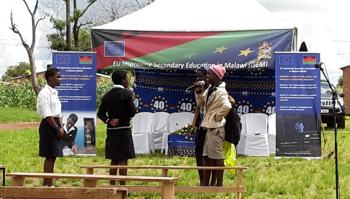
Provision of Technical Assistance to Improving Secondary Education in Malawi (ISEM)
- 2016 – 2024
- de 2 a 5 millones de €
- Malawi
The overall objective is to contribute to the strengthening of Malawi's education sector and its capacity to satisfy the economy's need for educated youth through the expansion and improvement of equitable access to inclusive quality education.
The target groups are the students in the selected CDSSs (particularly girls and other vulnerable students), Science teachers and School Managers as primary beneficiaries. The programme will also target Education managers at various levels in the system, and some support will be provided to the MoEST education institutions such as the Malawi College for Distance Education (MCDE) and the Malawi Institute for Education (MIE).
Particip provides the Government of Malawi, and in particular the Ministry of Education, Science and Technology (MoEST), the Education Divisions, Districts and Secondary Schools, with technical assistance to deliver on its desired objectives of promoting equitable access to secondary education, improving the quality and relevance of secondary education, and strengthening of governance and management capacity of secondary education institutions.
Through technical and administrative support, Particip will deliver the following results:
Result 1: Improved teacher training and technical skills to deliver the new secondary school curriculum, thus contributing to quality education.
Result 2: Successful and effective implementation of programme activities in close collaboration with the MoEST. This will also include identification and provision of solutions to emerging challenges in the sector related to delivery of the programme.
Result 3: Strengthened capacity of education managers at various levels for effective governance and management of the secondary education sub-sector, also including the area of public finance management.
Technical assistance mission for the coordination of regional infrastructure projects and the preparation of project files for blending finance in Central Africa
- 2022 – 2024
- de 500.000 € a 1 millón de €
- Central African Republic
The general objective of this technical assistance was to support the CEMAC Commission in the coordination and monitoring of infrastructure projects financed through blending mechanisms under the Support Programme for the Governance of Regional and National Infrastructure in Central Africa (PAGIRN).
From a specific perspective, the technical assistance supported the specialized structures of the CEMAC and ECCAS Commissions in:
- The coordination and monitoring of infrastructure projects financed through blending mechanisms for the beneficiary states of PAGIRN in Central Africa;
- The search for financing for regional infrastructure projects using blending mechanisms and providing coaching on financial structuring for proposals deemed eligible by CEMAC/ECCAS Member States and Development Partners (including development financial institutions);
- Ensuring the ownership, by the specialized structures of the CEMAC and ECCAS Commissions, Member States, and the private sector, of the financing instrument through blending mechanisms.
The following results were to be achieved by the service provider:
- Financing proposals for priority infrastructure identified by Member States, with concrete interest from financial institutions, were prepared and negotiated;
- Staff from the two RECs were trained in the coordination and monitoring of infrastructure projects financed through blending mechanisms;
- Member States, as well as the private and financial sectors, were sensitized to the blending financing modality for infrastructure;
- The directory of regional infrastructure projects financed through blending mechanisms was consolidated to facilitate their monitoring;
- PAGIRN Steering Committee (COPIL) meetings were held (at least once a year);
- An operational coordination mechanism by the CEMAC Commission for regional infrastructure projects eligible for blending financing in Central Africa was established.

Election Expert Mission to Madagascar 2023
- 2023 – 2024
- menos de 500.000 €
- Madagascar
The purpose of the Election Expert Mission (EEM) was to collect and analyse factual information, assess and report on the electoral process against international commitments, standards and good practice for democratic elections in line with the criteria contained in the Commission Communication on Electoral Assistance and Observation. The electoral experts also formulated recommendations to improve future electoral processes and assessed the state of implementation of recommendations made by previous electoral missions.

External Review and Evaluation Services of forest programmes in Tanzania
- 2020 – 2024
- de 500.000 € a 1 millón de €
- Tanzania
The main purpose of this project was to conduct reviews and evaluations alongside the implementation of three different Forestry Programmes in Tanzania. These are:
- Participatory Plantation Forestry Programme phase 2 (PFP2),
- Forestry and Value Chain Development Programme (FORVAC) and
- Tree Outgrowers Support Programme (TOSP).
The Finnish support to PFP2, FORVAC and TOSP aimed at increasing rural income, social and environmental benefits in Tanzania thereby reducing poverty and inequality. This is achieved through developing sustainable plantation forestry, sustainable management and utilization of natural forests, and value addition including employment creation in the entire forest production value chain. The interventions support sustainable land-use planning, plantation, community-based forest management, facilitation of local organisations, including Tree Growers Associations (TGAs), and capacity building of tree growers, small and medium sized enterprises (SMEs), service providers and other stakeholders involved in the forest value chain.
The reviews and mid-term evaluations were conducted for accountability and learning purposes as well as for supporting strategic and adaptive management of MFA Finland funds.
The services were carried out in 2020–2023. They included the following:
- Annual reviews of the three programmes
- Mid-term evaluation of FORVAC and PFP2
- Socio Economic Assessment
- Final synthesis report
The evaluation team implemented an annual field mission in the beginning of the calendar year and the analysis fed into the preparation of the programme annual plans. The synthesis report summarised the analysis, recommendations and lessons learned throughout the assignment.

Evaluation of Finland’s initiatives focused on enhanced domestic resources mobilization (DRM)
- 2022 – 2024
- menos de 500.000 €
- Global
The main objective of the evaluation was to assess the results and effectiveness of Finland’s support to Domestic Resource Mobilisation (DRM) and provide recommendations for future actions, in view of the main developments that took place on the domestic and global front since 2016. It looked at the two Action Plans as guiding instruments, taking into account actions like coordination, financing and, policy dialogue and influencing. The mainstreaming of relevant cross-cutting objectives was also looked at.
Domestic resource mobilization (DRM) is the most important source for sustainable public financing of public services like education, health and security in partner countries. For this reason, DRM plays a major role in achieving the Sustainable Development Goals (SDGs) in the partner countries.
The evaluation was based on a theory of change. The main sources of data included relevant government policies, selected reports from implementing partners, and recent evaluations of DRM initiatives. Semi-structured interviews were held with relevant MFA departments, the Ministry of Finance, other Finnish actors, implementing partners, and selected international organisations and beneficiaries. A focus group with Finnish civil society was also organised. This strategic evaluation examined the overall DRM agenda and portfolio as well as consolidated achievements across broader results areas.

Information, Communication, and Visibility activities for the EU Delegation in Zambia
- 2019 – 2024
- menos de 500.000 €
- Zambia
The objective was to enhance the visibility of the EU in Zambia and improve the awareness of the EU-Zambia partnership in all its dimensions (political, trade and economic, development and other major policy areas of common interest) with the Government of Zambia, NGOs, business community, academia, media, and the people of Zambia, through increased information, communication and visibility activities.
The specific objective of this contract was to support the EUD in the implementation of ICV activities and events, including the dissemination of informational and promotional material to enhance the visibility of the European Union and to increase awareness about the EU-Zambia partnership.
In order to attain the overall objective and purpose of the contract, we achieved the following results:
- Result 1: EUD disposes of a series of print, broadcast and digital media products to be shared with relevant stakeholders;
- Result 2: Enhanced knowledge of the target groups about the dimension and benefits of the EU partnership with Zambia;
- Result3: Developed capacity of staff involved in EU funded programmes/projects in terms of communication and visibility.

Election Expert Mission to Ecuador 2023
- 2023 – 2024
- menos de 500.000 €
- Ecuador
The purpose of the Election Expert Mission (EEM) was to collect and analyse factual information, assess and report on the electoral process against international commitments, standards and good practice for democratic elections in line with the criteria contained in the Commission Communication on Electoral Assistance and Observation. The electoral experts also formulated recommendations to improve future electoral processes and assessed the state of implementation of recommendations made by previous electoral missions.

Good Financial Governance - Consulting service to support Internal Audit System
- 2021 – 2024
- de 1 a 2 millones de €
- Tanzania
The Good Financial Governance II programme (GFG II, August 2020 – January 2024) built on the successful implementation of the GFG I programme (May 2016 – July 2020). The overall objective was to ensure the public finance system is strengthened in accordance with the principles of good financial governance, specifically transparency, efficiency and accountability.
The consortium implemented Field of Action 2 under the GFG II programme, which focused on strengthening the internal audit function across the Tanzanian public sector by enabling conditions for an effective internal audit in the public sector in Tanzania with the continued ambition that the internal audit reports of Internal Audit Units (IAUs) in Ministries, Departments, Agencies (MDAs) and Local Government Authorities (LGAs), may achieve international standards for Internal Audit. This was mainly done via support in two key areas, which were the provision of capacity building measures at organisational and individual level (on-the-job trainings, workshops and formal certification trainings) and the development / updating of audit guidance documents (Internal Audit, Risk Management, Quality Assurance and Improvement, Performance Audit, and Gender Audit)
Results achieved:
- 23 out of 30 internal audit units of ministries, departments, and agencies (MDAs) and local government authorities (LGAs) improved their internal audit reports’ conformance with international standards by one step (based on standards of the Institute of Internal Auditors, IIA)
- Conditions for an effective internal audit function improved in line with the MoFP's 'strategy for the further development of the internal audit system in the public sector of Tanzania'.
- 5 guidance documents were newly developed or revised to address recurrent issues of the Internal Audit strategy, of which 3 were adopted and 2 were in the approval process by the Ministry of Finance and Planning (MoFP) by the end of the contract.
- 3 measures for improved knowledge management were developed for the Internal Audit General Division (IAGD) and Internal Audit Units of partner LGAs/MDAs.
- 3 measures, agreed upon in a MoFP action plan to establish independent and effective audit committees in the Tanzanian public sector were developed.
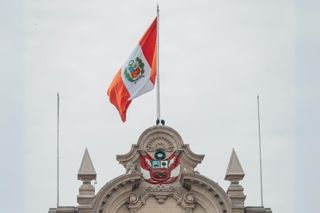
EFM PERU 2024
- 2024 – 2024
- menos de 500.000 €
- Peru
The overall objective of this assignment was to contribute to improving the electoral and democratic framework of Peru during the inter-election period and raising awareness and understanding of the EU EOM recommendations and technical issues related to their implementation. In general, an EFM supports the consolidation of democracy, institution-building and democratic elections in Peru in the context of the implementation of the 2020 EU EOM recommendations.
The specific objectives of the Mission included:
- Assess the state of play of the implementation of the recommendations of the 2020 EU EOM to Peru.
- Assess any electoral reforms adopted since the last EOM or which are under consideration (e.g. draft legislation) or planned and the degree to which these reflect EOM recommendations and their alignment with international standards for democratic elections;
- Identify which EOM recommendations are most relevant to the prevailing country situation and the current phase of the electoral cycle;
- Generate additional impetus for – or contribute to ongoing debates on – electoral reform;
- Identify areas of agreement and disagreement on EU EOM recommendations among the stakeholders and any political, technical, financial obstacles to electoral reform;
- Propose actions to overcome obstacles to electoral reform, including measures to develop support for and national ownership of the recommendations;
- Assist the EU Delegation, EEAS and INTPA in their assessment on whether ongoing cooperation and conflict prevention projects are addressing the recommendations made by EU EOMs. Based on a brief overview of existing programmes, provide needed information to support identification of potential additional election/democracy support action that could contribute to strengthening the implementation of the recommendations and/or to the overall improvement of the electoral framework;
- Contribute to analysis by the EU Delegation, EEAS and INTPA with information to originate any other possible EU actions that could contribute to strengthening the implementation of the recommendations and/or to the overall improvement of the electoral framework;
- Prepare/update with EU Delegation a follow-up plan to EU EOM recommendations.
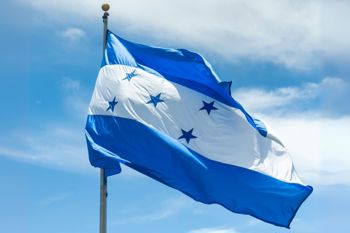
EFM Honduras 2023
- 2023 – 2024
- menos de 500.000 €
- Honduras
Particip aimed to contribute to improving the electoral and democratic framework of Honduras during the inter-election period and raising awareness and understanding of the EU EOM recommendations and technical issues related to their implementation. In general, an EFM supports the consolidation of democracy, institution-building and democratic elections in Honduras in the context of the implementation of the 20231 EU recommendations.
Particip's specific objectives included:
- Assessing the state of play of the implementation of the recommendations of the 2021 EU EOM to Honduras;
- Assessing any electoral reforms adopted since the last EOM or which are under consideration (e.g. draft legislation) or planned and the degree to which these reflect EOM recommendations and their alignment with international standards for democratic elections;
- Identifying which EOM recommendations are most relevant to the prevailing country situation and the current phase of the electoral cycle;
- Generating additional impetus for – or contribute to ongoing debates on – electoral reform;
- Identifying areas of agreement and disagreement on EU EOM recommendations among the stakeholders and any political, technical, financial obstacles to electoral reform;
- Proposing actions to overcome obstacles to electoral reform, including measures to develop support for and national ownership of the recommendations;
- If helpful and requested, assisting the EU Delegation, EEAS and INTPA in their assessment on whether ongoing cooperation and conflict prevention projects are addressing the recommendations made by EU EOMs. Based on a brief overview of existing programmes, providing needed information to support identification of potential additional election/democracy support action that could contribute to strengthening the implementation of the recommendations and/or to the overall improvement of the electoral framework;
- Contributing to analysis by the EU Delegation, EEAS and INTPA with information to originate any other possible EU actions that could contribute to strengthening the implementation of the recommendations and/or to the overall improvement of the electoral framework;
- Preparing/updating with EU Delegation a follow-up plan to EU EOM recommendations.