
Nuestros proyectos
Explore la experiencia de Particip en proyectos desarrollados en distintos países, sectores y ámbitos de especialización.
Nuestras referencias ofrecen una visión general de las misiones finalizadas y en curso, incluidos sus objetivos, alcance geográfico, duración y valor contractual.
Mostrando 291–300 de 796 referencias

End Term Evaluation of the Project "Skilled Young Palestine - Improving Resilience and Job Creation for Youth"
- 2024 – 2024
- menos de 500.000 €
- Palestine
End-Term Evaluation of the Enabel-funded 'Skilled Young Palestine - Improving Resilience and Employment Opportunities for Youth' (SYP) project which aimed to strengthen the resilience of Palestinian youth in vulnerable areas by improving their employability and entrepreneurship skills (2019-2024, EUR 7 million).
The evaluation guided future strategic and operational decisions with evidence-based recommendations. Its findings, conclusions and recommendations were drawn from a comprehensive desk analysis and from key informant interviews and focus group discussions with implementing partners and beneficiaries across the West Bank and East Jerusalem.

Building Resilience to Climate Change in Papua New Guinea: Project Implementation Support Consultants
- 2018 – 2024
- de 2 a 5 millones de €
- Papua New Guinea
The Government of Papua New Guinea has obtained a Grant from the Asian Development Bank to implement the proposed ++“Building Resilience to Climate Change” (BRCC - the project)++. The project will provide ++technical assistance++ in order to implement PNG’s ++Strategic Program for Climate Resilience++ (SPCR) 1 aimed at achieving transformational change in addressing the ++current and future threats from climate change++ and ++related hazards++. This will be achieved by ++mainstreaming climate resilience++ into development planning and addressing country priorities that focus on ++vulnerable communities++ of Bougainville, East New Britain, Manus, Milne Bay and Morobe provinces comprising 21 priority ++vulnerable islands/atolls++ identified through a participatory process across four sectors including (i) infrastructure, (ii) ++natural resources++, (iii) health, and (iv) agriculture, against potential impacts from ++climate change and variability++.
The project impact is: ++increased resilience to the impacts of climate change and climate variability.++ The outcome is: ++improved capacities of vulnerable islands/atoll communities++, government agencies, and civil society to plan and ++respond to the impacts of climate change++. The direct beneficiaries include approximately 13,000 inhabitants of the 21 vulnerable islands. The nationwide benefits include ++increased capacity to manage climate change risks++ through ++establishment of early warning systems++, access to finance by communities, and development of national databases and knowledge management systems.
The purpose of this assignment is to support the Project Management Unit (PMU) in
- Project implementation and administration
- Developing the necessary ++capacity development including training and transfer of skills++ to PMU personnel to improve their project management and implementation skills, and
- ++Strengthening CCDA’s overall capacity++ for future management and implementation of similar projects.

Final Evaluation of the Global Climate Change Alliance - Haiti (AP3C)
- 2022 – 2024
- menos de 500.000 €
- Haiti
In particular, this evaluation served to:
- determine the extent to which the AP3C programme (programme to support the integration of climate change into Haiti's development) has achieved its intended results, in particular by contributing to the implementation of the national strategies of the governments concerned in the NCCP (National Climate Change Policy) and NDC (Nationally Determined Contribution), by proposing opportunities for improving the implementation of national procedures and policies;
- pay attention to other aid modalities of the EU and other international partners (trust funds/pooled funds, projects), in order to assess the complementarity and synergy (or divergence) of these modalities with the AP3C programme;
- assess the ownership of the project results by the Haitian authorities;
- assess the effects of the AP3C programme on the monitoring and evaluation systems in the sectors supported by the programme;
- assess the way in which the gender dimension has been integrated and operationalised in the project and its results;
- take stock of what has been achieved in order to draw lessons and recommendations, and to be able to inform stakeholders on:
- the conditions under which the AP3C programme has had an effect (or not), and the possible intensity and nature (positive or negative) of this effect in Haiti in the environmental sector and more specifically in the fight against climate change;
- the design and implementation of future budget support operations in Haiti in the environmental sector and more specifically in the fight against climate change;
- improvements that the EU (or other international partners) should make to maximise the impact of AP3C measures in Haiti in the environmental sector and in particular in the fight against climate change;
- any limitations arising from public policies, institutional structures and administrative arrangements in Haiti that may hinder/have hindered the effectiveness of budget support on expenditure, or on the targeted public policies and reforms;
- and the extent to which the AP3C programme has mainstreamed gender in the implementation of the programme and what recommendations would be made to other similar programmes to mainstream gender.
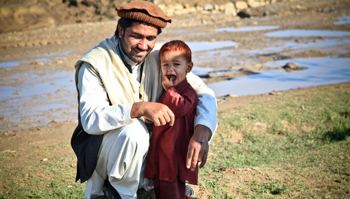
Third-Party Monitoring of ICRC Hospital support program
- 2021 – 2024
- de 2 a 5 millones de €
- Afghanistan
ICRC’s Hospital Support Program architecture deliberately included strong coordination with MoPH, including by setting up joint mechanisms on drug procurement and salary harmonization. With limited HR resources on the ground, the ICRC tabbed into the Government accountability mechanisms that were impossible to duplicate through parallel system in the short term and deprived the ICRC of an exit strategy and Afghanistan of a sustainable health sector.
- Carried out process monitoring of agreed activities of the project partners including indicators progress validated by field monitoring visits and cross checking through analytical reviews of deployed resources with proper record maintenance. The data collection and monitoring were under 4 modules: Hospital functionality verification, human resources, finance and patient satisfaction.
- Performed monthly evaluations to assess the project performance towards its defined milestones with feedback and validation from project beneficiaries and other stakeholders as per agreed work plan.
The objectives and monitoring needs of the ICRC were as follows:
- To create an independent Third-Party Monitoring platform for project progress and reviews.
- Monitor partner organisations’ performance through standardised monitoring tools and provide input for timely and accurate payments.
- Conduct a financial monitoring where hospitals are monitered by a checlist by budget line (stationary, HMIS forms, consumables, etc).This allowed to cross check money spent for different budget lines reported by each health facility against available receipts.
- Identify any shortcomings in the project delivery as per project framework.
- Support ICRC in achieving and enhancing effectiveness of the project through process monitoring and periodic reviews.
- Develop new monitoring tools / mechanism with mutual understanding to improve project monitoring and evaluations.
- Monitoring compliance with specified standards for input and key performance indicators to ensure program quality.
- Sample based quality assurance of project supplies and beneficiaries through survey.
- Interviews and surveys of intermediaries on sample basis with suitable intervals
- Beneficiary surveys for monthly reviews/evaluations;
- Review of financial and procurement records on monthly basis;
- Analytical reviews of data generated from various sources on monthly basis.
Main staff provided:
- Senior consultant Hospital Functionality Verification 264 wds
- Senior consultant Data management 264wds
- Senior consultant Drug Quality Assessment 264 wds
- Senior consultant Logistic and Administration Management 264wds
- Senior supervisor minilab testing 276wds
- Project Director 130wds
- Senior consultant Field work management 264wds
- Technical Coordinator 240wds

Support with gender mainstreaming in the European Union's cooperation programmes in Tunisia - Phase II
- 2021 – 2024
- menos de 500.000 €
- Africa (Northern)
The overall objective of this contract is to improve gender mainstreaming, including gender equality and women's empowerment, in the European Union's cooperation programs in Tunisia.
The specific objectives of this contract are:
1. To contribute to the taking into account of the objectives and indicators of the GAP 3 in the annual and multi-annual programming of the EUD in Tunisia to go towards the achievement of the target of 85% of the projects and programs with G Marker G1 or G2.
2. Contribute to the coordination, monitoring and reporting on FPIC implementation and support the integration of gender into other strategic documents of the EUD and the MS (such as the civil society support roadmap).
3. Support the institutional communication activities of the DUE Tunisia on the gender theme.
4. Deliver ad hoc training and coaching sessions to the staff of the EUD and possibly the MS.

CSO-EIDHR Support Measures
- 2022 – 2024
- menos de 500.000 €
- Rwanda
The purpose of this contract was to support the work of the Delegation of the European Union to Rwanda in enhancing the capacity of CSOs working in the country to act as actors of development through the organisation of trainings, workshops and specific events designed to build their capacity. In order to achieve this objective, the following services were provided:
- enhancing CSOs’ capacity through the organisation of capacity building workshops and creation of networking opportunities for CSOs, with a focus on enhancing their understanding of project design and EU procedures (especially for human rights projects); peer learning among CSOs; and exchange on key topics (NGO Law, the media and legal environment, UPR, Tax, etc.);
- increasing awareness of the EU and EU development cooperation programmes in Rwanda and their impact
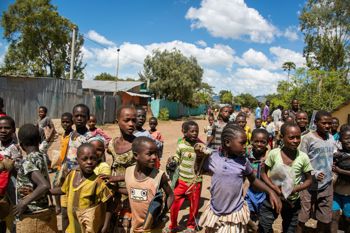
Project appraisal: Strengthening inclusive education system in support of Ethiopia's general education sectoral programme
- 2023 – 2024
- menos de 500.000 €
- Ethiopia
The purpose of the appraisal was to assess the feasibility of the Programme as defined in the draft Programme Document (PD), and to make sure that the PD is an adequate basis for tendering the consultant company for implementation.
The Programme that was appraised will focus on capacity development for inclusive education. It builds on previous experience gained from Finland’s Technical Assistance support to GEQIP-II and GEQIP-E, namely developing inclusive education resource centres (IERC), supporting a development of Model IERCs for developing locally relevant inclusive practice. The support enhances teacher education by focusing on developing teacher competences for inclusion through pre-service teacher education and practice, as well as strengthening pedagogical and practical knowledge and skills on inclusive education.
The key issues of the appraisal were the Programme’s relevance to beneficiaries and main stakeholders in the country; feasibility of the proposed implementation strategy, organisational structures, TA support, work plans, resource allocations and budget; sustainability as well as the result orientation and likely effectiveness in Ethiopian context. The appraisal also assessed the integration of human rights based approach and MFA cross-cutting objectives into the programme plan.

CONSULTANCY FOR THE DEVELOPMENT OF GENDER SENSITIVE, SOCIAL COHESION STRATEGY
- 2022 – 2024
- menos de 500.000 €
- SADC region
The overall objective of the project of which this contract will be a part of is as follows:
Under the overall authority of the Support to Peace and Security in the SADC Region (SPSS) Programme Coordinator and the Senior Officer of the SADC Politics and Diplomacy Sector, the individual consultant will undertake an assessment on the progress and challenges in building and consolidating gender sensitive social cohesion at regional and national levels.
Result 1: Assess SADC Member States’ resilience and social cohesion of local populations in conflict-affected communities and post-conflict situations at regional and national levels.
Result 2: Identify specific challenges and lessons–learned by SADC Member States regarding the promotion of resilience and social cohesion and make recommendations on addressing the challenges.
Result 3: Submit a report (both soft and hard copy) on Member States’ progress on the building and consolidation of social cohesion in conflict-affected communities, with guidelines, including the development of Regional Social Cohesion Strategy by SADC Member States.
The scope of the study is to:
Conduct an analysis of Resilience and Social Cohesion in Conflict–affected communities in the SADC region;
Provide effective and meaningful recommendations to SADC Member States regarding the building and consolidation of social cohesion;
Consult with SADC Member States and SADC Secretariat staff from relevant directorates and units to secure their inputs;
Present the draft and/or final report at technical meetings for validation.
The study will focus on all Member States. A specific focus will be adopted on 16 Member States that are affected by sexual and gender–based violence (SGBV) and conflict-affected communities who are not socially cohesive
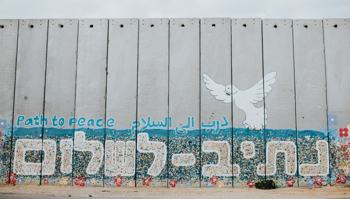
Capacity Building for Peacebuilding Civil Society Organisations
- 2021 – 2024
- menos de 500.000 €
- Israel, Palestine
The global objective is to enhance the capacities of civil society organisations involved in the EUPI to contribute to a sustainable resolution of the Israeli-Palestinian conflict.
The specific objectives are:
- Increasing the capacity of EUPI beneficiary organizations to monitor, evaluate, and adjust activities and outputs in service of results.
- Leveraging the EUPI, as a platform, to identify opportunities for coordination and cooperation between beneficiary organizations
- Increasing the capacity of EUPI beneficiaries to advocate to their respective publics and decision makers.

Final Evaluation of the African Union-European Union Digital for Development Hub Project (or AU-EU D4D Hub Project)
- 2023 – 2024
- menos de 500.000 €
- Africa
This end term evaluation (ETE) of the AU-EU D4D Hub Project programme both summative and formative with a general purpose to identify all project outcomes and generate learning for the next phase of the European Union and African countries cooperation on digitalisation. The purpose of accountability shall be completed by the Project Management Unit as part of the envisaged Final Narrative Report, which is due in Q4 2024.
The review considered all pillars of the Project and its diversity in activities. Therefore, the scope is:
• Temporal: the ETE covers the whole the implementation period, hence from December 2020 to first Quarter of 2024, complementing the findings of the MTR (covering December 2020 to May 2022).
• Geographical: the ETE covers all countries and regions in Africa where activities took place.
• Thematic: the ETE covers all Project intervention areas and outcomes within intervention areas
• Institutional: the ETE involved stakeholders from INTPA, the Operational Steering Committee (OSC), the D4D Hub Secretariat and notably its Africa Branch, as well as EU Delegations and African strategic partners.
The key methods employed were:
• Outcome Harvesting (OH). This methodology emphasises the collection and interpretation of evidence regarding the achieved outcomes of a project or program. Unlike traditional evaluation methods that rely on predefined indicators and theories of change, OH is participatory and qualitative in nature. It involves identifying and documenting outcomes by engaging with stakeholders and collecting evidence retrospectively, allowing for a more comprehensive and contextually grounded understanding of project impact.
• The Most Significant Change (MSC) approach. This methodology involves generating and analysing personal accounts of change and deciding which of these accounts is the most significant – and why. MSC can be very helpful in explaining how change comes about (processes and causal mechanisms) and when (in what situations and contexts) along the change pathways (see Program Theory of Change).
• Capitalisation (C). This refers to the systematic and intentional process of capturing, organising, and sharing knowledge derived from experiences, activities, and outcomes of a project or program. It emphasises transforming both explicit and tacit knowledge into accessible and usable formats to promote organisational learning, inform decision-making, and contribute to broader knowledge-sharing within and beyond the project