
Nuestros proyectos
Explore la experiencia de Particip en proyectos desarrollados en distintos países, sectores y ámbitos de especialización.
Nuestras referencias ofrecen una visión general de las misiones finalizadas y en curso, incluidos sus objetivos, alcance geográfico, duración y valor contractual.
Mostrando 271–280 de 796 referencias

Final Evaluation of EUPOP LATAM (Phase II) and EUPOP Canada (Phase II) - Extension
- 2023 – 2024
- menos de 500.000 €
- Argentina, Brazil, Canada, Chile, Colombia, Peru, Uruguay
The main objectives of this evaluation were to provide the relevant services of the European Union and the interested stakeholders with:
- an overall independent assessment of the past performance of the Public Diplomacy Actions (EU Policy and Outreach Partnership in South America – Phase II and EU Policy and Outreach Partnership, Canada – Phase II), paying particular attention to its results measured against its expected objectives; and the reasons underpinning such results;
- key lessons learned, conclusions and related recommendations in order to improve current and future Actions.
In particular, this final evaluation served to understand the performance of the Actions, their enabling factors and those hampering a proper delivery of results as to inform the planning of the future EU interventions in relation to EU Policy and Outreach Partnerships (EUPOPs) and Cultural Diplomacy. To this end, this final evaluation also looked at the package of Actions as a whole.
The evaluation assessed the Actions using the five standard DAC evaluation criteria, namely: relevance, effectiveness, efficiency, sustainability and perspectives of impact. In addition, the evaluation assessed two EU specific evaluation criteria:
- The EU added value (the extent to which the Actions bring additional benefits to what would have resulted from Member States' interventions only);
- The coherence of the Actions and approach with the EU Global Strategy, the new EU priorities for 2019-2024, as well as with other EU policies and Member State Actions.
Additionally, the evaluation team performed the following tasks:
- Identified type of activities that are frequently included across EUPOP Actions and facilitate the comparison across countries by highlighting the approach, the organisation costs (fees, incidentals) and summarised the key aspects in a table.
- Summarised some best practices per type of initiative/target audience/country in a booklet format.
The evaluation team furthermore considered whether gender, environment and climate change were mainstreamed; the relevant SDGs and their interlinkages were identified, and the extent to which they have been reflected in the implementation of the Actions, their governance and monitoring.

Final Evaluation of the Cooperation program 2019-2024 between Rwanda and Belgium
- 2023 – 2024
- menos de 500.000 €
- Rwanda
This Final Evaluation seeks to assess the implementation of the Belgian–Rwanda bilateral portfolio implemented by Enabel over the period 2019-2024, and the extent to which the results (output, outcomes) of its interventions have been reached. The analysis covers the global portfolio level based on the performance of the 4 sectors of intervention (Health, Agriculture, Urban Development and Public Finance Management -PFM), cross-cutting issues (gender and private sector development – PSD), and cross-cutting activities (incl. policy dialogue)
The evaluation conducted a performance analysis of the bilateral cooperation portofolio based on the DAC criteria (relevance, coherence, efficiency, effectiveness, impact and sustainability), and it assessed the quality of the collaboration between 1) Enabel and the national authorities and 2) Enabel and other developmental partners active in the country. The evaluation also included a sectoral analysis focusing on ++action research++ and ++gender integration in Sexual and Reproductive Health Rights++ for the health portfolio, and ++value-chain development++ in the agriculture and urbanisation sectors. Public Finance Management was also included in the evaluation as a cross-cutting issue. Qualitative data were collected during a three-week field mission (including stakeholder interviews, focus group discussions and direct observation) and in remote interviews. The review also drew on documents and existing quantitative M&E and survey data.
Evaluation of the EU external financing instruments for the 2014-2020 and 2021-2027 multiannual financial frameworks
- 2023 – 2024
- de 1 a 2 millones de €
- Global
This evaluation was simultaneously a final and mid-term exercise. It was the final evaluation of the External Financing Instruments (EFIs) forming the basis for 2014-2020 MFF EU external action programming under the umbrella of the Common Implementing Regulation (CIR). At the same time, it was the mid-term evaluation of the EFIs forming the basis for the 2021-2027 MFF EU external action programming, including the Neighbourhood, Development and International Cooperation Instrument – Global Europe (NDICI-GE), the Instrument for Pre-Accession Assistance III (IPA III), the European Instrument for International Nuclear Safety Cooperation (INSC), and the Decision on the Overseas Association, including Greenland (DOAG).
The general objective of this evaluation was to provide the relevant EU institutions and services, stakeholders and the wider public with an independent assessment of past and current achievement of the goals set out in the EFIs. The specific objectives could be summarised as providing an assessment on the EU added value, relevance and performance of EFIs, on their flexibility and capacity to react to changing political and policy priorities and a changing context, on internal and external coherence as well as on scope for further simplification of the EFIs. Furthermore, the evaluation sought to identify lessons learnt (both positive and negative) and formulate recommendations to inform future decisions on the renewal, modification or suspension of actions under each instrument. The use and functioning of the External Action Guarantee (EAG) and the European Fund for Sustainable Development + (EFSD+), and in particular its contribution to the overall objectives and principles, was also assessed.
Link to final report: https://international-partnerships.ec.europa.eu/publications/evaluation-european-unions-external-financing-instruments-2014-2020-and-2021-2027_en
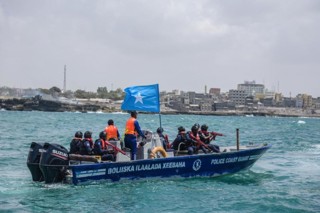
Coverage of ATALANTA High Level event in April 2024
- 2024 – 2024
- menos de 500.000 €
- Somalia
Operation Atalanta, formally European Union Naval Force (EU NAVFOR) Somalia, is an ongoing counter-piracy military operation at sea off the Horn of Africa and in the Western Indian Ocean, that was the first naval operation conducted by the European Union (EU). Particip produced a highlight video and photos of an high level event on 30.04.2024.
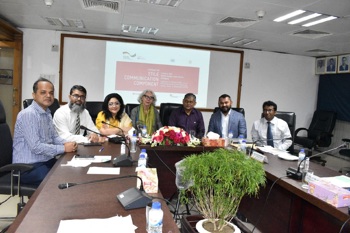
Communication Component of the project Sustainability in the Textile and Leather Sector in Bangladesh (STILE)
- 2021 – 2024
- de 1 a 2 millones de €
- Bangladesh
The Deutsche Gesellschaft für Internationale Zusammenarbeit (GIZ) GmbH on behalf of the Federal Ministry for Economic Cooperation and Development (BMZ) implemented the project “Sustainability In the Textile And Leather Sector” (STILE).
The objective of the project was to “strengthen Public and private sector actors’ capacity to fulfil their mandate and responsibilities to ensure compliance with social and environmental standards in the textile-, garment and leather industry in Bangladesh.”
The project consisted of four outputs:
- Output 1: The institutional capacities of selected public institutions responsible for ensuring compliance with social standards have been strengthened.
Output 1 focused on strengthening the institutional capacities of Bangladesh’s Labour inspectorate (Department of Inspection for Factories and Establishments, DIFE);
- Output 2: The prerequisites for the regulatory and organisational performance of selected public institutions in the area of the environment have improved.
Output 2 focused on strengthening the regulatory and enforcement capacities of Bangladesh’s Ministry of Environment, Forests and Climate Change (MoEFCC) as well as the country’s environmental protection agency (Department of Environment, DoE);
- Output 3: Private sector measures have complemented public sector initiatives to improve compliance with social and environmental standards.
Output 3 focused on aligning private sector initiatives to foster compliance with social and environmental standards with measures taken by the government to ensure better implementation of sustainability standards; and
- Output 4: Workers in the textile and leather industry have been actively advocated to increase compliance with social and environmental standards in their working and living environment.
Output 4 focused on encouraging workers in the textile-, garment and leather industry to actively advocate for compliance with social and environmental standards in their working and living environment.
Within this context, GIZ contracted Particip GmbH to implement Output 4.
Output 4 focused on four areas of intervention:
(1) developing and implementing at least five awareness-raising and information campaigns and designing related communication materials regarding social and environmental sustainability and pandemic preparedness measures in the textile- and leather clusters,
(2) conducting capacity development measures for at least ten Women Cafés of selected Non-Governmental Organisations (NGOs) to support them with educating workers regarding their rights and duties at the workplace and fostering conflict-resolution services,
(3) developing and implementing capacity development measures, and providing advisory services for workers and employers to initiate measures to improve compliance with social standards together with the management in 100 factories using Worker Participation Committees (WPCs), and
(4) monitoring and evaluating workers' activities in actively advocating to increase compliance with social and environmental standards in their working and living environment.

Evaluation of EU support to youth in the Enlargement and Neighbourhood regions (2014-2021)
- 2022 – 2024
- menos de 500.000 €
- ENI East, ENI South, IPA
The main objectives of this assignment are to: i) provide an independent and evidence-based assessment of the EU’s past and current external action support in the policy area of Youth, and ii) identify lessons learnt and recommendations to inform strategic policy orientation on supporting youth, define synergy effects with the EU's political and reform objectives, and enhance the planning, design, implementation and monitoring of new interventions launched under IPA III and NDICI-GE.
The evaluation aims to assess the performance of EU assistance (spending and non-spending actions) in Enlargement and Neighbourhood regions in the following sectors:
- i) Youth engagement (including participation in policy making and youth work);
- ii) Youth economic integration (including youth employment and employability, entrepreneurship, digital skills formal and non-formal learning);
- iii) Youth social inclusion (including youth mobility, culture, school retention, sexual, reproductive and mental health);
- iv) Peace and security (regional cooperation and reconciliation).
The legal and temporal scope of the evaluation covers:
- IPA II and III, ENI, NDICI-GE, EIDHR, Erasmus+, Trust funds and the Facility for Refugees in Turkey;
- funding related to the last programming cycle (2014-2020), as well programming under the current programming cycle until 2022.

EEM to Bangladesh 2023 - Parliamentary Elections
- 2023 – 2024
- menos de 500.000 €
- Bangladesh
The purpose of this Election Expert Mission (EEM) was to collect and analyse factual information, assess and report on the electoral process against international commitments, standards and good practice for democratic elections in line with the criteria contained in the Commission Communication on Electoral Assistance and Observation. The experts also formulated recommendations to improve future electoral processes and assessed the state of implementation of recommendations made by previous electoral missions.

Final evaluation - Environmental Diplomacy in G7/G20
- 2023 – 2024
- menos de 500.000 €
- Global
The main objectives of this evaluation are to provide the relevant services of the European Union and the interested stakeholders with:
- an overall independent assessment of the past performance of the ‘Environmental Diplomacy in G7/G20’, paying particular attention to its results measured against its expected objectives; and the reasons underpinning such results;
- key lessons learned, conclusions and related recommendations in order to improve future Actions.
In particular, this evaluation will serve to provide the relevant European Commission services and the European External Action Service (EEAS) with an independent review of the programme with a view to inform the implementation as well as future programming enabling cooperation on this topic. The review of progress should focus on assessing the achieved and emerging results of the programme, in particular in the 5 specific EU policy areas targeted by this project, i.e. resource efficiency, circular economy, marine litter and plastics as well as green financing. This assessment should take place against the background of the relations between the EU and the G7/G20 country governments and civil societies. It should look for evidence of whether, why and how these results are linked to the project and seek to identify the factors driving or hindering progress. The coherence, complementarity and value added of the project should also be assessed.
The identification of key lessons and the production of recommendations will be particularly relevant as the project aims to develop EU environmental diplomacy by supporting and fostering the environmental agenda in the G7 and G20 discussions and by strengthening bilateral dialogues on environmental issues
and opening up new areas of cooperation. The evaluation should inform the planning of similar future EU interventions and Actions.
The main users of this evaluation will be:
- European Commission: FPI, DG ENV, DG CLIMA and EEAS, potentially other DGs (FISMA, MARE, CLIMA, SG)
- Policy makers responsible for environment-related issues (EU and in the partner G7/G20 countries
of the action)
- Environment, trade and industry counsellors in EU Delegations
- Implementing partners: GIZ, IEEP, Adelphi, Ecologic
Mid-Term Evaluation of the Programme Supporting Youth in Tunisia (EU4Youth) - Extension
- 2023 – 2024
- menos de 500.000 €
- Tunisia
This project seeked to contribute to the improvement of economic, political, and social inclusion of most disadvantaged youth in Tunisia by taking a local development approach in Tunisia and more specifically in the targeted regions.
Particip's objectives included:
- seeking to address the problems of employability, decent employment, and the creation of jobs, which are key factors in the current phenomenon of youth exclusion. To achieve this, the intervention takes these factors into account and proposes an approach by involving public, private, and associative partners, while also organising inclusive and sustainable activities.
- capitalising on the acquisition and experience of the “Tfanen-Tunisie créative” project, which finances Tunisian cultural operators through calls for proposals and support to reinforce their action and sectoral impact. Another aim is to promote a territorial approach by fostering the emergence of collaborative local strategies for the inclusion of young people through sports and cultural practices.
- improving the integration of young people into public policies. This integration has a dual dimension: on the one hand, the integration of specific youth issues into local public policies, and on the other, the integration of young people into associative and political life, and into public affairs in general.

Final evaluation of PASJA programme
- 2023 – 2024
- menos de 500.000 €
- Algeria
The main objectives of this evaluation were to provide the relevant EU services and interested stakeholders with:
- An overall independent analysis of the performance of the Justice Sector Support Programme (JSSP), paying particular attention to its different levels of results compared to its expected objectives, and the reasons for these results;
- The main lessons, conclusions and recommendations arising from the evaluation in order to improve current and future interventions.
In particular, this evaluation served to understand the performance of the YSAP, its determining factors and those that have hindered the achievement of results, so as to be accountable for the use of EU resources in relation to the results of the YSAP and to serve as a basis for reflection for the next strategic programming of Team Europe in Togo.