
Nuestros proyectos
Explore la experiencia de Particip en proyectos desarrollados en distintos países, sectores y ámbitos de especialización.
Nuestras referencias ofrecen una visión general de las misiones finalizadas y en curso, incluidos sus objetivos, alcance geográfico, duración y valor contractual.
Mostrando 201–210 de 796 referencias
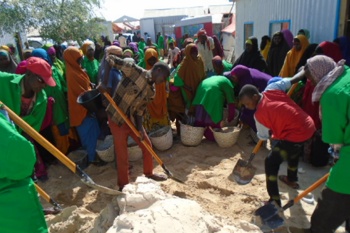
Third Party Monitoring & Evaluation III - EUTF
- 2022 – 2025
- de 500.000 € a 1 millón de €
- Somalia
Purpose 1
- Carried out independent monitoring of ongoing EUTF priority projects in Somalia in order to: Carried out visits to project sites (spot checks), especially on problematic EUTF-funded priority projects
- Verified and monitored if programme activities were being implemented in line with the approved framework (logframe) in terms of relevance, efficiency, effectiveness, and sustainability; verified data provided by the implementing partners
- Monitored whether EU visibility was ensured by the projects in accordance with the contractual obligations
- Verified and monitored if cross-cutting issues such as gender, the environment, and special needs were being taken into account during project implementation
- Established whether beneficiaries and targeted populations were satisfied with the results and services provided, including numbers of beneficiaries, preferably sex- and age-disaggregated (where relevant)
Purpose 2
- Provided recommendations on all aspects of project implementation and progress in order for the EU to better understand the various aspects affecting project implementation and delivery and adopt remedial measures. More specifically, the purpose was:
- Identified challenges and remedial measures, e.g. logframe revisions and activity adjustments
- Verified compliance with EU procurement procedures and, where relevant, carried out technical audits to reduce fraudulent cases
- Provided sector-wide linkages, achievements, lessons learned, and recommendations to inform future programmes
Purpose 3
- Carried out specific monitoring of how thematic issues were being addressed at project level and upon request by the EU Delegation

Global Education Policy Dashboard
- 2024 – 2025
- de 500.000 € a 1 millón de €
- Somalia
This consultancy aimed to comprehensively assess the quality of education provision in Somalia, evaluate education policies, and examine the government’s capacity at both national and federal levels to provide, regulate, and monitor education services. The project focused on gathering insights into the key challenges affecting enrollment growth and student learning outcomes in primary and secondary schools, as well as how schools are financed and managed. The project included two primary components of data collection:
1) A School Survey across 700 randomly selected schools, including interviews with principals and teachers, assessments of students and teachers, and live classroom observations
2)
A Survey of Public Officials, targeting 200 public officials at the national and federal levels to gather information on government capacity, bureaucratic processes, and education policies
The consultancy provided a robust analysis of factors affecting the education system, focusing on:
- Assessing the barriers that prevent growth in primary and secondary school enrollments and student learning improvements
- Profiling public and private education providers and analyzing the roles they play in delivering education services
- Identifying factors that influence variations in student learning outcomes, providing a data-driven understanding of the issues
- Understanding how schools are financed, their resource allocation, and spending efficiency
- Investigating the role of community committees in education service delivery, governance, and decision-making at the school level.
Collected data supportted World Bank in providing policy recommendations and actions aimed at increasing enrollment rates and improving student learning outcomes.

Rwanda CSO/HR&D Support measures
- 2023 – 2025
- menos de 500.000 €
- Rwanda
The purpose of this contract was to support the work of the EUD in enhancing the capacity of CSOs working in Rwanda to act as actors of development.
The specific objective of this contract was to implement a set of actions to support, among others, information sessions on calls for proposals, meetings with CSOs, mapping of CSOs, consultations, outreach and awareness raising activities, studies, seminars, trainings, publications, visibility of projects, exchanges of best practices, as well as enhancing the visibility of the in Civil Society –Human Rights instruments and impact.
Over the 23-month implementation period, the assignment provided flexible and demand-driven support to the EUD, including the planning and organisation of events, coordination with CSOs and service providers, production of audiovisual and communication materials, and support to activities promoting EU engagement with civil society in Rwanda.
The main objectives of the contract were to:
- Enhance the capacity of CSOs and relevant civil society actors through workshops, consultations, coordination meetings and networking opportunities;
- Support CSOs and media actors in strengthening their understanding of key topics, including ethical journalism, disinformation and foreign information manipulation;
- Support the EUD in engaging with civil society actors, including CSOs working on disability inclusion and human rights and development priorities;
- Increase awareness of EU support to civil society in Rwanda and improve the visibility of EU-funded projects and their impact;
- Produce communication and visibility materials showcasing tangible results of EU support, including audiovisual content featuring beneficiaries of EU-supported initiatives;
- Contribute to better public understanding of EU-Rwanda development cooperation and its contribution to civil society, creative industries and inclusive development.

EFM Kenya 2025
- 2024 – 2025
- menos de 500.000 €
- Kenya
The overall objective of this assignment was to contribute to improving the electoral and democratic framework of Kenya during the inter-election period and raising awareness and understanding of the EU EOM recommendations and technical issues related to their implementation. In general, an EFM supports the consolidation of democracy, institution-building and democratic elections in Kenya in the context of the implementation of the 2022 EU EOM recommendations.
The specific objectives of the Mission included:
- Assess the state of play of the implementation of the recommendations of the 2022 EU EOM to Kenya;
- Assess any electoral reforms adopted since the last EOM or which are under consideration (e.g. draft legislation) or planned and the degree to which these reflect EOM recommendations and their alignment with international standards for democratic elections;
- Identify which EOM recommendations are most relevant to the prevailing country situation and the current phase of the electoral cycle;
- Generate additional impetus for – or contribute to ongoing debates on – electoral reform;
- Identify areas of agreement and disagreement on EU EOM recommendations among the stakeholders and any political, technical, financial obstacles to electoral reform;
- Propose actions to overcome obstacles to electoral reform, including measures to develop support for and national ownership of the recommendations;
- If helpful and requested, assist the EU Delegation, EEAS and INTPA in their assessment on whether ongoing cooperation and conflict prevention projects are addressing the recommendations made by EU EOMs. Based on a brief overview of existing programmes, provide needed information to support identification of potential additional election/democracy support action that could contribute to strengthening the implementation of the recommendations and/or to the overall improvement of the electoral framework;
- Contribute to analysis by the EU Delegation, EEAS and INTPA with information to originate any other possible EU actions that could contribute to strengthening the implementation of the recommendations and/or to the overall improvement of the electoral framework;
- Prepare/update with EU Delegation a follow-up plan to EU EOM recommendations.

End Term Evaluation of the "Skills, Attitudes, Governance and Anti-corruption project (SG+)" - Uganda
- 2025 – 2025
- menos de 500.000 €
- Uganda
This end term evaluation (ETE) of the SG+ Project follows two specific objectives of learning and accountability. It is therefore both summative and formative with a general purpose to identify the project achievements and challenges of implementation and generate learnings for future programming and next phases of similar interventions. The accountability purpose is to provide an overall assessment of the performance achieved by the intervention.
The ETE covers the whole the implementation period, hence from December 2020 to December 2024, building and complementing on the findings of the mid-term Review and Result Oriented Monitoring ROM review. It covers all communities in Uganda where regions in activities took place, notably, Kampala, Mbarara and Wakiso. It is worth noting that field visits will take place in Kampala, Wakiso and Mukono. Thematically, the ETE covers all Project intervention areas and outcomes within intervention areas, and it involves stakeholders from ENABEL and the PSFU, the Project management unit, the steering committee, the EU Sustainable Business for Uganda Platform (SB4U), the Curriculum developers and soft skills trainers, the National Information Technology Authority and companies hosting graduates.
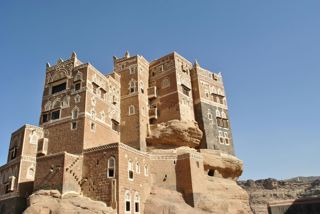
Corporate Emergency Evaluation of WFP’s Response in Yemen 2019-2024
- 2024 – 2025
- menos de 500.000 €
- Yemen
The Corporate Emergency Evaluation (CEE) of WFP’s Response in Yemen mandated by the Office of Evaluation (OEV) served the dual objectives of accountability and learning. It provided accountability for results to WFP stakeholders, and generated evidence on WFP's performance in Yemen specifically to inform WFP's future engagement in the country and share good practices to promote broader learning on WFP's response to complex and protracted crisis.
The evaluation covered WFP strategies and interventions in Yemen between January 2019 and September 2024. While the main units of analysis of the evaluation were the ICSPs 2019-2022 and 2023-2025,the evaluation also assessed WFP's work in Yemen that was not explicitly captured in the ICSPs.
The evaluation assessed WFP contributions to CSP strategic outcomes, establishing plausible causal relations between the outputs of WFP activities, the implementation process, the operational environment, and changes observed at the outcome level, including any unintended consequences.
It will also focus on adherence to humanitarian principles, gender equality and wider equity considerations, protection and accountability to affected people.

Evaluation of CBRN risk mitigation interventions - IcSP
- 2024 – 2025
- menos de 500.000 €
- Global
This evaluation concerns eight projects funded by the EU which have been mainly delivered through the Chemical, Biological, Radiological, Nuclear (CBRN) Risk Mitigation Centres of Excellence Initiative (CoE). The Initiative’s main objective is to strengthen the long-term capacity of, and to foster long lasting cooperation among the national and regional authorities, and administrative bodies responsible for tackling CBRN threats. The projects contribute to the same general objective to address specific global and trans-regional threats to peace, international security and stability, through enhancing governance and cooperation on CBRN risk prevention, detection and mitigation.
The primary aim of this evaluation is to provide the pertinent services of the European Union and other
interested stakeholders with:
- A comprehensive independent assessment of the performance of selected actions (projects) carried out under the EU CBRN program. The evaluation focuses on measuring their results against the intended objectives and evaluating the sustainability of these outcomes beyond the projects duration.
- Identification of best practices at regional or national levels that have effectively amplified the impact of the actions. These practices can serve as models for replication or inspiration in other countries.
- Compilation of a set of deliverables such as guidelines, manuals, standard operating procedures, framework laws, and training modules to disseminate and replicate by partner countries in order to bolster their capacities in mitigating similar CBRN risks.
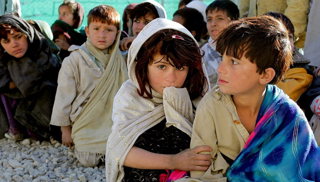
++Independent monitoring of immunization status in Afghanistan++
- 2024 – 2025
- de 500.000 € a 1 millón de €
- Afghanistan
The humanitarian engagement aimed to deliver life-saving humanitarian assistance to high-risk populations and to increase polio vaccination coverage among children in priority areas in Afghanistan.
This project aimed to ++monitor the planning, execution, and data quality of operations++ for the Humanitarian Actors Engagement, a consortium supporting the Global Polio Eradication Initiative (GPEI).
As the third-party monitor, Particip,
- Conducted desk reviews of microplans and project documents, and key-informant interviews with personnel involved in microplanning at all levels to identify strengths and challenges in the process and its implementation;
- Validated micro-plan settlements by re-creating the catchment areas of a sample of health facilities using satellite imagery;
- Conducted direct site observations, patient-provider observations at health facilities, and visited communities and households in project areas to monitor implementation status;
- Gathered primary data on operational strength, staffing adequacy, supply and stock management, pharmacy stockpiles, and health infrastructure availability and usage.

Policy Dialogue and Public Diplomacy Facility for Australia and New Zealand
- 2023 – 2025
- de 500.000 € a 1 millón de €
- EU, Oceania
The overall objective of the project was to strengthen EU-Australia and EU-New Zealand relations, in line with bilateral agreements and in coherence with the objectives of the EU’s Foreign Policy, as well as key EU strategies: the European Green Deal, a Stronger EU in the World, the EU’s Multilateral Strategy, the EU-Asia Connectivity Strategy, the Indo-Pacific Strategy, Global Gateway and Strategic Compass.
++Specific objective(s)++
- To advance existing policy dialogues and open avenues to expand relations in priority areas for the EU in Australia and New Zealand, through communication actions that contribute to the implementation of the bilateral Framework Agreement with Australia, the Partnership on Relations and Cooperation Agreement (PARC) with New Zealand, and future bilateral Free Trade Agreements.
- To increase understanding of EU policies and objectives, to build support and agreement in areas of mutual interests for the EU with Australia and with New Zealand, and to increase awareness of the role of the EU as a global player, via public diplomacy activities.

Technical Assistance in support of the EU-Australia Bilateral and Cultural Agenda: “100 Years of Maria Callas”
- 2023 – 2025
- menos de 500.000 €
- Australia
The project aimed to strengthen EU-Australia relations, in line with bilateral agreements, by highlighting their cultural dimension and ensuring coherence with the Indo-Pacific Strategy, the EU-Australia Framework Agreement, and the EU’s cultural diplomacy strategies and programmes.
More specifically, the project aimed to:
- Increase understanding of the EU as a global cultural powerhouse, beyond its perception as a trading and economic bloc, by showcasing the continued relevance and value of the EU’s cultural heritage and way of life in the modern world, including through activities linked to the visit of Commission Vice-President Schinas to Australia.
- Strengthen EU public diplomacy in Australia and increase EU visibility within Australian society and government through a series of Maria Callas hologram performances and accompanying activities, such as networking events and a related exhibition.
- Establish new ties with decision makers and influential individuals in Australia, using the events as a strategic platform for engagement.