
Nuestros proyectos
Explore la experiencia de Particip en proyectos desarrollados en distintos países, sectores y ámbitos de especialización.
Nuestras referencias ofrecen una visión general de las misiones finalizadas y en curso, incluidos sus objetivos, alcance geográfico, duración y valor contractual.
Mostrando 651–660 de 980 referencias

Strengthening education statisitcs in Niger: correction of inconsistencies observed, diagnosis and plan to strengthen the education management information system (EMIS)
- 2019 – 2019
- menos de 500.000 €
- Niger
The National Statistical System (SSN) in Niger is composed, according to Law No. 2004-011 of 30 March 2004 and its implementing decrees, of all public and parapublic services and organizations that produce and disseminate statistical data. Since an amendment to the law in November 2014, the INS has been institutionally anchored at the level of the Ministry in charge of the Plan. The main tasks of the INS are to collect, centralize, process and disseminate the statistical data necessary for the formulation, implementation and evaluation of the government's economic and social policies and the cooperation programmes of Niger's various development partners.
Statistics Departments existed at the level of each ministerial department. However, the organizational structure of the Nigerian national statistical system was not yet complete. The availability of human, material and financial resources within these directorates was far from satisfactory.
Sectoral statistical production remained insufficient, not only in terms of thematic coverage and regularity but also and above all in terms of quality. In addition, Niger's administrative, political, institutional, economic and even socio-cultural environment was changing rapidly, creating new needs in terms of statistical data.
In this context, it seemed necessary and urgent: (i) to verify and correct the data for the 2016-2017 school year in order to ensure the reliability and quality of the data from the last two school years and their official validation, and (ii) to carry out this complete diagnosis of the EMIS in order to put in place any palliative measures required to obtain quality data. This dual exercise contributed to the preparation of the ETP but also ensured the availability of data to allow for a possible disbursement of European budget support.

Design of the Viet Nam Nationally Determined Contributions (NDC) Implementation Mechanism
- 2019 – 2019
- menos de 500.000 €
- Viet Nam
The purpose of this contract was to develop / complete the design of the new mechanism for dialogue and coordination, identify an appropriate designation, develop a roadmap with objectives and key milestones for the mechanism to be operational. Additionally, this project encompased an estimation of resources needed for establishing the NDC Mechanism secretariat for the first year of operations and the development of its terms of reference.
The new mechanism ++furthered the implementation of Viet Nam’s NDC by creating enabling conditions for NDC planning, coordination and implementation at the level of LMs and provinces++. Expected effects were among others, the acceleration of implementation and the ++enhanced quality of action++.

European Union Electoral Follow-up Mission (EU EFM) to El Salvador
- 2019 – 2019
- menos de 500.000 €
- El Salvador
On 3 February 2019, El Salvador entered a new phase of its political history by electing the first president not originating from any of the two camps that fought the civil war (1980-1992). The EU
deployed Electoral Observation Missions (EOMs) to the 2018 legislative and municipal elections and to the
2019 presidential elections. Both missions found the elections to be inclusive, whilst delivering several
recommendations for future improvement. Political parties within the National Assembly, the Supreme
Electoral Court, the Sanchez Ceren administration, and civil society have expressed their support for
electoral reform and EU EOM recommendations, which are largely viewed as important and timely.
Following these EOMs, the EU issued a total of 45 recommendations, including several requiring changes in the legal framework. Key areas of improvements are the structure of the electoral body, the voter register, campaign finance, electoral justice and sanctions, the democratization of temporary electoral bodies, representation of women, media, and the rights of minorities.
The overall objective of this assignment was to contribute to improving the electoral and democratic
framework during the inter-election period and raising awareness and understanding of the EU EOM
recommendations and technical issues related to their implementation.
The specific ojectives of the mission were the following:
- Generate additional impetus for – or contribute to ongoing debates on – electoral reform;
- Identify areas of agreement and disagreement on EU EOM recommendations among the stakeholders and any political, technical, financial obstacles to electoral reform;
- Propose actions to overcome obstacles to electoral reform, including measures to develop support for and national ownership of the recommendations;
- Identify which EOM recommendations are most relevant to the prevailing country situation and the current phase of the electoral cycle;
- Assess any electoral reforms adopted since the last EOM or which are under consideration (e.g. draft
legislation) or which are planned and the degree to which these reflect EOM recommendations and their
alignment with international standards for democratic elections;
- Suggest any other possible EU actions that could contribute to strengthening the implementation of the
recommendations and/or to the overall improvement of the electoral framework

Final evaluation of 2014/355-412 "Gender-sensitive Transitional Justice"
- 2018 – 2019
- menos de 500.000 €
- Global
The overall objective of this assignment is to conduct a final evaluation of 2014/355-412 Gender-sensitive Transitional Justice.
The final evaluation will provide the European Commission, the implementing partners, and other relevant stakeholders with:
- an independent assessment of the overall intervention, paying particularly attention to the
design of the tool, the set-up of the agreement, and results achieved against its objectives; and
- key lessons and recommendations in order to improve current and future actions financed under the IcSP in this sector of intervention.
The specific objectives of this final evaluation are:
- to assess the performance of the project, including type of intervention, design and execution of assignment as well as its results;
- to assess if and to what extent the project has contributed to strengthen the capacities of the implementing partners to engage in transitional justice at international, regional or local levels;
- to assess the relevance of the project in this context and sector of intervention, and in comparison to other transitional justice related initiatives;
- to make an assessment of the project’s visibility, information and communication;
- to identify and document good practices and key lessons learned on mainstreaming gender-
sensitivity into transitional justice processes;
- to produce a set of recommendations that will assist the EU in designing and implementing future actions in the area of transitional justice, in applying gender-sensitive approaches to a specific thematic area, and in managing multi-country projects.
- to assess the extent to which the project has contributed to strengthen EU-UN relations in the field of transitional justice

Framework Contract Beneficiaries 2013: Lot 12 Humanitarian Aid, Crisis Management & Post-Crisis assistance
- 2014 – 2019
- de 2 a 5 millones de €
- Global
The objective of the Framework Contract (FWC) Beneficiaries 2013 Humanitarian Aid was to provide, via individual assignments defined and contracted through Specific Contracts, short-term technical assistance which can be mobilised at very short notice (normally within about 3 weeks).
The quality of this technical assistance had to be guaranteed by the selected Framework Contractors disposing of the appropriate internal or external technical skills. The technical assistance was provided for the exclusive benefit of those receiving the external aid. Technical assistance was required at any stage of the project cycle (except financial audits of programs) and covered any sector(s) within the below mentioned technical fields:
- Humanitarian aid needs assessment (medical and health-related matters, nutrition, water and sanitation, shelter…)
- Mediation, conflict prevention, conflict resolution and reconciliation
- Emergency/post emergency support needs assessment (including psycho-social, physical and economic damage assessment, reconstruction/rehabilitation planning and assessment of local implementation capacity and structure; socio-political situation among the population - “peace dividend”)
- Monitoring/observing cease-fire/peace accords and agreements
- Information/media support in crisis/emergency situations
- Demobilisation, disarmament and reintegration (DDR of armed forces, including child soldiers)
- Small Arms and Light Weapons; arms disseminated within civil populations;
- Clearance of mines and unexploded ordnance and related activities (including mine awareness, marking of minefields, impact survey, training and research)
- Repatriation and/or resettlement of refugees and internally displaced persons (IDPs) and support to host communities (including information, administrative preparation, transport, reception and short- and long-term reintegration)
- Linking relief, rehabilitation and development (LRRD) including the rehabilitation of social and economical infrastructures and the strengthening of institutions, deemed necessary for the improvement of the minimal living - social - standards in post-crisis situation. Rehabilitation also includes economic measures permitting a long-term economical reintegration of crisis-affected populations.)
- Damage assessment and reconstruction planning (Post Conflict Needs Assessments, Post-Disaster Needs Assessments)
- Post-conflict transition plans, including employment generation, transitional justice and security measures and Security Sector Reform
- Logistical support to operations (including planning of complex missions, transport, provision of security, telecommunications)
- Disaster preparedness (natural and man-made)
- Civil protection
- Exploratory missions for EU Election Observation Missions
The beneficiaries of the short-term technical assistance available via this FWC Beneficiaries 2013 Humanitarian Aid are exclusively third countries benefiting from the Commission’s External aid programmes. The FWC has no overall contractual amount or maximum budget. The implementation duration (not exceeding 730 days) and the contractual amount (not exceeding € 300,000) are fixed for each individual assignment. These maxima include the possible addenda.
The various assignments are financed from the different budget lines for external aid (the European Communities general budget) and the European Development Fund (EDF).
European Union Cooperation in Uzbekistan: Visibility Events in 2017 and 2018
- 2017 – 2019
- menos de 500.000 €
- Uzbekistan
Objective:
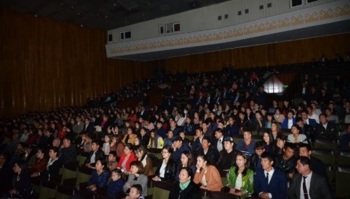
Implementation of a comprehensive set of actions to enhance the visibility of the European Union and its contribution to development cooperation in Uzbekistan.
More specifically, this contract contributed to gradual establishment of improved EU visbility and communication on EU assistance and cooperation with Uzbekistan guided by agreed overall messages.
The contract was understood as a complement to the communication efforts of each specific EU-funded project and added value to these efforts by highlighting the scale and impact of EU development assistance as a whole and thus increased visibility of EU.
Final Evaluation of the Contract FED 2014/339637 'Support to the Liberian Decentralization Support Programme'
- 2019 – 2019
- menos de 500.000 €
- Liberia
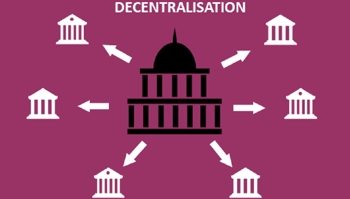
The main objectives of this evaluation were to provide the relevant services of the European Union, the interested stakeholders with:
- an overall independent assessment of the EU contribution to the Liberian Decentralisation Support Programme, paying particular attention to its results measured against its expected objectives; and the reasons underpinning such results;
- key lessons learned, conclusions and related recommendations in order to improve future EU Actions.
In particular, this evaluation served to understand the performance of the Action, to understand the performance of the Action as to inform the planning of eventual future EU interventions and Actions in the same sector.
EU added value:
- The extent to which the Action brought additional benefits to what would have resulted from Member States' interventions only.
- Coherence of the Action itself. With the EU strategy in Liberia and with other EU policies and Member State Actions as other relevant DPs (UN agencies and Usaid):
- The extent to which was the action complementary to other intervention in the Country.
Relevance:
- Appropriateness of the action approach via LDSP programme for the achievements of National Policy on Decentralization and Local Governance (NPDLG).
- The extent to which the action has been designed in line with the readiness and capacity of LDSP Programme stakeholders.
Effectiveness:
- The extent to which the deconcentration of services at local level (CSCs) have been improved.
- The extent to which programme modalities were effective for the implementation of the Program (DPs pool fund managed by UN Agency, NIM/DIM),
Efficiency:
- The extent to which was the action's implementation choice (DPs pool fund managed by UN Agency, NlM/DlM) efficient;
Sustainability:
- The extent to which mechanisms have been set in place by the action to support the Government of Liberia to sustain improvements in deconcentrated services (CSCs) made through this action;
Impact:
- The extent to which it was possible to describe the impact of the action in term of positive or negative; directly or indirectly.

End of term evaluation of ACP-EU Building Safety and Resilience in the Pacific (BSRP)
- 2019 – 2019
- menos de 500.000 €
- Fiji
In particular, this evaluation served to ++understand the performance of the three actions++, their ++enabling factors++ and those hampered or hampering a proper delivery of results as to ++inform the planning of future EU interventions++ and actions in similar sectors.
The main users of this evaluation are:
- the Regional Authorising Officer (PIFS - Pacific Islands Forum Secretariat);
- the ministries responsible for DRR and Climate Change in the BSRP countries;
- the implementing agencies of the actions;
- the EU Delegation;
- any other development partners involved in these sectors.

Joint Nordic Evaluation of the Nordic Development Fund (NDF)
- 2018 – 2019
- menos de 500.000 €
- Denmark, Finland, Iceland, Norway, Sweden
The Joint Nordic Evaluation of the Nordic Development Fund (NDF) aimed to assess the performance of the NDF in relation to its mandate and the fund’s potential future role as a joint Nordic financing instrument, assessing how strong its added value is from an international perspective. Thus, the study pursued two intertwined aims: i) assessing NDF’s past and current performance (“aim 1”); ii) assessing NDF’s potential future role as a joint Nordic financing instrument for development (“aim 2”).
The evaluation was conducted ten years after the establishment of the NDF’s new mandate – a period sufficiently long to take stock of what has worked and why, and what has been less successful.The analysis covers the period 2009-2018 and NDF’s entire portfolio. Although the NDF has focused on climate change, the analysis also looked at NDF’s potential future role beyond this theme.
In parallel to the NDF evaluation, an evaluation of the Nordic Climate Facility (NCF) was undertaken. With its specific set up and operations, the NCF faces particular challenges and potentials and, in conjunction with the NDF, it was therefore decided to evaluate the facility separately, however by the same evaluation team (Particip GmbH). The results of the two assignments were presented in the same evaluation report. The final report is available online: https://eba.se/en/rapporter/joint-nordic-organisational-assessment-of-the-nordic-development-fund-ndf/11350/
Third Party Monitoring and External M&E Support for Somalia Country Programme
- 2016 – 2019
- de 1 a 2 millones de €
- Kenya, Somalia
The main objective of the assignment was to help ensure that Somalia Country Programme results are achieved as planned. This advisory support purpose was two-fold:
- Particip provided continuous systematic, structured and strategic management information based on the Somalia Country Program, including the Thematic Programmes and the Development Engagements (DE), as well as the ++Monitoring & Evaluation systems++ of the DE partners.
- Particip increased the capacity of the Embassy’s DE partners with regards to ++Results Based Management++, including M&E and risk management.
Other project objectives included:
- Support the “whole of country programme” approach by identifying the need for, and facilitating the operation of, networks/groups drawn from across the programme and engagement partners to address specific development problems including those identified through M&E reports.
- Monitor, over the life of the programme, the effectiveness of the design and management arrangements for the Country Programme, and ++develop and disseminate learning tools++ (papers, guidelines, toolkits etc.) to inform future country programme design in Somalia.
- Provision of technical follow up on specific issues/problems identified through M&E reports, as requested by the programme committee and subject to resource availability; such as value for money audits; investigation and analysis of under-performance; mentoring of partner staff in M&E techniques.
- Support to the refinement and revision of the ++results framework++, in close association with programme partners, including ++assuring realistic and measurable indicators++ so that programme progress can be accurately documented at the outcome level. At the impact level, the M&E Support Team will support the development of the needed methodologies to ensure that the Danish contribution to the national level impact indicators is possible to assess.