
Nuestros proyectos
Explore la experiencia de Particip en proyectos desarrollados en distintos países, sectores y ámbitos de especialización.
Nuestras referencias ofrecen una visión general de las misiones finalizadas y en curso, incluidos sus objetivos, alcance geográfico, duración y valor contractual.
Mostrando 611–620 de 980 referencias

Desk Review Myanmar 2020
- 2020 – 2020
- menos de 500.000 €
- Myanmar
The objective of the desk review was provide guidance on electoral matters and technical support to EEAS and FPI in order to support them in assessing the electoral, political and legal framework in the light of international commitments and national legislation of the Union of Myanmar.

Evaluation of Finnish Development Policy Influencing Activities in Multilateral Organisations
- 2019 – 2020
- menos de 500.000 €
- UN
The purpose of this evaluation was to assess the relevance and effectiveness of different types of multilateral influencing activities implemented by the Ministry for Foreign Affairs of Finland (MFA), and to provide guidance on how to further strengthen them.
The evaluation used a theory-based approach which allowed for systematic analysis of multi-causal relationships between influencing activities, effects, and further changes in Multilaterals. Overall, 23 multilateral partner institutions of the MFA were covered, and eight of those were studied in more depth: the World Bank Group (WBG), the United Nations Population Fund (UNFPA), the United Nations Children’s Fund (UNICEF), the World Food Programme (WFP), the United Nations Entity for Gender Equality and the Empowerment of Women (UN Women), the International Fund for Agricultural Development (IFAD), the Food and Agriculture Organisation of the United Nations (FAO), and the International Trade Centre (ITC).
The evaluation’s specific objectives were as follows:
- to assess how Finland has managed to promote Agenda2030 and Finland’s Development Policy objectives in the multilateral partner organisations;
- to assess the influencing activities, means and ways used;
- to provide guidance in elaborating the new influencing plans (work in progress);
- to assess the human and financial resources available for influencing activities;
- to assess the usefulness and feasibility of having the influencing plans;
- to assess various influencing means and Finland’s best opportunities to influence (Headquarters of multilateral organisations, country offices, multi-bi projects etc.) taking into account available resources;
- to assess the Theories of Change of the influencing strategy plan (when available) and give guidance for the possible revision to better meet the objectives of Finnish Development Policy.
The final report is available here: https://um.fi/publications/-/asset_publisher/TVOLgBmLyZvu/content/evaluointiraportti-ulkoministeri-c3-b6-vaikuttaa-monenkeskisten-j-c3-a4rjest-c3-b6jen-toimintaan-1/384998
Strengthening of the policy development process in the context of the implementation of the Association Agreement
- 2018 – 2020
- de 1 a 2 millones de €
- Moldova
The overall objective of the project was to enhance the institutional and human resource capacity of the central and local public administrations in Moldova to elaborate and implement evidence-based policy and to ensure the efficient and effective delivery of high quality administrative services in line with the European Principles of Public Administration.
This was achieved by contributing to the horizontal Public Administration Reform process in Moldova in order to improve policy development process of the Government of the Republic of Moldova. Furthermore, the administrative capacity and the operational coordination of the three main institutions within the Centre of Government: State Chancellery as policy coordinator, Ministry of Finance as budgetary authority and Ministry of Foreign Affairs and European Integration (MFAEI) as coordinator of the monitoring of the Association Agreement are strengthened.
The project delivered the following results:
- Result 1: Capacity of the Government of Moldova to approximate EU Acquis and to implement the Association Agreement is supported and planning of the Association Agenda by the MFAEI in alignment with the State Chancellery and the Ministry of Finance is strengthened
- Result 2: Evidence-based Policy Development is promoted and capacity to develop legislation is supported with a unified procedure for ex-ante economic and social impact assessments, including strategic planning based on macroeconomic projections and an assessment of available internal and external sources of financing
- Results 3: Policy coordination capacities, procedures and information mechanisms are upgraded through compatible or unified communication systems and rules (rules of procedures) and roles and responsibilities between the functions of Government are demarcated
- Result 4: Public consultation mechanisms in the context of the policy development are improved for increased transparency and accountability of the Government towards citizens
The project directly supported three main institutions (MFAEI, State Chancellery and Ministry of Finance) to perform the tasks related to policy development, which entails all stages of policy-making process, starting by the identification of needs, the policy drafting, costing, draft budgeting, and the endorsement of legal acts necessary for its effective implementation. Policies pursued could be funded by State Budget or could request outputs provided by Development Partners in the context of the external assistance provided to Moldova

EU Border Assistance Mission to the Republic of Moldova/Ukraine Phase 11 (Extension) and Phase 12 – Mid-term evaluation
- 2019 – 2020
- menos de 500.000 €
- ENI East
The main objectives of this evaluation were to provide the relevant services of the European Union and the interested stakeholders with:
- an overall independent assessment of the past performance of the EUBAM MD/UA Phase 11 (extension) and EUBAM 12, paying particular attention to its intermediate results measured against its expected objectives, the reasons underpinning such results and lessons learned in view of future programming;
- key lessons learned, conclusions and related recommendations in order to improve current and future Actions.
In particular, this evaluation served to understand the performance of the action, its enabling factors and those hampering a proper delivery of results to take into account during the planning of the future EU interventions and actions in the same sector.
The main users of this evaluation were the relevant EU services (Delegations of the European Union to the Republic of Moldova and Ukraine, EC/DG NEAR and EEAS) and other stakeholders, such as the International Organization for Migration (IOM), that were involved in the implementation of the Action to be evaluated as well the Customs Service of the Republic of Moldova, Border Police of the Republic of Moldova, State Border Guard Service of Ukraine, the Bureau of Reintegration Policies (Moldova) and State Border Guard Service of Ukraine.

Mid-term evaluation of Natural Capital Accounting and Valuation of Ecosystem Services (NCAVES)
- 2020 – 2020
- menos de 500.000 €
- Global
The main objectives of thie Mid-term Evaluation of the EU's Natural Capital Accounting and Valuation of Ecosystem services are to provide the relevant services of the European Union, the interested stakeholders with:
- an overall independent assessment of the past performance of the EU’s Natural Capital Accounting and Valuation of Ecosystems (NCAVES) funded under the Partnership Instrument, paying particular attention to its emerging results measured against its expected objectives; and the reasons underpinning such results;
- key lessons learned, conclusions and related recommendations in order to improve current and possible future Actions in this sector.
'The evaluation will assess the Action using the five standard DAC evaluation criteria, namely: relevance, effectiveness, efficiency, sustainability and early signs of impact. In addition, the evaluation will assess two EU specific evaluation criteria:
- the EU added value (the extent to which the Action brings additional benefits to what would have resulted from Member States' interventions only);
- the coherence of the Action itself, with the EU environmental policy and with other EU policies and Member State Actions, and other donors, namely the UN.
The evaluation team shall furthermore consider whether gender , environment and climate change were mainstreamed; the relevant SDGs and their interlinkages were identified; the principle of Leave No-One Behind and the rights-based approach methodology was followed in the identification/formulation documents and the extent to which they have been reflected in the implementation of the Action, its governance and monitoring.

Mid-term evaluation of the Pro-CEMA Programme for the Consolidation of the State and the Associative World
- 2020 – 2020
- menos de 500.000 €
- Africa (Western)
The main purpose of this evaluation was to provide the relevant EU services and interested stakeholders with the following information:
- a global and independent analysis of the performance of the State Consolidation Programme and of the Associative World, paying particular attention to its intermediate results, in comparison with the expected objectives, and the reasons supporting these results;
- lessons learned, conclusions and associated recommendations, so as to improve, where appropriate, present and future actions.
In particular, this evaluation served to understand the performance of the action, its determining factors and those which have hindered the achievement of results, so as to adapt its design or implementation arrangements to serve as a basis for planning future EU actions and interventions in the same sector.
With regard to the Local Governance component, the recent establishment of 117 municipalities implies that this evaluation identified the adaptations already made by the project to this new reality, the obstacles to these adaptations, and proposed adaptations to better accompany the process of decentralization which is accelerating remarkably since the second quarter of 2019.
The main users of this evaluation are: the EU Delegation in Togo, the Ministry of Territorial Administration, Decentralization and Local Communities (MATDCL), the Ministry of Planning, Development and Development Cooperation (MPCD), the competent services of the German Embassy, the GIZ and the members of the Technical Monitoring Committee.
The overall objective of the programme was to contribute to the achievement of the objectives of the National Development Programme through support for the consolidation of local governance and greater participation of civil society, particularly autonomous women's organizations, in the definition, implementation and monitoring of development policies.

Management of the Jamaica Business Fund (JBF)
- 2016 – 2020
- de 2 a 5 millones de €
- Jamaica
The Jamaica Business Fund (JBF) operated under the Foundations for Competitiveness and Growth (FCG) Project. The JBF was financed under a loan agreement between the Government of Jamaica and the International Bank for Reconstruction and Development (the World Bank). Component 3A of the FCG, within which the JBF was funded, provided support directly to SMEs by funding a combination of supply chain learning, skills upgrading, and financing (total grant fund: US$5 million).
The overall objective of the FCG Project was to strengthen the business environment in Jamaica for private sector investment. The objective of this specific contract was: The successful management of the Jamaica Business Fund, which offered matching grant funds to SMEs in value chains within various sectors (notably in agriculture sectors: e.g. coffee, pepper, ginger).
The purpose of the JBF was to promote economic development through inclusive growth in high-potential supply chains. This improved productivity of SMEs in the supply chain and passed cost savings and increased output through to medium and larger buyer (anchor) firms, and their downstream clients, enhancing the competitiveness of exports and import-competing products.
In addition to direct firm-level productivity improvement grants, the Fund also provided two types of technical assistance: sector expertise to help firms identify problems along a supply chain and develop appropriate business plans for requisite skills upgrading needs, and public-private dialogue support to continue initial group problem-solving processes to work with public counterparts as well to resolve broader policy/regulatory or coordination constraints affecting a given supply chain. Furthermore, the JBF conducted several sector studies and disseminated its findings in the sector.
As part of the Fund Operations, an effective communications strategy and outreach program was developed and implemented. To achieve this, a Communication Officer was engaged to cover Fund-related PR and marketing. The communication activities included the design, development and management of the JBF website: https://jamaicabusinessfund.com/
Eligible supply chains included all productive sectors that could generate high job multipliers from invested resources and, ideally, sustainable and growing foreign exchange earnings through exports and/or foreign exchange savings through import substitution. Initial supply chains identified as having potential for productivity upgrading included agriculture and agro-processing, light manufacturing, and hotels and tourism linkages.
Implemented projects included, for example:
- Developing a Sustainable Supply Chain for the International Pepper Market (Hot Pepper sub-sector)
- Long Term Development of the Jamaican Ginger Industry (Ginger sub-sector)
- Connecting Artisanal Fisher Folk to Global Supply Chains (Lobster sub-sector)
- Improving exports through the acquisition of market driven skills and supply chain development (Condiments sub-sector)
- Upgrading the Quality and Market-Readiness of Local Artisan Supplies to Sandals Hotels (Tourism sector)
- Multi-Crop / Indigenous Products Supply Chain (Fresh Produce)

Mid-term evaluation of “Cooperation with Northern and Southern Transatlantic Dimension - Marine Protected Areas (MPAs)” (Transatlantic Action)
- 2020 – 2020
- menos de 500.000 €
- Global
The main objectives of this Mid-term Evaluation of the “Cooperation with Northern and Southern Transatlantic Dimension - Marine Protected Areas (MPAs)” (Transatlantic Action) are to provide the relevant services of the European Union, the interested stakeholders and the wider public with:
- an overall independent assessment of the past performance of the “Cooperation with Northern and Southern Transatlantic Dimension - Marine Protected Areas (MPAs)” (Transatlantic Action) to be evaluated, paying particular attention to its intermediate results measured against its expected objectives; and the reasons underpinning such results, focusing on assessing the policy relevance of the emerging results of the action;
- key lessons learned, conclusions and related recommendations in view to inform the upcoming follow-up project to start in mid- January 2020 as well as future programming enabling cooperation on the topic.
The evaluation will assess the Action using the five standard DAC evaluation criteria, namely: relevance, effectiveness, efficiency, sustainability and early signs of impact. In addition, the evaluation will assess two EU specific evaluation criteria:
- the EU added value (the extent to which the Action brings additional benefits to what would have resulted from Member States' interventions only);
- the coherence of the Action itself, with the EU strategy in Ocean Governance and Biodiversity and its contribution to strengthened Transatlantic relations between the EU and targeted partner countries and with other EU policies and Member State Actions.
The evaluation team shall furthermore consider whether gender , environment and climate change were mainstreamed; the relevant SDGs and their interlinkages were identified; the principle of Leave No-One Behind and the rights-based approach methodology was followed in the identification/ formulation documents and the extent to which they have been reflected in the implementation of the Action, its governance and monitoring.
Evaluation of Finland's Country Strategy Modality in Fragile Situations
- 2019 – 2020
- de 500.000 € a 1 millón de €
- Afghanistan, Myanmar, Palestine, Somalia, Syria
The evaluation assessed the applicability and feasibility of the Country Strategy instrument in fragile contexts, given their specific challenges and requirements. It will draw evidence from the experience of Country Strategies in five contexts, namely Afghanistan, Myanmar, the Occupied Palestinian Territory, Somalia and Syria/Iraq, to draw wider findings and conclusions. It will cover the period 2012-2020, with the emphasis on more recent activity (2016 onwards) and its main body of work will be completed during the period March 2019-April 2020.
The evaluation’s specific objectives are as follows:
- To assess the coherence between the five country strategies and MFA internal strategies and multilateral influencing plans, as well as with the Finnish Development Policy Programme 2016;
- To assess the relevance of Finland’s co-operation in fragile situations, as supported by Country Strategies, to the needs of beneficiaries and to the complexities of the context, including adaptation over time (e.g. the ‘triple nexus’);To assess role of Country Strategies in supporting the appropriateness and feasibility of Finland’s policy dialogue in fragile contexts;
- To assess the appropriateness of multi-bi cooperation as the main channel for delivery in fragile contexts;
- To assess the extent to which Finnish development priorities, as articulated in Country Strategies, are prioritised within planning and implementation of multi-bi co-operation, including in ensuring that crosscutting objectives (the rights of the most vulnerable, gender equality and climate change preparedness and mitigation) are integrated as appropriate/feasible;
- To assess the extent to which Country Strategies have supported co-operation to be conflict sensitive and to adhere to international commitments relevant to fragile situations, such as the International Humanitarian Principles, Do No Harm and Accountability to Affected Populations;
- To assess the role of Country Strategies in supporting results achieved by Finnish co-operation, as far as they can be determined;
- To assess the role of Country Strategies in supporting Finland’s approach to partnership (including relationship-building, predictability and the adoption of a principled approach) in fragile contexts, particularly as perceived by external partners.
The report and other material are available at: https://um.fi/development-cooperation-evaluation-reports-comprehensive-evaluations/-/asset_publisher/nBPgGHSLrA13/content/evaluointiraportti-ulkoministeri-c3-b6n-maaohjelmien-soveltuvuus-hauraissa-maissa-ja-konfliktiymp-c3-a4rist-c3-b6iss-c3-a4-teht-c3-a4v-c3-a4-c3-a4n-ke/384998
Strengthening communication and visibility of the EU-Republic of Congo cooperation
- 2018 – 2020
- menos de 500.000 €
- Congo (Brazzaville)
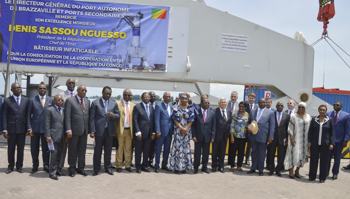
The overall objective of this project was to increase knowledge about the EU and the EU-Congo cooperation among the Congolese population.
The specific objectives of this contract were the following:
- To assist the Delegation of the European Union in Congo in implementing its communication strategy
- To facilitate the Congolese public's understanding of the role played by the EU and its values through its cooperation with Congo
- Making the impact of EU-Congo cooperation activities more visible and measurable