
Nuestros proyectos
Explore la experiencia de Particip en proyectos desarrollados en distintos países, sectores y ámbitos de especialización.
Nuestras referencias ofrecen una visión general de las misiones finalizadas y en curso, incluidos sus objetivos, alcance geográfico, duración y valor contractual.
Mostrando 561–570 de 980 referencias

Study on the monopoly position of global and regional Associations of Local Authorities
- 2020 – 2021
- menos de 500.000 €
- Global
The specific objective was to demonstrate which global and regional Associations of Local
Authorities hold a de facto or de jure monopoly on the basis of which DG DEVCO will be able to
sign the second generation of Framework Partnerships Agreements for the period of 2021-2027.
In the realm of this assignment, regional and global Associations of Local Authorities have to be
understood as membership-based umbrella organisations centered around representativeness
operating at sub-national, national, sub-continental, continental and international level. In
particular, for the purpose of this study, ALAs were:
- actor-based: “Actor-based” umbrella organisations are understood as structures that
gather the family of actors, in this case Local Authorities and their Associations,
excluding other types of actors; and
- non-thematic: Non-thematic organisations focus on general development issues such as ,
inter alia, development effectiveness, capacity building of development actors, creation
of an enabling environment for LAs. Non-thematic organisations can be understood as
opposed to organisations that focus on particular policy domains and thematic fields
such as, inter alia, climate change, education, health, migration.
Advisory Services for GIZ Sector Project Agenda 2030
- 2019 – 2021
- menos de 500.000 €
- Germany
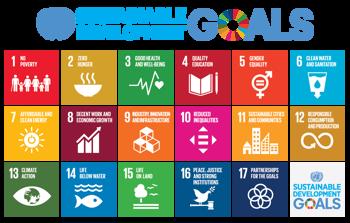
The Agenda 2030 for Sustainable Development has been implemented by all countries since 2016. Over the next 15 years, it will shape numerous policy areas - far beyond development cooperation (DC). The Federal Ministry for Economic Cooperation and Development (BMZ) is in the process of aligning development policy with the implementation of Agenda 2030. This is based on three pillars: implementation in Germany, support for the partner countries of German development cooperation and at the international level.
The sector project (SV) Agenda 2030 for sustainable development advises the BMZ to all three pillars. The focus of advisory activities is on the following three areas:
- German Sustainability Strategy and Architecture
- SDG Measurement Methods, Monitoring/ Data & & Statistics,
- Integrated implementation/policy coherence,
- Financing for sustainable development,
- Multilateral Processes
- Methodical implementation of Agenda 2030.
This means that the SV Agenda 2030 for Sustainable Development has the following requirements: (i) to work on new topics in depth in its activities, even at a short notice; (ii) to cover a wide range of topics using expert advice and to work on them in an integrated manner; (iii) to maintain an overview of the various reform processes and to classify them correctly; and (iv) to react to a broad spectrum of actors and provide advice. The dynamics, thematic range and complexity of the implementation of Agenda 2030 makes it necessary for the SV to have access to well-founded expertise on a wide range of topics (e.g. implementation at local level, private sector, monitoring/data & statistics, integrated implementation/policy coherence, financing for sustainable development, multilateral processes).
Against this background, the scientific/conceptual support prepares existing knowledge in this respect and accelerates, facilitates and deepens the advisory service through corresponding professional preparatory work.
The support provided by the contractor enables the SV Agenda 2030 to award contracts for the development of individual services at relatively short notice. At the same time, the contractor's broad technical base ensures the availability of scientific expertise on various topics relevant to the project and thus enables the BMZ to provide technically adequate and precise advice. Furthermore, the SV is to be enabled to maintain an overview of existing reform and adaptation processes and to derive recommendations for German development cooperation from these. As part of the scientific support, the contractor cooperates with the SV Agenda 2030 on a case-by-case and topic basis upon request and provides services to be specified in detail.

Evaluation of Danish Funding for Climate Change Mitigation in Developing Countries
- 2020 – 2021
- menos de 500.000 €
- Ethiopia, Indonesia, South Africa, Viet Nam
The objectives of the evaluation were threefold, covering both accountability and learning purposes:
- To document achievements in terms of assisting developing countries to mitigate climate change through the provision of Danish support in the period from 2013, both through the climate change envelope (CE) and through other development assistance channels;
- To analyse the outcomes of climate change mitigation funding, with due consideration of the opportunities and barriers at both national and global levels;
- On the basis of the lessons learned from the evaluation, to provide recommendations pertaining to future funding priorities.
On the basis of the above, four main evaluation questions had been identified:
- Taking into account the strategic objectives of development cooperation and the guiding principles for the CE, what are the main results of Danish funding for climate change mitigation since 2013?
- How has climate change mitigation funding responded to the aims and needs defined by developing countries in nationally determined contributions (NDCs), leading to measurable GHG emission reductions and to pro-poor low carbon development?
- How has climate change mitigation funding contributed to transformational change and the sustainable development goals in a manner consistent with Danish comparative advantages and opportunities and in terms of influencing global agendas for climate action?
- What are the main lessons learned from climate change mitigation funding that can determine strategic directions and operational considerations in the coming years?

Evaluation of the action 'Support to the integrated management of water resources of Lake Kivu and the Ruzizi River' – Mid-term Evaluation
- 2020 – 2021
- menos de 500.000 €
- Rwanda
The mid-term evaluation focusses on ++progress made++ to date and, explains why progress is happening or is not happening as planned, and shall provide++ recommendations on how to improve the Action++ during its residual duration in order to achieve the expected objectives, taking into account problems and opportunities. Further, the evaluation examines the ++mandate and capacity of ABAKIR++, the intended transboundary resource management mechanism for the three states of Rwanda, Burundi and Democratic Republic of Congo.
The evaluation should also serve to ++ prepare new Actions++ and encompass both forward and backward-looking perspectives including whether ++gender, environment and climate change++ were mainstreamed; the relevant SDGs and their interlinkages were identified; the principle of Leave No-One Behind and the ++rights-based approach++ methodology were followed in the identification/formulation documents and the extent to which they have been reflected in the implementation of the Action, its governance and monitoring.
1. Is the Action relevant as such and in particular in the current context (security situation in the region, the selected partner ABAKIR and its capabilities, etc)?
2. Is the method of management and of implementation applied by the contractor GIZ still appropriate in the current context and within the time remaining and the limited budget specifically dedicated to the activities?
3. Were all stakeholders appropriately involved in the preparation of the Action or were their views and expectations at least taken into consideration in the Action's design?
4. The Action is experiencing issues in terms of stakeholders' appreciation, ownership and expectations. The evaluators will analyse the reasons for these issues in view of proposing corrective measures to achieve the project objectives with a higher level of involvement and ownership of partners and beneficiaries - even by amending some terms of the Action and by redefining its objectives. Among the possible options, the evaluators will consider the following:
(1) an extension of the Action's duration without any extra budget allocation, namely a No-Cost Extension,
(2) a downsizing or a modification of some activities without altering the original Action's objectives,
(3) a suspension of the activities, as a whole or just partially, for a duration allowing some corrective actions to be taken, or
(4) an anticipated end of the Action and a termination of the contract signed with GIZ. In case this would not turn feasible, the evaluators will propose the best possible ways and conditions to terminate the Action with a limited impact on beneficiaries and stakeholders.
5. The evaluators will analyse the project achievements, all along its results chain.
6. The evaluators will consider the coordination with other Actions like the one similarly launched in favour of the Lake Tanganyika and with the GIZ-led Nexus programme.

Feasibility study on options for strengthening the future European financial architecture for development
- 2020 – 2021
- menos de 500.000 €
- Europe
The general purpose of this independent study was to provide a more detailed legal, governance, financial and operational assessment of the feasibility of two of the options put forward by the High-Level Group of Wise Persons in their Independent Report on the European Financial Architecture for Development (October 2019) and to assess also the option of possible enhancements in the current institutional set-up. As such, the study should inform future policy choices on the European financial architecture for development by comparing these options and allowing for a clear understanding of the added value of each of them in terms of efficiency, cost, speed of implementation, visibility, development impact and alignment with EU policy objectives as well as of the preconditions for their success.
The specific purpose of this study was to assess the feasibility and the conditions for the implementation of Options 1 and 3 put forward in the Wise Persons Group’s report as well as of possible enhancements in the current institutional set-up (Status Quo+). The two options put forward by the Wise Persons Group to be covered as elements of this study involve important institutional changes and have significant implications on financial and human resources. The study assessed the necessary legal and statutory pre-conditions for their possible implementation, their added value, their financial, governance and operational implications as well as the potential advantages and disadvantages of the Status Quo+.

Mid Term Review of Civil Society in Uganda Support Programme
- 2021 – 2021
- menos de 500.000 €
- Uganda
The overall objective was to assess the overall performance of the Civil Society in Uganda Support Programme.
The specific objectives of this evaluation were to:
- Assess the performance of the Civil Society in Uganda Support Programme (CUSP), paying particular attention to its intermediate results measured against its expected objectives; and the reasons underpinning such results;
- Enumerate the benefits for civil society directly accruing from Civil Society in Uganda Support Programme (CUSP);
- Assess the extent to which the action has contributed to quality improvement of CS landscape;
- Highlight the key lessons learnt, conclusions and related recommendations for adjustment in order to improve the current Action and its possible extension as well as future Actions.
Technical assistance within the areas of justice, human rights and security in Burkina Faso
- 2016 – 2021
- de 2 a 5 millones de €
- Burkina Faso
++TECHNICAL ASSISTANCE TO THE MINISTRY OF JUSTICE, HUMAN RIGHTS AND CIVIC PROMOTION++
The objective of the Development Commitment Paper 1 (DCP 1) was to “strengthen the effectiveness of human rights and the credibility of justice”. Its aim is to produce the following four outputs:
- Output 1: the Ministry of Justice, Human Rights and Civic Promotion (MJHRCP) will monitor and coordinate the follow-up of the recommendations from the Universal Periodic Review (UPR) for which the public partners are responsible, and strengthen the public partners’ capacities in monitoring methods and documenting tools.
- Output 2: the UPR recommendations for which the MJHRCP is responsible will be implemented, in particular concerning the key recommendations relating to the categories of rights that are targeted (e.g. child rights, women’s rights, the disabled and prisoners) and relating to the independence of justice.
- Output 3: the legislative framework will be made more inclusive and participatory in accordance with the UPR recommendations concerning the independence of justice and the categories of rights targeted (child rights, women’s rights, the disabled and prisoners).
- Output 4: the code of ethics will be adhered to better within the justice administration and by the judiciary actors.
The DCP 1’s field of activity was funnel-shaped from the broadest to the most specific issue, and can be described as follows: the general aim of output 1 is for the MJHRCP to monitor and coordinate the follow-up of the UPR recommendations, under the responsibility / in partnership with other public partners (the responsible ministerial departments or partners, and public institutions including the National HR Commission etc.) and to strengthen their capacities in monitoring methods and documenting tools; the aim of output 2 is for the MJHRCP to implement the UPR recommendations, particularly concerning the quality of the key recommendations relating to non-derogable fundamental rights, the independence of justice, women’s rights and child rights; the aim of output 3 is to make the legislative framework more inclusive and participatory in accordance with UPR recommendations, in particular concerning the independence of justice, women’s rights and non-derogable rights; and finally, more specifically, output 4 aims to improve the code of ethics within the justice administration and among the judiciary actors.
++TECHNICAL ASSISTANCE TO THE MINISTRY OF TERRITORIAL ADMINISTRATION, DECENTRALISATION AND SECURITY++
The objective of the DCP 2 was to “help improve local access to justice, stability and the protection of human rights (2016 – 2020)”. Its aim is to produce the following three outputs:
- Output 1: security services will have a good command of the tools and procedures for the protection of human rights, as per international standards.
- Output 2: security services will show more presence and effectiveness in the towns / villages that do not have police or gendarmes.
- Output 3: the participation of the communities in building security will be effective, especially for vulnerable groups.
The DCP 2 covers the Eastern and Northern Sahel regions and also the strategic function activities at central level. The flagship actions of the present commitment are based on:
- Support in reforming policies, security standards and human rights, as planned in the context of the security services’ missions, and support in preparing a White Paper on defence and security, planned for 2016.
- Consolidating the initial training in police and gendarme schools (new tools, approaches, procedures and techniques for human rights) and the continuing training (training of trainers and decentralised training in three regions) to accompany the huge ongoing recruitment drive for police officers and gendarmes.
- Support in deploying childhood protection squads in the Eastern and Northern Sahel regions.
- Set-up of model stations / units to receive citizens (especially locally for facilities to keep suspects in custody, separate rooms for women and minors, information panels to provide information on the services or benefits available).
- Support with communication and dialogue between the security services and the population, to assist with community participation on security issues, community conflict resolution and the fight against violent extremism.
The expected results include an improved capacity to deliver security services while respecting and protecting human rights; better citizen’s perception of security services; more responsible security services; and an improved dialogue between state actors and non-state actors when building community security and respecting human rights. The emphasis is placed on groups vulnerable to insecurity or to being deprived of human rights, such as the populations of the three regions and within them, women, minors, and chronic victims of the violation of human rights in Burkina Faso.

Final evaluation of the Technical Cooperation Project in support of the Renewable Natural Resources Sector Bhutan
- 2020 – 2021
- menos de 500.000 €
- Bhutan
The main objectives of this evaluation were to provide the relevant services of the European Union and the interested stakeholders with:
- an overall ++independent assessment++ of the past performance of the 'Technical Cooperation Project in support of the++ Renewable Natural Resources Sector Bhutan++', paying particular attention to its results measured against its ++expected objectives++; and the ++reasons underpinning++ such ++results++;
- ++key lessons learned++, conclusions and related ++recommendations++ in order to improve current and future Actions.
In particular, this evaluation served as an independent assessment of the:
- extent to which the project has achieved its intended results.
- factors that contributed or created obstacles in the achievement of results.
- identify++ key lessons++ that would lead to improved future actions in the country.
- propose ++practical recommendations++ and a ++roadmap++ that can be addressed through the ++ongoing EU supported initiatives++ in the country.

Visibility of EU and EU assistance in the Republic of Moldova in 2020
- 2020 – 2021
- menos de 500.000 €
- Moldova
The overall objective of the project was to achieve increased visibility of EU and the EU assistance provided to the Republic of Moldova, while providing targeted information on tangible results for the Moldovan citizens. The contract focused on EU values and assistance provided to the country, taking as reference the framework of the Association Agreement (AA) and the Deep and Comprehensive Free Trade Agreement (DCFTA). In addition to this, increased focus was placed on visibility of the European Neighbourhood Policy (ENP), the European Neighbourhood Instrument (ENI), the Eastern Partnership (EaP) and EU regional policies.
Last but not least, a special focus was placed on the role and importance of European values and culture, thus providing a pivotal role to communication activities around cultural aspects, both of the EU and the Republic of Moldova.
The specific objectives of this contract were:
- 1. Organisation of Europe Day events
- 2. Management of online communication tools of the EU Delegation
- 3. Provision of support to the EU Delegation in light of high-level communication events, cultural events and ad-hoc events
- 4. Provision of support for the promotion and participation of the EU Delegation in culture related events.

Evaluation of EU support to local authorities in Enlargement and Neighbourhood regions (2010-2018)
- 2019 – 2021
- menos de 500.000 €
- ENI, IPA
The purpose of this evaluation was to provide an independent assessment and evidence on the extent to which EU external action has contributed to the achievement of objectives and intended impacts of the EU’s policy towards local authorities (LAs) in enlargement and neighbourhood regions during the 2010-2018 period.
The specific objectives of this evaluation were:
- To assess the performance (relevance, efficiency, effectiveness, coherence, impact, sustainability and EU value added) of EU support (policy dialogue and financial assistance) to LAs and associations of local authorities (ALAs) in partner countries between 2010 and 2018;
- To assess the coherence, complementarity and coordination of EU interventions financed from IPAI/II and ENPI/ENI with other actions financed from other EU instruments, actions carried out by Member States, regional and international donors (state and/or international organisations) to support LAs and ALAs in partner countries;
- To provide recommendations for future programming and policy purposes, particularly on how to engage with LAs and ALAs in the next Multiannual Financial Framework (MFF) and in the context of the Commission proposals for the Neighbourhood, Development and International Cooperation Instrument (NDICI) and the Instrument for Pre-Accession III.
The results of the evaluation were used to:
- Take stock of the results achieved by the European Commission's support to local authorities and associations of local authorities in enlargement, neighbourhood regions over a large period of time (2010 to 2018) and identify the contributing (and hindering) factors;
- Consider those results against the problems and needs the EU's support to local authorities and associations of local authorities sought to address, resources deployed, as well as instrument and implementation modalities available;
- Measure the extent to which strategic orientations and principles were operationalised within the design, implementation and monitoring of the EU's support (political and policy dialogue as well as financial assistance) to local authorities and their associations;
- Identify areas of improvement for future policy and financial assistance orientations and guidelines, as well as for the future programming of interventions for the remaining period of the 2014-2020 Multi-annual Financial Framework and for the future one