
Nuestros proyectos
Explore la experiencia de Particip en proyectos desarrollados en distintos países, sectores y ámbitos de especialización.
Nuestras referencias ofrecen una visión general de las misiones finalizadas y en curso, incluidos sus objetivos, alcance geográfico, duración y valor contractual.
Mostrando 521–530 de 980 referencias

Support for Gender Mainstreaming in European Cooperation in Tunisia
- 2019 – 2021
- menos de 500.000 €
- Tunisia
The general objective of this contract was to improve information on equality between women and men in Tunisia and its inclusion in development policies with a view to supporting the Tunisian Government and the European Union in mainstreaming gender equality issues in development programmes and projects.
This consultation was expected to provide an in-depth analysis with strategic and specific recommendations on how to use EU resources to improve gender equality and women's empowerment, as well as an analysis of the sectors and themes of intervention with a view to supporting the definition of gender-based indicators for future multiannual programming and for the annual programmes 2021 and 2022.
The specific objectives for this application were as follows:
- 1. Elaborate a gender profile of Tunisia, and on this basis, monitor and propose recommendations for gender mainstreaming in the post-2020 multiannual national programme.
- 2. Elaborate sectoral gender analyses in Tunisia that present in a concise manner and based on statistical evidence the state of gender and women's empowerment, as well as the existing gaps, both at the level of institutional response and women's acquired rights.
The analyses focused in particular on the sectors of intervention in the annual programming for 2021 and 2022.
- 3. Draw up recommendations for the identification of objectives and indicators on gender equality in programmes in the identification and formulation phase (projects and budget support) and in the implementation and monitoring phase of programmes financed by the European Union.
- 4. To report the results and support the programming and implementation of public policies, programmes and projects in favour of gender equality.
Gender analysis made possible to understand whether inequalities between women and men persist in the various sectors specified and to learn about their causes, how they interact with other inequalities, their impact on human rights and/or the benefits of development efforts and access to them, and the commitment of the Government of Tunisia and its capacity to address issues relating to equality between women and men and the empowerment of women.
The result of this analysis were a practical guide with concrete and oriented recommendations for decision-making, including operational decisions.
The information was elaborated and presented in such a way that Tunisian and European decision-makers had clear information (at macro, meso and micro levels) on the economic and social stakes of the gender issue on policies, the legal framework, the participation of actors (public and civil society) and the availability of statistics. It enabled the European Union cooperation strategy being formulated (post-2020) to take account of gender issues in the programming of the areas of intervention selected and the cooperation objectives and approaches defined.
Technical Assistance for LAIF Programme
- 2018 – 2021
- de 500.000 € a 1 millón de €
- Latin America & Caribbean
LAIF is enabling the Commission to engage in more complex environments, such as higher income countries, sectors (infrastructure,) and projects (size, complexity) which would have been out of reach through the classic cooperation. It has great potential also to be a very effective instrument of policy dialogue when Delegations are able to use it as a strategic complement to their bilateral envelope and in countries without a bilateral envelope. More than EUR8bn in investment have been mobilised through 35 projects.
In order to continue aligning LAIF with the policies of the external engagement of the European Union and promote the objectives of the EIP, additional efforts have to be done to increase LAIF offer to the private sector, in particular for risk sectors such as RDT, start up, renewable energy and to ensure that LAIF projects effectively contribute to job creation and inclusive growth.
The overall objective of the assignment was to improve the quality the projects financed by LAIF, the overall visibility of the Latin American Investment Facility Programme (LAIF) in particular in the region which in turn should contribute to poverty reduction.
The purpose of this contract was as follows:
- to provide technical expertise for monitoring existing LAIF projects, facilitating the preparation of project proposals advising on project pipeline;
- to improve the understanding of the Facility functioning, the knowledge of the project financed by relevant actors namely in the region, the availability and visibility of the project outputs and results
- to support G2 in the coordination and promotion of technical meetings and discussion among the Programme's stakeholders.
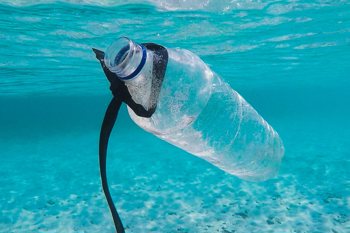
Mid-term evaluation of PI/2019/405-40: " Reducing plastic waste and marine litter in East and South East Asia – Supporting a transition to a circular economy in the region"
- 2021 – 2021
- menos de 500.000 €
- China, Indonesia, Japan, Philippines, Singapore, Thailand, Viet Nam
Systematic and timely evaluation of its programmes and activities is an established priority of the European Commission.
The focus of evaluations is on the assessment of achievements, the quality and the results of Actions in the context of an evolving cooperation policy with an increasing emphasis on result-oriented approaches and the contribution towards EU foreign policy objectives and the implementation of the SDGs.
From this perspective, evaluations should look for evidence of why, whether or how these results are linked to the EU intervention and seek to identify the factors driving or hindering progress.
Evaluations should provide an understanding of the cause and effect links between: inputs and activities, and outputs, outcomes and impacts. Evaluations should serve accountability, decision making, learning and management purposes.
The main objectives of this evaluation are to provide the relevant services of the European Union and the interested stakeholders with:
=an overall independent assessment of the past performance of the Action ‘Reducing plastic wast and marine litter in East and South East Asia – Supporting a transition to a circular economy in the region’ (PI/2019/405-400), paying particular attention to its intermediate results measured against its expected objectives; and the reasons underpinning such results;
=key lessons learned, conclusions and related recommendations in order to improve current and future Actions.
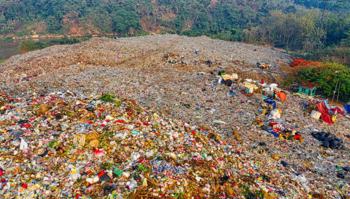
Identification and Formulation of a National Support Project on Green Economic Recovery through an Integrated Circular Economy Approach for the Philippines
- 2021 – 2021
- menos de 500.000 €
- Philippines
General Objective: Ensure that application of ++Circular Economy++ principles and practices in the Philippines are strengthened and embedded as part of the national strategy for post-Covid green economic recovery.
Specific Objective: ++Identification and formulation of a national support project steered by private sector and supervised by Government implementing Circular Economy approaches++ for improved plastic waste management with ++jobs creation++, ++environment safeguard++ and ++climate change response++ co-benefits.
Tasks:
- In alignment with the provisions of the ++EU Circular Economy Action Plan++ and ++EU Plastic Strategy++ identify and formulate an industry-led and Government-steered national project for the Philippines addressing niche areas of comparative advantage for the EU to lead and be transformative in the area of ++plastic waste management++ and ++marine litter++. The project focussed on promoting the enhancement of sustainability in the ++plastics supply chain++ and the reduction of its environmental and carbon footprint, the development of appropriate substitutions to single use plastics, job creation, and the advancement of Extended Producer Responsibility.
- The project proposed methods, investments and approaches to contribute to an ++improved waste management++ according to national climate change mitigation and adaptation targets underscored in the ++Philippine Nationally Determined Contribution++ (NDC). It took a synergetic approach to green recovery through policy support and improved waste management infrastructures, resources, enabling strategies, plans and procedures. This was linked to the broader mitigation and adaptation agenda of the Government, including through targeted policy support and capacity building.
- The project incorporated an active and comprehensive ++role of Civil Society++, representing all segments of society in appropriate areas of engagement (e.g. awareness raising and educational initiatives, recycling, media campaigns etc.) In this context the needs of a comprehensive range of vulnerable groups, including++ women, children and youth, people with disabilities, indigenous people++ etc. were taken into consideration.
- The project secured the involvement of the ++Philippine Department of Environment and Natural Resources++ (DENR) as well as other key Government departments and facilitated a dialogue with selected EU regional Delegations.
- The availability of EU funds were modest with respect to the scale required for the intervention to be truly transformative. For this reason, a strategic approach leveraging EU funds to mobilise larger blending financing from selected E-IFIs was sought.
- Beyond co-funding of specific activities the project took stock and aligned with planned activities under the ++EU Team Europe Initiative++ (EU TEI) for the Philippines and the EU TEI for ASEAN. In addition, synergy with relevant initiatives spearheaded by EU MS and other strategic development partners in the Philippines (e.g. World Bank, Asian Development Bank and the UNDP) were included in a close dialogue.

Final evaluation of projects MLI/021 (Développement rural et sécurité alimentaire), MLI/022 (Formation et insertion professionnelle) and MLI/023 (Décentralisation et bonne gouvernance)
- 2021 – 2021
- menos de 500.000 €
- Mali
The mission's main objective is to carry out a final, internal and independent evaluation of the Mali – Luxembourg program (MLI/021, MLI/022, and MLI/023). In this context, the mission should:
- Analyze the results and specific objectives achieved at the end of the interventions compared to what had been planned in the technical and financial documents and the inception reports
- Analyze the results achieved by the interventions in terms of capacity building (CB). The analysis will be structured around the following four points:
- RC support repository
- Contribution of CD to results and changes
- Contribution of CD to the process of partner empowerment
- Level of institutionalization of CD
- Analyze the management and monitoring of projects/programmes, paying particular attention to:
- the coordination mechanisms between the projects,on one hand, and on the other hand between the program and the counterparts (including the other contributing donors and the national counterpart);
- the operation of the project steering structure;
- Analyze the interventions according to the DAC evaluation criteria
- Analyze interventions according to cross-cutting themes:
- governance for development;
- gender equality;
- environment and climate change.
Monitoring of activities financed under Article 3 of the IcSP in West Africa and the Lake Chad Basin
- 2020 – 2021
- menos de 500.000 €
- Africa (Western)
The general objective of the service was to improve the degree of accountability and quality of certain EU-funded actions by providing the FPI Regional Team with follow-up and monitoring products for these actions and feedback on experience at the end of the project.
The specific objective of this contract was to assist the FPI Regional Team in the monitoring of certain projects financed under Article 3 of the IcSP in the Sahel region and the Lake Chad Basin.
Evaluation of the European Union's cooperation with the Islamic Republic of Mauritania (2014-2020)
- 2020 – 2021
- menos de 500.000 €
- Mauritania
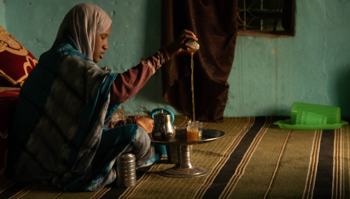
The objective of this evaluation was to provide the relevant EU cooperation services and the general public with a comprehensive and independent assessment of past and current EU cooperation with the Islamic Republic of Mauritania (RIM). In addition, the objective was also to draw the main lessons learned and to make recommendations to guide decision-makers, in particular at the European External Action Service (EEAS) and the Directorate-General for International Cooperation and Development (DG DEVCO), on how to improve strategies, programs and implementation of current and future interventions.
The specific objectives of the evaluation were:
- To provide food for thought for the formulation of the future strategy for the next programming cycle (2021-2027);
- To analyze the coherence of strategies and objectives of development cooperation and the G5 Sahel, and their implementation;
- To assess and provide recommendations on the coherence and complementarity between the different EU, national and regional strategies as well as on the different sectoral policies of EU intervention (cooperation, Fisheries Agreement, EPAs) and the different modalities;
- To evaluate the application of the integrated approach of the EU external action (and in particular of the Humanitarian - Development - Peace nexus) and its efficiency, in order to draw conclusions and recommendations for the establishment of a possible internal process;
- To assess the EU contribution on progress related to the Sustainable Development Goals (SDGs), and the expected progress towards Mauritania's objectives and the macroeconomic outlook (including future gas exploitation) on a medium-term perspective;
- To assess and provide recommendations on the process of dialogue with the government, other development partners and on joint programming.
The evaluation covers the EU cooperation strategy with RIM including its implementation during the period 2014-2020.
The thematic scope of the evaluation covered the following sectors: resilience and inclusive and sustainable growth, governance and rule of law, health, migration and security as well as cross-cutting issues such as gender, environment or human rights. Sectoral logics are developed for each of the priority intervention sectors identified above.
Report available here: https://international-partnerships.ec.europa.eu/publications/evaluation-eu-cooperation-islamic-republic-mauritania-2014-2020_en
EIP - Video and graphics 2020
- 2020 – 2021
- menos de 500.000 €
- Africa, Europe
The objective of this contract was to provide DEVCO.C.7 with professional video and animation expertise, as well as graphic design expertise.
Development of audio-visual products (such as short videos, animated data visualisations and animations) and graphic material on EIP’s work and achievements.
Most of the outputs were requested in English but occasionally in other languages. They applied a consistent visual identity in line with Commission’s Visual Identity Guidelines and the EIP’s ‘look and feel.
Consultancy for undertaking scenario planning on the socio-economic impact of Covid-19 in the SADC Region
- 2021 – 2021
- menos de 500.000 €
- SADC region
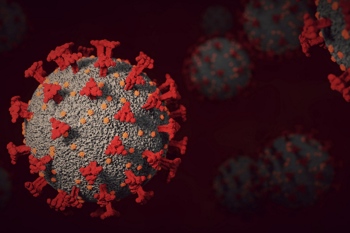
The overall objective of this assignment is to undertake scenario planning on the un-folding of the COVID-19 pandemic in the SADC region with a focus on the broader economic and social consequences, and thereafter, recommend practical response strategies under the different scenarios.
The purpose of this contract is to undertake a review on COVID -19 effects (direct and secondary) in the SADC region for the selected sectors in order to provide recommendations to mitigate the impacts of COVID-19.
The assignment covers the entire SADC region, but is limited to a few sectors for which various studies have revealed that the COVID-19 pandemic has greater impact. These sectors are:
(i) Health;
(ii) Trade;
(iii) Tourism;
(iv) Food Security;
(v) Education;
(vi) Employment; and
(vii) The Informal Sector.
In addition to the selected sectors, the analysis also covers the impact of the pandemic on macroeconomic stability in the region under the different scenarios, and recommend policy responses. The analysis will be based on selected macroeconomic variables (including GDP Growth, Inflation, Budget Deficit, External Debt, Current Account Deficit, External Reserves, Central Bank Credit to Government, and Domestic Savings).
The following steps should be considered:
- Step1 - Identifying key factors
- Step 2 - Developing Scenarios
- Step 3 – Analysing Scenarios
- Step 4 - Recommending action

Framework Contract COM 2015 Lot 1: Evaluation
- 2016 – 2021
- de 5 a 10 millones de €
- Global
This Framework Contract supported the European Commission in conducting evaluations in the area of international cooperation and development relations. One of its key objectives was to ensure that lessons learned and results from EU cooperation strategies and their implementation are accessible to EU services and relevant stakeholders, thereby enhancing decision-making. The evaluations focussed on ‘strategic evaluation’ at various levels, including Country, Regional, Thematic, Sectoral, Instrument, or Modality. The scope was global, encompassing all EU external actions (including non-spending activities such as policy dialogue) related to the portfolios managed by DG INTPA (formerly DEVCO) and DG NEAR.
Evaluations were carried out through individual assignments defined and contracted through ‘Specific Contracts’. The consortium lead, Particip, ensured overall Quality and Contract management.
Evaluations implemented by the Particip-led consortium include:
- Evaluation of EU Budget Support and Blending in the Kyrgyz Republic 2010-2019
- Mid-term evaluation of cross border cooperation programmes between IPA II beneficiaries
- Evaluation of the EU cooperation with Central African Republic (2008-2019)
- Evaluation of the EU's external action support in the area of gender equality and women's and girls' empowerment (2010-2018)
- Evaluation of the European Union's cooperation with the Islamic Republic of Mauritania (2014-2020)
- External Evaluation of EU’s Support to Conflict Prevention and Peace Building (2013-2018)
- Evaluation of the EU's external action support in the area of migration (2008-2018)
- Evaluation of EU support to local authorities in Enlargement and Neighbourhood regions (2010-2018)
- Evaluation of EU Support for Rule of Law in Neighbourhood Countries and Candidates and Potential Candidates of Enlargement in the period 2010-2017
- Evaluation of Spain and the European Union's cooperation with Nicaragua (2009-2017)
- Evaluation of the European Union’s Regional Level Cooperation with Latin America (2009-2017)
- Chapeau Contract for the Evaluation of the Common Implementing Regulation (CIR)
- Evaluation of the Development Co-operation Instrument (DCI)
- Evaluation of Greenland Decision (GD)
- Coherence Report on the External Financial Instruments and Co-ordination
- Evaluation of the European Neighbourhood Instrument (ENI)
- Evaluation of the Instrument for Pre-accession Assistance (IPA II)
- Evaluation of European Union's Budget Support operations in Peru (2009-2016)
- Evaluation of regional organisations in the Western Balkans