
Nuestros proyectos
Explore la experiencia de Particip en proyectos desarrollados en distintos países, sectores y ámbitos de especialización.
Nuestras referencias ofrecen una visión general de las misiones finalizadas y en curso, incluidos sus objetivos, alcance geográfico, duración y valor contractual.
Mostrando 511–520 de 980 referencias

Visibility & Communication for the European Union Development Cooperation in Bangladesh
- 2020 – 2021
- de 500.000 € a 1 millón de €
- Bangladesh
The overall objective of the project was to enhance the visibility of EU development cooperation in Bangladesh.
The specific objectives were:
- The EU is perceived as an important and longstanding partner of development cooperation in Bangladesh.
- The EU is perceived as an important strategic partner for Bangladesh (beyond development).
- EU development cooperation is seen as making a difference in people's daily life in Bangladesh in the long term, in particular with regard to the priority sectors in the Multi-annual Indicative Programme (MIP) 2014-2020, i.e. democratic governance, food & nutrition security, and education & skills development.
- EU development cooperation in Bangladesh is perceived as a good investment/win-win option for the beneficiary country and the EU.
Technical Assistance for EU Joint Programming strategy and aid effectiveness agenda in Madagascar
- 2020 – 2021
- menos de 500.000 €
- Madagascar
To enhance the overall effectiveness of the European aid to Madagascar in support of the achievement of the Sustainable Development Goals (SDGs) through the development of EU Joint Cooperation Strategy Paper 2021-2027.
We undertook an assessment of the key lessons learnt, progress, achievements and challenges from the first phase of Joint Programming process in Madagascar (diagnosis and structuring of the framework).
- Assist the DUE and the EU MS involved in developing a Joint Programming in Madagascar to finalise the Joint analysis, the strategic response documents, the implementation of EU Division of Labor (DoL) and prepare the Joint Programming Strategy for the 2021-2027 period.
- Increase the impact of the European aid to Madagascar, through increased coordination, harmonisation and alignment among EU Member States and the European Delegation and with other development partners (DPs), leading to greater aid effectiveness and visibility of European joint support.

Mediterranean Climate Finance Strategy
- 2019 – 2021
- menos de 500.000 €
- Albania, Algeria, Bosnia & Herzegovina, Egypt, Israel, Jordan, Lebanon, Mauritania, Montenegro, Morocco, Palestine, Syria, Tunisia, Türkiye
++Background++
In March 2017, the UfM Climate Change Expert Group (UfM CCEG) adopted a 5-years work-program, which stress the importance to strengthen climate finance in the Euro-Mediterranean region to address climate change issues. In April 2019, UfM Member States agreed to pursue the assessment of climate finance in the UfM region, with the view of providing sound basis for a renewed climate mandate of the UfM by 2020, with the new UfM Ministerial Declaration on Climate Change.
++Target Groups++
Target gruops of tehis technical assistance are: UfM Institutions, UfM Member States, International Financial Institutions, International Climate Change Institutions, Civil society representatives, Private sector Organisations and Institution interested in UfM regional integration.
++Objectives++
- The primary objective of this technical assistance is to enhance the knowledge of UfM Member States, International Financial Institutions, civil society representatives, private sector organisations and any other institution interested in the UfM regional integration, regarding the level of financial commitments made in 2018 and in 2019 to address climate change issues in the UfM region.
- The second objective is to explore the feasibility of financial mechanisms, which could be implemented in the UfM region with the aim of enhancing the mobilisation of climate finance for specific population or sectors, while building on lessons learned in some specific sectors (in particular in the water sector) or potentially in other regions, such as Caribbean or Latin America.
++Expected Results++
- R1 - to have a precise figure of financial commitments made to recipients in UfM developing countries in 2018 and in 2019, by public/private donors from developed/developing countries;
- R2 - to have a precise view of commitments and disbursements made by national governments, local authorities, private sector and, if possible, households addressing climate change in UfM developing countries;
- R3 - to have the methodology and process in place for monitoring, reporting and verifying climate finance commitments made in the UfM region, especially by ensuring the involvement of all relevant actors, including the scientific community, the private sector and NGOs;
- R4 - quantitative and qualitative analysis of financial mechanisms, which could be implemented in the UfM region with the aim of enhancing the mobilisation of climate finance for specific population or sectors.
Evaluation of R4 Rural Resilience Initiative in Masvingo and Rushinga Districts in Zimbabwe (2018-2021)
- 2021 – 2021
- menos de 500.000 €
- Zimbabwe
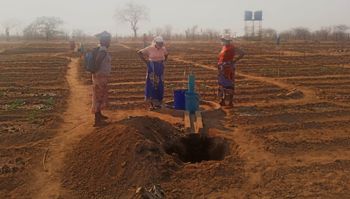
The decentralized evaluation of the R4 Rural Resilience Initiative was commissioned by WFP Zimbabwe. The R4 Initiative managed climate-related risk to enhance the food and nutrition security of farming households. Its integrated risk management strategy relied on four pillars: risk reduction (through a food for assets scheme and improved agricultural practices), risk transfer (through drought insurance), risk reserves and prudent risk taking (through village savings and loan groups, and market access for smallholder farmers).
The evaluation period covered the first phase of the R4 Initative in Zimbabwe, which ran from January 2018 to June 2021 and targeted 6,000 beneficiaries in the rural districts of Masvingo and Rushinga.
The evaluation served the double purpose of accountability and learning (with emphasis on the latter) and addressed the evaluation criteria of relevance, efficiency, effectiveness, impact, and sustainability, mainstreaming gender equality and empowerment of women throughout.
The mixed methods approach of the evaluation combined qualitative methods (document review, remote key informant interviews with national stakeholders, as well as field-based in-depth interviews with local stakeholders, focus group discussions with beneficiaries, and direct observation) and quantitative methods (a phone survey with beneficiaries, and analysis of existing M&E data).
The evaluation report is available at: https://www.wfp.org/publications/zimbabwe-r4-rural-resilience-initiative-masvingo-and-rushinga-evaluation
Visibility of EU and EU assistance in the Republic of Moldova in 2021
- 2021 – 2021
- menos de 500.000 €
- Moldova
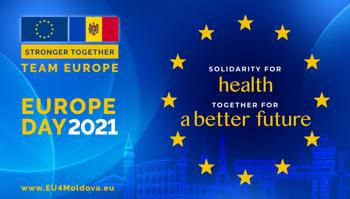
The overall objective of the project was to achieve increased visibility of EU and the EU assistance provided to the Republic of Moldova, while providing targeted information on tangible results for the Moldovan citizens. The focus of this contract was EU values and assistance provided to the country, taking as reference the framework of the Association Agreement (AA) and the Deep and Comprehensive Free Trade Agreement (DCFTA). In addition to this, increased focus was placed on visibility of the European Neighbourhood Policy (ENP), the European Neighbourhood Instrument (ENI), the Eastern Partnership (EaP) and EU regional policies.This objective was implemented via three key areas:
1. Europe Day events
2. High-level communication events, cultural events and ad-hoc events
3. Communication tools of EU Delegation
Last but not least, a special focus was placed on the role and importance of European values and culture, thus providing a pivotal role to communication activities focused around cultural aspects, both of the EU and the Republic of Moldova.

Consultancy Services for the Production of Country Evaluation Briefs Regarding International Development Assistance to Norwegian Partner Countries
- 2019 – 2021
- menos de 500.000 €
- Colombia, Ghana, Indonesia, Niger, Uganda
The purpose of this assignment is to collect, collate and systematically present, in the form of Evaluation Portraits and Country Evaluation Briefs, findings from existing evaluations and other documents of development interventions in five Norwegian partner countries: Colombia, Ghana, Uganda, Indonesia and Niger. The first four countries are characterised as partners “for long-term development” while Niger is characterised as a partner “for stabilisation and conflict prevention”.
The objective of this assignment is to provide accessible and relevant knowledge about Norwegian and other donors’ development efforts in Norway’s partner countries through systematising findings from existing evaluations of development interventions. The exercise emphasises learning, supplementing a growing database of systematised, relevant, context-specific and accessible information. Beyond its intrinsic value, this knowledge forms a basis for development policies and strategies, contributes to development efforts in the field and reveals knowledge gaps that could be covered by future evaluations.
The main target groups for the study are the Norwegian Ministry of Foreign Affairs, Norad and Norwegian embassies in the selected partner countries and elsewhere.
The assignment is guided by the following questions:
- What are the key contextual features characterising each of the studied case countries, and how do these contextual features affect development and/or humanitarian interventions in the respective country/-ies?
- What is the nature of the programmes and projects studied, including levels and trends of development/humanitarian support?
- What are the major findings in the assessed material concerning the goals, methods, challenges, results and sustainability of the interventions studied?
- How do the studied interventions perform in terms of such cross-cutting issues as human rights; women’s rights and gender equality; climate and environment; and anti-corruption?
- Which intended and, if any, unintended effects of the interventions, positive and negative, direct or indirect, can be identified?
Report available here: https://www.norad.no/en/front/evaluation/about-evaluation-department/evaluation-series/country-evaluation-briefs/
Innovative Pilot Evaluation: Aflatoxin Reduction in the Rwanda Maize Value Chain from October to December 2021
- 2021 – 2021
- menos de 500.000 €
- Rwanda
This pilot evaluation, commissioned by the WFP Regional Bureau of Nairobi in cooperation with WFP Rwanda and the Farm to Market Alliance (FtMA), assessed the introduction of a new technology for enhanced food safety of maize in Rwanda.
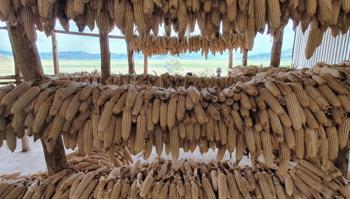
Rwandan maize is particularly affected by aflatoxin, a carcinogen, which prevents farmers from selling their harvests to premium domestic buyers that adhere to aflatoxin regulations. In this context, AflaSight (a start-up firm based in Rwanda) uses an innovative aflatoxin reduction technology that removes aflatoxin from already infected maize kernels at industrial scale. The direct users of AflaSight are agro-processors and traders that source maize from smallholder cooperatives. The strategic objective of AflaSight is to solve the aflatoxin problem in maize in Rwanda and enable smallholder farmers to connect with premium buyers of domestically produced maize.
The evaluation covered the pilot period from October to December 2021 and served the double objectives of accountability and learning (with emphasis on the latter). It followed a theory-based mixed methods approach to answer the nine main evaluation questions linked to different evaluation criteria (relevance, effectiveness, efficiency, impact, and sustainability), streaming gender equality and empowerment of women farmers throughout. Primary data was collected through key informant interviews in Kigali, as well as interviews, focus groups, direct observation, and a large-scale survey with 400 smallholder farmers in the Southern Province of Rwanda. The team also analysed existing M&E, financial and technical data, and carried out a document review, as well as a cost-effectiveness analysis of AflaSight.
The main users of the evaluation are WFP, FtMA, Government institutions involved in agricultural production and food standards, private sector agents, and smallholder cooperatives.
The evaluation report and brief are available at: https://www.wfp.org/publications/rwanda-innovative-pilot-evaluation-aflatoxin-reduction-rwanda-maize-value-chain
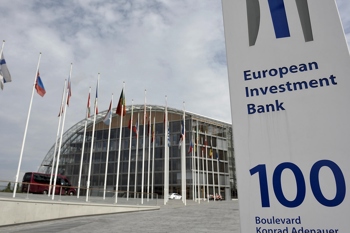
Framework contract for consultancy services to support the Operations Evaluation Division of the EIB
- 2016 – 2021
- Up to 2.600.000 EUR
- Luxembourg
This framework contract was set up to support the implementation of EIB's evaluations, EIB/EV regularly calls upon the support of experienced evaluation consultancy companies with appropriate sector expertise and language skills.
As part of the consortium led by Ramboll within this framework contract, Particip participated in the implementation of the following EIB evaluations:
- (Ramboll lead, Particip QA) Support to the Evaluation Cooperation Group’s (ECG) Working Group on evaluation recommendations, management responses and feedback loops
- (Particip lead) Evaluation of the Eastern Partnership Technical Assistance Trust Fund
Montenegro-Podgorica: IPA - Development of Vocational Education Qualifications in Line with Labour Market Need
- 2019 – 2021
- menos de 500.000 €
- Western Balkans
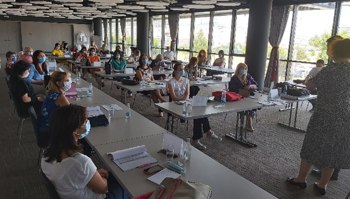
The purpose of this project was to contribute to the modernization of the vocational education and training system of Montenegro by equipping learners for lifelong learning and employment in line with modern rapid technological development, new labour market jobs and thereby overcomes the lack of skills needed in the labour market.
These objectives were achieved through the development of professional qualifications and training of VET teachers and in-company trainers in vocational and practical education as well as through the improvement of student-centred learning and practical teaching and learning.
The development of qualifications and programmes enabled an adaptation to current labour market and societal needs, in line with the National Qualifications Framework (NQF). The modernization of the curriculum and increase in the scope and quality of work-based learning empowers youth and young adults to take up the labour market challenges and it facilitates the transition from school to work and/or further education and lifelong learning.

Monitoring of pledges and policy commitments from Conferences on the Future of Syria and the Region
- 2020 – 2021
- menos de 500.000 €
- Jordan, Lebanon, Syria
++Global objective++: The overall objectives of the project were as follows:
- To hold the participants of past and future conferences on 'Supporting the future of Syria and the region’ accountable for the financial pledges made at the conference, to inform neighbouring countries of the international support they will receive as they implement their policy commitments, and to increase accurate, timely and comprehensive information on the international response to the Syrian crisis in order to inform relevant stakeholders gap analysis and programming (donors, UN & implementing partners, etc).
- To address the discrepancy between the funding of the different response plans and the commitments of the pledges in Lebanon and Jordan; and to facilitate the publication of conclusions and data with consistent methodology.
- To contribute to the monitoring of the key mutual policy commitments towards Lebanon and Jordan made by donors and partners countries on the occasion of the Brussels conferences.
- To allow the EU to communicate clearly on the support provided to Syria and the region.
++Specific objectives++: The purposes of this contract were as follows:
- Financial tracking:
- Collate information from various sources and other organisations that made financial pledges at the Brussels IV Conference, and triangulate this information with recipient organisations;
- Assess how much of these financial commitments will be committed and contracted to support: a) the UN appeals, b) each recipient country affected by the Syria crisis in the region (Syria, Lebanon, Jordan, Turkey, Iraq, and Egypt); and how much will be delivered to a) the various sectors and b) through the various implementing channels;
- Monitor disbursement of financial lending by institutions against statements made at the Conference, including terms of loans to determine if they are “concessional” under the revised OECD DAC principles agreed on 16 December 2014;
- Provide an explanation on the gap between various data sources on financial contributions related to the Syrian Crisis response in Lebanon and Jordan.
- Reporting on policy commitments:
- Report on progress made in Jordan and Lebanon on key mutual policy commitments taken in the series of the London and Brussels conferences as well as providing analytical reports on status and gaps.
- Describe in depth the findings including gaps analysis, and provide recommendations on the basis of the Steering Committee LCRP common monitoring framework for Lebanon and on the basis of the monitoring matrix elaborated for Jordan (by Agulhas) in 2019 and mentioned above.