
Nuestros proyectos
Explore la experiencia de Particip en proyectos desarrollados en distintos países, sectores y ámbitos de especialización.
Nuestras referencias ofrecen una visión general de las misiones finalizadas y en curso, incluidos sus objetivos, alcance geográfico, duración y valor contractual.
Mostrando 411–420 de 980 referencias
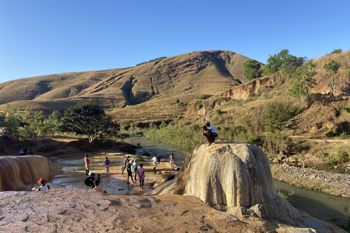
Madagascar: Evaluation of WFP Country Strategic Plan (2019-2023)
- 2022 – 2023
- menos de 500.000 €
- Madagascar
This independent evaluation of WFP Country Strategic Plan (CSP) in Madagascar assessed the strategic positioning, added-value and results of WFP operations in the Country from 2019 to 2023.
The evaluation served the double purpose of accountability (performance and result assessment) and learning (why certain results occurred or not, lessons and evidence for decision-making). The evaluation was envisioned to inform the design of the new CSP for Madagascar, scheduled for Executive Board consideration in November 2023.
CSP key sectors and activities included:
- Emergency preparedness and response, including cash-based transfers
- Unconditional resource transfers to support access to food
- Malnutrition prevention activities
- Nutrition and school feeding
- Livelihoods activities, including smallholder farmer support
- Institutional capacity strengthening
- Logistics, supply chains and humanitarian aid coordination
Cross-cutting themes included: Gender equality and empowerment of women (GEEW), humanitarian principles and protection, accountability to affected populations (AAP), environment
The evaluation employed a mixed-method approach that triangulates qualitative and quantitative data from a variety of sources. For this purpose, the evaluation team conducted interviews with different stakeholders including WFP staff at HQ, regional and country level, WFP cooperating partners, donors, UN agencies, government entities as well as focus group discussions with the beneficiaries.
Link to the publication: https://www.wfp.org/publications/evaluation-madagascar-wfp-country-strategic-plan-2019-2023
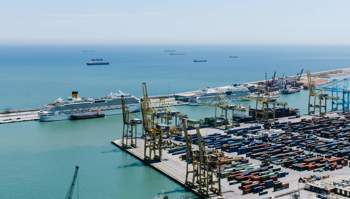
Job partnerships and promotion of SME in Senegal - Trade Facilitation Project "Digitalisation of the Import Process for Agro-Industrial Products"
- 2019 – 2023
- de 1 a 2 millones de €
- Senegal
The objective of the contract was the identification, development, implementation and monitoring of a trade facilitation project in Senegal. The project developed was titled “Automation of the Import Process for Agro-Industrial Products”. It was anchored within the Invest for Jobs program in Senegal implemented by GIZ on behalf of the German Federal Ministry for Economic Cooperation and Development (BMZ). It was part of the operational framework of the Global Alliance for Trade Facilitation (GATF), which contributed its expertise, lessons learned and best practices to the project.
The project focused on the digitalisation and automation of parts of the import process for pilot agroindustrial products with the aim to reduce the time and costs involved in importing these products. It also aimed to contribute to improving trade and investment conditions for African and European companies in Senegal, in the agro-industrial sector.
The result was the operationalization of the newly-developed digital platform for requesting import permits for agro-industrial products. The related outputs were the following:
1. Digital tools were designed to automate the import process for agro-industrial products and were integrated into the electronic single window.
2. Cross-border agencies and SMEs were enabled to use the new digitalised procedure for importing the pilot agro-industrial products.
3. The capacities of the public and private. stakeholders to coordinate and monitor the digitalised import processes for agro-industrial products were improved.
During contract implementation, the contract was expanded to include a second project focusing on technical support to the DPV (Direction de la Protection des Végétaux) for the implementation of an "E-Payment" solution in line with the digitalisation process set up by the DPV through the implementation of the ePhyto project, which aims to digitize the phytosanitary certificate as well as the payment of services rendered by this department.
The results of the contract were as follows:
- Reduction of time (7.9 hours per permit) for border / documentary compliance for imports.
- Reduction in the documentary and border compliance cost imposed on businesses for imports (savings of 18,301 F CFA per permit).
- Reduction of indirect supply chain costs for imports (reduced transit time, storage costs, demurrage, opertional costs related to personnel needed for the process, etc.).
The project was a catalyst for the digitalisation of the DPV's processes, extending the platform's functions to other services such as importer registration and approval, and the implementation of an electronic payment solution. Trade facilitation in agro-industry and the related sectors (services linked to agro-industry) will ensure greater gender equality and empower women, given that this sector employs more than half of the global female workforce.

FWC SIEA 2018 contract for actions in Aral Sea region
- 2022 – 2023
- menos de 500.000 €
- Uzbekistan
The specific objectives were:
1. To ++raise awareness of EU's policies, principles and values in Uzbekistan++, notably in relation to the protection of the environment and climate action in the Aral Sea basin.
This was expected to be done through the organisation of a study visit to the Aral Sea region in order to:
i) disseminate information about the work being done by the Government and MPHSTF in the Aral Sea region;
ii) demonstrate a successful case that proves it possible to achieve significant and long-lasting results with limited funds;
iii) pave the way for future green investments and support to the region.
2. ++Provide assistance to the government of Uzbekistan++ in its efforts to mitigate negative effects of the Aral Sea disaster to the environment and population of Karakalpakstan.
3. Contribute to ++improvement of the ecosystem++ and ++sustainable life in the saline lands++ of the dried bottom of the Aral Sea by ++planting of 27 000 trees++ that are resistant to the climatic conditions of the region, such as ash, elm, catalpa, willow, saxaul, kandym, and others.
Dialogue with Civil Society for Rights and Equality in the ENI Southern Neighbourhood
- 2019 – 2023
- de 2 a 5 millones de €
- ENI South
"Dialogue with Civil Society for Rights and Equality in the ENI Southern Neighbourhood" was a Technical Assistance Programme with the overall objective to strengthen the role of CSOs active at the regional scale, in building sustainable development, regional cohesion and resilience, as well as in influencing policymaking in the Southern Neighbourhood and the Euro-Mediterranean Space.
The specific objective was to strengthen the overall capacities and accountability of civil society organisations and facilitate their involvement so as to boost their contribution to the political and institutional framework at the regional level. This meant reinforcing the existing initiatives of support to CSOs in the Neighbourhood South, complemented with new elements, and to make CSOs efforts in the ENP South region more visible and structured. It aimed at enabling civil society to advocate and promote regional solutions to regional challenges, working jointly with governments, authorities and regional institutions while holding them to account.
Results:
1. Effective engagement with regional organisations and advance their agendas through policy dialogue.
2. Creation of regional thematic networks of CSOs.
3. Enhanced the capacities of Majalat, the regional hub of CSO on structured dialogue at regional level and with the EU Institutions.
4. Increased participation of young women and men in public life by expanding programmes for young civil society leaders.
5. Increased CSO contribution to developing resilience, defined in this instance as the capacity to resist adverse conditions, as well as contributing to stability at regional level by enabling CSOs to articulate their messages to regional authorities more effectively.
6. Support to EU Delegations in their engagement with civil society in partner countries provided.
Evaluation of the FEMIP trust fund
- 2022 – 2023
- menos de 500.000 €
- ENI South
The FEMIP Trust Fund, launched in 2004, was set up to provide support to critical projects and more generally the economic development of the EU’s Southern Neighbourhood. The evaluation aimed to support the Assembly of Donors’ decision on the future of the Fund with solid evidence on the Fund’s performance and ongoing relevance, including in light of other similar instruments currently available.
The purpose of the evaluation was to determine the extent to which the FEMIP Trust Fund has helped to improve EIB operations in EU’s Southern Neighbourhood countries since its establishment. Particip analysed the functioning of the FEMIP Trust Fund, its decision-making process, its governance arrangement and its organisation, including a review of the portfolio of TA operations that were financed through the FEMIP Trust Fund.
The evaluation work encompassed the following main phases:
- Structuring phase: the evaluation team took ownership of the evaluation framework and approach, further amended and developed it where necessary.
- Data collection and analysis phase: this phase entailed a thorough desk review, data collection, validation and analysis. The analysis, focussing on 10 case studies of TA operations lead up to the drafting of the Evaluation Report
- Preparation of the final report: the Team Leader participated in the presentation of the evaluation’s emerging findings to IG/EV and to the Evaluation Reference Group. Based on the Feedback of the Reference Group, the Team Leader drafted and finalised the Evaluation Report under the guidance of IG/EV.

TA-9807 PNG: Preparing the Improved Technical and Vocational Education and Training for Employment
- 2020 – 2023
- de 500.000 € a 1 millón de €
- Papua New Guinea
This Transaction Technical Assistance (TRTA) is provided to assist the Department of Higher Education, Research, Science and Technology (DHERST) to
- Design and prepare a project that will address key TVET challenges able to respond to labour market needs,
- Assess the technical suitability, economic, financial and social viability, capacity and institutional issues, gender issues and proposed actions, address environmental and social safeguards of the project; and
- Identify and implement selected measures to improve project implementation capacity of DHERST and other relevant government agencies.
The TA designs, undertakes due diligence and prepares project documentation for the future TVET project. The TA also assists in building the capacity of the government during their assignment, including implementing project management trainings and coaching as required.

Mid-term evaluation for Promoting biodiversity and sustainability in the agriculture and food sector through economic valuation (TEEB implementation)
- 2022 – 2023
- menos de 500.000 €
- Global
Systematic and timely evaluation of its programmes and activities is an established priority of the European Commission.
The focus of evaluations is on the assessment of achievements, the quality and the results of Actions in the context of an evolving cooperation policy with an increasing emphasis on result-oriented approaches and the contribution towards EU foreign policy objectives and the implementation of the SDGs.
From this perspective, evaluations should look for evidence of why, whether or how these results are linked to the EU intervention and seek to identify the factors driving or hindering progress.
Evaluations should provide an understanding of the cause and effect links between: inputs and activities, and outputs, outcomes and impacts. Evaluations should serve accountability, decision making, learning and management purposes.
TA to the establishment of the coordination cell of interventions envisaged in the financing agreement for the environment and sustainable agriculture for protection of biological priority sites of the DRC
- 2018 – 2023
- de 2 a 5 millones de €
- Congo (Kinshasa)
The protection of DR Congo's protected areas requires a concomitant, coordinated and coherent effort to conserve nature within parks and improve the well-being of the population living in peripheral areas, through economic and social benefits. positive social issues. Within this context, the European Union and the DRC concluded a financing agreement to support action to contribute to the protection of the country's ecosystems.
The Coordination Unit of the NIP 11th EDF E&AD DRC Program was called upon to support the EDF National Authorizing Officer in the management of the activities foreseen by the financing agreement.
The ++overall objective++ of the project was to contribute to the protection and enhancement of the unique environmental capital of the DRC by increasing the positive economic benefits for the surrounding populations.
The++ specific objectives++ was:
- to increase the appropriation of the concerned administrations by feeding the reflection at national level with the lessons of the concrete experiences of the NIP 11th EDF Environment and Sustainable Agriculture.
- to ensure that the program is implemented in accordance with the objectives of the financing agreement.
The results to be achieved by the implementation of the project were the following:
- The Cell is set up and operational
- The integrated planning, monitoring, evaluation and decision support system (PME-DSS) of the NIP 11e EDF E-AD DRC Program is fully operational
- The Steering Committee of the Program Convention fully assumes the decision-making power devolved to it by the Financing Agreement
- The progress reports of the PIN 11e EDF E-AD DRC Program and other documents related to its implementation are prepared in a timely manner and submitted to the project owner and stakeholders
- Program achievements, lessons learned and good practices based on the experience of the program are made available to relevant stakeholders and may be integrated into sectoral policies
- The exchange of information between stakeholders, communication and visibility of the program are ensured.

Evaluation of the EU cooperation with Ukraine (2014-2020)
- 2021 – 2023
- menos de 500.000 €
- Ukraine
This evaluation has two overarching objectives. Firstly, to provide the relevant external co-operation services of the European Union (EU) and the wider public with an overall independent assessment of the EU's cooperation with Ukraine between 2014 and 2020. And secondly, to identify key lessons and to produce recommendations in order to inform the responsible decision makers on how to improve the current and future strategies, programmes and actions of the EU in the country.
Its specific objectives are the following:
- To assess the performance (relevance, efficiency, effectiveness, coherence, impact, sustainability and EU added value) of EU support (policy dialogue and financial assistance); and
- To provide recommendations for the next programming period.
The evaluation pays particular attention to the areas of i) good governance, ii) economic sector reforms and iii) post-emergency conflict assistance. It is intended to lead to the identification of conclusions, lessons learnt (both positive and negative), good practices regarding the achievement of the EU’s support for Ukraine with a set of targeted and useful forward-looking recommendations for the improvement of the programming, assistance, and implementation of current EU interventions in the country.
The evaluation was terminated by the EU due to Russia's unprovoked invasion of Ukraine.
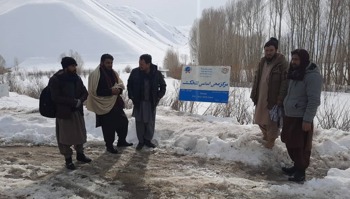
Provision of Third Party monitoring services for Sehatmandi Implementing Partners (UN CERF)
- 2021 – 2023
- de 2 a 5 millones de €
- Afghanistan
In the past 20 years Afghanistan worked hard to increase access to health services across the country, with remarkable progress. The Sehatmandi project introduced a performance management system for the service providers (SPs) of the BPHS/EPHS health services. This system was supported by an extensive independent Third-Party Monitoring program needed to hold service providers accountable and to monitor the availability and quality of services for better decision-making and allocation of resources. In light of the recent developments, it was crucial to maintain appropriate and accessible health services, which requires sufficient human resources and medical supplies. WHO/UNICEF jointly ensured the continuation of the health services in Afghanistan for an initial period of three months, starting on November 2021 until January 2022. To ensure effective performance monitoring of the health services provided and enable payments to SPs, Particip/KIT proposed to carry out TPM services.
I. HMIS Verification and HF functionality Assessment
Specific Objectives for Verification
- Verified the HMIS key performance output indicators (11 P4Ps), covering the period from November 2021 to January 2022.
- Verified the functionality, as defined per the minimum standards of services (MSS), set in the Afghanistan MoPH SoP for BPHS and EPHS, covering the period from November 2021 to January 2022.
- Verified the monthly salary payments for the health staff for the period from November 2021 to January 2022.
- Assessed the HMIS reporting performance (completeness, timeliness, consistency and accuracy) covering the verification period from November 2021 to January 2022)
Specific objectives for Assessing trends
- Assessed the HMIS reporting performance of the 11 P4P indicators (completeness, timeliness and consistency) during the period from July 2021 to December 2021).
- Assessed the functionality of BPHS and EPHS facilities implemented by contracted SPs (NGOs), and the level of compliance with the minimum standards of services, as defined in the Afghanistan MoPH SoP during the period from July 2021 to December 2021.
- Conducted trend analyses to assess the changes in the health services provided since July 2021 and the fluctuations overtime.
II. Drug Quality Assessment
Specific objectives
- Screened the quality of selected medicines in a representative national sample of public health facilities (BPHS and EPHS) supported by WHO/UNICEF during the three months of November 2021 to January 2022.
- Identified medicines that are not in compliance with quality standards and regulatory enforcement from both public sector facilities (BPHS and EPHS)
- Recommended appropriate regulatory actions and adjust pharmaceutical policies based on results of the quality screening of the medicines distributed in public and private sector
- To enhance local capacities to conduct cost-effective and sustainable drug quality assessment
Main staff provided:
- Field manager 338wds
- Finance officer 338wds
- Quality control officer 338 wds
- Logistics officer 338wds
- Deputy data manager 338 wds
- HR officer 338wds
- Office manager 338wds
- Support/admin staff 338wds