
Nuestros proyectos
Explore la experiencia de Particip en proyectos desarrollados en distintos países, sectores y ámbitos de especialización.
Nuestras referencias ofrecen una visión general de las misiones finalizadas y en curso, incluidos sus objetivos, alcance geográfico, duración y valor contractual.
Mostrando 371–380 de 980 referencias

Joint End-Term-Review of i) UGA180371T - (EHA) Roll out the National Results Based Financing Policy in the Acholi Sub-Region and ii) UGA20003 - (LSF) Leveraging strategic health financing for Universal Health Coverage
- 2023 – 2023
- menos de 500.000 €
- Uganda
The Joint End-Term-Review of i) EHA - Roll out the National Results Based Financing Policy in the Acholi Sub-Region and ii) LSF - Leveraging strategic health financing for Universal Health Coverage was commissioned by Enabel.
EHA and LSF aimed to contribute to Universal health coverage with focus on primary health care services in Tanzania. EHA runs from 2019 up to 2024, and covers the West Acholi region with a budget of EUR 9,7 million. LSF runs from 2021 up to 2024, and covers the West Acholi, Rwenzori and West Acholi regions with a budget of EUR 4 million.
The end-term review served the purposes of accountability (through performance assessment), and learning and steering (by explaining what works and does not work, and why, as well as through evidence-based lessons for other interventions and recommendations for decision-making). It addressed the six evaluation criteria of relevance, coherence, efficiency, effectiveness, impact and sustainability, as well as the cross-cutting issues of gender and youth empowerment, among others.
Qualitative data were collected during a two-week field mission (including stakeholder interviews, focus group discussions with leadership and members of cooperatives, and direct observation) and in remote interviews. The review also drew on documents and existing quantitative M&E and survey data.

Thematic evaluation of FPI.2 managed responses to Counter Terrorism and Preventing/Countering Violent Extremism (CT-P/CVE) in beneficiary countries (2017-2022)
- 2022 – 2023
- menos de 500.000 €
- Albania, Burkina Faso, Indonesia, Ivory Coast, Jordan, Kazakhstan, Kosovo, Kyrgyzstan, Lebanon, Malaysia, Maldives, Morocco, Mozambique, Niger, North Macedonia, Pakistan, Philippines, Senegal, Sri Lanka, Tajikistan, Thailand, Tunisia, Turkmenistan, Uzbekistan
The main objectives of this evaluation are to provide the relevant services of the European Union, the interested stakeholders with:
- An overall independent assessment of the performance of selected CT-P/CVE measures funded by FPI.2 during the years 2017-2022, paying particular attention to its different levels of results measured against its expected objectives; and the reasons underpinning such results
- As a particular approach to regional actions, a specific case study shall be carried out to assess the regional framework for support to CT-P/CVE measures in the Asian context, managed by the Regional Team in Bangkok. It is expected that the present evaluation assesses the relevance, added value and success of developing a model for CT and P/CVE actions, respectively, which have been replicated in different countries/contexts in Asia/Pacific (in Pakistan, Sri Lanka and Maldives for CT; and in Southeast Asia, Sri Lanka and Maldives for P/CVE). If deemed relevant, links can also be made to regional approaches in other RTs;
- Key lessons learned, conclusions and related recommendations in order to improve current and future interventions.
In particular, this evaluation will serve the contracting authority and other interested services to better understand the performance of the Intervention, its enabling factors and those hampering a proper delivery of results to inform the planning and implementation of current and future support to tackle CTP/CVE.
The main use of the results of the evaluation is expected to be
- To draw general lessons that can be used for the future approach to interventions in the sector
- To draw specific lessons that can be replicated in other similar interventions
- To draw specific lessons from the regional approaches, in particular the one applied by the Regional Team in Bangkok in terms of stocktaking, dynamics and replicability.
The main users of this evaluation will be the contracting authority, FPI.2, including its Regional Teams in Bangkok, Nairobi, Dakar, Eastern Europe and Central Asia (managed from Brussels). The Regional Team in Brasilia is less involved since they currently do not manage any CT-P/CVE projects.

Study on the spread of radicalization attempts in Liberia and Guinea Conakry
- 2022 – 2023
- menos de 500.000 €
- Guinea (Conakry), Liberia
The global objective of this study was to enhance the understanding of the reported recent attempts to radicalise and recruit individuals (including, but not limited to, dynamics of recruitment, motivations, target groups and threat posed) in the countries covered by the scope of the study, and of the threats they pose. To achieve this, the study looked into the interrelated relevant phenomena (including grievances, political dynamics and foreign religious influences). The final aim was to contribute to the development of potential EU support to address these challenges and build resilience and social cohesion.
The specific objectives of the project were:
- To investigate the dynamics of the reported growth of radicalisation and recruitment efforts in Liberia and in Guinea- Conakry (possibly linked to the expansion of Wahhabism/Salafism in the region).
- To assess the threat posed by such potential expansion and its interrelations with relevant national and regional causes of fragility.
- To assess the gaps, needs and interest for a possible EU intervention, complementing existing efforts. This assessment should consider opportunities, challenges and risks of such an intervention.
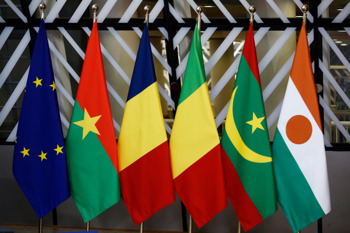
Production of the Sahel Alliance 5 years results report
- 2023 – 2023
- menos de 500.000 €
- Burkina Faso, Chad, Mali, Mauritania, Niger
The members of the Sahel Alliance have chosen to concentrate their efforts in five priority sectors of intervention, in line with the development priorities established by the G5 Sahel countries: Agriculture, rural development and food security; Decentralisation and basic services; Education and youth employment; Energy; Governance.
The overall objective of this contract is to produce the 5-years Technical Report in line with the needs of the SA needs. In line with the commitments of the SA and its members, the Sahel Alliance Coordination Unit (UCA) plans to produce a SA 5 years results report in 2023.
The 5 years results report will include the following elements:
- Analysis of the evolution of the national indicators included in the Alliance results framework in relation to the target values set by the G5 Sahel countries.
- The analysis of the aggregated results of the projects included in the Alliance Sahel portfolio in line with the project indicators included in the Alliance Sahel results framework.
- Analysis of the achievements attributable to the Sahel Alliance stricto sensu will beproduced, in order to show whatthe platform has collectivelyachieved and what its membersare achieving individually.
The following elements should be taken into consideration while drafting the report:
- A qualitative analysis will be needed, particularly in terms of Sahel Alliance member organizations contribution to the provision of basic services;
- The contexts of Sahelian countries (crisis, displacement of population, COVID-19, etc.) should be taken into account in the analysis of results where possible;
- Where possible, the results obtained should be read with regard to the existing policy messages and the sectoral notes issued by the sectoral and thematic coordination groups of the SA in order to measure their operational translation

European Union Electoral Follow-up Mission (EU EFM) Malawi 2022
- 2022 – 2023
- menos de 500.000 €
- Malawi
The overall objective of this assignment was to contribute to improving the electoral and democratic framework of Malawi during the inter-election period and raising awareness and understanding of the EU EOM recommendations and technical issues related to their implementation.
In general, an EFM supports the consolidation of democracy, institution-building and democratic elections in Malawi in the context of the implementation of the 2019 EU EOM recommendations.
The specific objectives of the Mission included:
- Assess the state of play of the implementation of the recommendations of the 2019 EU EOM to Malawi;
- Assess any electoral reforms adopted since the last EOM or which are under consideration (e.g. draft legislation) or planned and the degree to which these reflect EOM recommendations and their alignment with international standards for democratic elections;
- Identify which EOM recommendations are most relevant to the prevailing country situation and the current phase of the electoral cycle;
- Generate additional impetus for – or contribute to ongoing debates on – electoral reform;
- Identify areas of agreement and disagreement on EU EOM recommendations among the stakeholders and any political, technical, financial obstacles to electoral reform;
- Propose actions to overcome obstacles to electoral reform, including measures to develop support for and national ownership of the recommendations;
- If helpful and requested, assist the EU Delegation, EEAS and INTPA in their assessment on whether ongoing cooperation and conflict prevention projects are addressing the recommendations made by EU EOMs. Based on a brief overview of existing programmes, provide needed information to support identification of potential additional election/democracy support action that could contribute to strengthening the implementation of the recommendations and/or to the overall improvement of the electoral framework;
- Contribute to analysis by the EU Delegation, EEAS and INTPA with information to originate any other possible EU actions that could contribute to strengthening the implementation of the recommendations and/or to the overall improvement of the electoral framework;
- Prepare/update with EU Delegation a follow-up plan to EU EOM recommendations.

Evaluation of the strategies and programmes of the African Development Bank (AfDB) in Djibouti and Mauritania between 2011 and 2020
- 2021 – 2023
- menos de 500.000 €
- Djibouti, Mauritania
The purpose of this evaluation was to assess the strategies and programmes of the African Development Bank (AfDB) in Djibouti and Mauritania. Its specific objectives were to take stock of the results achieved by the AfDB in Djibouti and Mauritania, to put them into perspective in relation to the resources deployed, and finally to identify lessons learned that could help the AfDB improve the effectiveness of its cooperation in these two countries. In line with the BDEV guidelines, the evaluation determined the relevance of the strategies and programmes adopted by the AfDB and set out in the CSPs, as well as their effectiveness, sustainability, efficiency and contribution to achieving the development objectives of each of the two countries concerned for the period 2011-2020.
The evaluation took place in a difficult political, economic and social context in both countries, marked by the effects of the COVID-19 pandemic. Indeed, the economic and social impact of the pandemic had a negative influence on the implementation of development actions supported by the AfDB, if only because of the response put in place by governments, in particular travel restrictions.
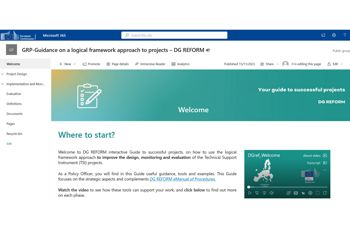
Strengthening DG REFORM's capacity of designing, monitoring and evaluating projects
- 2022 – 2023
- menos de 500.000 €
- Belgium
The general objective of this service contract is to strengthen DG REFORM capacity of designing, monitoring, and evaluating projects.
The three outcomes of this contract are as follows:
Outcome 1: DG REFORM staff have developed consolidated skills and expertise in designing, implementing, monitoring and evaluating technical support projects, using the principles and methodology of the Logical Framework Approach
Outcome 2: DG REFORM policy officers have been empowered to embed evaluation concepts and tools at each step of the project management cycle (design, contracting, implementation, evaluation)
Outcome 3: DG REFORM has developed an evaluation strategy to assess outcomes and impact of groups of projects
In the medium and long run, the achievement of the outcome of this service contract should contribute towards the development of a strong evaluation culture in DG REFORM (impact)

Evaluation of European Union's Cooperation with North Macedonia (2014-2020)
- 2021 – 2023
- menos de 500.000 €
- North Macedonia
This evaluation has two overarching objectives. Firstly, to analyse the extent to which and in which manner the support of the European Union (and of the European Commission in particular) has contributed to the overall political, economic and social development in North Macedonia in the period 2014-2020. In particular, the evaluation aims to:
- assess the contribution to the reform process in the framework of the country’s EU accession process;
- assess the design, implementation, responsiveness, results and impact of the EU support.
And secondly, to identify key lessons and produce recommendations in order to inform decision makers on how to improve the European Union’s current and future strategies, programmes and actions with regard to North Macedonia, and in particular to inform future decision making choices related to the programming of Instrument for Pre-Accession Assistance (IPA) III in North Macedonia.
The thematic scope of the evaluation focus is on priority reforms in i) Democracy and Governance, ii) Rule of Law and Fundamental Rights, and iii) Economic development and Social cohesion. It will include IPA national programmes; the various implementation modalities, instruments and tools utilised; and the policy dialogue that has been taking place at different levels. The evaluation also considers the contribution of multi country programmes in the areas of transport and environment in North Macedonia
Support to the interim evaluation of IPA II actions implemented under indirect management
- 2021 – 2023
- menos de 500.000 €
- Montenegro
The overall objective of the project of which this contract is part is to support evaluation of the achieved results for activities implemented under specific projects implemented under indirect management and to identify the weaknesses in the implementation of activities as pre-condition for the long-term success of all EU funded activities.
The purposes of this contract are as follows:
- to assess the ongoing implementation of proposed projects and determine the extent to which the objectives of the projects are being achieved;
- to provide recommendations for more efficient implementation of forthcoming contracts under indirect management.
Results to be achieved by this contract are grouped into two result areas with pertaining results:
Result area 1: Interim evaluation of selected activities conducted, and evaluation reports prepared;
Result area: Evaluation reports presented to the key stakeholders and published.

Corporate Emergency Evaluation of WFP’s Response in Myanmar (2018-2022)
- 2022 – 2023
- menos de 500.000 €
- Myanmar
This independent evaluation of the Corporate Emergency Evaluation of WFP’s Response in Myanmar assessed the appropriateness, effectiveness and efficiency of its emergency response in multiple crises in the country from 2017 to 2022.
The evaluation served the double purpose of providing: a) evidence and accountability (performance and result assessment) for results to WFP stakeholders; and b) provide learning (why certain results occurred or not, lessons and evidence for decision-making about a potential scale-up) on WFP’s performance in the Myanmar emergency context, specifically for developing WFP’s future engagement in Myanmar and for broader learning on WFP complex emergency responses.
The CEE‘s subject and focus followed a modular approach, including:
- Strategic positioning vis-à-vis evolving needs (incl. informed strategy, assistance adaptation to changing needs, internal coherency of CSP and budgets revisions, well targeted assistance for food insecure and vulnerable groups).
- Effectiveness in achieving CSP objectives (incl. delivering on planned activities, outputs and strategic outcomes, coverage of assistance, preparedness to respond to crisis, gender equality and empowerment of women)
- Connectedness of assistance (incl. assistance in taps into local capacities and is community-driven, transition and exit, tailored to local capacities and context, strategic linkages to establish along the triple nexus between humanitarian action, development, and contributions to peace, environmental sustainability)
- Partnerships and coordination (incl. coherent and aligned with the wider UN and humanitarian sector, developed appropriate and effective partnerships).
- Humanitarian principles, protection and AAP (incl. adherence to humanitarian principles and “Do No Harm” in all phases of its assistance, managing trade-offs between humanitarian principles, protection challenges faced personnel and its target populations, accountability to affected populations).
- Efficiency (incl. ability to mobilise adequate resources, activities and outputs delivered within the intended timeframe; activities have been cost-efficient; adequacy of corporate support during the consecutive crises; management of operational risks.
Cross-cutting themes included: humanitarian assistance in conflict and peri-urban settings, food and nutrition security, school-based programmes, nutrition-specific interventions and smallholder farmers support.
The evaluation used a mixed methods approach relying on a variety of primary and secondary sources, including desk review, key informant interviews, focus and groups discussions, additional questions to the post-distribution monitoring, phone survey, and geospatial analysis. Systematic triangulation across different sources and methods was carried out to validate findings and avoid bias in the evaluative judgement.
The final report is available at: https://www.wfp.org/publications/corporate-emergency-evaluation-wfps-response-myanmar-2018-2022