Nuestros proyectos
Explore la experiencia de Particip en proyectos desarrollados en distintos países, sectores y ámbitos de especialización.
Nuestras referencias ofrecen una visión general de las misiones finalizadas y en curso, incluidos sus objetivos, alcance geográfico, duración y valor contractual.
Mostrando 291–300 de 980 referencias
Final Evaluation of the BOOST Project from August 2018 to January 2024 in the Regions of Nueva Segovia, Madriz, Estelí, Matagalpa, Jinotega and RACCN
- 2024 – 2024
- menos de 500.000 €
- Nicaragua
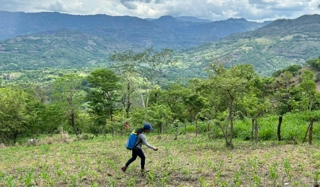
The final evaluation of the project "Boosting Rural and Rurban Economy in Times of Crisis and Beyond" (BOOST) was commissioned by the World Food Programme (WFP) in Nicaragua. BOOST was implemented from 2018 to 2024 and aimed to promote sustainable and resilient agri-food systems in five departments and one autonomous region of Nicaragua. The support package included three components (including gender-transformative approaches): support to smallholder farmers and their cooperatives in the production of basic grain and market access; links with the National School Feeding Programme of the Ministry of Education; and support to the creation of home gardens by vulnerable (peri-)urban families. The European Union was the main donor of the project.
The evaluation covered the entire implementation period of the project and served the double purpose of accountability and learning. It adopted a theory-based approach using the Qualitative Impact Assessment Protocol (QuIP) to answer evaluation questions linked to different evaluation criteria (relevance and coherence, effectiveness, efficiency, sustainability) and gender equality and empowerment of women. Primary data were collected during a two-week field mission and remotely. The evaluation team conducted (i) interviews at national and local levels with WFP staff, government institutions, the donor, technical staff and management of cooperatives; as well as focus group discussions with beneficiaries of all project components; (ii) direct observation during field visits; (iii) a comprehensive document review; and (iv) an analysis of existing M&E data.
In addition to the evaluation report, a short video with a summary of evaluation results was produced for dissemination purposes. The report is available at: https://www.wfp.org/publications/nicaragua-evaluacion-final-del-proyecto-boost-2018-2024
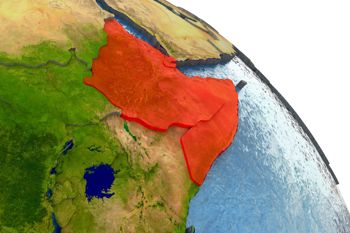
Resilience Assessments in Support of Programming in the Horn of Africa region
- 2023 – 2024
- menos de 500.000 €
- Africa (Eastern)
With a view to supporting the programming in the Horn of Africa region, and in particularly in support of resilience-building components of the EU’s external action, the overall objective of a Resilience Assessment and Roadmap creation was to:
a) identify,
b) address,
c) and take action
on structural causes of fragility and potential shocks, as well as opportunities for resilience building in the Horn of Africa region; operationalizing, improving and strengthening EU resilience-focused interventions and providing a vision on what specific strategic, policy, programming, design and implementation changes are needed to strengthen resilience in a specific context.
To this end, the expert(s), in conjunction with INTPA G5, provided technical assistance to Delegations to conduct resilience assessments and develop resilience roadmaps, highlighting which resilience dimensions should be targeted and how to best target them.
The specific objectives of the project were:
SO 1: To provide technical assistance to EU Delegations in the Horn of Africa region to highlight those structural causes of fragility that could potentially be transformed into effective resilience-building opportunities to improve ongoing and planned EU actions.
SO 2: To develop regional/national resilience roadmap(s) linking relevant resilience results chain indicators to existing national plans on the one hand and to national/regional SDGs on the other hand, in order to measure evidence based progress.
Evaluation of the European Union’s cooperation with the Federal Democratic Republic of Nepal (2014-2021)
- 2022 – 2024
- menos de 500.000 €
- Nepal
This evaluation had two overarching objectives. Firstly, it aimed to provide the relevant external cooperation services of the European Union (EU) and the broader public with an independent assessment of the EU's past and current cooperation with the Federal Democratic Republic of Nepal from 2014 to 2021. Secondly, it sought to identify key lessons and produce recommendations to inform responsible decision-makers, particularly in the European External Action Service and the Directorate-General for International Partnerships, on how to improve the EU’s current and future strategies, programmes, and actions.
Its specific objectives were as follows:
- To measure how the combination of different interventions and modalities contributed to the expected objectives of the Multi-Indicative Programme (MIP) 2014-2020 at the country level, taking into consideration policy dialogue and financial assistance (including budget support);
- To assess the extent to which budget support in Nepal achieved its expected results in the education sector. This included evaluating how sectoral budget support enhanced the efficiency and effectiveness of policies, strategies, spending actions, and administrative capacities in the education sector;
- To evaluate how EU external actions have supported and continue to support Nepal’s overarching priorities under the 2021-2027 MIP, particularly implementing the federalism reform and graduating from the status of least developed countries; and,
- To assess the impact of the COVID-19 pandemic on the evaluated sectors and the EU’s support as a response to the pandemic.
The evaluation focussed on the areas of i) sustainable rural development (incl. nutrition); ii) education (incl. technical and vocational education and training)); iii) federalism reform, strengthening democracy, decentralisation; as well as cross-cutting issues related to gender equality, climate change, and human rights.
The evaluation identified conclusions, lessons learned, and examples of good practices regarding the achievement of the EU’s support to Nepal. It also provided a set of targeted and practical forward-looking recommendations for the improvement of the programming, assistance, and implementation of current and future EU interventions in Nepal under the new multi-annual financial period 2021-2027.
Thematic Evaluation of EUTF Protection Interventions in Libya
- 2022 – 2024
- menos de 500.000 €
- Libya
The European Union Trust Fund (EUTF) for Africa provides a coordinated response by the European Union, its Member States and other donors to multiple crises affecting the most vulnerable and marginalised people in the Sahel and Lake Chad, the Horn of Africa, and the North of Africa. The overall objective of the EUTF is to support all aspects of stability and contribute to better migration management as well as addressing the root causes of destabilisation, forced displacement and irregular migration, in particular promoting resilience, economic and equal opportunities, security and development, and addressing human rights abuses.
This evaluation will focus specifically on protection interventions financed by the EUTF North of Africa window in Libya. It will cover eight major interventions financed by the EU over the 2017-2021 period. The main objectives of the evaluation are to provide the relevant services of the European Union and interested stakeholders with:
- An overall independent assessment of the performance of the eight interventions, paying particular attention to different levels of results, measured against the expected objectives; and the reasons underpinning such results;
- Key lessons learned, conclusions and related recommendations in order to improve current and future Protection interventions in Libya.
In particular, this evaluation will serve to:
- Measure the level of aggregated results achieved by the interventions and assess how they have contributed to NoA strategic objective 3 “Strengthen protection and resilience of those in need” (as defined in the Result matrices of the EUTF-NoA and the (re)constructed IL elaborated);
- Understand the reasons behind the performance of the interventions to provide recommendation on how to strengthen relevance, effectiveness, sustainability and impact of the future EU interventions in the Protection sector in Libya.
Evaluation of the implementation of EU Blending in the EU Neighbourhood and Western Balkans regions in 2015-2021
- 2021 – 2024
- menos de 500.000 €
- ENI, IPA
The general objective was to provide the relevant Commission services and other key stakeholders with an independent assessment of the contribution of blending to the achievement of EU policy objectives in the EU Neighbourhood and Western Balkans regions.
The specific objectives forevaluation were:
- To provide an assessment in both qualitative and quantitative terms on the relevance, conditions of implementation, and performance of Blending as an aid modality, particularly its efficiency, effectiveness, sustainability, impact, and added value, with emphasis on experience from the implementation of blending operations;
- To assess the EU cooperation potential and the EU added value;
- To identify lessons learnt (both positive and negative), best practices, and recommendations, in particular regarding the efficiency and effectiveness of Blending and the explanatory factors that facilitated or hampered the contribution of Blending to EU policy objectives.
The results of the evaluation fed the ground for the operationalisation of the EFSD+ in the coming years, defining greater synergy effects with the EU's political and reform objectives and for the overall programming, monitoring, reporting, and implementation of EU financial assistance.
The geographical scope of this evaluation was the Eastern and Southern Neighbourhood and the Western Balkans.
The thematic scope of this evaluation covered bilateral blended operations as well as operations implemented under the umbrella of the regional investment facilities (NIP and WBIF) in the sectors of:
- Private Sector Development and Access to Finance
- Energy
- Environment (with a focus on water/sanitation and waste management)
Support to the implementation of the Communication and Public Diplomacy Strategy for Somalia
- 2022 – 2024
- menos de 500.000 €
- Somalia
The overall objective was to increase awareness of the EU values and principles and the longstanding partnership with Somalia, by focusing on and showcasing the comprehensive EU support and development cooperation between 2022-2024.
- Objective 1: Technical support to the EU Delegation on the implementation of the Strategy on Communication and Public Diplomacy 2022 – 2024
- Objective 2: Providing communication and visibility services as requested by the EU Delegation
Identification and formulation mission for the implementation of a water resources management support program
- 2024 – 2024
- menos de 500.000 €
- Algeria
The general aim of this service is to support the European Union Delegation in Algeria in its work to prepare the 2024 Annual Action Programme.
The aim of this mission is to provide the European Union Delegation in Algeria with the elements of a support programme for the water resources management sector, with a view to economic development and respect for the environment.
Final Evaluation of EUPOP LATAM (Phase II) and EUPOP Canada (Phase II) - Extension
- 2023 – 2024
- menos de 500.000 €
- Argentina, Brazil, Canada, Chile, Colombia, Peru, Uruguay
The main objectives of this evaluation were to provide the relevant services of the European Union and the interested stakeholders with:
- an overall independent assessment of the past performance of the Public Diplomacy Actions (EU Policy and Outreach Partnership in South America – Phase II and EU Policy and Outreach Partnership, Canada – Phase II), paying particular attention to its results measured against its expected objectives; and the reasons underpinning such results;
- key lessons learned, conclusions and related recommendations in order to improve current and future Actions.
In particular, this final evaluation served to understand the performance of the Actions, their enabling factors and those hampering a proper delivery of results as to inform the planning of the future EU interventions in relation to EU Policy and Outreach Partnerships (EUPOPs) and Cultural Diplomacy. To this end, this final evaluation also looked at the package of Actions as a whole.
The evaluation assessed the Actions using the five standard DAC evaluation criteria, namely: relevance, effectiveness, efficiency, sustainability and perspectives of impact. In addition, the evaluation assessed two EU specific evaluation criteria:
- The EU added value (the extent to which the Actions bring additional benefits to what would have resulted from Member States' interventions only);
- The coherence of the Actions and approach with the EU Global Strategy, the new EU priorities for 2019-2024, as well as with other EU policies and Member State Actions.
Additionally, the evaluation team performed the following tasks:
- Identified type of activities that are frequently included across EUPOP Actions and facilitate the comparison across countries by highlighting the approach, the organisation costs (fees, incidentals) and summarised the key aspects in a table.
- Summarised some best practices per type of initiative/target audience/country in a booklet format.
The evaluation team furthermore considered whether gender, environment and climate change were mainstreamed; the relevant SDGs and their interlinkages were identified, and the extent to which they have been reflected in the implementation of the Actions, their governance and monitoring.
Providing Information Services Aiming to Bring the Turkish Cypriot Community Closer to the European Union Through Running an EU Infopoint in the Northern part of Nicosia
- 2019 – 2024
- de 1 a 2 millones de €
- Cyprus
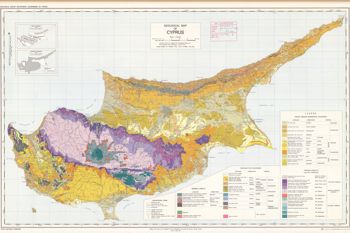
The purpose of this contract was to raise the awareness of the European Union, its policies and programmes within the Turkish Cypriot community in order to contribute to bringing the Turkish Cypriot community closer to the European Union. The project included various information and promotion activities using all available communication and media tools with the aim of raising awareness and understanding of the European Union.
The centrepiece of the information service provision was the running of the EU Infopoint, which carried out all activities and interactions. The EU Infopoint provided grassroots services tailored to local needs, which enabled the Turkish Cypriots to obtain information, advice, assistance and answers to questions about the EU priorities, legislation, policies, programmes and funding opportunities. The EU Infopoint informed in particular about the values of the EU and active citizenship. The aim of the information provision and communication of the EU Infopoint was to provide Turkish Cypriots with information on EU related activities and policies, in particular those having an impact on people's daily lives and to allow Turkish Cypriots to exchange views on such activities.
The EU Infopoint played an important role in promoting the EU Aid Programme for the Turkish Cypriot community and provided communication services support to EU-funded projects as part of the Aid Programme. In addition, the information service provision had a mobile component, i.e. regular outreach activities, cultural events and visits to e.g. remote rural communities and/or specific target groups in the northern part of Cyprus.
The target groups were the following:
- Young people, school and university students, teachers;
- Academia and "pundits", opinion leaders;
- The Turkish Cypriot leadership;
- Civil society organisations (CSO) and Non-governmental organisations (NGO);
- Local media;
- Potential beneficiaries of EU assistance including business communities, business organisations, rural communities, farmers etc.
Final Evaluation of the Cooperation program 2019-2024 between Rwanda and Belgium
- 2023 – 2024
- menos de 500.000 €
- Rwanda
This Final Evaluation seeks to assess the implementation of the Belgian–Rwanda bilateral portfolio implemented by Enabel over the period 2019-2024, and the extent to which the results (output, outcomes) of its interventions have been reached. The analysis covers the global portfolio level based on the performance of the 4 sectors of intervention (Health, Agriculture, Urban Development and Public Finance Management -PFM), cross-cutting issues (gender and private sector development – PSD), and cross-cutting activities (incl. policy dialogue)
The evaluation conducted a performance analysis of the bilateral cooperation portofolio based on the DAC criteria (relevance, coherence, efficiency, effectiveness, impact and sustainability), and it assessed the quality of the collaboration between 1) Enabel and the national authorities and 2) Enabel and other developmental partners active in the country. The evaluation also included a sectoral analysis focusing on ++action research++ and ++gender integration in Sexual and Reproductive Health Rights++ for the health portfolio, and ++value-chain development++ in the agriculture and urbanisation sectors. Public Finance Management was also included in the evaluation as a cross-cutting issue. Qualitative data were collected during a three-week field mission (including stakeholder interviews, focus group discussions and direct observation) and in remote interviews. The review also drew on documents and existing quantitative M&E and survey data.