
Nuestros proyectos
Explore la experiencia de Particip en proyectos desarrollados en distintos países, sectores y ámbitos de especialización.
Nuestras referencias ofrecen una visión general de las misiones finalizadas y en curso, incluidos sus objetivos, alcance geográfico, duración y valor contractual.
Mostrando 281–290 de 980 referencias
Evaluation of the Programme Low Carbon and Circular Economy Action in the Americas (LCBA Americas) implemented in Brazil, Colombia, Argentina, Chile, Mexico and Canada
- 2024 – 2024
- menos de 500.000 €
- Argentina, Brazil, Canada, Chile, Colombia, Mexico
The overall objective of the LCBA programme was to promote EU companies on low carbon and circular
economy related technologies and services at regional scale in the Americas
The Action contributed to promote and defend EU economic interests, in particular SMEs and small-mid
caps, on the regional stage and thus constituted a major operational action in support of an EU Economic
Diplomacy. It also contributed to the limitation and/or reduction of industrial GHG emissions in line with
the commitments of the Paris Agreement on Climate Change.
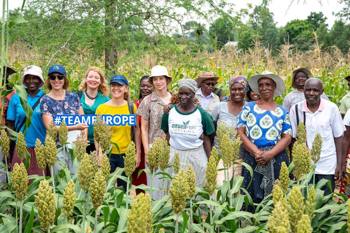
Support to the implementation of EU Working Better Together and Team Europe Initiatives in Zimbabwe
- 2022 – 2024
- menos de 500.000 €
- Zimbabwe
The overall objective of the contract was to enhance overall effectiveness and visibility of the Team Europe approach in Zimbabwe.
The specific objectives of this contract were as follows:
- Assist the EUD and the European Partners in the implementation of the Working Together Roadmap signed in September 2019
- Support the EUD and European Partners in the design, approval process, coordination and monitoring of interventions under the TEIs as well as the overall management of the TEIs (TEIs updates, overall progress reporting, information for the communication contract, etc.)

ExM Sri Lanka
- 2024 – 2024
- menos de 500.000 €
- Sri Lanka
The purpose of the Exploratory Mission was to collect factual information concerning this election process, in line with the criteria contained in the Commission Communication on Electoral Assistance and Observation [COM(2000)191]. The experts have also in particular:
1. Assessed the pre-election situation in the light of international standards for democratic elections and national legislation. The assessment covered: (i) Political situation, (ii) legal and electoral framework, (iii) election administration, (iv) voter registration, (v) party and candidate registration, (vi) human rights and fundamental freedoms, (vii) potential for electoral violence, (viii) traditional and online media, as well as social media, (ix) security aspects, (x) logistics and operational matters, (xi) use of electoral ICT and (xii) any other relevant issues relating to the elections and possible deployment of an EU EOM.
2. Assessed, when relevant, the state of implementation of recommendations of previous EU election missions (both EU EOMs and EEMs).
3. Made necessary preliminary logistics related enquiries and provided advice on how to organise the operational component of a possible EU EOM.
4. Assessed the security situation in the country, in particular in connection with the possible deployment of an EU EOM.
5. Advised on the composition, number and length of stay of the Core Team members and long and short-term observers of the EU EOM.
6. Drafted tentative specifications and Terms of Reference of a possible EU EOM and related estimated costs and budget breakdown.
7. Assessed the relevance of providing support to domestic observer organisations.
8. Acquired updated information on EU election support (both EU and Member States) and other major partners (Canada, Norway and Switzerland) and possible other major actors plans in this field, including in the area of electoral assistance.
9. Liaised closely with domestic and international election observation organisations that were present on the ground regarding the preparation of elections.
10. Prepared a number of specific reports as outlined in section 'VI. Output' of these ToR.
11. Participated in the briefing of the EU EOM Core Team should the deployment of an EU EOM be decided.
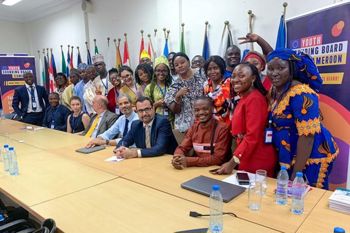
Prefiguration youth sounding board et jeunesse
- 2023 – 2024
- menos de 500.000 €
- Cameroon
The general objective of this contract was to support the Delegation of the European Union to Cameroon in the implementation, in Team Europe mode, of its policy towards Cameroonian youth. The aim was to position youth as a key partner for the EU and its Member States in defining, implementing and monitoring its external policy towards Cameroon.
More specifically, the aim of the contract was to support the EUD in its 3 pillars of the EU Youth Action Plan:
"ENGAGE"
- The creation, structuring and operation in Team Europe mode of a Youth Sounding Board (YSB) in Cameroon,
- Identifying contact points likely to promote coordination and the creation of a regular working relationship based on trust with central and local government players involved in youth issues, ==Preparing communication and visibility actions to promote the EU's commitment to Cameroonian youth.
"EMPOWER"
- Identify a project that could be financed under the initiatives set up by the EU's Youth Action Plan,
- Make the youth theme a transversal element (mainstreaming) of all the projects, programmes and cooperation policies of the European Union in Cameroon (the expert took on the role of technical assistant who trained the programme officers in the integration of young people in all the UECameroon strategic documents),
"CONNECT"
- The formulation of a proposal for action to enable young Cameroonians to be connected to their peers
- The relaunch of the ERASMUS+ exchange programme and a partnership with universities, with a view in particular to the creation of a Jean Monnet Chair in European Studies.

Technical expertise to support the Delegation of the European Union to the Republic of Guinea-Bissau in drafting programming documents in the democratic governance sector.
- 2024 – 2024
- menos de 500.000 €
- Guinea-Bissau
The European Union Delegation to Guinea-Bissau was preparing the Action on “Strengthening Democratic Governance in Guinea Bissau” as part of the above-mentioned 2024 Annual Action Plan. The general objective of the current assignment was to contribute to the implementation of the AAP 2024 in the framework of the MIP 2021-2027, in the area of democratic governance, notably in the elections, civil society and National Popular Assembly sectors.
The specific objective of this assignment was to elaborate and formulate a proposal of Action Document to contribute to strengthening democratic governance in Guinea Bissau, with the purpose of consolidating democracy and facilitating lasting peace in the country.
The action was based on three essential support components, according to the AAP 2024 of the MIP 2021-2027: civil society, parliament and elections. In the elaboration of the Action Document, EU thematic and regional programmes have been taken in consideration and demonstrate the coherence and synergies with the following specific objectives.
- SO1: strengthen the civil society as an actor to inclusive development at national and local levels;
Main expected results were: national and regional hubs strengthened or established to enhance dialogue and participation of civil society (including women and marginalized groups) in development planning processes with authorities and relevant stakeholders; regional Technical Assistance Offices created or supported to provide continuous training to CSOs on good governance, financial sustainability mechanisms and organizational culture; “citizen control” mechanisms consolidated and promoted; CSOs legal framework and capacities strengthened. Indicative budget: 3 M EUR
- SO2: strengthen representative and inclusive democracy through the effective functioning of the parliament;
Main expected results were: capacities of the elected members of ANP and its administration strengthened, including at the level of commissions on key topics (e.g. budget, gender); women parliamentarians supported in the development and implementation of strategies and relevant tools for better consideration of gender in the legislative process; exchanges ensured with other parliaments (including quota systems for women), constitutional experts and networks for technical improvements. Indicative budget: 1M EUR
- SO3: enhance credibility, inclusiveness, legitimacy and transparency of elections, in line with the domestic legislation and international standards, with a special attention to the next Presidential election foreseen in 2025.
Main expected results were: non-discriminatory laws for political participation and representation of women, youth, elderly and rural population promoted; capacities of women and youth in political participation strengthened; civil society activities to promote a safe space for the elections fostered; awareness raising on the Electoral Dispute Resolution Mechanism enhanced; observation and reporting on the elections facilitated; capacity building of journalists, including community radios’ voices and ethical journalism supported. Indicative budget: 1M EUR

Formulation Regional Transnational Organised Crime Programme WCA
- 2023 – 2024
- menos de 500.000 €
- Africa (Western)
The contractor undertook the formulation of an Action Document (AD) to implement a regional program addressing illicit trafficking and transnational organized crime in selected West African and neighboring Central African countries. This included providing all necessary inputs and conducting comprehensive analysis, documentation review, fact-finding work, and consultations to propose possible options/scenarios for program focus and intervention logic. This work identified key strategic questions/issues to support informed discussions with relevant EU Delegations and other key stakeholders

Framework Agreement for Evaluation Management Services (EMS)
- 2020 – 2024
- de 5 a 10 millones de €
- Finland
The Evaluation Management Services (EMS) was a service contract which consisted in the implementation of strategic and policy-level evaluations, meta-evaluations, project-level evaluations and assessments for the Ministry for Foreign Affairs of Finland (MFA). It corresponded to a model that is based on evaluation services commissioned to one service provider rather than outsourcing the implementation of each evaluation as a single assignment. The purpose of this contract was to increase the quality of outsourced evaluations and also to increase flexibility, efficiency and effectiveness of the MFA of Finland in planning and commissioning evaluations. In addition to some decentralised (project level) evaluations and assessments from various geographical units, all MFA centralised evaluations were prepared and implemented through the EMS.
The assignments that were implemented under this service contract are the following:
- Evaluation on Development Cooperation carried out by the Department for Russia, Eastern Europe and Central Asia, Including The Wider Europe Initiative (WEI).
- External Review and Evaluation Services of forest programmes in Tanzania
- Evaluation on the transition towards a new partnership between Finland and Vietnam
- Evaluation on water diplomacy in the context of Finnish development cooperation – lessons for the future
- Evaluation of ICI Projects in Afghanistan, Bhutan, India, and Nepal
- Meta-evaluation of MFA's projects and programme evaluations in 2018-2020
- Evaluation of the Finnish Development Policy Influencing in the European Union
- Evaluation of Finnish Humanitarian Aid
- Assessment on the Response of Finnish Development Policy and Cooperation to the Covid-19
- Final Evaluation of Rural Village Water Resources Management Project (RVWRMP) 2006-2022 and Post-evaluation of Rural Water Supply and Sanitation Western Nepal Project (RWSSP-WN) 2008-2019
- Facilitated assessment of Finnish peace, democratization and sustainable livelihoods support in Myanmar
- Evaluation of Finland’s International Climate Finance
- Evaluation of Human Rights-Based Approach (HRBA) in Finland’s Development Policy and Cooperation
- Review of the MFA’s support to international recruitment
- Evaluation on Development Communications in the Context of the Ministry for Foreign Affairs Finland
- Right to Education, Right to Learn – Evaluation of Finnish Development Policy and Cooperation in the Education Sector
- Evaluation of Finland’s initiatives focused on enhanced domestic resources mobilization (DRM)
- Meta-analysis of Country Programmes 2021–2024

Final evaluation - Central Services to the International Urban and Regional Cooperation (IURC): sustainable and innovative cities and regions
- 2023 – 2024
- menos de 500.000 €
- Global
The main objectives of this evaluation are to provide the relevant services of the European Union, the interested stakeholders with:
- an overall independent assessment of the past performance of the Central Services to the International Urban and Regional Cooperation (IURC): Sustainable and innovative cities and regions, paying particular attention to its results measured against its expected objectives; and the reasons underpinning such results;
- key lessons learned, conclusions and related recommendations in order to improve current and possible future Actions.
The main users of this evaluation will be:
- European Commission: FPI, DG REGIO, DG INTPA
- Policy makers responsible for regional -related issues
- Environment, trade and industry counsellors in EU Delegations
- Implementing partners

The Public Expenditure and Financial Accountability (PEFA) TOGO
- 2022 – 2024
- menos de 500.000 €
- Togo
The overall objective of the assessment mission is to assess the performance of the public finance management system using the PEFA methodology and the different developments since the previous assessment in 2016.
The assessment mission should be able to explain the changes observed and the degree of sustainability of the improvements observed by identifying the factors that contributed to the progress (or lack of progress) recorded compared to the previous assessment.
The results of this assessment will allow the formulation of new reform measures that will allow the updating of the Public Finance Management Reform Action Plan.
The periodic measurement of public finance management performance by national stakeholders and technical assistance missions are regularly taken into account and enrich the action plan.
The results will feed into the analytical work of the Technical and Financial Partners group on economic governance and facilitate a concerted dialogue between TFPs and the government on reforms.
By integrating a gender module, the report will highlight the progress and challenges of the public finance system in Togo with regard to gender equality, in particular the development and implementation of gender budgeting, and will show the efforts already made by Togo and the challenges that remain with regard to gender.
The environmental protection module will also allow Togo to measure progress and make adjustments to improve the country's performance in this area.
Meta-analysis of Country Programmes 2021–2024
- 2023 – 2024
- menos de 500.000 €
- Global
The purpose of the meta-analysis of the 2021-2024 Country Programmes in Finland's 10 partner countries was to support the achievement of Finland’s development policy objectives in the partner countries, and to provide information for the further development of the Country Programmes and their implementation at the strategic level. The meta-analysis and its recommendations supported the regional departments in the programming of the next generation of Country Programmes, and in their subsequent management.
The meta-analysis comprised a desk review of available information and stakeholder feedback (phase 1) as well as self-assessment workshops with each country team, to assess contributions to results and to discuss further scenarios.
The specific objectives of the analysis were:
1. To synthesise key developments in the 10 partner countries with relevance for the respective Country Programmes
2. To assess the degree and usefulness of adaptive management of the Country Programmes during the current programme cycle
3. To assess the degree to which Country Programmes have contributed to intended (or unintended) Country Programme results and to analyse the factors explaining these contributions (or the absence of contributions)
4. To assess the sustainability of Country Programme results
5. To assess the value-add of Country Programmes compared to planning and implementing separate projects
6. To support the preparation of the next cycle of Country Programmes