
Nuestros proyectos
Explore la experiencia de Particip en proyectos desarrollados en distintos países, sectores y ámbitos de especialización.
Nuestras referencias ofrecen una visión general de las misiones finalizadas y en curso, incluidos sus objetivos, alcance geográfico, duración y valor contractual.
Mostrando 251–260 de 980 referencias

Early Childhood Education for Jordanian and Syrian Children in Jordan
- 2022 – 2025
- de 500.000 € a 1 millón de €
- Jordan
The project focused on improving access to Early Childhood Education for all children with a focus on vulnerable children: refugees and children with disabilities.
- Module objective 1 focused on supporting the public Kindergarten (KG) system to increase KG offers through MoE support, infrastructure rehabilitation and the creation of a child-friendly learning environment.
- Module objective 2 aimed to improve the preconditions for a sustained increase in KG places in private non-profit institutions through supporting them in devising sustainable strategies for expansion.
- Module objective 3’s main focus was improving the access to KG for vulnerable children aged 4-6 years in selected communities or camps. This output focused on refugee children and children with disabilities or special learning needs.
Particip set up and managed a flexible short-term expert pool to contribute to all three Outputs and to achieve defined indicators with the respective deliverables.
Final Evaluation of the 'Technical Assistance to the implementation of the EU-Angola Dialogue Facility'
- 2024 – 2025
- menos de 500.000 €
- Angola
The evaluation seeks to assess the performance of the project FED/2019/408-193, measuring results against objectives, evaluating relevance, coherence, efficiency, effectiveness, sustainability and impact, and identifying lessons learnt, conclusions and related recommendations to revise the successor project 2024/455-047. The evaluation's recipients include relevant EU services (DG INTPA, EEAS, EUD Angola), the Ministry of Planning and the Ministry of External Relations of the Republic of Angola, the implementing partner (CESO) as well as civil society and the wider public.
The EU-Angola Dialogue Facility, approved in March 2019, aim at enhancing political cooperation and transversally supporting the implementation of policy priorities of Angola’s National Indicative Programme (NIP) 2014-2020, the National Development Plan (PND) 2018-2022, and the Joint Way Forward (JWF) recommendations. It further aims at reinforcing the capacity of Angola line ministries and contributing to better multisector coordination for more effective policy preparation and implementation. Angolan civil servants in the line ministries are at the centre of the capacity building activities, receiving training on how to prepare and submit proposals, and targeted capacity building on specific thematic topics of the dialogue. On the other hand, civil society, academia, and the private sector, EU institutions and EU Member States (MS) are also addressed within the framework of dialogue partnerships. At the impact level, an increased cooperation is expected between the EU, EU MS and Angola that significantly boosts policy implementation in Angola.
Mid-term evaluation of the financial and administrative governance support programme (PAGFAM)
- 2024 – 2025
- menos de 500.000 €
- Mauritania
The ongoing programme to support financial and administrative governance in Mauritania (PAGFAM) reflects the commitment of both the EU and Mauritania to support public finance reforms, in line with the European Union's Multiannual Indicative Programme (MIP-EU) 2021-2027, particularly Priority Area 3 - Governance, which focuses on economic governance and national public administration. The programme's overall objective is to enhance economic and administrative governance by promoting the reform of public finances and national administration, benefiting the various sectors that underpin public action. Specifically, the project aims to support reforms in public finances, public administration, and the civil service to make them more efficient and improve the quality of service to citizens.
The expected results from the implementation of each component of the programme, in line with the specific objective mentioned, include: the coordination and management of public finance reform, as well as the coordination of government action and the implementation of public administration reform. Across all of these components and subcomponents, the programme is intended to support the relevant departments and follow a logic of skills transfer.
The evaluation will focus on the intervention(s) using the six standard OECD-DAC evaluation criteria, namely: relevance, coherence, efficiency, effectiveness, sustainability, and impact prospects. Additionally, the evaluation will assess the intervention(s) using a specific EU evaluation criterion, namely the EU's added value.
Support for communication of the European Union in Morocco
- 2021 – 2025
- de 2 a 5 millones de €
- Morocco
++ General objective++
The general objective of the action is to strengthen the communication of the European Union, on knowledge about the EU and on EU activities in Morocco, their challenges and their ambitions, to ensure better visibility and a greater commitment of the population in Morocco vis-à-vis the privileged partnership between the EU and the Kingdom.
++Specific objectives++
The specific objectives of this contract are as follows:
- O.P.1: Better knowledge of the EU and strengthening of the EU-Morocco relationship.
- O.P.2: Increased awareness of the Moroccan public about EU programs, their concrete impact on the lives of citizens and on the development of the country; as well as the opportunities to benefit from them.
- O.P.3: More structured communication from the EU to Morocco, around strategic messages, actions and communication tools.

Development of Multi-Hazard Basin Risk Management Plans
- 2023 – 2025
- menos de 500.000 €
- Georgia
The main objective of this assignment was to assist with the elaboration of an integrated MHRMPs for
following 4 river basins of Western Georgia: Supsa, Natanebi, Kintrishi and Khobistkali through active
participation of relevant stakeholders. It was envisaged that these plans will take a bottom-up, multistakeholder approach which was mainstreamed into the national on-going work on the development of the river basin management plans as per Guidance Documents of EU Water Framework Directive and in line with the concept and objectives of the EU Floods Directive particularly for Flood Management Planning part.

ExM Ecuador 2024
- 2024 – 2025
- menos de 500.000 €
- Ecuador
The European Union sent an exploratory mission to assess the usefulness, advisability and feasibility of an EU EOM for the upcoming general elections in Ecuador.
The purpose of the Exploratory Mission was to collect factual information concerning this election process, in line with the criteria contained in the Commission Communication on Electoral Assistance and Observation [COM(2000)191].
The experts had in particular to:
- Assess the pre-election situation in the light of international standards for democratic elections and national legislation. The assessment will cover: (i) Political situation, (ii) Legal and Electoral framework, (iii) election administration, (iv) voter registration, (v) party and candidate registration, (vi) human rights and fundamental freedoms, (vii) potential for electoral violence, (viii) traditional and online media, as well as social media, (ix) security aspects, (x) logistics and operational matters, (xi) use of electoral ICT and (xii) any other relevant issues relating to the elections and possible deployment of an EU EOM.
- Assess, when relevant, the state of implementation of recommendations of previous EU election missions (both EU EOMs and EEMs).
- Make necessary preliminary logistics related enquiries and provide advice on how to organise the operational component of a possible EU EOM.
- Assess the security situation in the country, in particular in connection with the possible deployment of an EU EOM.
- Advise on the composition, number and length of stay of the Core Team members and long and short-term observers of the EU EOM.
- Draft tentative specifications and Terms of Reference of a possible EU EOM and related estimated costs and budget breakdown.
- Assess the relevance of providing support to domestic observer organisations.
- Acquire updated information on EU election support (both EU and Member States) and other major partners (Canada, Norway and Switzerland) and possible other major actors plans in this field, including in the area of electoral assistance.
- Liaise closely with domestic and international election observation organisations that may be present on the ground regarding the preparation of elections.
- Prepare a number of specific reports as outlined in section 'VI. Output' of the ToR.

EUTF Thematic Evaluation on strengthening resilience of vulnerable and displacement affected communities in Horn of Africa
- 2024 – 2025
- menos de 500.000 €
- Africa (Eastern)
The main objectives of this evaluation are to provide the relevant services of the European Union, the interested stakeholders and the wider public with:
- an overall independent assessment of the performance of the 2nd strategic objective of the EUTF on resilience, paying particular attention to its different levels of results measured against its expected objectives; and the reasons underpinning such results.
- key lessons learned, conclusions and related recommendations in order to improve current and future interventions, EU policies, strategies.
In particular, this evaluation will serve to (i) analyse the contribution of EUTF interventions to address specific drivers of fragility, potentially leading to (irregular) migration and forced displacement, (ii) analyse the contribution of the EUTF to strengthen local capacities for resilience – including absorption, adaptation and transformation capacities in response to disasters, shocks and other pressures – (iii) identify enablers for and barriers to the performance in achieving expected outputs and outcomes of these interventions, and (iv) identify the lessons learned and best practices to be further incorporated in the EU policy, strategic and operational responses for fostering resilience.
This evaluation will specifically focus on the following drivers of fragility:
- Limited access to natural resources (land, water, forests, etc.) impacting food systems, aggravated by climate change.
- Limited presence/legitimacy of the state and weak governance in fragility-prone areas limiting preparedness and responsiveness to disasters by local authorities & communities.
- Social/political conflicts in particular in the context of displacement-affected communities.
Final evaluation of decision n°042-166 (AMCC+) “Strengthening Governance and Climate Resilience in Chad”
- 2024 – 2024
- menos de 500.000 €
- Chad
In accordance with the rules and procedures of the European Union, a final evaluation is planned towards the end of the operational phase of the GCCA+ programme after approximately 50 months of implementation.
The main objectives of this evaluation are to provide the relevant European Union departments, interested stakeholders and the general public with:
• An independent overall assessment of the performance of the action “Strengthening climate governance and resilience in Chad (GCCA+) and its 5 implementation contracts”, paying particular attention to its different levels of results measured against the expected objectives and the reasons underlying these results; and
• Identify the main lessons learned, conclusions and related recommendations in order to inform decision-makers on how to improve current and future interventions to be formulated in 2025.
In particular, this evaluation should:
• Conduct a quantitative and qualitative analysis, take stock of the overall results and the level of indicators achieved and the impact of the project. Measure in a factual and documented manner the degree of achievement of the main objectives and results assigned and in relation to the resources allocated to the project.
• Conduct an in-depth examination of the effectiveness of the coordination of the AMCC+ project and the institutional set-up (institutional anchoring, targeting of stakeholders, implementation steering mechanism) and its relevance with regard to the objectives of the AMCC+ project and measure the adequacy with regard to strategies and policies in the fight against climate change.
• Analyze the achievements of the project with tangible impacts, consolidate the elements of good adaptation practices in the form of a summary note with concrete elements that can feed into the reflections on the formulation of the future intervention of 2025.
• Analyze the institutions (Designated National Authority of the Green Climate Fund and National Implementation Institutions-INM) facilitating climate financing, analyze the capacities of Chadian actors to submit bankable projects, describe the main obstacles/weaknesses and propose concrete elements to remove these constraints in order to have efficient institutions and actors.
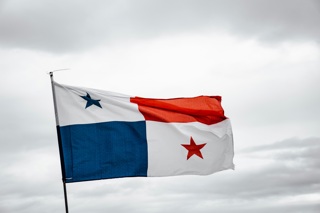
EEM Panama 2024
- 2024 – 2024
- menos de 500.000 €
- Panama
The purpose of the Election Expert Mission (EEM) was to collect and analyse factual information, assess and report on the electoral process against international commitments, standards and good practice for democratic elections in line with the criteria contained in the Commission Communication on Electoral Assistance and Observation [COM(2000)191]. The experts also formulated recommendations to improve future electoral processes and assess, when relevant, the state of implementation of recommendations made by previous electoral missions.
For the purpose of the EEM, the experts paid a specific attention to the elections of the President and Vice-President and the members of the National Assembly.

Evaluation of Ethiopia WFP Country Strategic Plan 2020-2025
- 2023 – 2024
- menos de 500.000 €
- Ethiopia
This independent evaluation of WFP Country Strategic Plan (CSP) in Ethiopia assessed the strategic positioning, added-value and results of WFP operations in the Country from 2019 to 2023.
The evaluation served the double purpose of accountability (performance and result assessment) and learning (why certain results occurred or not, lessons and evidence for decision-making). It is envisioned that the evaluation will inform the design of the new CSP for Ethiopia, which is scheduled for Executive Board consideration in November 2024.
CSP key sectors and activities included:
- Emergency preparedness and response, including cash-based transfers
- Nutrition and school feeding
- Social protection
- Livelihoods activities, including smallholder farmer support
- Institutional capacity strengthening
- Logistics, supply chains and humanitarian aid coordination
Cross-cutting themes included: Gender equality and empowerment of women (GEEW), humanitarian principles and protection, accountability to affected populations (AAP), WFP partnership strategy
The evaluation employed a mixed-method approach that triangulates qualitative and quantitative data from a variety of sources. For this purpose, the evaluation team conducted interviews with different stakeholders including WFP staff at HQ, regional and country level, WFP cooperating partners, donors, UN agencies, government entities as well as focus group discussions with the beneficiaries.