
Nuestros proyectos
Explore la experiencia de Particip en proyectos desarrollados en distintos países, sectores y ámbitos de especialización.
Nuestras referencias ofrecen una visión general de las misiones finalizadas y en curso, incluidos sus objetivos, alcance geográfico, duración y valor contractual.
Mostrando 11–20 de 796 referencias
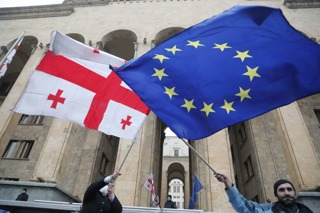
Public relations services: Strategic communication and public diplomacy of the European Union in Georgia
- 2025 – 2028
- de 5 a 10 millones de €
- Georgia
The expected outputs of this contract are as follows:
- Output 1 - Fact based and inspirational campaigns and materials explaining what the EU stands for and the EU’s partnership with the people of Georgia are accessible to the general public in Georgia;
- Output 2 - Networks of disseminators of EU values are created or reinforced, coordination between these network is ensured, and the awareness on EU values of Georgian citizens is raised;
- Output 3 - Knowledge of EU practices and support, especially among young people, women, urban populations in the regions of Georgia, and vulnerable communities, including minorities, is increased;
- Output 4 - EU-funded initiatives are more visible across Georgia and their capacities to disseminate information on the work of the EU in Georgia are developed;
- Output 5 - Journalists in Georgia are better equipped to report on EU topics.
Technical Assistance for Strengthening the Sri Lankan Civil Society as Actors of Development and Governance
- 2025 – 2028
- menos de 500.000 €
- Sri Lanka
The project is designed to strengthen civil society organizations (CSOs) in Sri Lanka in their diverse roles, contributing to the enhancement of democratic governance and sustainable development. The framework service contract is aimed at providing technical assistance to facilitate civil society's involvement in governance processes and ensure their capacity to engage effectively with public authorities. This project aligns with the European Union's priorities for Sri Lanka under the Multiannual Indicative Programme (MIP) 2021-2027.
General Objective:
The overall objective of the framework service contract is to strengthen Sri Lankan civil society actors, in their full diversity, in their roles to enhance democratic governance and promote sustainable development. By doing so, the project seeks to empower CSOs to effectively participate in policy dialogue, promote inclusive development, and ensure a more accountable and transparent governance system in Sri Lanka.
Specific Objectives:
1.) Establish and Maintain an Inclusive Structured Dialogue:
The first specific objective is to establish and maintain an inclusive structured dialogue between the EU, Member States, and civil society. This dialogue aims to improve the analysis and monitoring of the enabling environment and development cooperation landscape in Sri Lanka. Furthermore, it will feed into future EU political and policy dialogues with public authorities and EU services, ensuring that civil society's perspectives are included in shaping development policies and governance reforms.
2.)
Enhance Partnership Between CSOs and the Government:
The second specific objective focuses on enhancing the partnership between CSOs (including associations representing women, youth, and persons with disabilities) and the Sri Lankan government, including provincial and local authorities. This objective aims to strengthen the collaboration and coordination between civil society and public authorities at various levels, creating a more inclusive and participatory governance structure in Sri Lanka.

Third party monitoring (TPM) services for Swiss development and humanitarian projects and programming Ukraine
- 2025 – 2028
- de 1 a 2 millones de €
- Ukraine
The contract is for Third Party Monitoring (TPM) services supporting the Swiss government’s development and humanitarian interventions in Ukraine as part of the 2025–2028 Swiss country program, which is backed by an allocated budget and guided by strategic priorities of economic recovery, public sector service support and reform, and protection of civilians.
The TPM provider will monitor around 15 Swiss-funded projects annually—covering both development and humanitarian actions—by collecting and analyzing data, conducting site visits, reviewing procurement, and assessing partner risks to ensure quality, learning, and accountability. The mandate is intended to strengthen evidence-based decision-making and ensure project transparency and impact, with all work coordinated in partnership with the Swiss Cooperation Office in Kyiv, and all collected data and findings remaining the property of the Swiss Confederation.
EU Framework Contract - Lot 16 Evaluation at Intervention Level
- 2023 – 2028
- más de 10 millones de €
- Global
Under lot 16 – Evaluation at intervention level, Framework Contractors support the European Commission services (HQ and EUDs) in carrying out external and evidence-based evaluations of EU external action in partner countries and regions worldwide, and globally.
Evaluations include the following types: ex-ante, mid-term, final or ex-post. These types reflect the fact that an evaluation can take place at different stages of EU external actions and determine the principal evaluation purpose and intended use. It also includes cases in which a single evaluation covers elements with different temporal scopes and counterfactual impact evaluations.
To date, the following evaluations and assessments were implemented or are currently implemented:
- Evaluation of ADELANTE (final / ex-post phase 1 and interim second phase)
- Evaluation of CBRN risk mitigation interventions - IcSP
- Final evaluation of the program to support the empowerment of women and the protection of the rights of women and girls (FEMFI) in Djibouti
- Final Evaluation of the two projects strengthening social cohesion between displaced populations and host communities in Burkina Faso and Niger (WFP)
- Final Evaluation of Decision No. 042-166 (AMCC+) "Strengthening Governance and Climate Resilience in Chad"
- Mid-term Evaluation of the Health Sector Support Programme in Tunisia "Essaha Aziza"
- Final Evaluation of the China – EU School of Law Programme
- Final Evaluation of the Health Care Access and Supply Strengthening Programme in DRC and Support for the Preparation of the Future EU Health Programme in the Democratic Republic of Congo
- Final Evaluation – IBM III in Lebanon
- Mid-term Evaluation of PAGFAM in Mauritania
- Evaluation of BIC Africa
- Final Evaluation of FPI Crisis Response in North-East Syria
- Final Evaluation of the 'Technical Assistance to the Implementation of the EU-Angola Dialogue Facility'
- Final Evaluation of Investment Support to the Wadi Al Arab Water System II Project
- Mid-term Evaluation of the "United for Peace and Security" Programme
- Final Evaluation of Promove Comercio - Building Competitiveness for Exports
- Mid-term Evaluation of the "Support to the Formalization of the Economy including Social Protection and Support to Public Finance Management" Programme
- Mid-term Evaluation of the Blue Economy Programme

Technical Assistance for the EU Kenya Dialogue Facility II
- 2025 – 2028
- de 2 a 5 millones de €
- Africa
The overall objective of the project is to enable a strong strategic partnership between
the EU and Kenya, including in the political, developmental, trade, investment and societal spheres. The purpose of the assignment is to enable policy dialogue, thereby enhancing mutual understanding and relations in the priority areas of the EU-Kenya partnership, with a gender-sensitive approach, as well as provide technical support to improve the relevance, quality, design, monitoring and implementation of cooperation actions under the EU-Kenya partnership.
As part of its scope, the project supports the implementation of the following:
a) The High Level Strategic Dialogue between the European Union and the Republic of Kenya,
launched on 21 June 2021
b) The Kenya MIP 2021-2027, setting out the EU priority areas for Kenya
c) Developmental actions emancipating from the Economic Partnership Agreement (EPA)
d) The Team Europe initiatives
e) The Global Gateway
f) Public diplomacy activities

Promoting the EU-Kenya Partnership through strategic communications
- 2025 – 2028
- de 1 a 2 millones de €
- Kenya
The specific objective of the project is to measurably increase awareness and improve the perception of the EU’s Global Gateway priorities, their added value and positive impact on the lives of Kenyan citizens among key target groups.
The outputs of this contract are as follows:
- Output 1: Produce an evidence-based campaign strategy for the EU Delegation to Kenya covering online and offline media, including but not limited to social media, website, national press and media outlets, influencers, digital and physical advertisement and events.
- Output 2: Successfully implement value-driven and thematic campaigns of small and large scales.
- Output 3: As part of the campaigns, set up marketing activations to ensure direct engagement with young people in Kenya through social media, universities, and student groups.
Support to Ukraine in further alignment with the provisions of Chapter 27 of the EU Acquis on environment (APENA 4)
- 2026 – 2028
- de 2 a 5 millones de €
- Ukraine
The specific objectives (Outcomes) of this contract are as follows:
- The Specific Objective (Outcome) 1 is that the environmental legislation is enhanced in line with Chapter 27 of the EU acquis
- The Specific Objective (Outcome) 2 is that the capacity of Ukraine's public authorities is strengthened to implement the reforms, enforce the legislation in the area of environment, pursue the green recovery and reconstruction effort including via cross-sectoral mainstreaming of environment
- The Specific Objective (Outcome) 3 is that public access to environmental information is improved and public awareness raised on the benefits of environmental reforms and green reconstruction is increased

MONITORING AND LEARNING SYSTEM FOR THE MULTI-COUNTRY SOUTHERN NEIGHBOURHOOD MIGRATION PROGRAMMES (MIGRATION MLS)
- 2025 – 2028
- de 1 a 2 millones de €
- Algeria, Egypt, Libya, Morocco, Tunisia
To achieve the first specific objective, the contractor will need to complete four interlinked results to ensure that the MLS in place efficiently measures overall progresses of migration related projects implemented in the Neighbourhood South.
++Result 1++
The first critical step is to develop a Monitoring and Learning System (MLS) methodology for the Migration Neighbourhood South portfolio - ensuring tailor made information provision and reporting services - according to corporate reporting requirements. The contractor will assess the needs and agree upon the MLS methodology with all relevant parties, including DG MENA HQ team, EU Delegations and a sensible sample of key Implementing Partners (IP) (Result 1). The main rationale is to build on the experience and knowledge from previous and ongoing MLS systems, in particular the MLS for the EUTF North of Africa window and MLS MADAD, and to foster harmonization with the current MLS approaches and methodology, ensuring continuity and comparability in MLS data and reporting.
++Result 2++
The second layer envisaged is developing a capacity-building strategy aimed at providing tailoredtechnical support to the EC Neighbourhood South Migration teams and Implementing Partners (IP) based on a need analysis (Result 2). This capacity-building component will be implemented over the whole duration of the contract and adjusted according to any emerging ad-hoc needs. To be noted that, if some adjustments of the MLS methodology are deemed necessary, it is critical to foresee a solid capacity-building session to foster knowledge transfer, mutual understanding and consensual agreement among all parties (MLS, EC and IP teams).
++Result 3++
Finally, yet importantly, the third key component is for the MLS contractor to regularly produce and disseminate monitoring reports, on one hand analysing overall progresses of the Neighbourhood South
Migration portfolio in function of the stakeholders’ needs and relevant EC results reporting exercises
(e.g. against the MIP priorities or other relevant principles of interventions as well as the Neighbourhood South intervention logic, and on the other hand summarizing, structuring and facilitating dissemination of relevant key migration facts (Result 3).
++Result 4++
To achieve the second specific objective and taking into account the recommendations from the of the
European Court of Auditors (ECA) Special Report 17/2024 on the EUTF for Africa and the European Commission’s replies, the contractor will develop a learning and communication strategy (Result 4), providing for cross-country analysis of MLS data, cross-regional analysis of Neighbourhood South Migration main thematic areas in the region and qualitative case studies of best practices. The reports produced will also put Neighbourhood South Migration activities into a broader contextual perspective assessing their coherence with other donor funded activities and identifying priorities and opportunities for extending current migration related activities into the next programming exercise. Particular attention should also be paid on creating a bridge between ongoing migration activities and future programming on migration to ensure that the knowledge and experience gained are integrated into policymaking and the next funding cycles, as well on assessing if and to which extent previous lessons learned have been implemented so far.

NDICI Cooperation Facility
- 2024 – 2028
- de 2 a 5 millones de €
- South Africa
++Overall Objective++
The overall objective of the project of which this contract will be a part is as follows: To work with the European Union Delegation in supporting its activities in and with South Africa, including partners such as the Government of South Africa, civil society and the private sector to support objectives outlined in the country’s National Development Plan, the implementation of the EU-SA MIP 2021-2027, Global Gateway and other mutual relevant priorities between South Africa, the European Union and its Member States.
++Specific Objective++
To establish a Programme Management Unit (PMU) composed of a Team Leader, for the duration of the contract. The PMU will pursue the overall and specific objectives directly and through the deployment of short-term experts to provide technical support for the development, design implementation and monitoring of the Delegation’s projects, programmes, ambitions and activities. The PMU shall do so through a needs-based approach, flexible in order to capture the Delegation’s evolving needs as they arise within the scope of the deliverables outlined in this TOR.
- Support the identification, formulation, implementation, audit and evaluation of actions under the MIP (through the deployment of experts, studies, research) or under other financial instruments implemented by the EU Delegation in South Africa; as well as assist Government, civil society, private sector and the Delegation in the implementation of EU funded interventions and ambitions;
- Facilitate and improve capacity for the EU-South Africa partnership, through training support, conferences and seminars, capacity-development, consultations, research and via dissemination of results achieved, as well as awareness-raising and visibility at local, regional and international levels.
- Ensure that cross-cutting issues in EU’s international cooperation and policies (as per the MIP 2021-2027), namely gender equality and women's empowerment, human rights and democracy, culture, environment and climate change, good governance, regional or continental integration, among others are adequately addressed
++OUTPUTS++
- The establishment of a Programme Management Unit (PMU) for the duration of the contract.
- Through the deployment of short-term experts, studies and research provide technical support for the identification, formulation, implementation, audit and evaluation of actions in support of the Delegation’s priorities in a flexible manner.
- Through the successful dissemination of results to a broader public to highlight the SA-EU partnership.
++Non-key expert engagements++

Support Facility on the Implementation of country allocations of the Human Rights and Democracy Thematic Programme
- 2026 – 2028
- menos de 500.000 €
- Global
Project overview:
This project supports the European Union in the implementation of country allocations under the Human Rights and Democracy Thematic Programme, financed through NDICI – Global Europe. The assignment establishes a flexible support facility to assist DG INTPA, EU Delegations, and, where relevant, programme beneficiaries in the effective implementation, monitoring, and reporting of EU-funded actions promoting human rights, democracy, the rule of law, and support to civil society in partner countries.
The Human Rights and Democracy Thematic Programme is one of the EU’s key instruments for promoting and protecting universal values worldwide. A significant share of the programme envelope is implemented directly by EU Delegations through country allocations, mainly via grants awarded through Calls for Proposals. These allocations are intended to respond to country-specific human rights and democracy challenges, support local civil society, and ensure that actions are closely aligned with the needs of rights-holders and local actors.
The project therefore provides technical and operational support across the full implementation cycle of the programme. This includes the assessment of proposals submitted under EU Calls for Proposals, capacity-building and information sessions for EU staff, civil society organisations, and beneficiaries, quality checks of project data and results encoded in OPSYS, and ad hoc studies, analyses, or evaluations related to programme implementation and monitoring. The assignment is mainly home-based, with possible field missions for trainings, capacity-building activities, or specific studies.
General objective:
The general objective of the project is to enhance the implementation of EU actions promoting and protecting human rights and democracy in partner countries under the NDICI Human Rights and Democracy Thematic Programme.
Specific objectives:
The specific objectives of the project are to:
- Provide technical support to EU staff and beneficiaries in the implementation of the Human Rights and Democracy Thematic Programme.
- Support the assessment of proposals received under Calls for Proposals launched by EU Delegations or DG INTPA Headquarters, including the evaluation of concept notes and full applications through PROSPECT.
- Organise and facilitate capacity-building activities, information sessions, consultations, networking events, and related support for EU Delegations, civil society organisations, grant beneficiaries, and other stakeholders.
- Ensure timely and accurate quality checks of Human Rights and Democracy Thematic Programme projects encoded in OPSYS, including the use of appropriate indicators, thematic classifications, and programming priorities.
Produce ad hoc studies, analyses, and evaluations related to the results, monitoring, implementation, and capitalisation of grants and other actions funded under the programme.
- Contribute to the consistent application of the EU’s human rights-based approach, gender mainstreaming, and results-oriented reporting requirements across programme interventions.
Scope of activities
The project covers four main areas of support. First, it provides technical assistance for the assessment of Calls for Proposals. External assessors evaluate concept notes and full applications according to the relevant Guidelines for Grant Applicants and EU evaluation grids. The assessments are carried out using the EU’s PROSPECT system, under the guidance of the Contracting Authority. A Team Leader coordinates the assessment process, ensures that assessors are properly briefed, provides guidance on the interpretation of call documents, performs quality control of draft assessment grids, and supports the preparation of reports on each call.
Second, the project supports the organisation and facilitation of capacity-building activities, information sessions, consultations, and networking events. These activities may target EU Delegation staff, DG INTPA Headquarters, local civil society organisations, future applicants, or grant beneficiaries. Topics may include EU grant management, Commission procedures, Project Cycle Management, the Logical Framework Approach, the design and assessment of grants, and best practices in the implementation of the Human Rights and Democracy Thematic Programme. Activities may be delivered virtually or through field missions.
Third, the project includes quality reviews of project data and results encoded in OPSYS. A Data Analyst reviews the quality and consistency of reporting, including the use of corporate indicators, thematic designations, programming priorities, and other relevant reporting elements. This work supports more accurate corporate reporting and contributes to better monitoring of the results achieved under the programme. The Data Analyst also prepares reports on issues encountered and methodological notes to improve reporting practices.
Fourth, the facility may deliver ad hoc analyses, studies, and evaluations at the request of DG INTPA. These assignments may focus on the implementation and monitoring of the Human Rights and Democracy Thematic Programme, data analysis, results measurement, capitalisation of lessons learned, or thematic and project-level evaluations. Depending on the nature of the request, these activities may be conducted remotely or through field missions.
The project is managed by DG INTPA Unit G1 “Gender Equality, Human Rights and Democratic Governance” and implemented through a team consisting of a Team Leader, Core Expert Assessors, Reserve Expert Assessors, and a Data Analyst and Coordination Support expert. The outputs include proposal assessments, short performance reports after each call-related assignment, a tracking table of requests and working days, training and capacity-building materials, OPSYS quality review reports, methodological notes, interim progress reports, and final reporting. Overall, the project contributes to more coherent, transparent, and high-quality implementation of EU support to human rights, democracy, and civil society worldwide.