
Nuestros proyectos
Explore la experiencia de Particip en proyectos desarrollados en distintos países, sectores y ámbitos de especialización.
Nuestras referencias ofrecen una visión general de las misiones finalizadas y en curso, incluidos sus objetivos, alcance geográfico, duración y valor contractual.
Mostrando 181–190 de 980 referencias

Evaluation of EU support to IPA Roma inclusion projects (2016-2023)
- 2023 – 2026
- menos de 500.000 €
- Western Balkans
The evaluation covered all European Union (EU) external action support to IPA Roma inclusion projects in the Western Balkans and Türkiye between 2016 and 2023. The main objectives of this assignment were to: i) provide an independent and evidence-based assessment of the EU's past and current external action support in the area of Roma inclusion; and ii) provide lessons learnt and recommendations at EU level to inform ongoing and future decision-making in improving current and future EU strategies, programmes and actions on Roma inclusion.
The evaluation was centred around three main thematic areas:
- Civil rights (registration, data collection, monitoring, reporting, fight against discrimination and antigypsyism);
- Economic and social rights (health, employment, education and housing, including access to public services);
- Roma inclusion in governments' green and digital agendas.
Additionally, the evaluation addressed broader cross-cutting issues such as human rights, the need to ensure appropriate treatment for vulnerable groups including children, fight against environmental poverty and climate change, social inclusion and gender equality.
The analysis covered both spending and non-spending actions and examined all funding mechanisms and modalities of implementation used under IPA II and III.

Strategic Evaluation of the EU partnership with Mozambique (2014-2024)
- 2024 – 2026
- menos de 500.000 €
- Mozambique
This evaluation had two overarching objectives. Firstly, it aimed to provide an independent and comprehensive assessment of the performance and strategic relevance of the European Union’s (EU) partnership with the Republic of Mozambique. Secondly, it sought to identify key lessons and produce forward-looking recommendations to inform responsible decision-makers – particularly within the European External Action Service and the Directorate-General for International Partnerships – on how to enhance the quality, coherence, and impact of the EU’s current and future strategies, programming, and actions in Mozambique.
Its specific objectives were as follows:
- To measure how the combination of different interventions are contributing to the expected EU strategic objectives at the country level, taking into consideration political diplomacy, policy dialogue, and financial assistance;
- To provide relevant external cooperation services of the European Union (EU) and the broader public with an independent assessment of the EU's past and current cooperation with the Republic of Mozambique from 2014 to 2024.
The analysis centred on six ‘domains’ (or ‘development challenges’): i) the path to a stable peace through the implementation of the 2019 Peace Agreement, ii) local violence and conflict in Cabo Delgado, iii) macroeconomic stability and public finance management in the aftermath of the 2016 ‘hidden loans’ case, iv) vulnerability to climate change and natural disasters, v) social and economic disparities within the population, and vi) foreign, domestic and private investment in Mozambique.
The evaluation identified conclusions, lessons learned, and examples of good practices regarding the achievement of the EU’s support to Mozambique. It also provided a set of targeted and practical forward-looking recommendations for the improvement of the programming, assistance, and implementation of current and future EU interventions in Mozambique under the new multi-annual financial period 2021-2027.

Mid-term evaluation of the Health Sector Support Program in Tunisia 'Essaha Aziza'
- 2024 – 2026
- menos de 500.000 €
- Tunisia
The Health Sector Support Programme ('Essaha Aziza', financing agreement ENI/2016/39-819) was composed of two phases: the first phase started in 2017 with an overall budget of EUR 20 million and the second started in 2021 (following an extension in the form of a budget reinforcement decided in 2020), increasing the overall budget to EUR 70 million. Its general objective was to support Tunisia in improving healthy living conditions and promoting the well-being of all and at all ages. More specifically, the program aimed to improve the performance of the health system in Tunisia, particularly in terms of front-line services, surveillance, emergency, telemedicine and family, community and hospital care.
This evaluation was a "mid-term evaluation" and covered the period from the start of intervention activities in 2017 until mid-2023 (30/06/2023). Its aim was to provide an independent analysis of the programme's performance, highlighting the qualitative and quantitative results in relation to the objectives. More specifically, it assessed the relevance of the intervention's focus areas in light of the results obtained. It also verified the proper delivery of equipment (including destination, allocation, use, and associated training). Additionally, it evaluated the intervention's performance in terms of the results achieved and the resources allocated, as well as the satisfaction of users of frontline health services. The recommendations aimed to contribute to the reflection for the next strategic programming in the health sector and to inform future interventions by 2025/2026.

Mid-term Evaluation of the 'Support to the Formalisation of the economy including social protection and support to Public Finance Management' Programme
- 2025 – 2026
- menos de 500.000 €
- Angola
This mid-term evaluation concerned the Budget Support programme “Support to the Formalisation of the Economy Including Social Protection and Support to Public Finance Management.” The global objective of the evaluation was twofold:
To provide the relevant services of the European Union and interested stakeholders with an overall independent assessment of the programme’s performance, with particular attention to its different levels of results measured against expected objectives and the underlying factors influencing those results; and
To identify key lessons learned, conclusions, and related recommendations in order to inform decision-makers on how to improve current and future Budget Support programmes.
The evaluation delivered an independent assessment of the programme’s performance, effectiveness, and sustainability. It analysed how Budget Support inputs, policy dialogue, and complementary actions contributed to Angola’s formalisation and public finance management strategies. Particular attention was given to the evolving institutional context, data and governance gaps, and the relevance of the intervention logic in light of recent policy developments. The evaluation generated lessons, conclusions, and actionable recommendations to support better decision-making by Angolan authorities, the EU, and its partners.
Technical Assistance for Support to Bangsamoro Transition (SUBATRA)
- 2020 – 2026
- de 5 a 10 millones de €
- Philippines
The signing in July 2018 by the President of the Philippines of the 'Organic Law for the Bangsamoro Autonomous Region in Muslim Mindanao' (BOL) constituted a major step for the Peace Process in Mindanao - as it established the autonomous political entity known as the Bangsamoro Autonomous Region in Muslim Mindanao (BARMM). The capacity of the executive and legislative branches of the Bangsamoro Transition Authority (BTA) to implement the transition according to BOL's provisions is the most critical issue for peace consolidation in Mindanao, being the cornerstone of the core Bangsamoro self-reliance and self-determination for effective autonomy. The challenge is enormous in such a short time frame, foremost of which is the enactment of the BARMM core legal framework, establishment and capacity building of transitional political institutions as well as development and undertaking of key transitional policies.
The overall objective of the TA for Support to Bangsamoro Transition (SUBATRA) was to contribute to a peaceful, cohesive, secure and inclusively developed Bangsamoro.
The specific objective was the establishment of an enabling democratic governance environment for a smooth implementation of the transition in Bangsamoro.
The purpose of this contract was to provide technical assistance for capacity building of executive and legislative branches of the Bangsamoro Transition Authority, to promote an enabling good governance environment with a focus placed on capacities that are critical for a sound functioning of the Bangsamoro institutions during the transition:
- Purpose 1: enhanced capacity of the BTA's executive branch to efficiently handle the transition through improved capacity of the executive branch superstructure to plan, impulse and monitor transitional policies as well as enhanced capacity of the administrative machinery, especially key governance ministries, to implement policies and deliver basic social services.
- Purpose 2: enhanced capacity of the Bangsamoro Parliament to exercise its law making, oversight and representation functions.
This TA required sound monitoring and evaluation mechanism of implementation of the project, and a results-based approach. Particip delivered policy advice, supported law drafting and review and provided capacity building support. We supported the BARMM with high quality expertise, mentoring and training to allow the Bangsamoro institutions to perform their tasks effectively and in a sustainable way.
Our highly qualified experts support the Bangsamoro, among others, in the field of gender mainstreaming, gender research, capacity building, local governance, public administration, decentralization, economic research, policy research and budget management.
Our TA provided support to select Governance Ministries and Agencies (Ministry of Indigenous People Affairs (MIPA), Ministry of Public Order and Safety (MPOS), Ministry of Interior and Local Government (MILG), Bangsamoro Planning and Development Agency (BPDA), Bangsamoro Women Commission (BWC) and Bangsamoro Youth Commission (BYC) through a mix of empowerment, institution building and capacity building. There was an increased focus on local government capacity building and outreach activities. Power and functions of local government administrations were clarified, the financial administration, the legislative process and the local government development planning were strengthened.
Our TA furthermore supported the development of training modules for local officials capacity development; reviewed the Local Government Code, developed many Manual of Operations and did Strategic Planning exercises. A focus was also put on Gender sensitive legislation and Gender mainstreaming in local governance.
Mid-term review of the Blue Economy Programme
- 2025 – 2026
- menos de 500.000 €
- Algeria
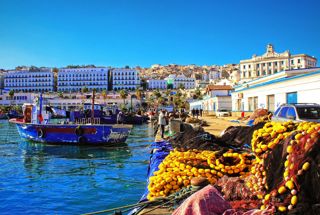
This mid-term evaluation, which is both retrospective and forward-looking, aims to independently analyse the performance of the intervention in terms of results, impacts and sustainability, while providing strategic guidance for the next stages of the EU Programme on the Blue Economy in Algeria. It assesses the contribution of the coordination tools and activities implemented to the specific objectives of the Programme and to the EU's cross-cutting priorities, in particular gender, environment and climate. The evaluation will provide concrete recommendations to strengthen coordination between stakeholders, improve the effectiveness of monitoring mechanisms and ensure greater consistency of actions. Its conclusions will ultimately feed into strategic thinking on the sustainability of achievements and future programming in the sector.

Illicit Financial Flows TEI / FWC
- 2023 – 2026
- menos de 500.000 €
- Africa
The overall objective underlying the proposed FWC is to support INTPA A2 and its partners to coordinate, manage and deliver on the three identified TEI components.
The specific objectives are:
- Strengthened coordination within and among the IFF-TOC Political Steering Committee and Management Committee;
- Ensured high-level knowledge management, monitoring and information sharing supporting the coordination among all TEI stakeholders.

FACILITY TO SUPPORT THE BLUE ECONOMY AGENDA
- 2023 – 2025
- menos de 500.000 €
- Mozambique
The blue economy in Mozambique involves a large number of sectors and institutions, and the governance of the country’s marine and coastal resources is highly complex, requiring coordination on a scale seen in few other areas of the national economy. The Government of Mozambique is promoting several reforms towards better management of ocean and marine resources, as well as, a better institutional alignment around the Ministry of Sea, Inland Waters and Fisheries (MIMAIP). MIMAIP is currently drafting a blue economy strategy covering fisheries resources, energy, maritime transport, biodiversity conservation, tourism and security issues as a priority, and would include an oversight by a consultative inter-ministerial body.
The specific objective of the assignment is to provide technical and support assistance to the donor coordination in Mozambique and to the EU Delegation to Mozambique in support of an enhanced strategic and operational dialogue in the area of Blue economic development and decision-making.
Technical assistance for the implementation of the projects Improvement of the judicial system and access to justice 2021-2025 and Improvement of trust between the population and the internal security forces
- 2021 – 2025
- de 2 a 5 millones de €
- Burkina Faso
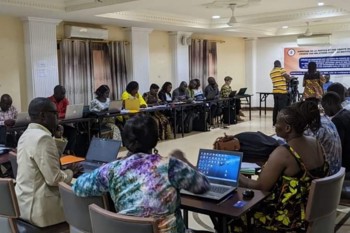
The overall Technical Assistance was broken down into two components, linked by a joint general objective to contribute, within the thematic framework of governance of the Danish Country Programme for Burkina Faso 2016, to "an improved human rights situation, strengthening democratic governance and stability" in Burkina Faso.
The main focus was to provide technical assistance to the Governmental agencies and ministries to ensure that the danish programme did not convert into a simple patchwork of training and equipment activities, but that it materialized into a real governance project that links effectiveness, efficiency and accountability; the participation of citizens and CSOs, and inter-ministerial cooperation (particularly with Justice and Human Rights, Social Action and Promotion).
The development of these two axes was guided by the human rights-based approach (HRBA), particularly the four principles of non-discrimination, participation, accountability and transparency
Component 1: Technical Assistance To The Ministry Of Justice, Human Rights And Civic Promotion
The objective of the Development Commitment Paper 1 (DCP 1) was to “strengthen the effectiveness of human rights and the credibility of justice”.
Its aim was to produce the following four outputs:
- Output 1: the Ministry of Justice, Human Rights and Civic Promotion (MJHRCP) will monitor and coordinate the follow-up of the recommendations from the Universal Periodic Review (UPR) for which the public partners are responsible, and strengthen the government capacities in monitoring methods and documenting tools.
- Output 2: the UPR recommendations for which the MJHRCP is responsible were implemented, in particular concerning the key recommendations relating to the categories of rights that were targeted (e.g. child rights, women’s rights, the disabled and prisoners), contributing to an improved delivery of nationwide civic education on justice procedures.
- Output 3: the legislative framework was made more inclusive and participatory in accordance with the UPR recommendations concerning the independence of justice and the categories of rights targeted (child rights, women’s rights, the disabled and prisoners).
- Output 4: the code of ethics were adhered to better within the justice administration and by the governmental agencies and ministries.
Component 2: Technical Assistance To The Ministry Of Territorial Administration, Decentralisation And Security
The objective of the DCP 2 was to “help improve local access to justice, stability and the protection of human rights (2016 – 2020)”. Its aim was to produce the following three outputs:
- Output 1: security services has a good command of the tools and procedures for the protection of human rights, as per international standards.
- Output 2: security services show more presence and effectiveness in the towns / villages that do not have police or gendarmes, in particular by increased citizen participation.
- Output 3: the participation of the communities in building security are effective, especially for vulnerable groups.
The DCP 2 covered the Eastern and Northern Sahel regions and also the strategic function activities at central level. The flagship actions of the present commitment were based on:
- Support in reforming policies, security standards and human rights, as planned in the context of the security services’ missions, and support in preparing a White Paper on defence and security
- Consolidating the initial training in police and gendarme schools (new tools, approaches, procedures and techniques for human rights) and the continuing training (training of trainers and decentralised training in three regions) to accompany the huge ongoing recruitment drive for police officers and gendarmes.
- Support with communication and dialogue between the security services and the population, to assist with community participation on security issues, community conflict resolution and the fight against violent extremism.
The expected results include an improved capacity to deliver security services while respecting and protecting human rights; better citizen’s perception of security services; more responsible governance; and an improved dialogue between state actors and non-state actors (CSOs) when building community security and respecting human rights

Election Observation Missions / Framework 2021 Lot2
- 2021 – 2025
- Global
The Framework contract relates to the implementation of the logistics, security, administrative and financial aspects and the delivery of outputs of specific electoral missions (Electoral Exploratory Missions, Electoral Expert Missions and Electoral Follow Up Missions).
The specific purpose is to:
- ensure adequate expertise and a cost-efficient implementation of electoral missions;
- ensure the availability of a limited number of selected service providers capable of implementing EU electoral missions in often complex environments while ensuring the highest logistical, financial and security standards, on the widest geographic scope; and
- encourage further development, improvement and innovation in the implementation of EU electoral missions.