
Nuestros proyectos
Explore la experiencia de Particip en proyectos desarrollados en distintos países, sectores y ámbitos de especialización.
Nuestras referencias ofrecen una visión general de las misiones finalizadas y en curso, incluidos sus objetivos, alcance geográfico, duración y valor contractual.
Mostrando 151–160 de 980 referencias

Joint Efforts for a Green Future: Evaluation on Finland's Development Cooperation in Environment and Sustainable Use of Natural Resources and Private Sector Opportunities
- 2024 – 2026
- menos de 500.000 €
- Global
This evaluation aims to provide the Ministry for Foreign Affairs (MFA) of Finland and its stakeholders with an in-depth understanding of the achievements, merits, and value of implementing the policy priority area on sustainable management and use of natural resources. It seeks to deliver evidence-based recommendations to enhance the effectiveness of Finland's engagement with this theme over the long term, while also increasing awareness of results achieved and lessons learned. Additionally, the evaluation will expand knowledge on environment and natural resources-related Sustainable Development Goals (SDGs), with particular attention to SDG 17 on partnerships.
The evaluation encompasses four standalone evaluations on four of the sub-sectors under Finland's ‘Climate and Natural Resources’ policy priority area: i) forests and biodiversity; ii) water resources management; iii) energy, circular economy and critical minerals; and iv) disaster risk reduction (DRR), including meteorology. A synthesis report integrates key findings from the four evaluation reports, explores interlinkages, provides meta-level insights, and identifies concrete opportunities for Finnish private sector engagement. The evaluation also examines digitalisation and data management in forestry sectors in Tanzania and Vietnam, as well as delves deeper into the energy sector in Ukraine.
Objectives:
Assess results, successes, and challenges in achieving the objectives of this policy priority area and its sub-sectors.
Provide a synthesis of outcomes and impacts, including early and emengrgi impacts.
Identify and analyse opportunities for engaging Finnish private sector actors in this work.
Develop practical, evidence-based recommendations for future policy and operational approaches, considering financial and resource constraints. This includes exploring the potential of geospatial data and geo-referencing for monitoring and evaluation purposes.
The evaluation focuses primarily on the OECD DAC criteria of effectiveness and impact, with a particular emphasis on tangible results and signs of impact from both ongoing and completed interventions.
Outsourcing the regular monitoring of projects financed by the EU delegation
- 2019 – 2026
- de 2 a 5 millones de €
- Mali
Relevant Background - The deterioration of the political framework in Mali in the last 5 years is having a great impact both at social and economic level, leading the country in a very difficult situation in terms of health and security. The humanitarian situation in central Mali can be seen mainly as a “protection crisis” with relevant consequences also in other areas such as shelter, nutrition, food security, health, education as well as water, hygiene and sanitation. Despite the risk, the Technical and Financial Partners remain present and active. Safety is therefore is a key issue in the implementation of this project, for which access to many dangerous areas is essential. The European Union is actively present in the country and supports Mali in several areas, including agriculture, health, environment, culture and in strengthening civil society.
The General Objective of the intervention is to contribute to the effective implementation of the EU funded projects in Mali.
The Specific Objective is to assist the European Delegation in Mali and the EDF National Authorising Officer (NAO) to the regular monitoring of all its current and future projects financed by the European Union through its various financial instruments (EDF, UTF, LB, regional funds, etc.). The projects cover mainly the following sectors: infrastructure (roads, water and sanitation), agriculture and food security, governance, justice and human rights, education, etc. However, the EU also finances projects in other sectors such as security and migration, etc.
The Results to be achieved through the activities carried out during the implementation are:
• Design, set up and constant update of a field mission workplan, issued each three months and approved by the EUD in Mali.
• “Human resources” (experts) identified and mobilized to provide updated and reliable information on the project’s implementation, directly from the field.
• A flexible and continues communication mechanism is put in place to ensure adequate information sharing both with the EUD/EDF NAO and the Consortium partners.
• An updated methodology that ensure the triangulation of the information collected, including several and cross-referenced data acquisition methods: analysis of reporting documents (project reports, evaluation and monitoring reports), direct survey of the project facilities and achievements, sampling if necessary, to measure quality, and interviews with stakeholders.
• Problems and good practices identified to be provided to the EUD and the stakeholders.
• Criteria and sub-questions defined in order to monitor and evaluate the two relevant cross-cutting issues: gender and environment.
Afghanistan Health Survey (AHS)
- 2022 – 2026
- de 5 a 10 millones de €
- Afghanistan
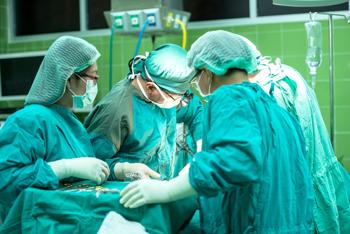
The USAID-funded Assistance for Families & Indigent Afghans to Thrive (AFIAT) project aims to conduct the AHS 2022/2023. The overall purpose of the project is to provide the data needed to assess the performance of Afghanistan's health care system by conducting a household level assessment of key health indicators with a focus on evolving perceptions and socio-cultural norms, with an emphasis on gender and youth, to guide implementation of high impact interventions for reproductive, maternal, newborn, and child health (RMNCH), nutrition, and tuberculosis. The AHS 2022 will help to understand and monitor changes in household and community motivations, attitudes, habits (e.g., health expenditures), and other health information.
The goal of AHS 2022/2023 is to provide national level and provincial level population estimates of various outcome and impact level health indicators based upon the performance of the basic package of health services (BPHS) in both rural and urban areas of the 34 provinces in the following key areas:
Socio-economic and demographic characteristics: Child health and immunization, Maternal and Neonatal health (i.e. ANC, Delivery, PNC, danger signs), Maternal and child mortality and their causes, Nutritional status and behaviors of women and children, Fertility and family planning, including contraceptive prevalence rate and birth spacing, Tuberculosis, Health equity, accessibility, and utilization differences between higher and lower wealth quintiles and urban vs. rural populations, Household level knowledge, motivation, attitudes, behaviors, satisfaction with services and perceptions of the quality of healthcare (including Household expenditures on health services and drugs and other recommended information)
Manager of the CSO Fund 'Promotion of Human Rights, Peace and Social Cohesion 2021-2025'
- 2021 – 2026
- de 2 a 5 millones de €
- Burkina Faso
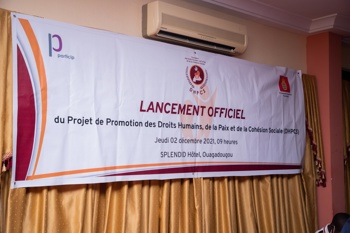
For many years, the Royal Danish Embassy (RDA) in Ouagadougou has accompanied and strengthened Burkinabe civil society organisations (CSOs) active in the field of democratic governance and the promotion and protection of human rights, which have very often been at the forefront of promoting democratisation and the defence of fundamental rights.
The objective of this project is "a strengthened civil society contributes to the respect of human rights, the prevention of conflicts and the preservation of social cohesion". Three outputs are expected:
- output 1: Human rights are promoted, particularly among women, youth and marginalised groups - including Internally Displaced Persons (IDPs) - and better respected throughout the country;
- output 2: Preservation of social cohesion, resilience against violent extremism and peace-building are strengthened, particularly with the participation of women and youth;
- output 3: The strengthening of CSO’ capacities favours better quality actions on the ground, allowing for greater access to rights and increased dialogue with the government.
In a highly deteriorated context (deterioration of security, expansion of terrorism, social contestation, threats to freedom of expression), Burkina Faso needs stronger CSOs. The project, through the Technical Assistance Unit, will contribute to capacity building in strategic planning, management, monitoring and evaluation and capitalisation, which will lead to better quality actions on the ground, allowing for greater access to rights and increased dialogue with the Government.
Mandate of operator for the general coordination and technical assistance to the partners of the AGORA Programme, Phase 1: 01.06.2022-31.05.2026
- 2022 – 2026
- de 2 a 5 millones de €
- Benin
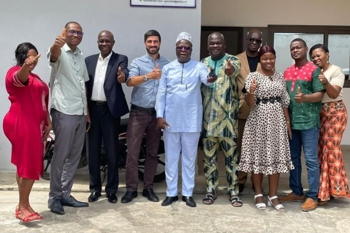
The Programme of Support to Local Governance and the Strengthening of Territorial Attractiveness
Attractiveness (AGORA) aims to ensure that women, men, youth and children have access to quality basic public services in attractive and secure territories that offer a sustainable environment, through the creation of conditions conducive to local economic development.
++Specific outcomes:++
- Outcome 1: The municipalities have strengthened competencies in production engineering and delivery of quality and equitable basic public services, in a sustainable, attractive, secure and cross-border cooperation environment.
- Outcome 2: The territorial areas have framework conditions that are attractive to economic actors and favourable to local development.
- Outcome 3: The legal, political and institutional environment is favourable to strengthening decentralisation, local governance and regional development
The program will strengthen partners at both the macro and meso levels. These are the ministries in charge of decentralization, the internal affairs, and the environment through their technical structures dealing with the targeted sectors: the National Association of Communes of Benin (ANCB), the Prefectures of Borgou, Alibori, Atacora, and Donga, two (3) regional associations at the heart of the program's implementation, ADéCoB, APlDA, and ACAD, which cover twenty-seven (27) communes. Each of these actors has an annual work plan containing actions related to the objectives of the program.
PARTICIP-REID CARE's mandate specifically revolves around the overall operational and strategic coordination and monitoring of the Program, accompaniment, training and capacity building of the program's actors, and capitalization and management of the Program's knowledge.

EU Mobility in VET: Empowering providers through international exchange programmes
- 2025 – 2026
- menos de 500.000 €
- Ukraine
Support will be provided to Ukrainian Vocational Education and Training (VET) providers to strengthen their capacity to participate in Erasmus+ programmes. All services are to be delivered remotely between June 2025 and May 2026, structured under two main work packages.
++Work Package 1: International Engagement through Erasmus+++
A total of 40 VET providers will be engaged, with 25 selected for in-depth support. A joint planning workshop will be conducted with the National Erasmus+ Office–Ukraine and GIZ to define the training programme. Initial online sessions will be held to introduce Erasmus+ opportunities, followed by targeted training for the selected providers on project development and application processes. Partnerships with institutions in EU Programme countries will be facilitated, and individual support will be provided throughout the proposal preparation and submission phases. At least 18 Erasmus+ project applications are expected. All sessions will be fully organized and documented, including logistical coordination and reporting.
++Work Package 2: Handbook Development++
A bilingual handbook (Ukrainian and English) will be created to guide VET providers in drafting Erasmus+ project proposals. The handbook will include step-by-step instructions, visual aids, and digital navigation features, ensuring accessibility across devices. Its content will be tested during the application phase, revised accordingly, and submitted for approval by GIZ and the National Erasmus+ Office–Ukraine.
Final evaluation of the Creative Industries and Cultural Governance Support Program (Culture and Employment Program)
- 2025 – 2026
- menos de 500.000 €
- Burkina Faso
This evaluation pursues two main objectives. Firstly, it aims to provide an independent and in-depth assessment of the performance of the Support Programme for Creative Industries and Cultural Governance (PAIC-GC) in Burkina Faso, by examining its results, impacts, and the factors that explain them. Secondly, it aims to identify key lessons learned and formulate concrete recommendations to inform European and national decision-makers in improving current and future European Union interventions in Burkina Faso's cultural sector.
The specific objectives of the evaluation are as follows:
- Analyze the extent to which the PAIC-GC has contributed to the development of cultural and creative industries and the strengthening of cultural governance in Burkina Faso;
- Provide relevant European Union departments, national stakeholders, and the general public with an independent assessment of the programme's overall performance, measured against its objectives, results, and the causal links between implemented activities and observed impacts;
- Identify lessons learned, conclusions, and recommendations useful for preparing future EU intervention in the culture and tourism sectors in Burkina Faso.
The evaluation will produce findings, conclusions, lessons learned, and recommendations regarding the relevance, coherence, effectiveness, efficiency, impact, sustainability, and added value of EU support. It will also inform the identification and formulation of a future program, with the expected output of an Action Document and an identification report to guide the next EU strategic programming in the cultural sector in Burkina Faso.
Somalia Crisis Recovery Project - Independent Verification Agent (IVA)
- 2021 – 2026
- de 500.000 € a 1 millón de €
- Somalia
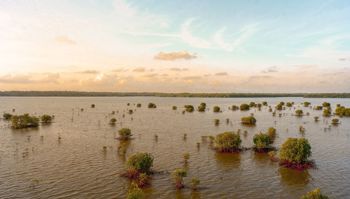
The Somalia Crisis Recovery Project is a flood and disaster recovery, and reconstruction project financed by the World Bank to the Federal Ministry of Finance (MOF). It will support immediate and sustainable flood recovery and finance activities to mitigate against future shocks, by supporting: (a) immediate early floods recovery and service delivery restoration activities; (b) immediate support activities to respond and mitigate COVID 19; (c) medium-term rehabilitation of flood-impacted infrastructure, services and livelihoods; (d) elements of immediate and longer-term crisis preparedness and recovery; (e) detailed flood risk management plans, including both structural and non-structural flood risk management solutions for the country; and (f) support to enhance government performance and accountability and citizen engagement in service delivery.
The overall objective of the assignment is to provide independent review of project implementation and verification of all project results.
The project components include:
- Component 1: Immediate basic services and livelihood support for early recovery
- Component 2: Medium-term flood recovery
- Component 3: Longer-term disaster risk management and preparedness
- Component 4: Project Management
- Component 5: Contingency Emergency Response Component
As part of the Component 2 verification activities, the team is undertaking progress monitoring and assessment of river embankments, health facilities, roads and irrigation canals, through technical assessment of measurements of construction sites and materials, and verification of compliance as per the works contract.
The Project’s early recovery and locust preparedness activities will likely take six to twelve months to complete, while an overall four-year project duration is proposed to: (a) allow the completion of infrastructure activities to building-back-better standards; (b) allow time for the FGS-Federal Member State (FMS) project management arrangements to become functional, and (c) support longer-term resilience building and risk management within Government. The Project will follow a rigorous prioritization and sequencing exercise based on the needs identified in the FINA, to identify state-level annual investment plans.

Technical Assistance for OACPS Secretariat restructuring (AAP 2023 Support measures)
- 2025 – 2026
- menos de 500.000 €
- ACP (Africa)
Specific Objective 1 (SO1): Support the Secretariat to transition to a new organisational structure by strategic execution of tasks to minimise disruption and ensure alignment with the organisation's goals.
Specific Objective 2 (SO2): Support the Secretariat in establishing procedures and regulations as informed by the 2024 system audit and put in place administrative, contractual and financial checks, balances and controls.
Final Evaluation of the Support to Rural Entrepreneurship, Investment and Trade in Papua New Guinea (EU-STREIT PNG) Programme
- 2025 – 2026
- menos de 500.000 €
- Papua New Guinea
The Support to Rural Entrepreneurship, Investment and Trade in Papua New Guinea (EU-STREIT PNG) was the largest grant-funded project of the EU in the Pacific region at the time of the assignment. With a budget of nearly 90 million EUR, it was implemented by a consortium of five UN agencies (led by FAO) from 2020 to 2026 in the two Sepik provinces of Papua New Guinea. It aimed to foster rural development through a holistic approach that integrated the development of three agrofishery value chains (cocoa, vanilla, and fisheries) with enabling services and infrastructure, in particular business services for farmers and their organisations, financial services and digital services, rural transport infrastructure, and renewable energy.
The evaluation was commissioned by the EU Delegation to Papua New Guinea and was managed by the Delegation together with FAO and the Department of National Planning and Monitoring of PNG. Its global objective was to provide the relevant services of the EU, its development partners, and other interested stakeholders with an overall independent assessment of the performance of the programme, paying particular attention to the results achieved and the underlying reasons of these achievements. It also identified lessons learned, conclusions, and recommendations to improve current and future interventions. The evaluation scope included all programme activities over the entire implementation period.
Methodologically, the evaluation adopted a theory-based approach using mixed methods. Qualitative research included a comprehensive document review and primary data collection through remote interviews and an in-country mission in Port Moresby and the Sepik provinces to conduct face-to-face interviews, focus groups with beneficiaries, and field visits to project sites. In terms of quantitative methods, the team analysed the data available in the programme's Management Information System (STREITMIS).
The final report is available online at: https://webapps.ilo.org/ievaldiscovery/#alt4829