
Nuestros proyectos
Explore la experiencia de Particip en proyectos desarrollados en distintos países, sectores y ámbitos de especialización.
Nuestras referencias ofrecen una visión general de las misiones finalizadas y en curso, incluidos sus objetivos, alcance geográfico, duración y valor contractual.
Mostrando 141–150 de 980 referencias

Evaluation of Lebanon WFP Country Strategic Plan 2023-2025
- 2026 – 2026
- menos de 500.000 €
- Lebanon
The independent Evaluation of the Lebanon World Food Programme (WFP) Country Strategic Plan (CSP) 2023–2027 aims to generate evidence and learning on WFP’s performance in Lebanon, while ensuring accountability to WFP stakeholders and affected populations.
The evaluation covers all WFP activities (including cross-cutting results i.e. adherence to humanitarian principles, gender and inclusion, protection and accountability to affected populations) from mid-2020. This also includes activities prior to the Country Strategic Plan (2023-2027) to better assess the results trends, contextual evolution and the extent to which the strategic shifts envisaged with the introduction of the CSP have taken place.
CSP key sectors and activities include:
- Emergency preparedness
- School feeding
- Livelihoods activities
- Social protection
- Institutional capacity strengthening
The evaluation employs a mixed-method approach that triangulates qualitative and quantitative data from a variety of sources. For this purpose, the evaluation team is conducting interviews with different stakeholders including WFP staff at HQ, regional and country level, WFP cooperating partners, donors, UN agencies, government entities as well as focus group discussions with the beneficiaries.
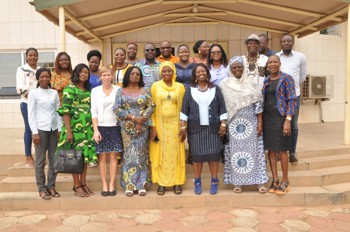
Benin - Gender Equality Support Programme (PAEG) - Recruitment of an operator for the general coordination and technical assistance to local partners Phase 1 : 01.07.2022 - 30.06.2026
- 2022 – 2026
- de 5 a 10 millones de €
- Benin
The Benin Gender Equality Support Programme (PAEG) aims to ++strengthen gender equality among the Beninese population and thereby sustainably reduce the socio-economic vulnerability of women in Benin.++
The programme focuses in particular on:
- increased support in the fight against gender-based violence (GBV),
- improving support for women’s leadership and the promotion of peace,
- building the technical and institutional capacity of the SDC’s partners to enable crosscutting implementation of transformative gender and the Leave No One Behind (LNOB) principal,
- advocacy and policy dialogue with the government to improve coordination and promote gender equality.
The implementation of the programme will favour a participatory approach according to the “make things happen” principle (stakeholder approach). Within this context, the decentralised structures of the Ministry of Social Affairs and Micro Finance (MASM) will be the central actors of the programme and will work on setting up a decentralised management system for social action, to ensure the sustainabilty of the activities. The role of civil society organisations (CSOs) will be to implement the strategy promoting women’s leadership, whilst the programme will support the advocacy / policy dialogue carried out by the TFPs and the CSOs to better institutionalise gender at macro, meso and micro levels.

Strengthening Decentralisation and Good Financial Governance (PADGOF) - Tax and expenditure management in Cameroon
- 2024 – 2026
- de 1 a 2 millones de €
- Cameroon
The general objectives of this program are:
- to improve the efficiency and transparency of tax and expenditure management by the Directorate General of Taxation (DGI) and sector ministries;
- to improve the tax administration's orientation towards citizens and communication with taxpayers from D to C according to the P3-10 standard of the tax administration diagnostic assessment tool (TADAT);
- to evaluate gender- and climate-sensitive programme budgets with 3 sector ministries that play an important role in decentralisation by facilitating the 3 performance (cost-effectiveness) audits from the Audit.

Reforestation: Green Crusade in Regions
- 2024 – 2026
- menos de 500.000 €
- Peru
1) Restore 1,600 hectares of tropical montane forest in the San Martin Region, recovering areas affected by forest fires, protecting biological diversity and environmental services.
2) Plant 1,000 trees in the province of Cusco in the districts of San Jerónimo and San Sebastián and 150 urban trees in Cercado de Lima.
3) Strengthen the capacities of municipal officials responsible for the Municipal Programs of Education, Culture and Environmental Citizenship (EDUCCA) and their environmental promoters, on the importance of conservation and management of green areas and trees, and the planting and maintenance of trees and the prevention of forest fires.

Policy Support Facility for the Implementation of Foreign Policy (Lot 2: Technical Assistance)
- 2019 – 2026
- más de 10 millones de €
- Global
The Policy Support Facility (PSF) is foreseen within The PI Multiannual Indicative Programme 2018-2020 to support the Union's relations with key partner countries. Such a facility is needed to respond to the dynamic and fast changing global environment that EU policies are being confronted with and to promote EU interests in a timely manner.
The PSF is one of the Partnership Instrument’s implementation modalities, providing responsiveness to emerging needs and priorities, and a flexible implementation modality. The PSF aims to support (existing) policy dialogues between the EU and partner countries in areas such as global challenges, the international dimension of the “Europe 2020” strategy, to facilitate economic relations with partner countries and to support public diplomacy. It will complement/support the external dimension of internal policies conducted under the other EU political programmes and instruments.
For the purpose of the Policy Support Facility, this Global Framework Contract (FWC) was put into place. Indeed, many European Commission Directorate Generals need shorter and more targeted quick actions rather than standalone, extensive projects/programmes to support the external dimension of their policy agenda. They are therefore interested in short-term targeted support and need a tool that can accommodate rapidly developing policy dialogues and priorities.
Policy sectors covered by this FWC: Environment, natural resources, biodiversity and sustainable water management; Raw materials; Energy; Climate change; Smart, sustainable and green growth; Research, development and innovation; Industry and SMEs; Regulatory cooperation and standards harmonisation; Employment and social policy; Education and training; Judicial cooperation; Migration and mobility; Foreign policy/security; Disinformation and societal resilience; Health and consumer safety;Digital; Economic and financial affairs; Transport; Governance, human rights and democracy; Maritime policy; Culture and creativity;Tourism; Citizens’ rights
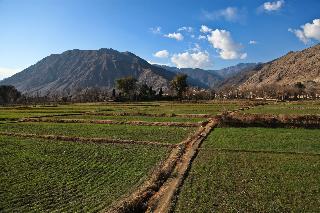
Post-Distribution Monitoring of Winter and Earthquake Injured Response 2025 in Kunar Province
- 2026 – 2026
- menos de 500.000 €
- Afghanistan
The assignment consisted of conducting a Post-Distribution Monitoring (PDM) exercise to assess the effectiveness, efficiency and child-focused outcomes of UNICEF’s winterisation and earthquake-injured cash assistance in Kunar Province.
The PDM verified the timely and complete receipt of cash transfers and assessed whether the assistance supported access to essential winter items, basic needs and costs related to earthquake injuries, while enabling households to avoid negative coping strategies. It also assessed the safety, accessibility, equity and accountability of the delivery process in line with UNICEF safeguarding and Age, Gender and Diversity (AGD) standards. Findings supported programme adjustments and strengthened future winterisation and shock-responsive cash interventions.
The monitoring covered districts across Kunar Province where UNICEF supported approximately 5,340 winter- and earthquake-affected households, including 1,049 households with earthquake-injured members identified through health facilities and community-based referral mechanisms.
The assignment applied a ++mixed-methods approach++, combining representative household surveys with ++Focus Group Discussions (FGDs)++, using separate sampling approaches for the winterisation and earthquake-injured responses. Data was collected through Kobo or InForm-based tools using a hybrid approach, with approximately 70% face-to-face and 30% telephone interviews, ensuring disaggregation by age, gender and disability (AGD).
Key activities included:
- ++Planning and inception++, including methodology development, sampling design, tool preparation and staff training.
- ++Quantitative and qualitative data collection++, including household surveys and FGDs with beneficiaries and vulnerable groups.
- ++Data quality assurance, analysis and reporting++, including validation of datasets, preparation of PDM reports and presentation of findings to UNICEF.
- ++Ethical and safeguarding measures++, ensuring confidentiality, informed participation, inclusion and compliance with UNICEF protection standards.
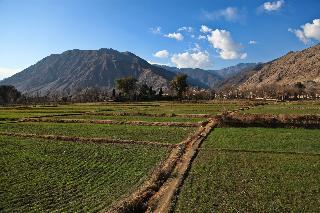
Post-Distribution Monitoring of the Winter Response 2025 in Samangan Province
- 2026 – 2026
- menos de 500.000 €
- Afghanistan
The assignment involved UNICEF providing a one-off winterisation cash assistance of USD 200 (AFN 13,140) to approximately 1,000 vulnerable households across five districts of Samangan Province to address essential heating and cold-weather needs and protect children from illness, malnutrition and harmful coping strategies.
Particip was responsible for conducting an independent ++Post-Distribution Monitoring (PDM)++ exercise to assess the effectiveness, efficiency, accessibility, safety and child-focused outcomes of the assistance. The PDM verified timely receipt and use of cash transfers, access to essential winter items, households’ ability to cope with winter conditions without resorting to negative strategies, and beneficiaries’ perceptions of the assistance delivery process.
The assignment applied a ++mixed-methods approach++ combining representative household surveys with ++Focus Group Discussions++, with approximately 70% of interviews conducted face-to-face and 30% by telephone, while applying an ++Age, Gender and Diversity (AGD)++ lens. Particip’s tasks covered mission planning and inception, staff training and tool testing, quantitative and qualitative data collection, quality assurance, data management, analysis and reporting, in line with UNICEF safeguarding, confidentiality and Do No Harm standards.
Particip was responsible for the following activities:
++Planning for Post-Distribution Monitoring:++
- Authorisations and Preparatory Actions
- Planning and Inception
- Training of Staff
- Field Tool Testing
++Implementation of the Post-Distribution Monitoring Survey:++
- Quantitative Data Collection
- Focus Group Discussions (FGDs)
++Data Management:++
- Data Quality Assurance and Validation
- Data Ownership, Storage, and Archiving
++Reporting:++
- Data Validation and Dataset Finalisation
- Data Analysis and Draft PDM Reporting
- Reporting Standards and Content Requirements
++Ethical Considerations:++
- Informed Participation and Transparency
- Confidentiality and Data Protection
- Safeguarding and Do No Harm
- Age, Gender and Diversity (AGD) Sensitivity
Framework contract EVA 2020 - Strategic Evaluations of the European Union External Action
- 2020 – 2026
- más de 10 millones de €
- Global
The framework contract EVA 2020 – Strategic evaluations supported the European Commission services in conducting complex, external, and evidence-based evaluations of EU external action in partner countries, regions worldwide, and globally.
Strategic evaluations encompassed various scopes, including:
- Country or Regional evaluations
- Thematic and Sectoral evaluations
- Evaluations of EU external financing instruments
Budget support evaluations
- Evaluations of implementing modalities (e.g. blending, guarantee funds)
These evaluations are considered complex because they comprehensively analyse EU policies, strategies, and actions from design to implementation, assessing the combined results of both spending activities (such as a portfolio of interventions (projects and programmes) and non-spending activities (such as policy dialogues) over a significant period, typically at least four years.
Evaluations were carried out through individual assignments defined and contracted through ‘Specific Contracts’. Evaluations implemented by the Particip-led consortium include:
- Evaluation of the EU's support to climate change and environment in Enlargement and Neighbourhood regions (2014-2020)
- Evaluation of the European Union support to Rule of Law and anticorruption in Partner Countries (2010-2021)
- Evaluation of the European Union Support to Sustainable Agri-Food Systems in partner countries (2014-2020)
- Evaluation of the implementation of EU Blending in the EU Neighbourhood and Western Balkans regions in (2015-2021)
- Evaluation of the European Union Bêkou Trust Fund (2014-2023)
- Evaluation of EU support to connectivity in the enlargement and neighbourhood regions (2014-2022)
- Mid-term evaluation of the implementation of the EU Gender Action Plan III (2021-2025)
- Evaluation of EU support to youth in the Enlargement and Neighbourhood regions (2014-2021)
- Evaluation of the EU external financing instruments for the 2014-2020 and 2021-2027 multiannual financial frameworks
- Evaluation of the EU support to migration (Western Balkans only)
- Evaluation of EU support to IPA Roma inclusion projects (2016-2023)
- Global case study on the large ocean and Small Island Developing States (SIDS) group of countries in support of the strategic joint evaluation of the collective international development and humanitarian assistance response to the Covid-19 pandemic
- Evaluation of European Union's Cooperation with North Macedonia (2014-2020)
- Evaluation of the European Union’s cooperation with Tajikistan (2014-2020)
- Evaluation of EU's Cooperation with Georgia (2014-2020)
- Evaluation of the European Union cooperation with the Federal Republic of Somalia (2014-2021)
- Evaluation of European Union's Cooperation with Papua New Guinea (2014-2021)
- Evaluation of the EU cooperation with Ukraine (2014-2020)
- Evaluation of Budget Support in Albania (2014-2020)
- Evaluation of the European Union cooperation with Federal Democratic Republic of Nepal (2014-2021)
- Evaluation of the EU Budget Support Operations in Jamaica (2008-2021)

Evaluation of the EU support to migration (Western Balkans only)
- 2024 – 2026
- menos de 500.000 €
- Western Balkans
The primary objective of this assignment was to provide the relevant EU services and the wider public with an independent assessment on the extent and manner in which the EU’s cooperation, particularly through the Commission, with pre-accession candidates in the Western Balkans has contributed to their alignment with EU standards under Chapter 24 of the acquis, as well as with the EU Pact on Migration, covering the period from 2018 to 2023.
In particular, this evaluation aimed to:
- to assess the EU's support on migration management, border control and asylum, through the IPA instrument, particularly its efficiency, effectiveness, sustainability, impact and added value.
- to assess the EU cooperation potential and the EU added value.
- to provide conclusions based on objective, credible, reliable, and valid data.
- to identify key lessons, best practices and to produce recommendations in order to improve the current and future EU strategies, programmes and actions.
Country case studies were conducted in Albania, Bosnia and Herzegovina, Kosovo, Montenegro, North Macedonia, and Serbia.
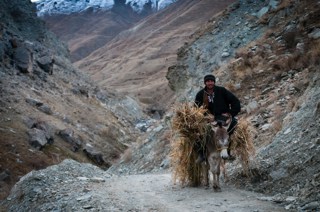
Evaluation of the WFP Tajikistan Country Strategic Plan 2023-2026
- 2025 – 2026
- menos de 500.000 €
- Tajikistan
This independant evaluation of WFP Country Strategic Plan (CSP) in Tajikistan assesses the strategic positionning, added-value and results of WFP operations in the Country from 2021 to 2025.
The evaluation serves the double purpose of accountability (performance and result assessment) and learning (why certain results occurred or not, lessons and evidence for decision-making). It is envisioned that the evaluation will inform the design of the new CSP for Tajikistan, which is scheduled for Executive Board consideration in November 2026.
CSP key sectors and activities include:
- Emergency preparedness
- School feeding
- Malnutrition prevention and treatment
- Livelihoods activities, asset creation and climate change adaptation
- Social protection
- Institutional capacity strengthening
Cross-cutting themes included: Gender equality and empowerment of women (GEEW), accountability to affected populations (AAP), WFP partnership strategy
The evaluation employs a mixed-method approach that triangulates qualitative and quantitative data from a variety of sources. For this purpose, the evaluation team is conducting interviews with different stakeholders including WFP staff at HQ, regional and country level, WFP cooperating partners, donors, UN agencies, government entities as well as focus group discussions with the beneficiaries.