
Nuestros proyectos
Explore la experiencia de Particip en proyectos desarrollados en distintos países, sectores y ámbitos de especialización.
Nuestras referencias ofrecen una visión general de las misiones finalizadas y en curso, incluidos sus objetivos, alcance geográfico, duración y valor contractual.
Mostrando 121–130 de 980 referencias

Evaluation of Budget Support to Public Administration Reform SBS Reform, Integrated Border Management Strategy and EU4Health - Contribution to the availability and access to vaccines against Covid-19 in Montenegro
- 2026 – 2026
- menos de 500.000 €
- Montenegro
This assignment consists of an evaluation of the European Union’s Budget Support in Montenegro, focusing on three strategic areas: Public Administration Reform (PAR), Integrated Border Management (IBM), and the response to COVID-19. It covers four sector budget support programmes implemented between 2016 and 2026, including the PAR programme, two IBM programmes, and COVID-19 crisis response support. The evaluation will assess the relevance, effectiveness, efficiency, coherence, EU added value and sustainability of these interventions, with particular attention to their contribution to Montenegro’s EU accession agenda. It will examine how EU financial support, policy dialogue and complementary technical assistance have supported reforms, strengthened national systems, and contributed to governance, security, economic recovery and social resilience.
The work will combine document review, interviews, field visits, quantitative analysis and stakeholder consultation, structured around reconstructed intervention logics and evaluation questions. The evaluation will provide evidence-based findings, conclusions and recommendations for future EU support in Montenegro.
Methodologically, the assignment will follow the OECD-DAC approach to budget support evaluation, structured around the levels of the intervention logic: inputs, direct outputs, induced outputs, outcomes and contextual impact indicators. The evaluation will not aim to prove direct causality for higher-level results, but will assess the plausibility and consistency of EU contributions in relation to observed changes. Evidence will be gathered through a combination of documentary review, administrative and statistical data, interviews with EU, government, donor and civil society stakeholders, focus groups and field visits.
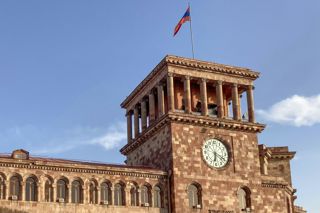
Final Evaluation – Evaluation of Budget Support Programme “Support to Justice Sector Reforms in Armenia, Phase I” ENI-ENEST/2020/042019
- 2026 – 2026
- menos de 500.000 €
- Armenia
The Final Evaluation of the Budget Support Programme “Support to Justice Sector Reforms in Armenia, Phase I” provides an independent assessment of the programme’s effectiveness, efficiency, and impact in supporting Armenia’s policies on good governance, rule of law, justice, and anti-corruption. It examines the extent to which EU budget support has helped strengthen institutional capacities, improve policy frameworks, and enhance public budget spending in support of the Government of Armenia’s reform agenda. The evaluation also considers how this support has enabled progress on Armenia’s commitments under the Comprehensive and Enhanced Partnership Agreement (CEPA).It reviews the sustainability of supported policies and analyses the complementarity and synergies between EU budget support, other aid modalities, and interventions by development partners. A further objective is to identify constraints in government policies, institutional structures, and administrative arrangements that may reduce the effectiveness of budget support in promoting public spending reforms and targeted policy actions. The findings are intended to inform future EU cooperation in Armenia and strengthen the design and delivery of budget support operations in the justice sector.The general objectives of this evaluation are:
- to assess the contribution of EU budget support and complementary assistance to capacity building;
- to assess policy dialogue, coordination mechanisms, and policy monitoring processes;
- to answer the evaluation questions.
The Evaluation Manager is responsible for the management and the coordination of all activities, which mainly include:
- methodological steering of the evaluation
- Drafting the final evaluation report
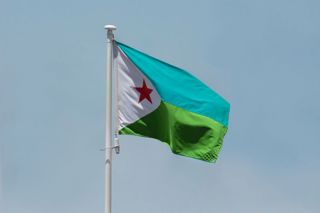
TA Support to Civil Society
- 2023 – 2026
- de 500.000 € a 1 millón de €
- Djibouti
The general aim of the action is to support the European Union Delegation in Djibouti in its support for Djiboutian civil society in terms of political advocacy and capacity building.
The specific objectives are:
1. Support to the European Union Delegation in Djibouti for civil society support programmes;
2. Adoption of the legal and institutional framework governing CSOs;
3. Supervision of CSO projects.
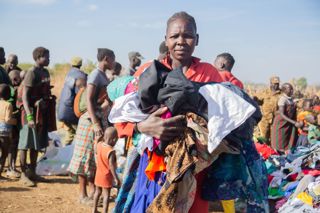
Ex-post evaluation for South Sudan Women Empowerment Programme
- 2025 – 2026
- menos de 500.000 €
- South Sudan
The purpose of this evaluation was to provide a systematic and objective assessment of the South Sudan Women Empowerment Programme. The programme's overall objective was to advance the empowerment of women and girls by supporting the effective implementation and enforcement of women’s rights legislation through capacity building of duty bearers, and by promoting women’s economic, political and social participation at the local level, with particular attention to those in the most vulnerable situations.
The evaluation's global objective is twofold: i) to deliver an independent assessment of performance to the European Union, stakeholders and the wider public; and ii) to generate key lessons, conclusions and recommendations to guide decision makers in improving current and future interventions.
The specific objectives were:
- to inform the next phase of programming on gender equality and women's empowerment,
- to draw lessons that can be replicated in other ongoing and future EU interventions across thematic areas such as economic development, human development and governance, thereby strengthening gender mainstreaming,
- to ensure accountability for the use of EU resources in relation to the results achieved in promoting gender equality and women's empowerment.
Results Oriented Monitoring (ROM) Systems for External aid Interventions Financed by the European Union — Neighbourhood Region
- 2021 – 2026
- más de 10 millones de €
- ENI
Results Oriented Monitoring (ROM) reviews aim to assist the European Commission’s services and EU Delegations in monitoring of and reporting on EU financed development and cooperation projects and programmes in third countries through independent reviews of the progress of their implementation and the achievement of project results.
ROM services to be provided through this contract are clustered in three components:
** Component 1: ROM Reviews. ROM contractors will assess the performance of EU-funded interventionson the basis of the following OECD DAC evaluation criteria: relevance, efficiency, effectiveness, and sustainability.
ROM reviews will cover:
-A sample of EU funded interventions during the inception phase of implementation. The ROM review will support the OM in confirming or updating intervention logic and logframe matrix, in reviewing the monitoring system of the IP, in assessing risks and mitigation measures and fine tune the calendar of activities with a view to improve the performance of the intervention across the OECD DAC criteria.
- ROM reviews will assist the OM in adressing the main implementation problems.
-Other interventions for which Commission services request a ROM review on demand (interventions which could not be visited by EU OMs or for which there is a lack of sector expertise in the EU Delegation/operational unit in HQ).
- Blending operations, focused on asessing the value added of the EU contribution and on the performance of blending interventions in terms of socio-economic development.
** Component 2: Quality assurance and support at design stage for a sample of interventions. Provide technical support to EC services in the formulation of intervention logics and related logical frameworks matrices (logframes) and monitoring and reporting arrangements for a sample of interventions.
**Component 3: Results report (at corporate and intervention level). The Contractor will provide services to encode and quality control results data for a set of interventions subject to results reporting. TOM contractor will ensure quality control of data included in the intervention's logframes. Such quality controls will include, amongs others: verifying that the logframe is correctly encoded and up-to-date , enssuring that the latest values related to logframe indicators are available, and supporting the aggregation of intervention-level results into the EU Results Framework or other frameworks.
Evaluation of the Renewable Energy for Rural Development Phase II Plus (RERDII+) Irrigation Component, Mozambique
- 2026 – 2026
- menos de 500.000 €
- Mozambique
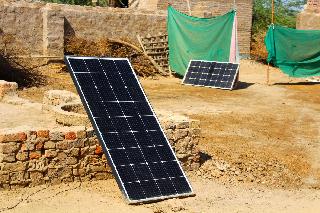
This End-Term Evaluation (ETE) of the Renewable Energy for Rural Development Phase II Plus (RERDII+) irrigation component was both summative and formative in nature, with the overall purpose of assessing project performance, identifying results and generating learning for future solar-powered irrigation programming in Mozambique. The intervention was designed to strengthen agricultural productivity, climate resilience and rural development through the deployment of Solar-Powered Irrigation Systems (SPIS), while supporting farmer capacity development, institutional strengthening and market development for solar irrigation technologies.
The evaluation covered the implementation of the irrigation component implemented by Enabel in partnership with the National Irrigation Institute (INIR). The intervention focused on the provinces of Manica and Zambézia and aimed to promote sustainable uptake of solar irrigation through infrastructure deployment, financing and co-financing mechanisms, engagement with private suppliers, institutional capacity building and knowledge generation for future scaling.
Thematically, the evaluation assessed project performance against the OECD-DAC criteria of relevance, coherence, effectiveness, efficiency, impact and sustainability, while also examining cross-cutting issues including gender equality, youth inclusion, support to vulnerable farmers and environmental sustainability. Particular attention was given to efficiency and sustainability, in line with the Terms of Reference.
The evaluation involved key stakeholders at national, provincial and local levels, including Enabel, INIR, provincial and district authorities, private suppliers, financial actors, service providers and beneficiary farmers. The methodology combined a desk review of programme documentation, interviews with institutional and sector stakeholders, field visits in Manica Province, beneficiary consultations and case studies documenting farmer-level effects and lessons learned.
Through this approach, the evaluation assessed the relevance of solar irrigation to Mozambique’s agricultural and climate-resilience priorities, examined early effects on production, livelihoods and resilience, analysed financing and market development mechanisms, reviewed institutional and private sector roles, and identified lessons and recommendations to support future scaling of solar irrigation systems. The evaluation found that RERDII+ successfully demonstrated the potential of solar irrigation for rural development but highlighted the need for stronger financing mechanisms, institutional anchoring, post-installation support and market ecosystem development to ensure long-term sustainability.
Final evaluation of the RE-INTEG Programme
- 2025 – 2026
- menos de 500.000 €
- Somalia
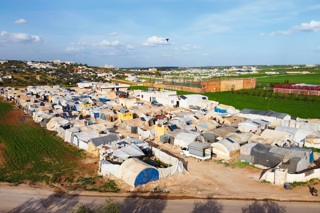
RE-INTEG (“Enhancing Somalia’s responsiveness to the management and reintegration of mixed migration flows”) is a long-term EU Trust Fund for Africa (EUTF) programme in Somalia with a total budget of EUR 55 million, implemented from September 2016 to December 2025 across Somalia, including Somaliland and all Federal Member States. The programme supports a development-oriented response to displacement and mixed migration, aiming to strengthen stability and socio-economic recovery by improving absorption capacities and livelihood conditions in areas of return and departure. Its specific focus is on enabling sustainable and durable reintegration of refugees, returnees (including from Yemen, Kenya, Europe and other areas of departure) and IDPs, and helping to “anchor” populations within Somalia.
Operationally, RE-INTEG is structured around four broad result areas: (1) closing gaps in the management of refugees and returnees; (2) strengthening rule of law and governance through improved policies/legal frameworks for displacement and migration and enhanced cross-border cooperation; (3) improving access to basic services and livelihood opportunities in key areas of return/departure through area-based approaches implemented by multiple consortia; and (4) supporting Somalia’s COVID-19 response as an additional result introduced through a programme adjustment. Implementation is delivered through several major contracts involving partners such as IOM, UNHCR, IDLO, WHO and multiple NGOs/UN actors working on protection, services, livelihoods, and institutional capacity.
The final evaluation will provide an independent assessment of the programme’s performance and results, explain what has driven or constrained achievements, and generate lessons learned and actionable recommendations to inform ongoing implementation and future EU engagement on durable solutions and mixed migration management. It assesses RE-INTEG against the DAC criteria (relevance, coherence, efficiency, effectiveness, sustainability, and early signs of impact) plus EU added value, while also considering cross-cutting priorities (notably gender and environment/climate where relevant) and programme governance/coordination arrangements led by the EU Delegation with Somali counterparts and implementing partners.

Mongolia Sustainable Forest Management and Bioeconomy Framework Loan
- 2025 – 2026
- menos de 500.000 €
- Mongolia
The global objective is to support the Government of Mongolia with the formulation and design of the MONGOLIA SUSTAINABLE FOREST MANAGEMENT AND BIOECONOMY FRAMEWORK LOAN financed by the European Union and the European Investment Bank and possible other co-financing institutions under a blended financing arrangement.
The specific objectives are:
- conduct a comprehensive multi-disciplinary analysis of context, capacities, feasibility, risks, and vulnerabilities of the proposed investment programme;
- design an investment programme in the forest and agricultural sector for the abovementioned components paying due attention to the expected participation of European stakeholders and companies in its implementation;
- prepare the dedicated Environmental and Social Management Framework (ESMF);
- prepare a gender action plan related to the investment programme;
- draft the EIB application for an EU Technical Assistance and Investment grant supporting the investment programme;
- draft the Terms of Reference for the implementing consultant, i.e. the consultant facilitating the implementation of the investment programme in Mongolia.
Final Evaluation of the “Quality Standards and Compliance Programme for the United Republic of Tanzania” (QUALITAN NO. FED/2021/428-294) under the business environment growth and innovation (BEGIN/ TZ/FED/41067) programme- Tanzania
- 2026 – 2026
- menos de 500.000 €
- Tanzania
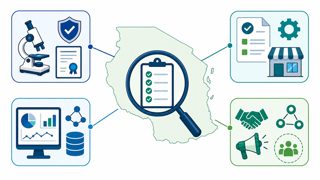
The final evaluation of the EU-funded “Quality Standards and Compliance Programme for the United Republic of Tanzania” (QUALITAN), implemented by UNIDO under the wider Business Environment, Growth and Innovation (BEGIN) programme aimed to increase MSME compliance with quality standards in order to widen market access, reduce standards compliance costs and enhance consumer protection.
The evaluation has a twofold objective: first, to provide the European Union and interested stakeholders with an independent assessment of QUALITAN’s performance, including the results achieved at different levels and the factors explaining those results; and second, to identify lessons learned, conclusions and recommendations to inform current and future interventions.
More specifically, the evaluation will assess progress against the project’s original objectives and expected results; examine the sustainability of benefits; assess the contribution and effectiveness of stakeholders and governance structures; and identify the major constraints faced during implementation.
The evaluation covers the full QUALITAN implementation period, from 1 January 2022 to 24 July 2025.
While QUALITAN is part of BEGIN, the evaluation focuses on the QUALITAN component only. It will consider links with BEGIN, the Blueprint reform agenda and Tanzania’s wider quality infrastructure system only where these are relevant to QUALITAN’s performance, coherence, sustainability and EU added value.
The evaluation will use a theory-based, mixed-methods approach structured around the OECD-DAC criteria, EU added value, the reconstructed Theory of Change and the Evaluation Matrix. The approach is designed not only to assess what was achieved, but also to explain why results varied across components and how QUALITAN contributed to observed changes.
The main analytical approach will be contribution analysis, testing the plausibility of QUALITAN’s intervention logic and assessing whether the project contributed to results in areas such as conformity assessment capacity, standardisation, MSME outreach, digitalisation, governance and communication.
The evaluation will assess QUALITAN against the following main areas: relevance, coherence, effectiveness, efficiency, sustainability, perspective of impact and EU added value. It will also integrate cross-cutting issues, including gender equality, youth, disability, Leave No One Behind, human rights-based approaches, environment and climate considerations, and contributions to SDG 8 and SDG 9.

Technical Assistance to support traceability of deforestation- free agricultural value chains in Honduras
- 2025 – 2026
- menos de 500.000 €
- Honduras
The project will give support IHCAFE and SAG to put in place a data collection campaign protocol and a robust management system to strengthen the existing national coffee farmer registry, with the end goal to support compliance with the EUDR and potential future market regulation, support sustainability and coffee producers livelihoods policies, and prepare avenue for expanding the mechanism to other deforestation risk commodities.