
Nuestros proyectos
Explore la experiencia de Particip en proyectos desarrollados en distintos países, sectores y ámbitos de especialización.
Nuestras referencias ofrecen una visión general de las misiones finalizadas y en curso, incluidos sus objetivos, alcance geográfico, duración y valor contractual.
Mostrando 1–10 de 157 referencias
Conflict Prevention & Mediation Support
- 2026 – 2030
- de 2 a 5 millones de €
- Global
The EU has developed its own capacities to identify conflict risks early and contribute to strengthening the overall conflict prevention, peace building and mediation capacity of the international community. It strives to establish and promote the use of mediation as a tool of first response to emerging or ongoing crisis situations. As stated by the Concept on EU Mediation and Dialogue (2020), the EU is a uniquely placed actor on conflict prevention and mediation.
The EEAS aims to continue using mediation, conflict early warning and conflict analysis in a more systematic way as an efficient and cost-effective instrument to prevent and resolve conflicts.
The objective of the framework contract is to provide the EEAS.PCM.2 Division (Peace, Security and Defence Partnerships) high quality external expertise (technical assistance) at short notice and logistics support in the fields of conflict prevention and analysis, peace mediation and dialogue support
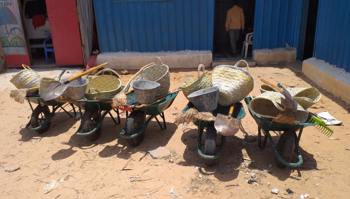
Third Party Monitoring Evaluation and Learning (TPME&L) and Accountability to Affected Populations (AAP) in Somalia
- 2021 – 2029
- de 5 a 10 millones de €
- Somalia
The current objective is to improve the performance of the Swiss HoA programme. This will be achieved thanks to a broad shift in posture, achieved through four highlevel outcomes: (a) improved monitoring and risk governance of the SDC HoA programme, (b) increased benefits for the most vulnerable people, including in hard-to-reach areas, through better targeting by Swiss Agency for Development and Cooperation (SDC), (c) increased number and improved quality of partnerships with local actors, and (d) improved state-led national development plan (NDP) and sustainable development goals (SDG) monitoring.
To better achieve this it is believed that third-party monitoring should be applied at the project, portfolio and strategy level, backed up by community feedback mechanisms to increase accountability to beneficiaries, and implementing partner risk assessments, audit field spot checks, in addition to training and capacity building of implementing partners. SDC will therefore be able to improve the tracking of its projects in Somalia, and also to extend the mix of aid modalities, and allow the management of projects to focus to a greater extent on risk management and trust.
Through its Whole-of-Government Regional Cooperation Strategy Horn of Africa (CS Horn of Africa) 2018-2021, Switzerland has the following priorities:
- Geographic target: At risk regions of the Horn of Africa, mainly Somalia (including Somaliland), and the Arid and Semi-Arid Lands (ASAL) of Kenya (i.e. North-Eastern Kenya) and Ethiopia (i.e. South-Eastern Ethiopia). Switzerland aims at stronger focusing its intervention to rural and harder-to-reach areas.
- Population target: pastoralists, agro-pastoralists, most vulnerable parts of population (including displacement-affected communities). Switzerland aims at better including marginalized and disadvantaged groups, such as minority groups in Somalia.
- Thematic target: Governance, Food Security, Health, Protection/Migration.
- A new Regional Cooperation Programme for the Horn of Africa will be developed in 2021 for the period 2022-25. It is expected that only minor adjustments to the mentioned geographic, population and thematic targets will occur.
Project Components and Phases. FRAP is made up of the following elements:
a) Third-Party Monitoring (TPM) (subject of this tender) and a Digital Platform
b) Support to the International NGO Safety Organization (INSO)
c) Possibly support to the Somalia UN Risk Management Unit (UN RMU)
d) Possibly direct or indirect support to the National Bureau of Statistics of Somalia
As part of the first element, the Kulmis Support Team (KST) works with SDC, implementing partners and digital platform developers to ensure all SDC M&E tools and IP progress data are accurately transferred to the digital platform. This task also including supporting implementing partners during this transaction process, as providing trainings, supporting on filling and uploading specific progress monitoring tools, undertaking the initial QA-QC in data management, etc. In addition to that, KST regularly provides feedback to developers to ensure the digital platform is user friendly and reflects the accurate data, along with regular updates on data protocol to be adopted.

Expert Support Platform for Resilience (Support measures)
- 2025 – 2029
- de 2 a 5 millones de €
- ACP (Africa), Africa, ALA region, ASEAN region
The overall objective (impact) to which this action contributes is: to increase the Commission’s capacity to strengthen resilience and better link humanitarian, development and peace actions (HDP nexus approach) in a conflict-sensitive way in fragile and conflict-affected countries, and in partner countries affected by a sudden shock.
The specific objectives (Outcomes) of this contract are as follows:
- To support the preparation and implementation of the resilience component of the RRP and the mainstreaming of resilience in geographic and thematic projects and programmes.
- To strengthen coordination and synergies between DG INTPA, DG ECHO, FPI, EEAS, and wherever relevant and possible “Team Europe” following a HDP nexus approach. Similarly, strengthen coordination and synergies with other humanitarian, development and peace actors on the ground.
- To support the Commission efforts to ensure that all actions in fragile and conflict affected countries are conflict sensitive, as per NDICI-GE and good international practice.
- To support the Commission´s effort to advance different policy areas related to resilience, peace and security and their implementation.

Inclusive Lesotho - monitoring & evaluation FWK
- 2025 – 2029
- menos de 500.000 €
- Lesotho
Overall objective of the project is to enhance the effectiveness and efficiency of the “Inclusive Lesotho” Action’s implementation by setting up a tailored monitoring & evaluation framework for the programme. The “Inclusive Lesotho” Action aims to achieve systemic, participatory improvements in the way elections are conducted by promoting targeted civic education, enhancing transparency measures, and supporting broad-based participation, particularly among underrepresented groups such as women, youth, people with disabilities, and those experiencing multidimensional poverty, as well as to improve the voter registry and to enhance the capacity of the Independent Electoral Commission to administer fair, transparent, and inclusive elections through targeted capacity building.
Specific objectives of the monitoring & evaluation assignment are as follows:
- To design and implement a monitoring system at action level, based on the action’s logical framework, on the basis of the agreed data and information collected in collaboration with the project implementers (International IDEA and UNDP);
- To set up a learning mechanism that provides feedback to involved stakeholders at regular intervals, and allows progressive adjustments of the programme when needed;
- To provide a mid-term review of the programme, including support to the implementing partners in the definition of a sustainability/exit strategy.

Technical Assistance contract for the PAIESC Programme (Programme d'Appui aux Initiatives Émergentes de la Société Civile)
- 2024 – 2028
- de 1 a 2 millones de €
- Haiti
Haiti is evolving in a context of institutional fragility and unstable democratic governance, aggravated by the assassination of the President in 2021 and an ongoing constitutional crisis. This context of fragility and chronic instability has led to a confusion of roles between civil society and the political class. The decay of the State and the absence of coherent public policies over the long term have forced many CSOs to fill in the gaps (substitution logics) to respond, as best they can, to the needs of the population. In this context, the role of Haitian civil society remains essential, both in advocating for public policies that improve the situation of the population, and in providing basic services and reinforcing community solidarity and a spirit of citizenship.
With PAIESC, the EU is continuing its support to civil society after the 10th and 11th EDF. The programme aims to contribute to the consolidation of democracy and civic culture in Haiti through the growing, inclusive and effective participation of emerging civil society players, particularly young people, in the country's democratic, economic and social development process. It should therefore contribute to strengthening the organisational, technical, advocacy and proposal capacities of civil society players. PAIESC will be implemented through programme estimates.
++General objective++
Contribute to the consolidation of democracy and civic culture in Haiti
++Specific objectives++
- To provide technical assistance for the coordination, planning, implementation, monitoring and reporting of PAIESC, as well as its financial and contractual management.
- Provide the technical assistance and management, support and supervision measures required within the framework of the resources provided for in this contract, to ensure that the Programme Specification and related activities run smoothly, in particular the strengthening of the strategic, institutional and operational capacities of CSOs (in particular, NGOs), institutional and operational capacities of Haitian CSOs (including CBOs and small formal or informal associations in communities) to be responsible, informed and competent partners in economic, political and social life, and to support small communities in tackling structural problems through cascading grants to be awarded under the programme estimate

JAP-Technical assistance to the programme
- 2024 – 2028
- de 1 a 2 millones de €
- Rwanda
To assist the Justice and Accountability Programme (JAP) deliver on its result areas: i) Improved delivery of timely, quality justice, and access to justice for the most vulnerable persons; ii) Improved use of social and economic reintegration measures for persons deprived of their liberty, by institutional and civic stakeholders and iii) Enhanced citizen’s voice and effective participation in accountability mechanisms
To assist the EUD, the Ministry of Justice (Minijust), the Judiciary, National Public Prosecution Authority (NPPA), National Commission for Human Rights (NCHR), Rwanda Correctional Services (RCS), the Police, RIB and the CSOs beneficiaries to deliver on the above-referred programme’s expected results.
The specific objectives of this contract are as follows:
Specific objective 1: to assist the Ministry of Justice (Minijust) Chair of the Steering Committee, and the EUD as co-Chair in the strategic steering and overall implementation of the programme, as well as thematic support.
Specific objective 2: to assist the following institutions in the implementation of their individual grant contracts, namely Minijust, Judiciary, National Public Prosecution Authority (NPPA), National Commission for Human Rights (NCHR), and Rwanda Correctional Service (RCS), by providing support in project and financial management ensuring good understanding, compliance and adherence to EU procedures.
Specific objective 3: to provide thematic support through short-term experts’ assistance to government institutions (to be further defined during implementation).

IFF/TOC TEI - Technical assistance – Support to the management structures, knowledge management, monitoring and information sharing
- 2026 – 2028
- menos de 500.000 €
- Africa
The overall objective underlying the proposed specific contract is to support the Contracting Authority (INTPA G5) and its partners to coordinate, manage and deliver on the components of the TEI. The technical assistance is primarily focused on coordination/management support and delivery of TEI processes and outputs, while providing capacity for targeted substantive IFF/TOC inputs as needed.
Specific objectives are:
1. Ensure smooth, efficient and inclusive coordination of all TEIs stakeholders within and among the Strategic Steering Group and the Management Committee.
2. Support high-level knowledge management, monitoring and information sharing to enhance the coordination, coherence, complementarity and visibility of actions taken by the EU and TEI members in the areas covered by the TEI.
3. Provide a platform for EU actors and African partners to align approaches, ensuring a unified stance and stronger visibility in regional and global fora.
Framework Contract Services for the Implementation of External Aid (FWC SEA 2023), Lot 9: Democracy, Human Rights, Rule of Law, Gender Equality and Human Rights Based Approach (HRBA)
- 2024 – 2028
- más de 10 millones de €
- Global
The objective of the FWC is to provide, via individual assignments defined and contracted through Specific Contracts, expertise which can be mobilised at short notice. The quality of the services, which may make use of expertise either internal or external to the Framework Contractor, must be guaranteed by the Framework Contractor who will provide the appropriate internal technical skills and resources.
The FWC has no funds on its own. The main instrument within external action is the Neighbourhood, Development and International Cooperation Instrument - Global Europe (NDICI-Global Europe).
The implementation duration (not exceeding 48 months) and the contractual amount (not exceeding € 1,999,999) are fixed for each individual assignment.
The thematic division is articulated according to the priority areas of the EU International Partnerships and Lot 9 focuses on the following sectors:
- Human Rights Based Approach (HRBA)
- Human Rights
- Support to democratisation
- Reinforcement of the rule of law and administration of justice
- Public administration reform and organisational development of public institutions
- Elections
- Gender equality and women’s empowerment
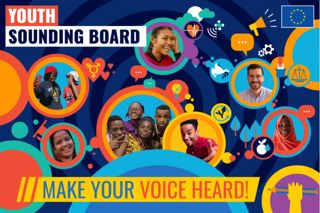
Technical Assistance to support the Malawi Youth Sounding Board (2025-2027)
- 2026 – 2028
- menos de 500.000 €
- Malawi
The project “Technical Assistance to support the Malawi Youth Sounding Board (2025–2027)” contributes to the European Union’s commitment to promoting inclusive governance, youth participation, and responsive policymaking in Malawi. It is implemented in the context of a youthful population facing persistent challenges related to unemployment, socio-economic exclusion, and limited participation in decision-making processes, while at the same time representing a key asset for the country’s long-term development.
Overall Objective:
The overall objective of the project is to empower Malawian youth by actively involving them in the shaping, monitoring, and dissemination of European Union initiatives, ensuring that EU actions in Malawi are inclusive, relevant, and aligned with the aspirations and needs of young people, particularly those who are most vulnerable. By strengthening youth participation, the project supports the EU Youth Strategy and contributes to democratic governance, social inclusion, and sustainable development in Malawi.
Specific Objective
The specific objective of the project is to provide comprehensive technical, administrative, and communication support to the Malawi Youth Sounding Board (MW-YSB), enabling it to efficiently and effectively implement its mandate as an advisory and consultative body to the EU Delegation in Malawi.
Project Description
To achieve these objectives, the Technical Assistance supports the day-to-day functioning and strategic positioning of the Malawi Youth Sounding Board. It facilitates regular and structured dialogue between the EU Delegation and Youth Sounding Board members, ensuring that youth perspectives are systematically integrated into EU programmes, policies, and initiatives. The project also supports the organisation and coordination of Youth Sounding Board participation in EU events, programme activities, and exchanges with national, regional, and international stakeholders.
A strong emphasis is placed on capacity building and skills development. The project designs and delivers demand-driven training activities tailored to the needs of Youth Sounding Board members, equipping them with the knowledge and competencies required to engage meaningfully in policy dialogue, advocacy, monitoring, and communication. In parallel, the project strengthens linkages between the Youth Sounding Board and existing youth networks, civil society organisations, and institutions across Malawi, thereby reinforcing outreach, inclusiveness, and representativeness.
The Technical Assistance further develops monitoring and feedback mechanisms that allow young people to collect, analyse, and synthesise youth perspectives on EU-supported initiatives. These insights are consolidated into regular reports that inform the EU Delegation’s programming and implementation processes. In addition, the project supports the development and implementation of a communication and visibility strategy aligned with the EU Delegation’s Strategic Communication framework, enhancing the visibility of youth engagement and EU actions among Malawian youth.
Finally, the project contributes to the sustainability of youth engagement by supporting the establishment and operationalisation of a Youth Sounding Board Alumni Network, ensuring continuity, institutional memory, and long-term impact beyond individual mandates. Through these combined actions, the project strengthens the role of Malawian youth as active partners in EU cooperation and national development processes.
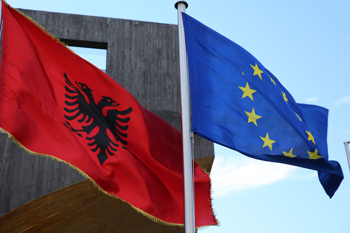
EU for Good Governance technical assistance at central and local level with a focus on Public Administration Reform, Public Finance Management, and Anti-Corruption
- 2023 – 2027
- de 2 a 5 millones de €
- Albania
The purposes of this contract are as follows:
1. Capacity building for policy making and implementation including integrated and efficient planning, budgeting and coordination of policies;
2. Capacity building to better understand and implement public internal financial control policy across all public institutions;
3. Support to improve EU related governance and delivery of public services by central agencies and municipalities;
4. Support to improve participatory governance and civic dialogue, including public consultation;
5. Support to improve transparency and accountability for reform implementation, including through independent institutions.