
Nuestros proyectos
Explore la experiencia de Particip en proyectos desarrollados en distintos países, sectores y ámbitos de especialización.
Nuestras referencias ofrecen una visión general de las misiones finalizadas y en curso, incluidos sus objetivos, alcance geográfico, duración y valor contractual.
Mostrando 1–10 de 90 referencias
EU for Good Governance technical assistance at central and local level with a focus on Public Administration Reform, Public Finance Management, and Anti-Corruption
- 2023 – 2027
- de 2 a 5 millones de €
- Albania
The purposes of this contract are as follows:
1. Capacity building for policy making and implementation including integrated and efficient planning, budgeting and coordination of policies;
2. Capacity building to better understand and implement public internal financial control policy across all public institutions;
3. Support to improve EU related governance and delivery of public services by central agencies and municipalities;
4. Support to improve participatory governance and civic dialogue, including public consultation;
5. Support to improve transparency and accountability for reform implementation, including through independent institutions.

Strengthening the national regional linkages in SADC (SNRL) - Consultancies on regional integration based on SADC policies, facilitation of events, communication and visibility
- 2023 – 2027
- de 2 a 5 millones de €
- SADC region
The overall objective of the project "Strengthening the national regional linkages in SADC (SNRL)" is to support the Southern African Development Community (SADC) in its efforts to promote regional integration in the member states (MS) for the benefit of the population in the SADC region.
The project is aligned with SADC's regional strategy (the Regional Indicative Strategic Development Plan 2020-30, RISDP) and supports its implementation.
In particular, it supports SADC and its MS on implementing Chapter 5 of the RISDP focusing on the strategic management objectives of the RISDP. By strengthening SADC as a regional organization and by supporting the implementation of the regional agenda RISDP, the SNRL project aims to facilitate the regional integration in the SADC region.
The objective of this contract is the provision of high-quality short-term expert (STE) advice in various topics relevant for enhancing the capacities of national stakeholders to vigorously and effectively pursue in their respective countries the regional integration protocols, policies and strategies of SADC.
The individual consultancy assignments are developed between GIZ and its partners and are based on a joint process and methodology aimed at identifying the needs in the SADC region and within individual member states.
The assignments focus on the scaling-up of best practices and should aim to share experiences and knowledge throughout the region (for example by aiming to standardize products developed as part of the assignment).
The following outputs are expected as a result of project implementation:
- ++Output 1:++ The institutional framework for the implementation of regional integration in the SADC region has improved in the member states;
- ++Output 2:++ Monitoring and evaluation systems for the implementation of regional integration are in place in selected member states;
- ++Output 3:++ The strategic communication capacities of SADC and member states for high profile communication around SADC activities and operations are strengthened.
Implemented projects include the following (project number and title):
- P1/2023 Consultancy to Support the SADC Secretariat to Develop and Pilot the Protocol Compliance Mechanism and Monitoring of the Trade Protocol;
- P2/2023 Perception Survey on the status of SADC regional integration in the Member States;
- P3/2023 Facilitator/Presenter and Group Work Moderators for Two Regional Workshops Supported by SNRL;
- P4/2023 Development of Model Law for the Establishment of SADC National Committees in Member States;
- P5/2023 Consultancy to develop communication products for publication purposes from the deliberations of SADC Member States at the Regional Learning and Exchange Symposium in Lesotho;
- P6/2023 Consultancy to develop presentation on the Status of SADC National Structures and their Financing at the Regional Learning and Exchange Symposium in Lesotho;
- P7/2023 Facilitation Operational Planning SNRL;
- P8/2023 Consultancy Services to Support the Publicity Products of The SADC Summit Public Lecture- Angola;
- P9/2023 Consultancy Services to Provide Rapporteuring of the Proceedings of The SADC Summit Public Lecture- Angola;
- P10/2023 Development of Peer Learning & Review Mechanism for national SADC coordination;
- P11/2023 Shadow monitoring on the extent of implementation of the SADC RAIP 2017 – 2022;
- P12/2023 Editing & Design of Eswatini’s New Industrial Policy;
- P13/2023 Capacity Building on SADC Regional Integration and Project Management for SADC National Contact Points Junior and Middle Staff;
- P14/2023 Updating and Finalising the Status of the SADC National Committees Desk Review Report;
- P15/2023 Consultancy Services to Support the Documentation of Proceedings at the SADC Integrated Regional Electronic Settlement System 10th Anniversary Celebrations;
- P16/2023 Consultancy Services to Support the Publicity Products of the SADC Integrated Regional Electronic Settlement Systems 10-year anniversary;
- P17/2023 Consultancy Services to Support the Rapporteuring of the SADC Integrated Regional Electronic Settlement Systems 10-year anniversary;
- P18/2023 Scoping Studies South Africa and Zimbabwe;
- P19/2023 Scoping Study Madagascar;
- P20/2023 SNRL II Operational Planning Workshop.
- P21 Team Retreat Facilitatior
- P22 Communication Guidelines
- P23 Lesotho National Policy on Regional Economic Integration
- P24 Scoping study and development of SA documentary
- P25 Production of SADC video podcasts
- P27 Development of a Resource Mobilisation Plan for the SNC of the Kingdom of Eswatini
- P28 Ops Manual, OP & Capacity Building Training on RI & PM - Eswatini
- P29 Communications Capacity Building in Botswana
- P30 SNRL II Team Retreat Refresher
- P31 CB& Strengthening Lesotho's SNCs - Project Management
- P33 Establishment of South Africa’s SADC National Committee
- P34 Graphic Design for Promotional Material - SADC Public Lecture in Zimbabwe
- P35 Rapportuering of the SADC Public Lecture Zimbabwe
- P36 Madagascar National Policy on SADC RI
- P37 Capacity Building & Strengthening SNC in Madagascar
- P38 CB & Training on SADC RI & PM for Zambia’s SNC staff
- P39 CB on Resource Mobilisation & Development of Resource Mobilisation Strategy in Zambia
- P40 Regional CB on Resource Mobilisation
- P41 Model Law on the Establishment of SNCs
- P42 Policy briefs on SADC-RTGS; role/significance of the SADC public lectures in promoting regional cooperation and integration in the SADC region.
- P43 Fact Sheets on SADC Protocols
- P44 Communications Strategy and Social Media Dissemination Plan for BGCIS in Botswana
- P46 RI Orientation & Induction for the SNC in Eswatini
- P47 SNRL II Operational Planning Workshop 2025
- P48 Rapporteur for Tanzania Event on SADC RAIP 2017-2022 Shadow Monitoring Report
- P49 Rapporteur for Malawi Event on SADC RAIP 2017-2022 Shadow Monitoring Report
- P50 Policy Brief, Factsheet & Press Release On he AML (Anti-Money Laundering) & CFT
- P51 Madagascar Resource Mobilisation Strategy and Action Plan
- P52 Piloting SNC Peer Learning and Review Mechanism (S-PLRM)
- P53 Establish Baseline Values on SADC Parliamentary Forum’s Operational Efficiency
- P54 Revise SADC Draft Communication, Awareness and Visibility Strategy
- P55 NSA Baseline Indicators
- P56 Interpretation Assignments
- P57 Facilitation of Consultation Workshop SNRL
- P58 Endline Perception Survey
- P60 Piloting M&E Framework for the SADC Protocol on Trade
- P61 SADC Parliamentary Forum M&E on Gender
- P62 Photography, Videography and Livestreaming _ Launch of SA's SNC
- P63 SADC PRU Comms Strategy Launch
- P64 Status of SNCs in the Member States
- P65 Training of Botswana SNC
- P69 Facilitation of SPLRM 1st Cycle
- P70 SPRLM Budget and Finance Plan
- P71 CfP Support
- P72 Facilitation of SNC Guidelines
- P73 SADC PF Publication and Dissemination
- P74 SADC PF Gender Assessment
- P75 SADC PF Mid-Term Evaluation
- P77 Review of Public Hearing
- P81 Communication Documentary Launch

Complementary assistance for the PAR SRC - Assessment and monitoring of SBS implementation
- 2024 – 2027
- de 500.000 € a 1 millón de €
- Serbia
The specific objective (Outcome) of this contract is to assess compliance of the national administration with the General and Specific Conditions for the release of fixed and variable tranches as set out in the Appendix for Budget Support for Public Administration Reform and to provide recommendations to the EU Delegation to the Republic of Serbia concerning the value of the tranches to be disbursed.

Strengthening local governance, decentralisation and gender mainstreaming in Bhutan
- 2024 – 2027
- de 1 a 2 millones de €
- Bhutan
The overall objective (Impact) to which this action contributes is:
- To assist Bhutan in reducing poverty.
The specific objectives (Outcomes) of this contract are as follows:
- Specific objective (Outcome) 1: Strengthening local governance and decentralisation;
- Specific objective (Outcome) 2: Strengthening gender mainstreaming, including at local level.
The expected outputs of this contract are as follows:
- Output 1 to Outcome 1 & 2: High-quality technical expertise/support provided to Bhutan, including capacity building actions, to improve implementation of the programmes financed by the EU in the focal sectors and in the cross-cutting areas such as but not limited to : CSOs, governance, gender mainstreaming and support to gender equality and women empowerment, environment, climate, disaster risk reduction, democracy and poverty. Specifically, the support is expected to enhance implementation of the Decentralisation policy and local governance priorities in the 13th Five Year Plan.
- Output 2 to Outcome 1 & 2: Policy Dialogue and engagement between the EU and Royal Government of Bhutan in the cooperation policy areas improved through dialogue facilitation, training, workshops, research and studies, including sector policy assessments under budget support in specialised areas related to local governance, decentralisation and gender mainstreaming.
- Output 3 to Outcome 1 & 2: Series of studies in the Local Government sector and pertaining to gender equality and women participation conducted, in close coordination with the Royal Government of Bhutan.
- Output 4 to Outcome 1 & 2: Organisation of dialogue facilitation, trainings/workshops both in Bhutan and outside Bhutan for Bhutanese stakeholders to improve human resources capacities as well as enhance communication between stakeholders and visibility of EU and RGoB achievements in the sector. Beneficiaries could include officials from the department of local governance, Ministry of Finance (Department of macro-fiscal and development finance), the omen and Children Division (which is the secretariat of the National Commission for Women and Children) under the Ministry of Education and Skills Development, civil servants from the districts and municipalities at local level (e.g. gender focal points, members of Mainstreaming Reference Groups), elected officials and also representatives/members of nongovernmental organisations
- Output 5 to Outcome 1 & 2: As cross-cutting for the sectors (i.e. statistical methodologies for the 2 sectors and for better monitoring system within Bhutan), the provision of technical assistance to the National Statistical Bureau to support an improved statistical system at central and local levels and a strengthened local level data collection and treatment of data in the areas targeted by the EU budget support programme.
Technical Assistance Support to OCTA 2024-2025
- 2025 – 2027
- menos de 500.000 €
- OCT
The overall objective of the proposed technical assistance is to enhance the OCTs’ capacities for political and policy dialogue with the EU and to support OCTA on the management of horizontal issues.
The specific objectives of the action are to ensure a good coordination and dialogue among the OCTs, the Member States to which they are linked and the European Commission, through the annual OCTs-EU Forum, the quarterly tripartite meetings (MS/OCT/COM), Working Parties meetings (if relevant), the OCTA Ministerial Conference and OCTA ExCo meetings and other ad-hoc meetings. Furthermore, the assistance shall ensure that OCTs-EU relations in horizontal issues and programs, trade matters and the mainstreaming of transversal priorities are duly taken into consideration.

Bridging Knowledge and Policy: Strengthening Armenian Think Tanks for Enhanced EU Engagement and Regional Cooperation
- 2024 – 2026
- menos de 500.000 €
- Armenia
The overall objective of this contract is to support evidence-based policymaking and to strengthen the inputs of the Armenian think tank community in the current context of deepening of EU-AM relations in line with the objective of further strengthening Eastern Partnership (EaP) priorities and enhancing awareness and understanding of the European Neighboured Policy.
The specific objectives of this contract are as follows:
- Specific objective 1: Enable production of high-quality research papers that provide indepth analysis on topics of importance to the EU’s engagement in Armenia and the South Caucasus.
- Specific objective 2: Foster collaboration between Armenia and EU based think-tanks, local experts, policymakers, and EU representatives to support informed decision-making and policy development.

Support to Coordination of the EU Development Interventions in Nigeria
- 2025 – 2026
- menos de 500.000 €
- Nigeria
The overall objective is to support the FMBEP in strengthening existing capacities for coordination of the EU development interventions in Nigeria. Given the limited budgetary resources in carrying out the key mandates of the EU Unit of the FMBEP relevant to effective implementation of the EU– MIP for Nigeria, it is pertinent to support key activities. This objective is complementary to the economic blueprint of the current Administration, i.e the Medium Term Plans of the Nigerian Agenda 2050 are also critical in meeting the targets of the Sustainable Development Goals (SDGs).
The timing of the action is therefore relevant for facilitation the implementation of the recommendation from the review of the National Development Plan (NDP) and MIP. The proposed activities for this action will support all the thematic sectors and actions of the EU – MIP 2021 – 2027.
The specific objectives are to:
- Result 1: Strengthen understanding and the capacities of key actors involved in supporting the new modalities for implementation of the EU funded interventions programmes (national and regional).
- Result 2: Strengthen administrative systems, structures and capacity to monitor, evaluate, coordinate and report on the EU development assistance are in place.

Strategic Evaluation of the EU partnership with Guinea (2014-2024)
- 2025 – 2026
- menos de 500.000 €
- Guinea (Conakry)
This evaluation has two overarching objectives. Firstly, it aims to provide an independent and comprehensive assessment of the performance and strategic relevance of the EU’s partnership with the Republic of Guinea. Secondly, it seeks to identify key lessons and produce forward-looking recommendations to inform responsible decision-makers – particularly within the European External Action Service and the Directorate-General for International Partnerships – on how to enhance the quality, coherence, and impact of the EU’s current and future strategies, programming, and actions in Guinea.
Its specific objectives are as follows:
- To assess how the EU’s overall engagement in Guinea has contributed to its strategic objectives at the country level, through political dialogue, development cooperation, trade, and investment initiatives;
- To provide EU external cooperation services and the broader public with an independent assessment of the EU’s cooperation with the Republic of Guinea over the period 2014-2024.
The evaluation will focus on six priority sectors: i) return to constitutional order; ii) south-north migration; iii) natural resource exploitation and public finance; iv) energy; v) climate change; and vi) health.
The evaluation will deliver findings, conclusions, and lessons regarding the effectiveness, coherence, and sustainability of the EU support in Guinea. It will also provide targeted, practical, and forward-looking recommendations to improve the design and implementation of current and future EU interventions in Guinea under the 2021-2027 programming period
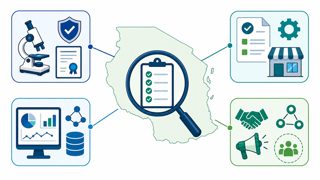
Final Evaluation of the “Quality Standards and Compliance Programme for the United Republic of Tanzania” (QUALITAN NO. FED/2021/428-294) under the business environment growth and innovation (BEGIN/ TZ/FED/41067) programme- Tanzania
- 2026 – 2026
- menos de 500.000 €
- Tanzania
The final evaluation of the EU-funded “Quality Standards and Compliance Programme for the United Republic of Tanzania” (QUALITAN), implemented by UNIDO under the wider Business Environment, Growth and Innovation (BEGIN) programme aimed to increase MSME compliance with quality standards in order to widen market access, reduce standards compliance costs and enhance consumer protection.
The evaluation has a twofold objective: first, to provide the European Union and interested stakeholders with an independent assessment of QUALITAN’s performance, including the results achieved at different levels and the factors explaining those results; and second, to identify lessons learned, conclusions and recommendations to inform current and future interventions.
More specifically, the evaluation will assess progress against the project’s original objectives and expected results; examine the sustainability of benefits; assess the contribution and effectiveness of stakeholders and governance structures; and identify the major constraints faced during implementation.
The evaluation covers the full QUALITAN implementation period, from 1 January 2022 to 24 July 2025.
While QUALITAN is part of BEGIN, the evaluation focuses on the QUALITAN component only. It will consider links with BEGIN, the Blueprint reform agenda and Tanzania’s wider quality infrastructure system only where these are relevant to QUALITAN’s performance, coherence, sustainability and EU added value.
The evaluation will use a theory-based, mixed-methods approach structured around the OECD-DAC criteria, EU added value, the reconstructed Theory of Change and the Evaluation Matrix. The approach is designed not only to assess what was achieved, but also to explain why results varied across components and how QUALITAN contributed to observed changes.
The main analytical approach will be contribution analysis, testing the plausibility of QUALITAN’s intervention logic and assessing whether the project contributed to results in areas such as conformity assessment capacity, standardisation, MSME outreach, digitalisation, governance and communication.
The evaluation will assess QUALITAN against the following main areas: relevance, coherence, effectiveness, efficiency, sustainability, perspective of impact and EU added value. It will also integrate cross-cutting issues, including gender equality, youth, disability, Leave No One Behind, human rights-based approaches, environment and climate considerations, and contributions to SDG 8 and SDG 9.

Capacity-building for the Implementation of Interreg and Cohesion Policy
- 2025 – 2026
- menos de 500.000 €
- ENI, EU, IPA
The EU Cohesion Policy is a key investment strategy aimed at reducing regional disparities and fostering smart, sustainable, and inclusive growth across the EU. It operates through national, regional, and Interreg cooperation programmes to support infrastructure, the green transition, connectivity, and social inclusion in the EU Member States, while preparing candidate countries for EU membership by building administrative capacity through Interreg and tailored training programmes.
The overall objective of the project is to prepare candidate countries for implementing cohesion policy in the lead up to and upon accession.
The project specifically aims to:
- Train staff from national administrations at central and local/regional level participating in Interreg programmes (and IPA III programmes, if staff overlaps), to reinforce their capacities for participating in and later on implementing cohesion policy programmes.
- Organise study visits (and cover related travel and accommodation costs and per diem) for short-term work experience in selected Member States’ managing or audit authorities, thereby increasing the skills for benefitting better from their participation in existing programmes and preparing future ones.