
Our projects
Explore Particip’s project experience across countries, sectors and areas of expertise.
Our references provide an overview of completed and ongoing assignments, including their objectives, geographic scope, duration and contract value.
Showing 81–90 of 513 references
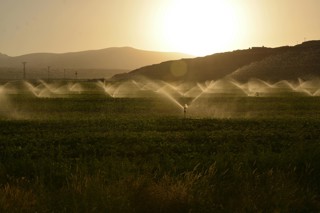
Support to the Egyptian Irrigation Modernization to Enhance the Water Productivity programme
- 2024 – 2027
- € 500,000 – 1 million
- Egypt
The envisaged programme to be designed is foreseen to include:
Component 1: Implementation of on-farm irrigation water management Infrastructure. This component is intended to support on-farm (marwa/mesqa) irrigation modernization in the Nile Valley (specific areas to be decided).
The component is divided into the following:
1. Rehabilitation of mesqa (tertiary) system, including pump stations, wherever feasible renewable energy pumps (mainly solar pumps) will be considered, while accounting for feasibility and sustainability measures.
2. Transformation from open marwa canals to a pressurized distribution system composed of buried PVC pipes and hydrants and installing modern irrigation system (drip or bubblers) in the farms.
3. Establishment of mesqa Water User Associations and ensuring their proper representation.
Component 2: Capacity building and participation for government staff and farmers in the project area. This component aims to improve stakeholders' knowledge through
1. Building the capacity of Water User Associations, and key farmers on operation and maintenance of modernized irrigations systems, marketing, accounting and management.
2. Building the capacity of Ministry of Water Resources and Irrigation officials in the field of design, implementation and operation of modern irrigation schemes, and improving their knowledge in the most recent technologies of water management and irrigation modernization.
- Partners:
- Particip (Lead), Incatema
- Keywords:
- Agriculture, Environment, Rural and urban development
Technical Assistance Support to OCTA 2024-2025
- 2025 – 2027
- under € 500,000
- OCT
The overall objective of the proposed technical assistance is to enhance the OCTs’ capacities for political and policy dialogue with the EU and to support OCTA on the management of horizontal issues.
The specific objectives of the action are to ensure a good coordination and dialogue among the OCTs, the Member States to which they are linked and the European Commission, through the annual OCTs-EU Forum, the quarterly tripartite meetings (MS/OCT/COM), Working Parties meetings (if relevant), the OCTA Ministerial Conference and OCTA ExCo meetings and other ad-hoc meetings. Furthermore, the assistance shall ensure that OCTs-EU relations in horizontal issues and programs, trade matters and the mainstreaming of transversal priorities are duly taken into consideration.
- Keywords:
- Institutional development
Monitoring, Evaluation and Communication of Results in Iraq
- 2023 – 2027
- € 2 – 5 million
- Iraq
The overall objective (Impact) to which this action contributes is :
- To provide monitoring and evaluation services to assess the results achieved through the EU’s development cooperation, and to provide support on communication and visibility in line with the Delegation’s communication strategy.
The specific objectives of this contract are as follows:
- 1.To conduct results-oriented monitoring of EU-funded projects in Iraq and to implement a results-oriented monitoring based on innovative approaches in the field that allows improving the steering and delivery of programmes to Iraq.
- 2.To provide an assessment of achievements, the quality and the results of interventions based on evaluation approaches adapted to the specific intervention under observation in order to deliver evaluations that allow for institutional learning and improved programming cycles.
- 3.To disseminate information about the EU’s engagement in Iraq and notably its cooperation activity in an accessible manner with a focus on communicating EU values and EU results, in particular to stakeholders in Iraq and the general population.
There are 3 main components each associated to a results that the project will aim to achieve
- Component 1: Results-oriented monitoring of EU-Funded projects in IRAQ
- R-1: Provided a results-oriented assessment of ongoing operations
- Component 2: Evaluations of the EU’s cooperation projects in Iraq
R-2: Provided evaluations of achievements, the quality and the results of interventions based on evaluation approaches adapted to the intervention under observation
- Component 3: Communication of EU engagement in Iraq
R-3: Disseminated information about EU engagement in Iraq and notably cooperation initiatives and projects (including results) in an accessible manner with a focus on communicating results across various platforms and towards various audiences
- Partners:
- Particip (Lead), Altai, Idem Concept
- Keywords:
- Communication & media, Monitoring & Evaluation

The evaluation of the Danish Energy Partnership Programmes (DEPP) covers more than a decade of bilateral cooperation supporting the green energy transition in emerging economies. Since 2012, these programmes have engaged Denmark with key partner countries such as China, India, South Africa, Vietnam, and Mexico, whose future energy choices will significantly shape global emissions. DEPP provides technical assistance in long-term energy planning, renewable energy integration, energy efficiency, and the development of regulatory frameworks.
The overall objective of the evaluation is to strengthen accountability and learning by documenting results and assessing DEPP’s contributions to capacity strengthening, as well as their strengths and weaknesses. More specifically, the study will analyse the programmes’ relevance, coherence, effectiveness, efficiency, impact, and sustainability. By doing so, it will generate lessons learned and actionable recommendations to inform the design and implementation of future programmes, consolidating Denmark’s role as a trusted partner in advancing global climate and energy goals
.
- Partners:
- NCG Denmark (Lead), DEM, Particip

Enhancing Community Resilience and Local Governance Project Phase II Services of Third-Party Monitoring (TPM) Agent
- 2025 – 2027
- € 500,000 – 1 million
- South Sudan
ECRP-II’s Project development objective is to improve access to services, strengthen flood resilience, and enhance institutional capacity for local service delivery and integrated disaster risk management at the national and sub-national levels.
ECRP-II comprises five components designed to improve service delivery, flood resilience, and institutional capacity in the more vulnerable areas in South Sudan. The five components of ECRP-II are as follows:
- Component 1. Infrastructure and Services for Community Resilience (US$ 113 million): This component will support eligible investments in community-level infrastructure and services as well as physical investments for flood risk reduction. There are three sub-components that focus on eligible sub-project priorities, flood risk reduction investments, and operations and maintenance.
- Component 2. Institution Strengthening (US$10 million): This component supports the participatory planning process for the identification of subprojects to be financed under Component 1, monitoring of the construction of subprojects, and capacity-building of relevant national and sub-national institutions. Three sub-components focus on community institution strengthening, county government strengthening, and national and state government strengthening.
- Component 3. Emergency Flood Response (US$14 million): This component will support targeted emergency flood response in Warrap and Northern Bahr el Ghazal (NBeG) implemented through NGOs with a pre-existing geographic footprint and technical expertise in the two target states. The selection of the NGOs was based on: (i) geographic footprint; (ii) technical expertise on emergency flood response; (iii) adequate absorptive capacity; and (iv) suitable E&S and security risk management mechanisms.
- Component 4. Project Management and Learning (US$ 13 million): This component will support: a) project management including technical planning, FM, procurement, environmental and social (E&S) risk management, and communications; (b) project monitoring that includes a geo-enabled monitoring system and a beneficiary feedback/grievance redress mechanism (GRM), which will be accessible to refugees, IDPs, and host communities and will complement the existing GRMs in refugee areas; (c) impact evaluations; (d) financing for a third-party monitoring agent (TPMA); and € the PMU operating costs.
- Component 5. Contingency Emergency Response (US$ 0): A contingency emergency response component (CERC), initially without a budget allocation, will allow for the rapid reallocation of project funds in the event of natural or man-made crisis and major disease outbreaks of public health importance during the implementation of the project.
The overall objective of this TPM terms of reference is to provide third party monitoring of project implementation activities undertaken under Components 1- 3 to strengthen awareness of project risks, benefits, opportunities for correction, and conditions requiring timely intervention.
- Partners:
- Particip (Lead)
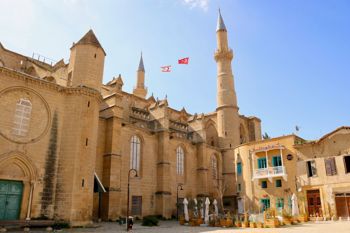
EU Legal and Linguistic Support Phase 2 for the Turkish Cypriot community
- 2024 – 2027
- € 500,000 – 1 million
- Cyprus
The overall objective of the project is to facilitate the delivery of EU funded support under the Aid programme in view of preparing the Turkish Cypriot community for the implementation of the acquis communautaire following a comprehensive settlement of the Cyprus problem.
Specific Objective 1: To improve the interpretation and translation sectors in Cyprus in line with EU standards
1.1 To provide technical support and guidance in using CAT (Phrase) Software and for legal translation/interpretation
1.2 To provide technical assistance for setting up the internal structures of the Bicommunal Professional Association of Translators and Interpreters in Cyprus and implementing activities targeting professionals and youth.
Specific Objective 2: To improve the “legislative processes” in the TCc in view of TAIEX supported legal texts and bring them in line with EU standards
2.1 To provide support for the process and procedures of legal texts drafting.
2.2 To improve awareness and understanding of EU policies, especially for the most active sectors of TAIEX support as per EU acquis in the Turkish Cypriot community, in addition to improving the understanding on the general functioning and structures within the Commission.
2.3 To provide support for the use of the Database developed by the previous EU Legal and Linguistic Support Project for TAIEX supported legal texts.
Specific Objective 3: To promote Cypriot linguistic heritage, network and solidarity amongst professionals and youth
3.1 To conduct awareness raising and networking events, in view of promoting Cypriot linguistic heritage
3.2 To improve interest for interpretation and translation profession, as well as multilingualism and to improve the network and solidarity amongst the professional interpreters and translators
- Keywords:
- Civil society, Institutional development, Justice/Rule of Law, Project implementation / Technical Assistance

Support to EU Deforestation Regulation (EUDR) compliance in Rwanda
- 2026 – 2027
- under € 500,000
- Rwanda
The overall objective is to strengthen Rwanda’s institutional and practical readiness towards EUDR compliance. The specific objectives are:
- SO1: Support the institutionalisation of a coordinated national governance mechanism for EUDR compliance in the coffee sector.
- SO2: To contribute to Rwanda’s georeferenced data of the coffee sector in the Eastern Province.
- Keywords:
- Agriculture, Environment
Framework Agreement for Decentralized Evaluations and Reviews (FADER) - Lot 1
- 2023 – 2027
- € 2 – 5 million
- Ethiopia, Indonesia, Kyrgyzstan, Nepal, Tajikistan, Tanzania, Ukraine, Uzbekistan, Viet Nam
The Framework Agreement for Decentralized Evaluations and Reviews (FADER) LOT 1 covers different types of appraisals, evaluations and reviews of development cooperation projects and programmes funded by the Ministry for Foreign Affairs of Finland (MFA).
The main users of the FADER are the regional departments of the MFA, which have regional and country specific development cooperation programmes/projects in Africa, the Middle East, Asia, Eastern Europe and Central Asia.
The following assignments are implemented by Particip GmbH:
- Project appraisal: Strengthening inclusive education system in support of Ethiopia's general education sectoral programme,
- Appraisal of the Local Adaptation to Climate Change- Project in Nepal,
- Project appraisal: Rural Economic Development (RED) Phase I in Ethiopia,
- Appraisal of the “Forestry, Land Use and Value Chains Development in Tanzania” (FORLAND) programme,
- Appraisal of Tax Sector Support to Tanzania (TAXTAN) programme.
- Keywords:
- Agriculture, Education, Environment, Forestry, Governance, Monitoring & Evaluation, Rural and urban development
- Result 1: MLS-NoA methodology – ensuring the overall MLS stability and continuing to address
NoA specific needs – is reviewed to provide for an increased level of harmonization with the MLS in place in HoA and SLC with any necessary revisions agreed upon by all parties involved.
- Result 2: NoA capacity-building strategy – providing tailored technical support to both the EUTF teams and implementing partners – is developed and executed according to a need-based analysis.
- Result 3: NoA monitoring reports – analysing progresses of the EUTF-NOA portfolio against both
EUTF strategic objectives and principles of interventions as well as EUTF-NoA intervention logic
– are regularly produced and publically disseminated.
- Result 4: NoA learning strategy – based on cross-country analysis of MLS data, cross-regional analysis of EUTF main thematic areas, qualitative case studies of best practices and contextual analysis – is developed with its findings publically presented to the relevant audience agreed upon.
- Partners:
- InProvE EEIG (managed by Particip) (Lead)
- Keywords:
- Monitoring & Evaluation

Strategic Evaluation of the EU partnership with Chad (2015-2025)
- 2025 – 2027
- Global price
- Chad
This strategic evaluation has two overarching objectives: (i) to provide EU services and stakeholders with an independent, comprehensive assessment of the performance of the EU-Chad partnership, with particular attention to results achieved against expected objectives and the underlying drivers of these results; and (ii) to identify key lessons, conclusions, and forward-looking recommendations to support decision-makers in improving current and future EU strategies, instruments, and interventions in Chad.
In particular, this evaluation aims to assess the relevance, coherence, effectiveness, efficiency and sustainability of the EU’s engagement in Chad over 2015–2025, and the EU’s added value in a highly fragile and geopolitically sensitive environment. It will analyse the EU’s combined use of instruments and modalities, and the extent to which EU actions contribute to expected strategic objectives at country level. Findings will be grounded in a theory‑based approach and strong triangulation, and will be translated into practical recommendations for the second half of the 2021–2027 period and beyond.
- Partners:
- Particip (Lead), ECDPM
- Keywords:
- Monitoring & Evaluation