Our projects
Explore Particip’s project experience across countries, sectors and areas of expertise.
Our references provide an overview of completed and ongoing assignments, including their objectives, geographic scope, duration and contract value.
Showing 481–490 of 511 references
EU Electoral Expert Mission to the Philippines 2022
- 2022 – 2022
- under € 500,000
- Philippines
The purpose of the Election Expert Mission (EEM) was to collect and analyse factual information, assess and report on the electoral process against international commitments, standards and good practice for democratic elections in line with the criteria contained in the Commission Communication on Electoral Assistance and Observation. The electoral experts also formulated recommendations to improve future electoral processes and assessed the state of implementation of recommendations made by previous electoral missions.
- Keywords:
- Elections
Evaluation Series on Emergency School Feeding in the Democratic Republic of Congo, Lebanon, Niger and Syria (2015-2019)
- 2019 – 2022
- € 500,000 – 1 million
- Congo (Kinshasa), Lebanon, Niger, Syria
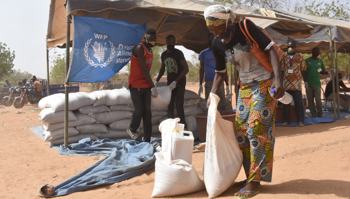
The evaluation series was commissioned by the WFP School-based Programmes Unit in Rome and covered WFP emergency school feeding (ESF) programmes during 2015-2019. It encompassed four country-specific evaluations in the Democratic Republic of Congo (focus on North Kivu region), Lebanon, Niger (focus on Diffa region) and Syria, as well as a global synthesis report. It covers the period 2015-2019.
The evaluation was financed from a multi-year Canadian contribution to WFP that also covered the costs of the ESF activities in the last years of the evaluation period. In 2018, these activities had reached nearly 1 million children in Syria and 17,000-71,000 children in each of the other three countries.
The findings of the evaluation series were meant to strengthen the global evidence base on ESF with specific guidance on school feeding in crisis and humanitarian settings. The findings will be used by Country offices to design future ESF activities.
All evaluations in this series used a mixed-method, theory-driven approach based on a set of reconstructed, country-specific Theories of Change. The country evaluation reports were based on document reviews, key informant interviews, focus groups discussions, and large-scale field surveys of schools, children, and households. The synthesis report was based on the four country reports of the evaluation series, a literature review, an online survey among WFP offices, and key informant interviews.
The country evaluation reports are available at:
https://www.wfp.org/publications/democratic-republic-congo-school-feeding-emergencies-evaluation https://www.wfp.org/publications/lebanon-school-feeding-emergencies-evaluation https://www.wfp.org/publications/niger-school-feeding-emergencies-evaluation https://www.wfp.org/publications/syrian-arab-republic-school-feeding-emergencies-evaluation
- Partners:
- Particip (Lead)
- Keywords:
- Education, Food and nutrition, Humanitarian aid, Monitoring & Evaluation
COMPREHENSIVE SECURITY ASSESSMENT CONSULTANCY
- 2021 – 2022
- under € 500,000
- SADC region
The purposes of this contract are as follows:
• To review the current security systems such as the CCTV, access control and time logging systems at the SADC Secretariat.
• To identify security gaps.
• To propose new solutions as well as a detailed roadmap and indicative costs on how to implement the desired solutions or systems.
Results:
Produce a Final Security Assessment Report.
Produce technical requirement document(s) that can be used for the acquisition of consultant or consulting firm(s) for the implementation of the approved solution.
- Partners:
- Particip (Lead), DMI, EY Belgium
Technical Assistance to Support the work for the AU EU Youth Cooperation Hub
- 2020 – 2022
- under € 500,000
- Africa
The overall objective of the contract was to support the AU-EU Youth Cooperation Hub by ensuring that the sustainability of the existing partnerships and the reinforcement of the Young Experts capacities were consolidated by reinforcing the coordination and communication activities linked to the hub.
The specific objectivies
- Facilitated the coordinate between the key actors of the HUB (Young experts, CSOs, EU Delegation and the AU Youth Division);
- Consolidated the partnerships and identified new sources of funding;
- Communicated the HUB’s achievements and promoted the youth inclusion in the Africa- EU partnerships;
- Consolidated partnerships and identified new sources of funding;
- Identified a clear strategy post 2021 in order to ensure the Hub’s sustainability.
- Partners:
- Particip (Lead)
- Keywords:
- Communication & media
Update of the Libya- Gender Country Profile and a gender-responsive audit/assessment of the overall cooperation of the EU Delegation to Libya
- 2021 – 2022
- under € 500,000
- Libya
- The overall objective of the Libya Gender Country Profile was to provide an overall and comprehensive assessment of the gender equality situation in Libya, as well as an analysis of gender-based-violence against women at country level. It contributed to the integration of the EU rights-based approach and gender mainstreaming obligations under the GAP II and future GAP III in future and ongoing cooperation programmes.
- The overall objective of the gender-responsive assessment/evaluation of the on-going EU funded projects in Libya was to provide corrective recommendations and element for reflections for the programming period 2021-2022.
More specifically, the Gender Country profile was to:
- Provide an understanding of the extent of gender inequality in Libya and its causes, how it intersects with other inequalities, its impacts on human rights and Libya’s commitment and capacity to work on GEWE issues;
- Identify key gender issues that need to be addressed, especially in the context of the Sustainable Development Goals;
- Assess possibilities for strengthening the existing Women’s Empowerment Unit under the Presidency Council with concrete proposals; this assessment of possibilities needed to include a SWOT/capacity assessment of the unit and come with a concrete proposal of what could be done (mainly in terms of training/TA);
- Define how international cooperation can support the formulation of the country’s gender equality policies;
- Update the 2015 GCP and provided key elements on how the EU and EU-MS support on GEWE (approach, methods, delivery and results) can be improved in the light of the 2021-2022 programming period;
- Assess Libya’s legal, economic and political context as related to gender equality, gender discrimination against women, men and LGBT. It also identifies human rights and decent work deficits from a gender and non-discrimination perspective;
- Facilitate the development of gender-responsive country strategy, programmes and projects;
- Provide quantitative and qualitative information for advocacy, programming, budgeting, and decision-making purposes;
- Be an analytical and operational document, which included suggestions for strategies, types of actions, and proposes pertinent modalities for a constant monitoring and evaluation of EU funded actions in order to address the gender gap identified through documentary review and analysis;
More specifically, the specific objectives of the gender-responsive evaluation/assessment included:
- Analysis and evaluation of the design and planning (objectives, results pursued, activities planned), the implementation and results of an indicatively maximum of 15 projects of the full list of ongoing or recently completed projects, programme from a gender perspective;
- Production of a set of recommendations on corrective measures and programming 2021-2022;
- The project-based gender evaluation informs how projects managed by the EUDELLY ensure a consistent application of gender mainstreaming and gender equal.
- Partners:
- Particip (Lead), EuroPlus
- Keywords:
- Human rights, Monitoring & Evaluation
Evaluation of Tajikistan WFP Country Strategic Plan 2019-2024
- 2021 – 2022
- under € 500,000
- Tajikistan
This independant evaluation of WFP Country Strategic Plan (CSP) in Tajikistan assessed the strategic positionning, added-value and results of WFP operations in the Country from 2018 to 2021.
The evaluation served the double purpose of accountability (performance and result assessment) and learning (why certain results occurred or not, lessons and evidence for decision-making). It envisioned that the evaluation will inform the design of the new CSP for Tajikistan, which was scheduled for Executive Board consideration in November 2022.
CSP key sectors and activities included:
- Nutrition and health
- School feeding
- Livelihoods, asset creation and climate adaptation activities
- Institutional capacity strengthening
- Services in logistics, procurement and administration
Cross-cutting themes included: Gender equality and empowerment of women (GEEW), humanitarian principles and protection, accountability to affected populations (AAP), WFP partnership strategy
The evaluation employed a mixed-method approach that triangulated qualitative and quantitative data from a variety of sources. For this purpose, the evaluation team conducted interviews with different stakeholders including WFP staff at HQ, regional and country level, WFP cooperating partners, donors, UN agencies, ministries as well as focus group discussions with the beneficiaries.
Link to the publication: https://www.wfp.org/publications/evaluation-tajikistan-wfp-country-strategic-plan-2019-2024
- Keywords:
- Food and nutrition, Humanitarian aid, Monitoring & Evaluation
Support for programme implementation of the OPSYS information system
- 2018 – 2022
- € 5 – 10 million
- Belgium
Deliver and make operational a new information system (OPSYS) replacing inter alia the existing information system called CRIS (Common Relex Information system) system, addressing gaps, supporting the new DG DEVCO, NEAR, FPI and European Commission strategies as well as engaging in a business transformation starting with the harmonisation/simplification of business processes.
The purpose of this contract is:
1. Provide support to the business owner (system owner) in areas covered by the OPSYS programme and in line with the Commission PM2 standards for:
a) Business management in terms of inter alia requirements, tests, process management;
b) Programme management;
c) Change management;
d) Provision of ad hoc long term and short term expertise
- Partners:
- Everis Belgium (Lead), Particip
Mid-term evaluation of PASSMAR Result 2
- 2022 – 2022
- under € 500,000
- Cameroon, Congo (Brazzaville), Gabon
The project "PASSMAR Outcome 2: National maritime legislative and regulatory frameworks are adopted and law enforcement is strengthened" was co-financed by the EU under the 11th European Development Fund. It aimed to enable ECCAS coastal states to prosecute cases of piracy and other maritime crimes in accordance with the Yaoundé Code of Conduct and to increase response and cooperation in Zones A and D.
To achieve this, UNODC has built on existing legal reform initiatives, training and advice for prosecutors, judges and law enforcement officials in three ECCAS pilot countries, namely Cameroon, Gabon and Sao Tome and Principe. In addition, some new countries were subject to a legal assessment, including Angola, Congo and the DRC.
UNODC also supported legal cooperation, developing memoranda of understanding to improve the quality and quantity of prosecutions. Actions have included: strengthening prosecutorial capacity, improving regional investigative and prosecutorial cooperation, legal reforms where necessary in the Gulf of Guinea countries, and legal support for existing cases on an ad hoc / request basis.
- Keywords:
- Justice/Rule of Law, Monitoring & Evaluation
European Union Exploratory Mission (ExM) to Lesotho
- 2022 – 2022
- under € 500,000
- Lesotho
The purpose of the Exploratory Mission was to collect factual information concerning this election process, in line with the criteria contained in the Commission Communication on Electoral Assistance and Observation [COM(2000)191]. The experts have also in particular:
- Assessed the pre-election situation in the light of international standards for democratic elections and national legislation. The assessment will cover: (i) Political situation, (ii) Legal and Electoral framework, (iii) election administration, (iv) voter registration, (v) party and candidate registration, (vi) human rights and fundamental freedoms, (vii) potential for electoral violence, (viii) traditional and online media, as well as social media, (ix) security aspects, (x) logistics and operational matters, (xi) use of electoral ICT and (xii) any other relevant issues relating to the elections and possible deployment of an EU EOM.
- Assessed, when relevant, the state of implementation of recommendations of previous EU election missions (both EU EOMs and EEMs).
- Made necessary preliminary logistics related enquiries and provide advice on how to organise the operational component of a possible EU EOM.
- Assessed the security situation in the country, in particular in connection with the possible deployment of an EU EOM.
- Advised on the composition, number and length of stay of the Core Team members and long and short-term observers of the EU EOM.
- Drafted tentative specifications and Terms of Reference of a possible EU EOM and related estimated costs and budget breakdown.
- Assessed the relevance of providing support to domestic observer organisations.
- Acquired updated information on EU election support (both EU and Member States) and other major partners (Canada, Norway and Switzerland) and possible other major actors plans in this field, including in the area of electoral assistance.
- Liaised closely with domestic and international election observation organisations that may be present on the ground regarding the preparation of elections.
- Prepared a number of specific reports as outlined in section 'VI. Output' of these ToR.
- If necessary, participated in the briefing of the EU EOM Core Team should the deployment of an EU EOM be decided.
- Keywords:
- Elections
Monitoring and Support Mission for Civil Society Organisations (CSOs) in the Implementation of Grants for the CSO Thematic Programme and the European Initiative for Democracy and Human Rights in Madagascar
- 2019 – 2022
- under € 500,000
- Madagascar
The Roadmap for the EU's involvement with Malagasy civil society defined four overall priorities with a long-term vision representing the structural changes that the EU planned to achieve through its work with civil society and the Malagasy government. In fact, since the set-up of a continuous EU-CS political dialogue, the EU's engagement with civil society in Madagascar became strategic. CSOs no longer considered the EU as a donor but as a true partner, thus confirming the EU's willingness to honour its new commitment to CS.
Under the 10th EDF, the Dinika Programme (€10 million) supported Malagasy civil society organisations from 2013 to 2017 in the regions of Analamanga, Analanjirofo and Atsimo-Andrefana. The purpose of this programme was to serve as a "laboratory" to develop new forms of dialogue, interaction, and a pool of more detailed knowledge on the dynamics within civil society. As part of the implementation of the 11th EDF, a new agreement on financing the Integrated Civil Society Support Mechanism in Madagascar, Dinika (2), was signed in September 2017 for a period of 5 years. This financing agreement had a total budget of €9.5 million with a contribution from the 11th EDF of €8 million and was jointly funded by the German cooperation through the GIZ with a further €1.5 million.
With regard to the EIDHR, as a result of a call for proposals in 2017, three projects were contracted.
For the Civil Society Organisations Thematic Programme, two calls for proposals made it possible to contract 13 grants (6 in 2016 and 7 in 2018). The 13 actions shared a partnership approach between non-state actors/civil society organisations and, sometimes, with local authorities.
The call for proposals of the 2018 CSO/LA Thematic Programme, enabled 4 projects to be contracted. Their aim was to help improve local governance and got communal services functioning properly to allow a real and efficient exercise of the prerogatives of Local Authorities for the benefit of their population, and involving the consultation of citizens.
The specific objective of the mission was to ensure monitoring and on-the-ground support of the progress of both ongoing and future projects that have been contracted under the CSO Thematic Programme and the EIDHR 2019-2020, while offering technical support to strengthen the capacities of grant recipients.
- Keywords:
- Civil society