
Our projects
Explore Particip’s project experience across countries, sectors and areas of expertise.
Our references provide an overview of completed and ongoing assignments, including their objectives, geographic scope, duration and contract value.
Showing 81–90 of 796 references
Framework Agreement for the Provision of Evaluation Consultancy Services - Lot 2: Expert services in evaluation in anglophone countries
- 2023 – 2027
- Global
This public contract consists of the provision of evaluation expertise services by means of a framework contract. The following type of assignments are included in this framework contract:
- Intervention-level evaluation;
- Country, regional or thematic portfolio evaluations;
- Cross-cutting evaluations in a specific theme, sector or approach implemented by Enabel.
Enabel’s portfolio covers institutional support programmes as well as implementation. Enabel operates at the national (country) level, regional (one or several districts) level as well as local (decentralised) level. The geographical scope of this public contract covers all countries where Enabel intervenes with its partners as well as Belgium.
To date, the following evaluations and assessments were implemented or are currently implemented:
- End-term review of the Sustainable Agriculture Kigoma Regional Project (SAKIRP)
- Mid-term Review of the European Union Trust Fund (EUTF) Support Programme for Refugee Settlements in Northern Uganda (SPRS-NU): Livelihood and Labor Market Relevant Skills Development for Refugees and Host Communities
- Joint End-Term-Review of i) UGA180371T - (EHA) Roll out the National Results Based Financing Policy in the Acholi Sub-Region and ii) UGA20003 - (LSF) Leveraging strategic health financing for Universal Health Coverage
- Mid Term Review of the project 'Renewable Energy for Rural Development – Phase 2' implemented by the Belgian Development Cooperation
- Mid-term Review of the Beekeeping Value Chain Support (BEVAC) Programme in Tanzania
- Final Evaluation of the African Union-European Union Digital for Development Hub Project (or AU-EU D4D Hub Project)
- Final Evaluation of the Cooperation programme 2019-2024 between Rwanda and Belgium.

Support to tri-partite cooperation on crises assessments (RPBA, PDNA, PRNA)
- 2024 – 2027
- € 2 – 5 million
- Global
The overall objective (Impact) to which this action contributes is to support third countries to build up their capacity to carry out RPBA/PDNA/PRNA, through provision of technical expertise. Various activities are foreseen, including deployment of experts in RPBA/PDNA/PRNA missions, and provision of training and capacity building activities to national authorities and regional/international organizations, tripartite training events, as well as information sessions for EU entities.
The specific objectives/outcomes of this contract are as follows:
- To assist, together with the UN and the WB, countries affected by crisis with identifying, developing, and implementing recovery activities through RPBA/PDNA/PRNA processes. This will often consist of supporting joint RPBA/PDNA/PRNA missions in-country/in region (in coordination with EU Heads of Delegations, the European Commission, and with the European External Action Service). While such support could cover any relevant technical field (longer-term and shorter-term expertise), it is foreseen that a particular emphasis is put on expertise in mission planning and development of final reports/recovery frameworks;
- To support further development of the joint RPBA/PDNA/PRNA methodologies, tools, training programmes;
- To promote the values and principles of the EU as a global actor;
- To ensure inclusiveness of RPBA/PDNA/PRNA processes.

Framework Contract Services for the Implementation of External Aid 2018 ('FWC SIEA 2018') Lot 1 – Sustainable management of natural resources and resilience
- 2018 – 2026
- over € 10 million
- Global
The objective of the FWC is to provide, via individual assignments defined and contracted through Specific Contracts, expertise which can be mobilised at short notice. The expertise may be required at any stage of the project cycle (except financial audits) and may cover the following sectors related to Sustainable management of natural resources and resilience:
Agriculture
1.1. Crop production, storage, conservation, transformation, and marketing /value chains
1.2. Vegetable, fruit and cash crop productio
n storage, conservation, transformation and marketing /value chains
1.3. Legal aspects
1.4. Alternative production systems (organic farming, agroforestry, permaculture)
2. Livestock
2.1. Livestock regeneration plans
2.2. Veterinary, animal health, animal identification, quarantine and border inspection posts
2.3. Trade of animal products
2.4. Production, conservation, storage and marketing of animal products
2.5. Legal aspects
3. Sustainable Forestry management and conservation
3.1. Forest inventories, forest management plans, forest establishment and plantation management
3.2. Agroforestry, community and environmental development programmes
3.3. Strategic and operational resource development and wood supply plans
3.4. Forestry industry development plans
4. Fishery and aquaculture
4.1. Marine and fresh water aquaculture
4.2. Assessment of fish stocks and sustainable fish resources exploitation
4.3. Legal aspects
5. Land management
5.1. Land use planning, Land information systems and applications,
5.2. Land reform policies
5.3. Land registration and cadastre, Land market development, estate economic assessments
6. Food security & nutrition
6.1. Assessment of national stocks
6.2. National statistics on food production
6.3. Forecasts of famine and early warning systems
6.4. Transitory and chronic food insecurity
6.5. Nutrition
7. Food safety
7.1. Tracing, food control
7.2. Legal aspects
8. Extension/Training/Human Resources Development/Institutional development
8.1. Extension services
8.2. Training of personnel
8.3. Sectoral organisations (farmers, producers, traders)
8.4. Institutional strengthening
9. Rural Infrastructure
9.1. Rural infrastructure planning, development and rehabilitation (Market infrastructure, irrigation and drainage, etc.)
10. Climate Change
10.1. Climate change: resilience, adaptation and mitigation
11. Sustainable Natural Resource management
11.1. Sustainable management and protection of natural resources, biodiversity and ecosystems (soil erosion/salinization/fertility, national parks ecosystem protection, fight against desertification, etc.)
11.2. Sustainable Water management including planning (e.g. integrated river basin management), supply, waste water treatment (incl. waste water reuse and energy generation)
11.3. Environmental protection
11.4. Pollution including chemicals, plastics, waste, air pollution and greenhouse gases emissions
11.5. Green economy (incl. sustainable and resource efficient production and consumption), Blue Economy
11.6. Ocean governance including marine/coastal zones protection
12. Disaster Risk Reduction
12.1. Disaster Risk Reduction, including climate and environmental risks/disaster management
The expertise may cover any geographic area in the world, either inside or outside the EU.
The Specific Terms of Reference (Specific ToR), which form part of each Specific Contract, shall describe the objectives and required outputs of each individual assignment.

Evaluation of the Regional Sub-Saharan African Programme (2021-2025)
- 2025 – 2026
- under € 500,000
- Africa
The main objectives of this assignment are: i) to provide the relevant services of the European Union (EU) with an overall independent assessment of the performance of the EU cooperation with Sub-Saharan Africa (SSA) MIP (2021-2027); and ii) to identify key lessons learned, conclusions and recommendations in order to inform decision-makers on how to improve current and future EU objectives, instruments and implementation arrangements targeting SSA, in the context of the design of the Multi-Annual Financial Framework 2028-2034 and the next programming document for SSA.
In particular, this evaluation aims to: i) assess to what extent the design and the implementation arrangements of the SSA MIP are suited to deliver on its intended objectives and the Global Gateway agenda in particular; and ii) assess to what extent the design and the implementation arrangements of the SSA MIP are flexible and responsive to fragility and to continuously evolving geopolitical contexts and shifts.

EU-India Policy Dialogue Support Facility (PDSF)
- 2024 – 2026
- € 1 – 2 million
- India
The specific objectives of this contract are as follow:
- Outcome 1: To support the ongoing and planned sectoral EU-India policy dialogues and partnerships on topics of EU and EU-India mutual interest; and
- Outcome 2: To contribute to policy convergence of EU-India policy approaches in the global arena.
The expected outputs of this contract are as follows:
- Solid basis is established for operationalisation of the EU-India strategic partnership, as well as other key strategies and agreements shaping EU-India relations.
- People-to-people contacts are strengthened.
- Dissemination of relevant and updated information to target audiences on the EU-India strategic partnership, and more specifically on topics of key relevance to the sectoral policy dialogues is improved.
- Additional thematic areas for EU-India sectoral cooperation are identified, explored, and developed, including beyond India (regional, trilateral or global).
- Mutual understanding, trust, and knowledge of policy objectives and strategic interests between the EU and India are further strengthened.

Mid-Term Evaluation of the Ukraine Facility
- 2025 – 2026
- under € 500,000
- Ukraine
The Ukraine Facility (the Facility) is a key instrument of the European Union’s strategy to address the scale and complexity of the challenges facing Ukraine in the wake of Russia’s ongoing war of aggression. This mid-term evaluation (MTE) is a stock-taking, lesson-learning, and forward-looking exercise, whose general objective is to provide the European Commission and other key stakeholders with an independent assessment of progress towards the Facility’s objective.
The specific objectives of the evaluation are:
- To provide a qualitative and quantitative assessment of the relevance, implementation conditions, and performance of the Facility as a performance-based instrument, with particular attention to efficiency, effectiveness, and EU added value.
- To assess the protection of the financial interests of the Union.
- To identify lessons learned (positive and negative), best practices, and recommendations, particularly regarding:
- the impact on the administrative capacities of Ukrainian public institutions (including monitoring and reporting) and the link to actual results and their sustainability;
- the administrative costs for Commission services in terms of expertise and processes; and
- the factors that facilitate or hinder the effectiveness of the Facility in achieving its objectives.
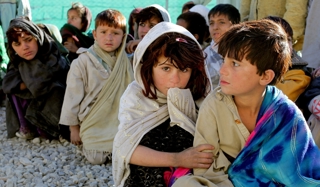
Third-Party Monitoring of Italian Cooperation Programme in Afghanistan
- 2024 – 2026
- under € 500,000
- Afghanistan
This contract will contribute to the overall objective of the Programme, which is to ensure food security and access to healthcare services, promote income-generating activities, and reduce the risk of disasters, particularly for the most vulnerable populations, including women and children.
The Programme focuses on:
- Strengthening food security for the most vulnerable groups and enhancing their capacity to engage in income-generating activities in provinces most affected by food crises.
- Improving the health of the Afghan population.
- Promoting anticipatory responses to recurrent crises resulting from climate shocks, through disaster risk reduction and management.
The overall objective of this contract is to focus on activities implemented through INGO partners, selected within the framework of the Call for Proposals 1, and inform AICS programme management and reporting with relevant data and analyses inspired by the Monitoring, Evaluation, Accountability and Learning (MEAL) approach, concepts and practices.
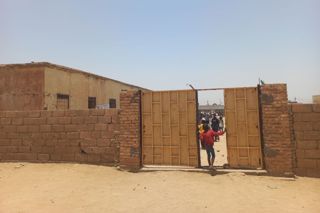
Bank Support and Monitoring Agent for Social Protection and Education projects in Sudan
- 2025 – 2026
- under € 500,000
- Sudan
The main purpose of the BSMA is to ensure that funds of the two World Bank-financed projects, namely the Sudan SANAD – Emergency Crisis Response Safety Nets Project and the Sudan Primary Education Emergency Project (P504621), are used for the intended purpose.
The BSMA will carry out its support and monitoring activities consistent with the terms of the grant agreements concluded by the World Bank with WFP and UNICEF, respectively, including the terms of personal data protection. The BSMA consultancy assignment is additional to the normal monitoring and evaluation (M&E) functions that will be carried out by WFP and UNICEF, respectively, and will monitor and review the following:
- Monitor the progress of project activities in accordance with their overall plans. This includes data collection, field visits, and progress reporting.
- Monitor that results are being achieved in accordance with each projects’ results framework. This includes confirmation of the projects targets in the Results Frameworks.
- Monitor the implementation of the environmental and social risk management instruments as set out in the Environmental and Social Commitment Plan (ESCP), and provide recommendations to address the challenges, if any. Provide recommendations for continuous improvement, relevance, effectiveness, impact, and sustainability of activities.
- Monitor the mitigation and management of risks outlined in the project documents and provide recommendations to reduce or manage potential risks or constraints identified through the BSMA.
- Provide evidence-based, credible, and useful information to enable the incorporation of conclusions, lessons, and recommendations into the future decision-making processes of the World Bank projects.
- The BSMA will utilise the World Bank’s Geo-Enabling Initiative for Monitoring and Supervision (GEMS) to enhance transparency and accountability of the BSMA services, where possible, given the Fragility, Conflict, and Violence (FCV) context.

Third-Party Monitoring for Programmes Funded by the Somalia Joint Fund (SJF) and the UN Secretary-General's Peacebuilding Fund (SG PBF)
- 2025 – 2026
- under € 500,000
- Somalia
The overall objective is to independently monitor and/or verify that SJF supported activities are being implemented with quality and integrity by NGOs, Government partners and participating UN entities and to assess the impact of SJF funded programmes on the target beneficiaries in line with fiduciary principles. Independent verification will also assess the extent to which the SJF is achieving its objective, contribute to organizational learning and recommend ways in which the Fund should enhance coherence, alignment, and harmonisation based on UNSDG Pooled-Financing mechanism best practices and the Funding Compact.
The scope of work encompasses monitoring activities, which may be of either an “overt” or a more “low-profile” nature. The exact nature of the assignment will depend, among other factors, on the proposed methodology, the sensitivity/type of information requested, and the local security context at the time of deployment.
Six cross-cutting programmatic themes and approaches guide all investments by the SJF:
- Gender equality and women empowerment
- Leave no one behind
- Social contract and legitimacy
- Capacity sharing and exit strategies
- Anti-corruption
- Environment and Climate Security
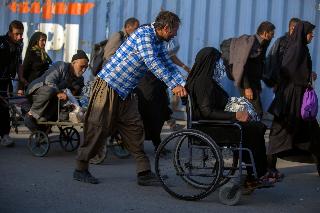
Evaluation of Disability Inclusion in EU-funded humanitarian aid operations (2020-2025)
- 2026 – 2026
- under € 500,000
- Global
The Evaluation of Disability Inclusion in EU-funded humanitarian aid operations (2020–2025) assesses how disability inclusion has been integrated into DG ECHO-funded humanitarian interventions five years after the publication of its 2019 Operational Guidance on the inclusion of persons with disabilities. The global objective of this evaluation is twofold:
- To provide the relevant EU services and stakeholders with an independent assessment of the extent to which DG ECHO-funded humanitarian interventions have mainstreamed disability inclusion across sectors and contexts, while also supporting disability-targeted actions and relevant policy projects;
- To identify key lessons learned, conclusions, and recommendations to inform decision-makers on how to strengthen disability inclusion in current and future EU-funded humanitarian aid operations, including through improved programming, data use, participation, and accessibility.
The specific objectives are:
- to assess the relevance of DG ECHO’s operational guidance in supporting staff and partners to mainstream disability inclusion in EU-funded humanitarian aid interventions;
- to assess the level, quality, and effectiveness of disability inclusion across all sectors, covering both mainstreaming and disability-targeted actions;
- to assess ECHO-funded policy projects on disability inclusion, including their coherence with EU policy, relevance to global priorities and needs, added value for partners and the broader humanitarian system, and achieved results;
- to assess the capacity of DG ECHO staff and partners to operationalise disability inclusion in programming, including through available requirements, tools, and practices;
- to identify barriers, enablers, gaps, lessons learned, and good practices in disability inclusion, and to develop actionable strategic and operational recommendations for future DG ECHO strategies, policies, programming priorities, guidance, and tools.