
Our projects
Explore Particip’s project experience across countries, sectors and areas of expertise.
Our references provide an overview of completed and ongoing assignments, including their objectives, geographic scope, duration and contract value.
Showing 821–830 of 980 references

Public services contract for midterm and final evaluations of projects and programmes of the Belgian Technical Cooperation in the sector of governance
- 2013 – 2018
- € 500,000 – 1 million
- Africa, Asia
This 4-year framework contract has the objective to conduct all mid-term and final evaluations of projects and programmes of the Belgian Technical Cooperation (BTC-CTB) in the governance sector. Sectors targeted: Justice, security, decentralisation, local development, institutional capacity building.
The following evaluations have been carried out so far are:
- Mid-term review of the project "Appui institutionnel au MACTL pour le pilotage stratégique de la décentralisation et de la déconcentration au Mali", Mali;
- Final evaluation of the project "Appui au développement socio-économique de la Province du Nord (PADSEC)", Rwanda;
- Mid-term review of the project "PADLPC - Projet d'appui au développement local et à la participation citoyenne", Burundi;
- Final evaluation of the project "Support to capacity development in Rwanda", Rwanda;
- Mid-term review of the project "Projet d’appui institutionnel a la mise en œuvre de la politique nationale genre par le Ministere de la population, de la promotion de la femme et de la protection de l’enfant", Niger;
- Mid-term review of the project "Support to Local Government Reform and Development Programme", Palestinian Territories;
- Final evaluation of the project "Kasese District Rural Community Development Programme - Phase II", Uganda;
- Mid-term evaluation of the Common Management Support Units (CMSU) – EPSP – MINIDER - AGRI – DRC;
- Final evaluation of the institutional support to the Ministry of Planning in DRC;
- Final evaluation of the “Support to community development initiatives programme” in the District of Tshopo (Paideco-Tshopo), DRC;
- Final evaluation - Poverty reduction through institutional strengthening at provincial (Nghe An) and district (Quy Chau) levels (Vie 08 036 11) Vietnam;
- Mid-term review of the intervention “Enhancement of procurement capacity of local government authorities project”, Tanzania;
- Mid-term review of the project “Central and decentralized institutional support to the Ministry of Justice in Burundi”;
- Final review of “the support of professionalization of the National Police in Burundi”.
- End-term review of the intervention “Local Government Reform and Development Program (LGRDP)” in Palestine
- Mid-term review of the programme of studies and expertise in DRC
- Mid-term review of the Institutional support project to the regionalisation process in Mali (PAIR)
- Final reviews of the interventions “Support to the decentralization of the Koulikoro region – PADK II” and “Support to civil status – PAEC” in Mali
- Final review of the intervention "Support to the Ministry of foreign affairs, international cooperation and francophonie" in the Democratic Republic of Congo
- Yearly review of the intervention facility for front line service delivery improvement - Tirelo Bosha – in South Africa
- Mid-Term Review of the intervention “Support to the development of human resources of beneficiary organisations “SDHR” in Uganda
- MTR of the intervention Capacity Building for Planning Reform (CDPR) in Vietnam
- Mid-Term Review of the Intervention “Regeneration of Historical Centres in Local Government Units (RHC)” in Palestine
- Mid-Term Review of Rwanda Decentralization Support Programme – Enhancing the capacities of districts (RDSP-ECD)
- Final Evaluation of the Project “Enhancement of Procurement Capacity of Local Government Authorities in Tanzania”
- Final review of the intervention “Institutional support project to the Ministry of Territorial Administration and Local Government (MATDRE) for the strategic steering of decentralization and deconcentration” in Mali
- Final Review of the project "Institutional support to the process of regionalisation in Mali" (PAIR)
- Mid-term review of the support project to investments of local authorities (PAICT) in Mali
- External mid-term review of the Support Project on Expertise, Studies and Technical Assistance to the water and environment sector (PAERE) and the Project on Strengthening of Competencies of the sector water and environment (CF) in Bolivia
- Mid-term review of the project to support Burundian organizations through human resources capacity building (PAORC) in Burundi
- Mid-Term Review Of The Intervention “Facility For Capacity Building” (FCB) in Vietnam
- Final Evaluation of the Support Programme for the Implementation of Decentralised Entities in the Dosso Region, phase 2 and extension phase (PAMED II & PAMED II Extension) in Niger
- End-Term Review of the Intervention "Capacity Building for Planning Reform (CDPR)" in Vietnam

2017 Annual Report of the EU Emergency Trust Fund for Africa
- 2017 – 2018
- under € 500,000
- Africa
The focus of the work of the EUTF addresses the roots of the main development challenges of the 26 African partner countries through direct and immediate actions as well as through “indirect” and long-term initiatives such as on education, skills, improved governance, etc. Significant financial resources have been allocated to undertake programmes across the three African regions where the EUTF is implemented.
The overall objective of the assignment was the production of the 2017 Annual Report of the EUTF for Africa, which serves as an information tool for an informed audience as well as the general public.
The specific objectives were to
- Design the layout of the Annual Report
- Collect pictures to highlight and enhance the text of the report
- Develop and graphically enhance tables and graphs for the presentation of the relevant data of the report
- Edit the English version of the report
- Translate and edit the report into French
- Print 150 copies of the report in English and 100 copies in French
Functional review of the Ministry of infrastructure, housing and territorial planning in the context of the public administration reform in Tunisia.
- 2017 – 2018
- under € 500,000
- Tunisia
The objective of the Functional review of the Ministry of infrastructure, housing and territorial planning was to assist in decision-making concerning the implementation of the Government’s modernization agenda for the public administration on the level of this specific Ministry.
Being a tool for evaluation and decision-making, the functional review of the Ministry, its conclusions and recommendations should facilitate the implementation of measures to rationalize its structures in order to allow for more efficiency and a better (re-)allocation of resources, especially human resources with the double objective to allow for a better return and to generate savings.
The FR was supposed to be a project of redefining the Ministry’s tasks, its organigram and the allocation of its organs, as well as decision-making responsibilities concerning its key functions.
It should also indicate:
- the needs in terms of staff, the redeployment of officials in the evolving context of reforms to anticipate and especially of deconcentration and decentralisation, taking into account the need to consolidate public finances; in terms of sustainability concerning the development of the wage share and the rebalancing of public expenditure;
- the impact of these functional reviews on the requirements to be taken into account in the context of functional reviews of other Ministries.
The specific objective of this mission was to conduct a functional review of the Ministry with the following characteristics:
a) a focus on relevance, coherence and on the necessity to adapt and adjust the tasks and organisational structures of the Ministry on the one side and the allocation of human and financial resources on these structures on the other side;
- for the sake of a better return and the generation of savings, e.g. throughout internal restructuring;
- taking into account the constraints that may exist at the level of reallocating and redeploying agents in order to accompany priority shifts and new needs in general and
- concerning the limitations of the statutory regulatory framework, especially aspects relating to the experts’ mobility and remuneration and
- particularly in view of the need of redeployment to the regions (decentralized services).
b) an analysis (SWOT or similar) on the capacity of concerned services (allocation-structures, affected posts and instruments available) in order to establish a “forecast management of jobs and skills” of the sector
c) formulation of recommendations for guidance and decision-making allowing decision-makers to identify accompanying actions to be foreseen, enabling the Ministry to engage in the progressive implementation of its reorganization and facilitating future steps to introduce periodic functional reviews of other entities within the sector.

Ex-ante Evaluation and Formulation study of CAR’s component of the Ecofac 6 Program: Protected Areas Complex of Northeastern CAR and the Chinko Project in Southeast CAR
- 2018 – 2018
- under € 500,000
- Central African Republic
The overall objective of the program of which this market is a part was "improvement of the governance of natural resources and the management of protected areas with a view to contributing to a green economy characterized by endogenous, sustainable and inclusive economic development, as well as 'to the fight against climate change".
The specific objective was "a more effective preservation of diversity and fragile ecosystems" in relation to associated ecosystem services.
This project had the following three specific objectives:
- Establish a rapid assessment and disgnosis of the Ecofaune+ (NE component) and Chinko (SE component) projects; contextualize this diagnosis at the national and international level.
- Identify and formulate an action to take over from Ecofaune+ in the comming years and at the latest until April 2022 (deadline for the implementation of Ecofac VI).
- Specify the action document for the Chinko grant no later than April 2022 (deadline for implementation of Ecofac VI).
- Propose the most relevant indicator to be included in the logical framework of the previous two actions, and define the targets to be included in the logical framework model proposed by the ECOFAC 6 financing agreement.

Evaluation of the EU support provided at regional and bilateral level in the field of environment in the Neighbourhood South countries (2010-2017)
- 2017 – 2018
- under € 500,000
- Algeria, Egypt, Greece, Israel, Jordan, Lebanon, Morocco, Palestine, Tunisia
The global objective of the assignment was to assess the EU support at regional level, bilateral level and through the blending mechanism (the NIF ) to the partner countries of the Neighbourhood South in the fields of environment (H2020 initiative, Sustainable Consumption and Production, Integrated Water Management, biodiversity and Marine Protected Areas…) over the period 2010-2017, and to propose recommendations for further EU support for the forthcoming programming period 2018-2023.
It also considered how the political relationships between the EU and its partner countries as well as relations between partner countries affect both the implementation of the EU support and the development of harmonised environment sector policies in the Mediterranean region.
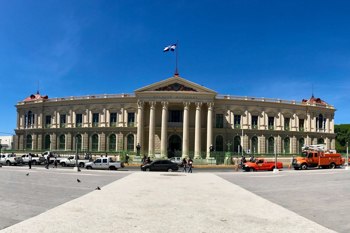
EU Election Exploratory Mission (EU ExM) to El Salvador
- 2017 – 2018
- under € 500,000
- El Salvador
Following an invitation by the Salvadoran Government to the European Union to observe the Legislative and Municipal elections taking place on 4 March 2018, an Election Exploratory Mission was deployed to the country from 11 to 25 November 2017.
The Mission’s overall objective was to assess whether the deployment of an EU Election Observation Mission for the 2018 elections would be useful, feasible and advisable, in accordance with the criteria set out in the communication on EU Election Assistance and Observation (COM(2000)191) and the Declaration of Principles for International Election Observation.
The specific objective of the Mission was to produce strategic analysis and reporting on the ongoing electoral processes and to provide input for electoral reform as well as confidence-enhancing measures during and after the elections.
The Mission met with a wide range of government authorities, election administration, the judiciary, political parties, independent candidates, Armed Forces, human rights institutions, civil society, domestic and international observers, media representatives, international organisations and the EU and other diplomatic communities. The mission undertook field visits to Santa Ana, San Miguel, San Vicente, La Unión, Usulután, Ahuachapán and Chalatenango.

Evaluation of the implementation of the African Peace Facility as an instrument supporting African efforts to manage conflicts on the continent
- 2017 – 2018
- under € 500,000
- ACP (Africa)
The objective of the evaluation was to provide an overall independent assessment of the performance of the African Peace Facility (APF) for the period 2014-2016 and, on this basis, draw key lessons and recommendations in order to improve current and future support through that instrument.
The evaluation served policy decision-making and project management purposes. The main users of this evaluation were DG DEVCO, the EEAS, EU delegations in the APF beneficiary regions; the AU and the REC/RMs. The evaluation also generated results of interest to governmental and civil society partners and the EU member states.
Evaluators followed a two-step approach:
- First, the evaluation provided an assessment of what has been achieved through the APF for the period 2014-2016 with regards to Peace Support Operations and capacity-building, taking into account the conclusions and recommendations of th11-0248-052e 2013 APF evaluation.
- Second and based on the findings of the first step, the evaluation offered concrete and actionable follow-up as well as new recommendations to address the remaining and new challenges faced by the APF.
Change Management for Business Transformation Programme
- 2016 – 2018
- € 500,000 – 1 million
- Belgium
DG DEVCO has launched a large-scale Business Transformation Programme, currently called the ‘OpSys programme’ with the strategic objectives of increasing productivity, improving quality, simplifying and harmonising processes and increasing transparency of results. The OpSys programme encompasses 6 projects to gradually upgrade operational processes and the tools available to staff from DGs DEVCO and NEARand the Service for Foreign Policy Instruments (FPI). From end users to top managers, the upgraded processes and tools will allow staff to efficiently manage their portfolio of projects/programmes throughout the cycle of operations. OpSys will enable the staff to easily access information on projects/programmes, prepare, validate and monitor them, tender and contract relevant assistance and manage results following a ‘no re-encoding’ principle. The system will also be open to external partners and provide essential data for reporting and communication tools allowing greater transparency. Project 1 (of 6) is already being implemented. It focuses on Operational Entities and Results Management and is designed to achieve 6 key outputs which represent a major change in the working methods of the concerned DGs and FPI. This change began a long time ago and includes many efforts to introduce result based management, some of which we are well aware of (e.g. results reporting within the EU Results Framework, considerable effort to improve results indicators and generally the management of programmes and projects using these indicators). In order to take place smoothly, and in a sustainable manner, this change must be managed which means that all the stakeholders must “buy into” the process, and be trained in its implementation. This change management project, accompanying Project 1, will consist of appropriate communication and training around the approach to results management focused on the Operational Managers

Support to the EU-India Climate Change Dialogue
- 2016 – 2018
- under € 500,000
- India
The specific objectives of this assignment are:
- To raise awareness on EU positions and know how in Climate Change and low carbon technologies by engaging Indian stakeholders such as NGOs, think tanks, businesses and Government officials.
- To gather intelligence on policies and needs in view of facilitating European business and policylevel involvement in India's Climate Change agenda
- To initiate cooperative action between the EU and India, in support of mitigation, adaptation and transparency targets of the Paris Agreement.

Final evaluation China-EU Access to Justice project
- 2017 – 2018
- under € 500,000
- China
The main objectives of this final evaluation were to provide the relevant services of the European Union and interested stakeholders with:
- An overall independent assessment of the past performance of the China-EU Access to Justice project, paying particularly attention to its results against its objectives;
- Key lessons and recommendations in order to improve current and future actions in this and related sectors.
In particular this evaluation served to assess the results of the action as well as the reasons for success or failure for achieving the expected results.
The specific aspects to be evaluated were:
a) The results and possible impact achieved through project support;
b) The experience of linking state and non-state legal service providers and impact on strengthening of the role of civil society in social justice issues in China;
c) Areas where learning opportunities and transfer of knowledge on legal aid modalities and practice between Europe and China were pursued and analysis of relevance to the broader EU-China strategic relationship.