
Our projects
Explore Particip’s project experience across countries, sectors and areas of expertise.
Our references provide an overview of completed and ongoing assignments, including their objectives, geographic scope, duration and contract value.
Showing 801–810 of 980 references

INDEPENDENT FOREST MONITORING (IFM) EVALUATION
- 2018 – 2018
- under € 500,000
- Congo (Brazzaville)
The overall objective of this study was to:
Support the National Authorizing Officer of the European Development Fund (EDF) and the Delegation of the European Union in drawing up terms of reference for supporting and strengthening the civil society in the case of the implementation of the APV-FLEGT process in the Republic of Congo
The specific objectives of this contract were:
- Analyse the independent observation mission conducted by the CAGDF since 2014 with regards to the content of the Memorandum of Understanding signed with the MEF (objectives, activities, publications, transparency, operating, organisational and funding modalities) and the capacity-building objectives of the civil society included in the VPA, as well as the links which the IO maintains with other civil society organizations,
- Draft a Description of the Action and a Budget for the next direct grant to CADGF to carry out mandated Independent Observation and guidelines for the Call for Proposals for Non-Mandated Independent Monitoring Support

Needs assessment and a dedicated Secretariat and voluntary MDTF for the Kimberly Process
- 2018 – 2018
- under € 500,000
- Global
The objective of this study was to carry out an assessment to establish the needs for: (a) dedicated Secretariat and (b) a voluntary Multi Donor Trust Fund (MDTF) for the Kimberley Process (KP).
- The comprehensive needs assessment identified possible forms of both structures taking into consideration the needs to be addressed by each of the two entities and the available resources.
- The experts, among others, reflected on the tasks and responsibilities of a dedicated Secretariat, the possibility of further building on the existing administrative structure (ASM) of the KP with a view to creating a coordinated platform, the possible venue of a Secretariat ensuring accessibility, the management and staffing of a Secretariat etc. Furthermore, the experts reflected on the needs to be addressed by a voluntary MDTF and outline its structure, mechanism, staffing needs etc.
- They also explored to what extent a voluntary MDTF could be embedded in the Kimberley Process dedicated Secretariat. All matters related to the well-functioning of the new entity, including the appointment of a Trustee/Fund manager and the establishment of all necessary conditions for receiving funds from donors in the context of grant or other type of agreements were analysed by the experts.

EEM to Colombia - Presidential election 2018
- 2018 – 2018
- under € 500,000
- Colombia
The purpose of the Experts Mission was to collect factual information concerning the electoral process, in line with the criteria contained in the Commission Communication on Electoral Assistance and Observation [COM(2000)191]. Moreover, the experts produced strategic analysis and reporting on the ongoing electoral processes and will provide inputs for electoral reform as well as confidence enhancing measures, during and after the elections.
The objectives of the mission were the following:
- Assess all aspects of the electoral process in light of international commitments and relevant national legislation of Colombia; evaluate openness, comprehensiveness and adherence to the rules of the different phases of the process, including voting, counting and possibly treatment of complaints; and make recommendations in the area of electoral reform
- Assess the implementation of previous EU (and non-EU) election related missions’ recommendations and propose targeted recommendations the authorities of Colombia should take in order to improve the election framework
- If possible, provide analysis to help identify needs and potential for additional bilateral or EU electoral support
- Prepare a draft Final Mission Report (max. 30 pages), in consultation with representatives of EC/EEAS services presenting an overview of the pre-election situation
- Following final de-briefing with EC/EEAS services in Brussels incorporate additional comments into the draft report and provide Commission and EEAS services with a Final Report.
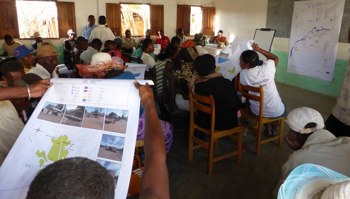
Technical assistance to the Programme to Support Madagascar’s Civil Society (DINIKA)
- 2013 – 2018
- € 2 – 5 million
- Madagascar
The overall objective of this programme was to support Madagascar’s Civil Society and promote good governance at local and national level, working towards more independence and the increased credibility of the NSAs.
This action primarily aimed to broaden the spectrum of European Aid beneficiaries amongst the Malagasy NSAs, in particular promoting the support of emerging actors in the rural world and in urban centres:
- Particular attention was paid to youth and women’s associations. Targeted capacity-building activities, local support by operators selected through service contracts, and study trips in the region were carried out. Moreover, small subsidies were granted to a limited number of initiatives to enable them to structure themselves and to increase their participation in economic and social spheres;
- Furthermore, transparency, accountability and the decision-making process of the NSAs were taken into account in the programme to the greatest extent possible, with a view to strengthening their credibility with citizens, and towards the government, local authorities and financial and technical partners. Governance initiatives in key sectors at communal and intercommunal level, were financed and accompanied; the concept of learning by doing and coaching was applied throughout the process;
- The programme also worked towards increasing public participation in eligible areas in political, social and economic spheres. To this end, the Programme to Support Madagascar’s Civil Society is financing NSA projects (priority being placed on level 4 NSAs) involved in the sensitisation and civic education of citizens, to increase their participation in politics (local and national level); moreover, the programme had to facilitate a multi-actor dialogue on the role of civil society in promoting a more conducive environment for NSAs working in this domain;
- Promotion of the structuring of the NSAs involved in governance initiatives. In particular, identifying and accompanying civil society initiatives to strengthen their involvement in the process of citizen control of public action (followed by the implementation of public policy, budget monitoring,…); the programme also supported the exchange of best practices and experience with other African NSAs by organising targeted study voyages and/or twinning with initiatives that have already established their structure and are operational in the region;
- Finally, the programme facilitated the following elements: building on experience, producing information and knowhow about NSAs, and about opportunities and possibilities for their participation in the preparation, follow-up and implementation of development policies. The programme also promoted access to this information and knowhow.
The implementation of the programmed activities strictly followed the procedures of the 10th EDF. A monitoring system of the technical, contractual, financial and accounting aspects ensured that the results expected from the programme were achieved, and that resources were mobilised and used with the desired efficiency and effectiveness.
A focus was put on very small initiatives, mainly managed by women.
Final evaluation of two operations of the programme "Green Economy in Belarus"
- 2017 – 2018
- under € 500,000
- Belarus
The overall objective of the programme was the promotion in Belarus of green economy mechanisms through support to the relevant national efforts at policy, legislative, institutional, operational and international levels. This was achieved through the EU financial investments to Belarusian human, as well as natural and built capital.
The specific purposes of the Programme were the following:
- to identify and develop the main mechanisms of green economy development and to provide institutional and legislative support to the Ministry of Natural Resources in this regard;
- to extend international co-operation between Belarus and the EU, including sharing information on environmental data, and to intensify people to people contacts by transfer of EU knowledge, skills, experience and technologies to the personnel of the Ministry of Environment and its regional bodies;
- to promote green economy decision making and production/consumption patterns through support and implementation of small green initiatives, pilot projects and visibility/public awareness projects.
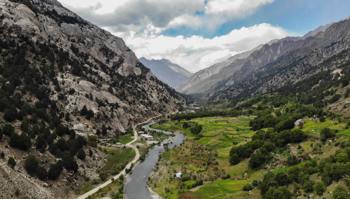
Assistance and Training in Transboundary Waters for the Ministry of Foreign Affairs (Afghanistan)
- 2017 – 2018
- under € 500,000
- Afghanistan
The overall objective of this contract is as follows:
To assist the Ministry of Foreign Affairs in undertaking dialogue with riparian neighbours
and address issues related to transboundary waters in all its relevant watersheds to promote
peaceful regional cooperation and development; and to ensure that there is a training program
in place at the Institute of Diplomacy (Ministry of Foreign Affairs).
The specific objectives of the contract are as follows:
OS 1: To provide on-going assistance and support to the Ministry of Foreign Affairs, specifically the Directorate General of Border Affairs, Transboundary Waters and Security Cooperation, in matter related to transboundary waters.
OS 2: To build sustainable capacity within the Ministry of Foreign Affairs to address transboundary waters through the creation of a training course on international water law and transboundary waters which will be maintained and delivered by the Institute of Diplomacy. This includes conducting a Training of Trainers and overseeing the delivery of at least one training session. The training course should be made available to persons from other ministries, in particular Ministry of Energy and Water, and Ministry of Finance, amongst others.
OS 3: Develop resource data base for transboundary waters including treaties, MOUs, academic literature, and case studies which are pertinent to Afghanistan’s situation.

Advisory services for the GIZ Sector Project "Agenda 2030 for Sustainable Development" on cross-sectoral issues and international processes
- 2017 – 2018
- under € 500,000
- Germany
The Agenda 2030 for Sustainable Development is being implemented by all countries since January 2016. Over the next 15 years, it will shape numerous policy fields - far beyond development cooperation. The Federal Ministry for Economic Cooperation and Development (BMZ) is currently aligning its development policy with the implementation of the Agenda 2030. This is based on three pillars: the implementation of the Agenda in Germany, the support of the partner countries of the German Development Cooperation, and the implementation on the international level. The sectoral project (SV) Agenda 2030 advises the BMZ on sustainable development on all three pillars.
Due to the dynamics, the thematic scope and the complexity of the Agenda 2030, the SV Agenda 2030 demands through this assignment the support by profound expertise on various topics.
In this context, the contractor supported the content and conceptual work of the SV Agenda 2030 with input. The scientific and conceptual support provided by the contractor was intended to synthesize existing knowledge and, by means of correspondingly professional preparatory work, deepen the content of the consultancy, accelerate the handling of the requests, and enable promt reaction to developments in the desired quality. The contractor's broad professional profile was to ensure the availability of scientific expertise on various topics; thus, enabling technically adequate advisory services for BMZ. Furthermore, the SV was enabled to keep an overview of existing reforms and adaptation processes and to derive recommendations for German development cooperation.
Within the scope of the scientific support, the contractor worked, on request, together with the SV Agenda 2030 on various topics and provided specific services. A pool of 3 specialists was provided.

Support to the collective of associations for the protection of the rights of victims of violence in Algeria
- 2016 – 2018
- under € 500,000
- Algeria
The required services aimed at assisting associations defending the rights of women, children, vulnerable individuals, terror victims, people with disabilities and road accident victims to eliminate factual and juridical barriers they may encounter, enforcing the rights of their litigant members.
The specific objectives were to:
- Support the protection of victims of violence in order for them to make use of the rights stipulated in the Constitution.
- Promote the enforcement of legal provisions defending the rights of victims of violence.
- Draw the attention of prosecutors and lawyers to the need to build on the international conventions ratified by Algeria in their pleadings, according to article 58 of the Code of Civil and Administrative Procedure (law dated 25 February 2008), as well as the rules of Algerian positive law for victim protection on which they can base the drafting of their petition in order for the judges to make judgments in favour of victims of violence.
Support for the elaboration of an action plan to strengthen the capacity of the monitoring and evaluation mechanism of the National Economic and Social Development Plan (PNDES)
- 2017 – 2018
- under € 500,000
- Burkina Faso
The overall objective of this consultation is to provide the Permanent Secretariat of the PNDES (SP/PNDES) and the various actors involved with an action plan aimed at strengthening monitoring and evaluation for the PNDES. This action plan should ensure that actions are defined to monitor the Sustainable Development Goals (SDGs) and that such actions allow for a strengthening of the links between policy monitoring and the budgetary process.
In concrete terms, and based upon the draft action plan drawn up by the SP/PNDES, this consultation will involve:
- making a global diagnosis of the monitoring and evaluation mechanism;
- assessing the operational capacities of those involved in the mechanism;
- identifying the operational capacity building needs of the mechanism’ s stakeholders;
- proposing, in consultation with the mechanism’ stakeholders, of activities to strengthen the implementation of the PNDES;
- proposing a capacity building programme for the mechanism’ stakeholders;
- providing the SP/PNDES with a coherent action plan;
- estimating the cost of the action plan, defining the sequencing of activities and identifying the responsible structures;
- defining common instruments for the financing of this action plan by the Technical and Financial Partners (PTFs) in Burkina Faso;
- defining a communication plan for the different audiences: authorities, general public, PTFs, potential investors, civil society;
- writing the different project documents (DAO) for future EU support to the implementation of the PNDES.
Results to be achieved by the contractor:
- Result 1: The action plan is defined. Its cost is estimated and the timetable for its implementation is available
- Outcome 2: The instruments for financing the action plan by the PTFs are identified. Operational requirements are identified
- Output 3: The communication plan of the PNDES is defined
- Outcome 4: A training plan for stakeholders (including SP/PNDES, DGESS, DGESS, DGEP, INSD) is defined
- Outcome 5: Project documents for future EU support are available

Final evaluation of the IfS/IcSP support under Articles 3 and 4 to Counter-terrorism and Preventing Violent Extremism (CT/PVE) in beneficiary countries (2007-2016)
- 2017 – 2018
- under € 500,000
- Kenya, Lebanon, Tunisia
The purpose of this evaluation was to provide an assessment and evidence on the scope and performance of the implemented and on-going EU support to CT/PVE provided by the IfS and the IcSP from 2007 to 2016. It aimed at providing recommendations for the improvement of the design and the implementation of EU support to CT/PVE in line with:
a) the principles laid down in the following key EU policy documents:
- A Global Strategy for the European Union’s Foreign and Security Policy – Shared Vision, Common Action: A Stronger Europe (2016);
- European Union Counter-Terrorism Strategy (2005);
- European Union Strategy for Combating Radicalisation and Recruitment to Terrorism (2014);
- Preventing Radicalisation to Terrorism and Violent Extremism: Strengthening the EU’s Response (2014)
- Communication from the European Commission of the European Parliament, the Council, the European Economic and Social Committee and the Committee of the Regions Supporting the Prevention of Radicalisation Leading to Violent Extremism (2016).
b) the principles laid down in the following key international policy documents :
- The UN Global Counter-Terrorism Strategy (2016);
- The UN Secretary General’s Plan of Action to Prevent Violent Extremism (2016);
- GCTF Ankara Memorandum on Good Practices for a Multi-Sectoral Approach to Countering Violent Extremism (2013);
- The UN Sustainable Development Goals (2016)
The evaluation provided the European Commission, the European External Action Service, and other relevant stakeholders with:
- an independent assessment of the overall IfS/IcSP support to CT and to PVE (2007-2016), paying particularly attention to the results achieved against its objectives;
- key lessons and recommendations to FPI.2 in order to improve current and future support for CT and PVE financed under the IcSP;
- recommendations to the European Commission on the best way to approach and improve its support to CT and to PVE both in terms of the use of policy dialogue and
financial assistance.
The analysis, lessons and recommendations were explicitly distinguished (separated when
necessary) given the differences of objectives, approaches and activities relating, on one hand,
to counter terrorism and, on another hand, to the prevention of violent extremism.
The results of the evaluation was used to:
- demonstrate whether already on-going/planned IcSP interventions in the area of CT and PVE have taken on board the past lessons learned;
- feed into the overall evaluation and impact assessment of the IcSP;
Geographical coverage:
The evaluation covered all beneficiary countries in which the IfS/IcSP provided/provides support to CT/PVE.