
Our projects
Explore Particip’s project experience across countries, sectors and areas of expertise.
Our references provide an overview of completed and ongoing assignments, including their objectives, geographic scope, duration and contract value.
Showing 721–730 of 980 references
Mid-term evaluation of NFD ‘An administration for all’
- 2017 – 2019
- under € 500,000
- Madagascar
The evaluation’s main objectives were to present:
- an independent overall assessment of the results of the NFD intervention, focusing particularly on the results of the project in relation to its objectives
- the main findings of the intervention and recommendations to improve the current measures and future actions and future strategic choices, also with a view to a possible rider to the project.
The main beneficiaries of this evaluation were the European Union Delegation and the Republic of Madagascar, the Government of Madagascar PREA (Programme of Strengthening the efficiency of the Administration), the contractors and the technical assistance team of the NFD project.
The evaluation was also of interest to the technical and financial partners and to civil society in general.
The specific objective was to provide an independent mid-term evaluation of the NFD project. The mid-term evaluation, as planned in the technical and administrative capacities of the financing agreement of the project, provided answers to the identified evaluation questions, also through an analysis of the country context and in particular through the application of a political economy analysis (PEA).
It was a question of determining the important factors to proceed with ambitious activities around governance such as public finance, reforms of human resources and service delivery of NFD.
This analysis is particularly important in countries with weak governance systems, where it is necessary to verify, at a certain point in the project, the probability that the envisaged reform will achieve results.
The financing agreement signed by the European Union, the technical assistance contract with GOPA, the technical assistance ToR, had to be taken into account. The administrative, accounting and financial procedures manual was consulted for the management aspects of the project.
The first mid-term evaluation of the NFD project covered the implementation period from April 2015 to May 2017.
The thematic aspect focused on the interaction between public finance, human resources and justice.
Somalia National Statistical Capacity Building Project
- 2018 – 2019
- € 500,000 – 1 million
- Somalia
The overall objective of the consultancy was to ++build capacity++ of the National Directorate for Statistics of the Ministry of Planning, Investment and Economic Development (FMoPIED), and Statistics Departments of Puntland Ministry of Planning, Investment and Economic Development (PLMoPIED) and Southwest Administration Ministry of Planning, Investment and Economic Development (SWAMoPIED) to enable these institutions to effectively ++conduct++, ++supervise++ and ++coordinate++ the ++statistical activities++ in the areas under their jurisdiction.
The National Directorate of Statistics under the FMoPIED planed to develop a ++National Strategy for the Development of Statistics (NSDS)++. The strategy identified various themes that contributed to the development of statistics in Somalia. Gearing towards the implementation of the NSDS, African Development Bank (AfDB) had provided support to conduct specific activities that are outlined in the Strategy. The AfDB support also included institutional reform, enhancement of the professional expertise of the National Directorate of Statistics of the FMoPIED and installation of IT equipment and/or software within the same Ministry.

Operationalisation of ICM Framework Bridging Phase for Establishing ICM Approach in priority Sub-Catchments and Institutionalisation of ICM
- 2018 – 2019
- under € 500,000
- Lesotho
Background:
Water is one of the most important natural resources of Lesotho and the water sector encompass almost all aspects of life, the economy and the natural environment. The unique geographic location, high altitude and pristine natural quality of the mountain areas position Lesotho as the ‘Water Tower’ of southern Africa. The sustainability of water resources is threatened by degradation of the catchment areas. Land and water resources cannot be easily separated or managed independently of one another. This implies that coordinated and integrated planning is required and this can be achieved by instigating Integrated Catchment Management (ICM) approach within the country. The establishment of Integrated Catchment Management is regarded as the most important challenge in relation to water resources management – especially in view of the challenges presented by the changing climate conditions with chances of more prolonged droughts and heavy rains. The complexity of implementing ICM is also exacerbated by multifaceted issues of land use patterns and the varied roles played by stakeholders, communities and government.
Integrated Catchment Management includes measures to guarantee water quantity and quality in the entire catchment, such as protection of sources of water (e.g. wetlands), buffering of run-off (e.g. vegetation cover) and water quality (e.g. effluent control). It also includes measures to satisfy demand, such as water for irrigation, industrial use and household consumption.
Global objective:
contributing towards effective implementation of Integrated Catchment Management in Lesotho through following up on previous operationalisation of the ICM framework, including improved coordination among relevant stakeholders in line with the Long-term Water and Sanitation Strategy.
The specific objectives are to:
- Further support the institutional and legal reforms for operationalising the ICM Framework, both at national level and at catchment level and based on the established ICM organogram
- Decide for each level of the organogram the required expertise needed and formulate key job descriptions. A gap analysis (also for the pilot sub-catchments) and recommendations on training and / or recruitment is to be made
- Contribute to development of catchment management plans for each of the prioritised pilot catchments including watershed improvement plans of action and tentative budgets
- Support the Lesotho Department of Water Affairs (DWA) in undertaking the identification, organisation, initial needs assessment, surveys, and planning cycle with pilot communities
- Support DWA on the development of a holistic nationally accepted and community based participatory watershed planning guideline, to be approved by the National Inter-Ministerial Catchment Committee (NICMC)
- Support DWA in preparing a draft communication strategy guideline
- Identify key capacity needs in the Department of Water Affairs, and support the process of capacitating the Department to enable it to optimally play its role in ICM.
Evaluation on Forced Displacement and Finnish Development Policy 2012-2018
- 2017 – 2019
- under € 500,000
- Afghanistan, Jordan, Kenya, Lebanon, Somalia, Syria
The main objective of the evaluation was to: ‘assess how coherently Finland’s development policy and its targets relating to forced displacement have been implemented and how the coherence could be enhanced’.
The evaluation covered the period 2012 until late-2018 which includes the two last Development Policy Programmes (DPPs) of 2012 (MFA 2012) and 2016 (MFA 2016), with emphasis on the latter part of the period.
The backdrop to this evaluation was the growing complexity of the drivers of forced displacement, the historically high numbers of those displaced and the increasingly protracted nature of displacement. These conditions constitute major global challenges for peace and security, human wellbeing and the 2030 Sustainable Development Goals (SDGs) amongst many other impacts.
This evaluation was a formative evaluation, steering the outputs towards a learning process, the main purpose of which was to increase knowledge, awareness and the operationalisation of the humanitarian development nexus (HDN) and the concept of forced displacement (FD) within the MFA. Aligning development cooperation and humanitarian assistance programming more effectively in relation to forced displacement expected to enhance PCD within the MFA and with its partners.
The Evaluation also served wider policy making intentions: it contributed significantly to the preparation of the MFA’s 2020 DPP, and it also contributed to increased knowledge on how to better promote the 2030 SDGs Agenda.
The three questions sought to ascertain: the overall understanding of and approach to FD and HDN and how it has evolved over the evaluation period 2012-18 (EQ 1); its adequacy and the scope of policy influence in this context (EQ 2); and the extent of policy coherence (EQ 3).
The evaluation undertook three country/regional case studies: Afghanistan, Jordan/Lebanon/Syria (covering the Syrian refugee crisis and termed MENA (Middle East and North Africa for short) and Somalia (in view of the MFA’s engagement in long-term displacement and development contexts).
The report and other material are available at:
https://um.fi/development-cooperation-evaluation-reports-comprehensive-evaluations/-/asset_publisher/nBPgGHSLrA13/content/evaluointi-pakkomuutosta-ja-kehityspolitiikasta/384998

Review of Gender Equality Findings from Middle East Evaluations
- 2019 – 2019
- under € 500,000
- ENI South
Following intensive consultations that took place in 2016, Canada refocused its international assistance on helping the poorest and most vulnerable people and supporting fragile states.
Within this broader context, support has been requested by the International Assistance Evaluation Division (PRA) of Global Affairs Canada for the planning of an evaluation of gender equality programming in the Middle East. In this regard, a review of evaluations by other donors of development and humanitarian assistance programmes in the region has been considered as necessary.
The purpose of this study is to review available thematic evaluations, country programme evaluations, major project evaluations and possibly other essential documents related to the achievement of gender equality outcomes in the Middle East.
The focus of the study has been on three countries: Turkey, Lebanon and Egypt. The countries were chosen on the basis of amount and quality of the available literature rather than total spending of Global Canada’s which is highest in Jordan, Syria, and Iraq.
Support to the implementation of the EU-Liberia Climate Change Alliance in Urban Solid Waste Management and Institutional Capacity Building
- 2017 – 2019
- under € 500,000
- Liberia
The global objective of the assignment is to support the Government of Liberia in implementing its Intended National Determined Contributions (INDC) by operationalising the EU-Liberia Climate Change Alliance.
Specific objectives of this consultancy are:
- Recommend options to implement Component 1 of the EU-Liberia Climate Change Alliance – better solid waste management (through recycling and composting) – on the basis of a sound analysis of the solid waste management sector in greater Monrovia
- Recommend options to implement Component 2 of the EU-Liberia Climate Change Alliance – capacity building – on the basis of an in depth gap analysis of the institutions involved in the implementation of the INDC
Capacity Assessment for Inclusive Education in Primary Schools in Malawi
- 2018 – 2019
- under € 500,000
- Malawi
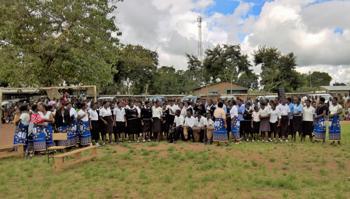
The objective of this project is to analyse the capacity of mainstream primary schools to identify and support learners with special educational needs in Malawi.
The results from the capacity analysis and their reflection against best practices will lead to realistic recommendations to enhance support to learners with special educational needs.
The project is devided in three main phases:
1. Literature review and case studies
2. Capacity assessment of mainstream primary schools to support learners with Special Education Needs
3. Consultation and formulation of recommendations
Review of Findings from DRC Evaluations - Review of evaluations by other donors of development and humanitarian assistance programs in the DRC
- 2019 – 2019
- under € 500,000
- Congo (Kinshasa)
Canada is significantly involved in the DRC through projects addressing children and youth, maternal, newborn and child health care (MNCH), security and protection, as well as governance and the advancement of democracy. Since 2006, Canada has been an important player in the DRC and in the Great Lakes Region, notably in the fight against sexual violence and holding criminals accountable.
The review covers all international assistance programming including humanitarian assistance, stabilization, and development projects. The main focus is on the most recent years in order to reflect changing contexts (2012-2018).
DRC review focuses on responsiveness and agility in fragile states, program and policy coherence, and women and girls programming.
The review will generate recommendations to improve the relevance, effectiveness, sustainability, and efficiency of programs.
At this point, PRA is planning an evaluation of Global Affairs Canada’s international assistance in the DRC in accordance with the Treasury Board Policy on Results, which requires that all departments conduct an evaluation of the relevance and performance of all ongoing programs every five years.
Technical Assistance for the Implementation of the Socio-economic Reintegration Component of the Programme to Support the Reform of the Security Sector (PARSS-RSE) in the Republic of Guinea
- 2014 – 2019
- € 2 – 5 million
- Guinea (Conakry)
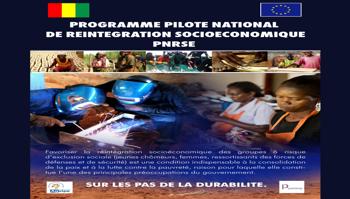
The ++socio-economic reintegration component++ of the ++Programme to Support the Security Sector Reform (PSSSR-SER)++ focused on the socio-economic reintegration of vulnerable populations that have emerged including defence and security forces that were restructured. Thus, the technical assistance supported the implementation of the ++National Programme for Socio-economic Reintegration (NPSER)++ .
The NPSER formed part of the Security Sector Reform and was in keeping with the goal of helping to stabilise the country, to smooth the path towards peace consolidation. The NPSER was designed using an ++innovative approach++, targeting sustainability and resilience by (i) integrating the most vulnerable members of the community at risk of being socially excluded (former defence and security forces), into the target group, and (ii) rehabilitating the target group by getting them involved in economic activities at community level, initiated and supervised by partner civil society organisations.
The approach involved the following steps:
- social dialogue, social cohesion and reconciliation,
- rehabilitation and socio-economic reintegration of vulnerable populations, including ex-combatants, in partnership with civil society organisations working in the programme intervention areas
- economic recovery in local communities, and
- capacity building for participants, local actors, and the institutional partnership, sensitisation, provision of security, and communication.
The NPSER strategy involved creating temporary jobs and sustainable economic opportunities for the populations at risk from social exclusion, through the rebuilding of communities, promotion of social cohesion and setting up tools to encourage saving. This strategy aimed at the socio-economic reintegration of populations at risk and contributes to local development. The micro-projects for creating temporary jobs were initiated and supported by 13 civil society organisations, with which the project contracted and accompanied throughout the implementation of activities. CSOs were therefore the main implementing partners with the microfinance institution.
The implementation of the NPSER was divided into three (3) phases, supporting the participants for a four-year period.
++Phase 1 (inclusion) :++
- creation of temporary jobs and of individual capital for the participants
- rebuilding of the communities with a commitment from all parties concerned (participants, local authorities, civil society organisations, the private sector).
++Phase 2 (ownership) :++
- choice of participants in manufacturing or service activities,
- self-help by creating sustainable jobs and reviving income-generating activities.
++Phase 3 (towards sustainability):++
- consolidation of the jobs created and the initatives taken by the participants through networking
- help in creating associations and cooperatives to better manage the value chains.
Urban Sanitation Support Formulation
- 2018 – 2019
- under € 500,000
- Guinea (Conakry)
General objectives:
- The mission provided relevant information to the Government of Guinea and the European Commission justifying support for solid and liquid waste management in certain secondary cities and/or regional capitals.
Specific objectives:
The specific objectives of this project were as follows:
- To formulate an integrated strategic approach to support liquid and solid sanitation in certain cities in Guinea;
- To develop a proposal for an action document (including the financing of secondary cities and key infrastructures in Conakry, such as a water treatment plant and a technical landfill center) in accordance with the model and including its annexes (cross-cutting issues, implementation form, logical framework, budget).