
Our projects
Explore Particip’s project experience across countries, sectors and areas of expertise.
Our references provide an overview of completed and ongoing assignments, including their objectives, geographic scope, duration and contract value.
Showing 711–720 of 980 references

Joint country strategy evaluation of Spain and the European Union's cooperation with Nicaragua (2009-2017)
- 2018 – 2019
- under € 500,000
- Nicaragua
The evaluation assessed the cooperation of the European Union and Spain with Nicaragua between 2009 and 2017. It covered:
- All of EU and Spanish cooperation with Nicaragua between 2009 and 2017, including programming and political dialogue. The main sectors covered included: private sector development, good governance and justice, security, climate change, water and sanitation, energy, education and TVET, and gender equality.
- All instruments and aid modalities employed, as well as crisis response mechanisms and financing implemented within the framework of the IFS (Instrument for Stability) followed by the IcSP (Instrument contributing to Stability and Peace) in the case of the EU, and for the Spanish Cooperation, instruments and modalities in the framework of III and IV Master Plans (2009-2012 and 2013-2016).
- Spending and non-spending activities completed, in progress and being planned in the evaluation period.
- EEAS in so far as it related to development in Nicaragua (programming and political dialogue).
- The interaction of DG DEVCO interventions with those of DG Trade, FPI, ECHO and the EIB and those carried out under the Common Foreign and Security Policy (CFSP) in Nicaragua; The interaction of AECID interventions with other actors of Spanish Cooperation in Nicaragua, such as other Ministries, autonomous communities, local governments, etc. The interaction between EU and Spanish Cooperation interventions is also assessed.
- Coherence between European Union interventions in the field of international cooperation and development and other EU policies affecting Nicaragua in the framework of the Policy Coherence for Development (PCD) commitments. Coherence between Spanish interventions in the field of international cooperation and other Spanish policies affecting Nicaragua
*Due to the political crisis in Nicaragua as from April 2018, the Contracting Authority decided to stop this evaluation upon conclusion of the desk stage. The last report produced was the desk report and included preliminary conclusions and recommendations.
Support to WFP/FAO: Stabilization of Priority Post-Conflict Areas of DRC
- 2019 – 2019
- under € 500,000
- Congo (Kinshasa)
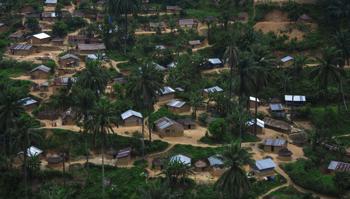
In 2016, the United Nations World Food Programme (WFP) and the Food and Agriculture Organization of the United Nations (FAO) launched a joint project to rebuild livelihoods shattered by conflict in eastern Democratic Republic of Congo (DRC), by empowering women, supporting farmers and helping build peace between communities. This was funded by the German Cooperation through KfW with a grant of 35 million EUR.
Working hand-in-hand in using their collective expertise, WFP and FAO have set out efforts to assist rural farming communities returning home after forced displacement. The support includes a short-term safety net for people in urgent need, as well as micro-financing, numeracy and literacy training, economic empowerment training for women, and conflict prevention tools.
The aim is to bridge the gap between humanitarian assistance and development work, by improving value chains and livelihood development for smallholder farmers, thus supporting the emergence of more resilient and peaceful communities. Families will benefit from better access to markets, training in sustainable agricultural production, including post-harvest management, adequate agro-processing and marketing of their produce to boost their income and improve their food and nutrition security.
The overall task of the consultancy was to support WFP and FAO in the monitoring and reporting of the project “Stabilization of Priority Post-Conflict Areas of DRC”. This included support in a review of the operational management and coordination of the project,identifying improvements in data collection and analysis, updating / finalizing the effects matrix, and drafting an evaluation report.
Technical assistance for awareness, information and communication to improve waste management practices in Georgia and the visibility of EU support to the sector
- 2018 – 2019
- under € 500,000
- Georgia
Since Georgia adopted its new Waste Code in 2015 and the development of a National Waste Management Strategy, the Georgian government has treated waste collection, safe disposal, recycling, recovery and waste management in general as top priorities. Some requirements of the new code had already been enforced, while others were expected to be enacted step-wise according to a time-bound Action Plan (2016-2020). The government’s aim was to establish a comprehensive system for waste management in line with modern standards and the EU-Georgia Association Agreement (AA) requirements.
The EU, through its Delegation in Georgia, played a significant role in supporting this field of environmental protection. However, in spite of the extensive and outstanding contribution to the waste sector development, the awareness of key target audiences and of the general public of implemented or ongoing actions in the waste sector, and of best waste management practices needed to be strengthened further.
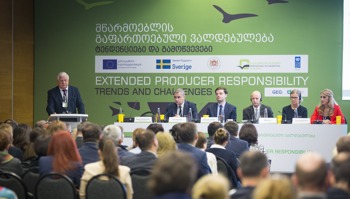
The overall objective of this project was to increase awareness, understanding, and support for the EU and its activities in Georgia, particularly among Georgian audiences. The specific objective was to do so with particular emphasis on the EU support to improve waste management practices in the country through active participation within society.
Concretely, this has been done by raising awareness, informing, engaging and building capacity among the key audiences, and by enhancing communication and cooperation among the key stakeholders and counterparts of this initiative. This increased the visibility of the EU activities and awareness of waste related issues, while demonstrating its importance for the whole country.

Final evaluation - Institutional Capacity Building of the National Authorising Officer System in PNG - Phase II
- 2019 – 2019
- under € 500,000
- Papua New Guinea
The Project under the 10th EDF was designed based on lessons learnt from the Institutional Capacity Building - Phase I Project, the 2010 Result Oriented Monitoring (ROM) and the Mid-Term Review (MTR) and the subsequent analysis during formulation of ICB - Phase II which confirmed the weak ownership of the EU-PNG Development Programme and of the EDF-funded projects/programmes by the GoPNG and the implementing line departments and agencies (LDA), largely as a consequence of inadequate involvement in the programming and planning process, and as evidenced by virtual non-functioning of the Programme Steering Committee, which was to play a central role in guiding the NAO-SU.
The overall objective of the project was to contribute to the strengthening of the mobilisation, management and coordination of all development assistance to PNG, ensuring its effectiveness and alignment with national strategies and development plans.
It was expected to deliver support and capacity strengthening actions to the NAO system in order to enhance the preparation and the implementation of the PNG-EU development cooperation programme and therefore to contribute to the effectiveness of the aid provided to PNG.
It focussed on the areas of programming, planning, aid management and project management. The implementation was expected to be underpinned by effective internal and external communication and information.
The main objectives of this evaluation were to provide the relevant services of the European Union, the interested stakeholders and the wider public with:
- an overall independent assessment of the past performance of the Institutional Capacity Building of the National Authorising Officer System in PNG - Phase II, paying particular attention to its results measured against its expected objectives; and the reasons underpinning such results;
- key lessons learned, conclusions and related recommendations in order to improve current if relevant and future Actions.
Service Contract for a Results Oriented Monitoring system of the Implementation of Projects and Programmes of external aid financed by the European Union, ROM-LA
- 2014 – 2019
- over € 10 million
- Latin America & Caribbean
Results Oriented Monitoring (ROM) reviews aim to assist the European Commission’s services and EU Delegations in monitoring of and reporting on EU financed development and cooperation projects and programmes in third countries through independent reviews of the progress of their implementation and the achievement of project results.
The ROM reviews and support missions to be carried out are the following:
a) +++ROM reviews of projects signalled as having implementation problems and where EC services have identified a need for an outside expert review to assist in addressing the problems, identifying causes and options for solution and making recommendations.
b) +++ ROM reviews of other projects for which such ROM reviews may have a particular usefulness, in particular for projects which could not be included in the EUDs’ planning of field visits or for which the necessary sector expertise at EUD level may not be sufficiently available at a given point of time or for innovative projects.
c) ROM reviews of BS programmes: in countries where a BS programme is signalled as having implementation problems, a ROM review may be organized focusing on the programme in question for the sector specific aspects but also covering the Public Financial Management (PFM) and macroeconomics aspects of all BS programmes financed by the EU in the country .
d) ROM support to end of project reporting on results (outputs and direct outcomes), including for BS programmes. These ROM support missions are to assist EC services and EUD in strengthening their results reporting capacities in: assisting with the recording actual results achieved by projects and programmes that have come to an end in the specified calendar year, solving technical difficulties that may occur linked to results reporting, and identifying the systemic needs and modalities for improvement which may be needed in these areas. The ROM support to end of project results reporting missions are to focus on projects of EUR 750.000 or more.

Sectorial Evaluation: European support for forest sector policy in Honduras
- 2018 – 2019
- under € 500,000
- Honduras
The evaluation should allow an understanding of the cause-effect relationship between the activities, the direct effects and the impacts. Evaluations should have as main objectives contributing to accountability, decision making, learning and management improvement.
The main objectives of this evaluation are to provide the competent services of the European Union, the interested parties and the general public:
++ An independent evaluation of the implementation of the Budget Support Program for the forestry sector of Honduras (PAPSFOR), focusing in particular on its 'intermediate' results in relation to its objectives;
++ The main lessons and recommendations with a view to improving the current Action (if applicable) and future.
In particular, this evaluation will serve to evaluate the impact that the Program has had to date and better understand the public perception of this impact.
The main users of this evaluation will be the government, civil society, indigenous peoples, the timber industry, donors and the general public.
About Google TranslateCommunityMobile

Final Evaluation of Development of Management Information System for the Forestry Sector (FORMIS – phase II) and People Participation in Improvement of Forest Governance and Poverty Alleviation in Vietnam (PFG)
- 2018 – 2019
- under € 500,000
- Viet Nam
The evaluation comprised two forestry projects financed by the Government of Finland. The first project, 'Development of Management Information System for the Forestry Sector in Viet Nam, Phase II' (FORMIS II), aimed to establish a fully integrated Management Information System (MIS) for forestry decision making. The second project, 'People Participation in Improvement of Forest Governance and Poverty Alleviation in Vietnam' (PFG), aimed to foster the participation of grassroots communities in the national forestry MIS to improve forest governance and contribute to poverty alleviation.
The evaluation covered the period of the FORMIS Phase II (2014-2018) and the implementation period of the PFG (2014-2018). Its objective was to assess the achieved results and impacts of FORMIS II and PFG, as well as their values and merits in the perspectives of their key stakeholders.
For FORMIS II, the evaluation focused on capacity building; information and data sharing policies and practices; IT architecture, functioning and user-friendliness of the platform, applications and database; the extent of use of the system; the contribution and impact of FORMIS project to the ongoing policy reform; and on the role of FORMIS II in supporting the transition from aid to trade between Finland and Vietnam.
Regarding PFG, the evaluation analysed in particular the extent of use of the FORMIS system by communities in the pilot areas; the appropriateness of the livelihood models selected for the pilot sites; and the contribution of the PFG to enhanced participatory forest governance in the pilot areas.

Final Evaluation of EPJUST II Project
- 2019 – 2019
- under € 500,000
- Philippines
The EPJUST II programme was designed to address some of the weaknesses identified in rule of law in the Philippines, in particular key obstacles related to justice accessibility and enforceability. In doing so, it aimed to address both the "demand" side, with the view to enhance the possibilities of rights-holders to seek justice, and the "supply" side with the view to enhance the efficiency of duty-bearers to deliver justice. The expected results were to directly or indirectly contribute to the implementation of seven out of nine key action points identified to strengthen the Rule of Law in the Philippines Development Plan(PDP) 2011-2016, aimed at improving the economic performance and reducing poverty.
The objective of the EPJUST II Programme was to help achieve equitable access to efficient legal
enforcement of rights for all citizens in general and the poor and disadvantaged, including women,
children, minorities, indigenous peoples, and human rights and social activists in particular.
The main objectives of this evaluation were to provide the relevant services of the European Union, the interested stakeholders and the wider public with:
- An overall independent assessment of the past performance of the EPJUST II Programme, paying
particular attention to its intermediate results measured against its objectives;
- Key recommendations about sustainability of the action and exit strategy
- Key lessons and recommendations, to be drawn also from the evaluation in order to improve
current implementation and future Actions.
In particular, this evaluation served the purpose of identifying key bottlenecks of actual slow–moving implementation and suggested corrective measures for a smoother implementation.
The main users of this evaluation were the EU Delegation, the Government of Philippines, the
Department of Interior and Local Government and other beneficiary Departments and Agencies.
Environmental Country Profile Mali
- 2018 – 2019
- under € 500,000
- Mali
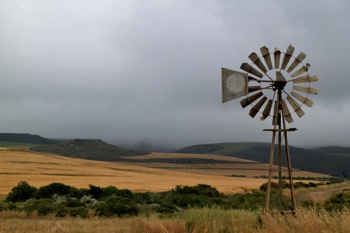
The Country Environmental Profile should identify the environmental issues that need to be taken into consideration in the preparation of the Mali Country Strategy Paper, and assess them, in order to influence - directly or indirectly - the EC's cooperation actions.
The Environmental Country Profile should provide decision-makers in the partner country and the European Commission with clear information on the major environmental issues, as well as on the policies, strategies and programs that concern them, including the 2030 Sustainable Development Agenda.
The purpose of providing this information is to ensure that the EC cooperation strategy can take environmental considerations and climate change objectives into account during the preparation of EU cooperation programs and to integrate them into the guidelines for EU-supported programs and policies. It should also be possible to use this information as a reference for environmental compliance in all development-cooperation-activities in the country.
The Profile will identify key links between environment, climate change and poverty reduction. It will also gather baseline information and help focus policy dialogue and cooperation with the country on key issues such as sustainable development or environmental awareness among policy makers.
Review (results-oriented monitoring — ROM) of implementation of project and programmes financed by the European Union within the framework of its external assistance in the Neighbourhood region
- 2014 – 2019
- over € 10 million
- Algeria, Armenia, Azerbaijan, Belarus, Egypt, Georgia, Israel, Jordan, Lebanon, Libya, Moldova, Morocco, Palestine, Russia, Syria, Tunisia, Ukraine
Results Oriented Monitoring (ROM) reviews aim to assist the European Commission’s services and EU Delegations in monitoring of and reporting on EU financed development and cooperation projects and programmes in third countries through independent reviews of the progress of their implementation and the achievement of project results.
The ROM reviews and support missions to be carried out are the following:
a) +++ROM reviews of projects signalled as having implementation problems and where EC services have identified a need for an outside expert review to assist in addressing the problems, identifying causes and options for solution and making recommendations.
b) +++ ROM reviews of other projects for which such ROM reviews may have a particular usefulness, in particular for projects which could not be included in the EUDs’ planning of field visits or for which the necessary sector expertise at EUD level may not be sufficiently available at a given point of time or for innovative projects.
c) ROM reviews of BS programmes: in countries where a BS programme is signalled as having implementation problems, a ROM review may be organized focusing on the programme in question for the sector specific aspects but also covering the Public Financial Management (PFM) and macroeconomics aspects of all BS programmes financed by the EU in the country .
d) ROM support to end of project reporting on results (outputs and direct outcomes), including for BS programmes. These ROM support missions are to assist EC services and EUD in strengthening their results reporting capacities in: assisting with the recording actual results achieved by projects and programmes that have come to an end in the specified calendar year, solving technical difficulties that may occur linked to results reporting, and identifying the systemic needs and modalities for improvement which may be needed in these areas. The ROM support to end of project results reporting missions are to focus on projects of EUR 750.000 or more.