
Our projects
Explore Particip’s project experience across countries, sectors and areas of expertise.
Our references provide an overview of completed and ongoing assignments, including their objectives, geographic scope, duration and contract value.
Showing 51–60 of 796 references

EU-Pakistan Private Sector Engagement
- 2024 – 2027
- € 500,000 – 1 million
- Pakistan
The overall objective (Impact) to which this action aims to contribute is to strengthen the economic and trade relation between the European Union and the Islamic Republic of Pakistan.
The specific objective of this contract is to contribute to the Private Sector Engagement (PSE) and Economic diplomacy strategy of the EU in Pakistan.
The expected outputs of this contract are as follows:
- Output 1: Coordinate with, and asses the other activities/interventions under the PSE strategy. Further
develop the PSE strategy during the contracting years, proposing new interventions;
- Output 2: Generate knowledge on private sector development challenges, investments opportunities,
European Business situation, all centred in EU interests to be presented/disseminated during the
Business Forum;
- Output 3: Design a communication strategy that enhances the Business Forum visibility, interest,
engagement and recognition;
- Output 4: Organised tailored high level business forums to discuss the situation of the sector and
promote investment between Pakistan and the European Union businesses.

Complementary assistance for the PAR SRC - Assessment and monitoring of SBS implementation
- 2024 – 2027
- € 500,000 – 1 million
- Serbia
The specific objective (Outcome) of this contract is to assess compliance of the national administration with the General and Specific Conditions for the release of fixed and variable tranches as set out in the Appendix for Budget Support for Public Administration Reform and to provide recommendations to the EU Delegation to the Republic of Serbia concerning the value of the tranches to be disbursed.
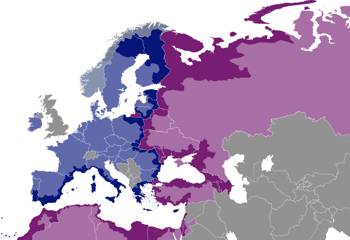
Facility for the ENI CBC and Interreg NEXT programmes on EU external borders with the neighbouring partner countries
- 2023 – 2027
- € 5 – 10 million
- ENI, Europe
The European Neighbourhood Instrument (ENI) Cross-border cooperation (CBC) and Interreg NEXT (acronym for: “Neighbourhood External”) programmes extend the principles of European Territorial Cooperation (ETC) among Member States within the EU, better known as Interreg, to territorial cooperation between Member States and the Partner countries and territories in the Neighbourhood area. They cover both cross-border cooperation (CBC) on land borders and sea crossing as well as transnational cooperation programmes covering sea basins.
Cross-border and transnational (sea-basin) cooperation along EU’s external land and sea borders is a unique form of cooperation between EU MS and neighbouring countries. It provides the framework and opportunities for enhanced people-to-people contacts, cooperation and exchanges essentially at regional and local level, and involves a broad range of actors (local authorities, NGOs, Civil Society Organisations (CSO), universities and other stakeholders).
The overall objective (Impact) to which this action contributes is to enhance the implementation of the ENI CBC and Interreg NEXT programmes by providing technical support to the programme authorities, beneficiaries, and stakeholders as well as to the Commission during all phases of the programme cycle.
The specific objectives of this contract are the following:
- to enable participating countries to manage, implement and close the ENI CBC Programmes taking into account the disruptions caused by the Russian aggression against Ukraine;
- to enable participating countries to manage and implement Interreg NEXT programmes in the most efficient way and to ensure effective cooperation between the Member States and the partner countries;
- to support the Commission with the effective management, implementation and closure of ENI CBC/Interreg NEXT programmes;
- to provide support to joint secretariats (JS)/branch offices in order to improve the project development and management capacity of organisations eligible to participate in the ENI CBC and Interreg NEXT programmes – such as local and regional authorities, CSOs and other relevant players. These activities should benefit eligible partner countries;
- to provide targeted support to the beneficiaries of partner countries impacted by the Russian aggression against Ukraine in close coordination with managing authorities and joint secretariats;
- to increase the capacities of regional and local authorities and other stakeholders in partner countries, in particular Ukraine, Republic of Moldova and Georgia, with a view to support their EU Accession process;
- to stimulate coordination not only among ENI CBC/Interreg NEXT programmes but also between ENI CBC/Interreg NEXT programmes and other similar instruments. This would allow for exchanges of best practices among both Programmes and projects as well as increase the ENI CBC and NEXT visibility.
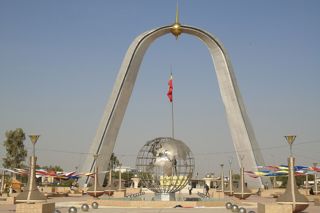
Improving Strategic Communication and Visibility of the EU in Chad
- 2025 – 2027
- € 1 – 2 million
- Chad
The specific objectives (results) of this contract are as follows:
- Result 1: Raise awareness about the values, actions, and impact of the European Union in implementing development initiatives that improve the living conditions of the Chadian population, particularly youth and women.
-
Result 2: Improve the knowledge and perception of Chadian citizens regarding the European Union, its cooperation offer, and the Global Gateway strategy implemented by Team Europe in Chad, through strategic communication operations — including public campaigns in official languages (French and Arabic) and in commonly spoken local languages — in complementarity with public diplomacy.
-
Result 3: Strengthen existing networks and create new links with the media, networks, and influential individuals (influencers, opinion leaders at the local level, diaspora) in order to improve the perception of the European Union in Chad.

Technical Assistance for Results Oriented Monitoring in Türkiye – Phase IV
- 2025 – 2027
- € 2 – 5 million
- Türkiye
The overall objective to which this action contributes is to ensure efficient and effective use of IPA assistance in Türkiye by improving the performance of interventions through strengthening design, monitoring and evaluation systems.
The specific objectives of this contract are as follows:
- To improve the design and implementation of IPA assistance in Türkiye
- To improve the visibility and public perception of IPA assistance by promoting the results and achievements of IPA projects.
The expected outputs of this contract are as follows:
- Output I to Outcome 1: ROM services provided in Türkiye were updated and extended.
- Output 2 to Outcome 1: Capacities of Turkish institutions dealing with ROM services were increased.
- Output 1 to Outcome 2: Results and achievements of IPA Projects were collected and disseminated through different means.
Stakeholders: Central Finance and Contracts Unit (CFCU), National IPA Coordinator (NIPAC/DEUA), National Authorising Officer (NAO) – Ministry of Treasury and Finance, Delegation of European Union to Türkiye (EUD), National Programming Compliance Coordinator, Managing Authority (MA) (IPA III), Intermediate Bodies for Policy Management (IBPM) (IPA III), Operating Structure (OS) (IPA II), Sectoral Monitoring Committees (SMC), Contractors, End beneficiaries

Evaluation of WFP Pacific multi-country strategic plan (2023-2027)
- 2026 – 2027
- under € 500,000
- ACP (Pacific)
This independant evaluation of WFP Multi-Country Strategic Plan (MCSP) in the Pacific assesses the strategic positionning, added-value and results of WFP operations in the region from 2022 to 2026.
The evaluation serves the double purpose of accountability (performance and result assessment) and learning (why certain results occurred or not, lessons and evidence for decision-making). It is envisioned that the evaluation will inform the design of the new MCSP for the Pacific, which is scheduled for Executive Board consideration in November 2027.
MCSP key sectors and activities include:
- Emergency preparedness and response
- Supply chains and logistics
- Institutional capacity strengthening
Cross-cutting themes included: Gender equality and empowerment of women (GEEW), inclusion, accountability to affected populations (AAP), protection, nutrition integration, environment, humanitarian principles.
The evaluation employs a mixed-method approach that triangulates qualitative and quantitative data from a variety of sources. For this purpose, the evaluation team is conducting interviews with different stakeholders including WFP staff at HQ, regional and country level, WFP cooperating partners, donors, UN agencies, and government entities.
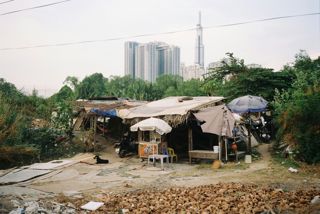
Consulting Services Agenda 2030, Poverty, and Inequality
- 2025 – 2027
- under € 500,000
- Germany
The 2030 Agenda, with its 17 Sustainable Development Goals (SDGs), serves as a strategic framework for international cooperation. The project addresses poverty and inequality through multidimensional and cross-sectoral approaches, with SDG 1 ("No Poverty") and SDG 10 ("Reduced Inequalities") at its core.

Strengthening local governance, decentralisation and gender mainstreaming in Bhutan
- 2024 – 2027
- € 1 – 2 million
- Bhutan
The overall objective (Impact) to which this action contributes is:
- To assist Bhutan in reducing poverty.
The specific objectives (Outcomes) of this contract are as follows:
- Specific objective (Outcome) 1: Strengthening local governance and decentralisation;
- Specific objective (Outcome) 2: Strengthening gender mainstreaming, including at local level.
The expected outputs of this contract are as follows:
- Output 1 to Outcome 1 & 2: High-quality technical expertise/support provided to Bhutan, including capacity building actions, to improve implementation of the programmes financed by the EU in the focal sectors and in the cross-cutting areas such as but not limited to : CSOs, governance, gender mainstreaming and support to gender equality and women empowerment, environment, climate, disaster risk reduction, democracy and poverty. Specifically, the support is expected to enhance implementation of the Decentralisation policy and local governance priorities in the 13th Five Year Plan.
- Output 2 to Outcome 1 & 2: Policy Dialogue and engagement between the EU and Royal Government of Bhutan in the cooperation policy areas improved through dialogue facilitation, training, workshops, research and studies, including sector policy assessments under budget support in specialised areas related to local governance, decentralisation and gender mainstreaming.
- Output 3 to Outcome 1 & 2: Series of studies in the Local Government sector and pertaining to gender equality and women participation conducted, in close coordination with the Royal Government of Bhutan.
- Output 4 to Outcome 1 & 2: Organisation of dialogue facilitation, trainings/workshops both in Bhutan and outside Bhutan for Bhutanese stakeholders to improve human resources capacities as well as enhance communication between stakeholders and visibility of EU and RGoB achievements in the sector. Beneficiaries could include officials from the department of local governance, Ministry of Finance (Department of macro-fiscal and development finance), the omen and Children Division (which is the secretariat of the National Commission for Women and Children) under the Ministry of Education and Skills Development, civil servants from the districts and municipalities at local level (e.g. gender focal points, members of Mainstreaming Reference Groups), elected officials and also representatives/members of nongovernmental organisations
- Output 5 to Outcome 1 & 2: As cross-cutting for the sectors (i.e. statistical methodologies for the 2 sectors and for better monitoring system within Bhutan), the provision of technical assistance to the National Statistical Bureau to support an improved statistical system at central and local levels and a strengthened local level data collection and treatment of data in the areas targeted by the EU budget support programme.
Support to programming, monitoring, evaluation and knowledge sharing in the EU external action (meldea)
- 2023 – 2027
- over € 10 million
- Africa, Asia, ENI, Latin America & Caribbean, Oceania, Western Balkans
The overall aim of the project is to ++support DG INTPA and DG NEAR in improving quality of performance, institutional learning and accountability for a better targeted and more sustainable impact of EU external action++.
The project comprises ++7 different services++:
++1++: provide methodological support to EU staff to plan, design, implement, monitor, and evaluate EU interventions in a coherent, efficient and effective manner.
++2++: assist requests of methodological screening and quality assurance related to programming and design.
++3++: assist to the enhancement of the internal monitoring and results reporting systems of the Commission services.
++4++: support and contribute to the revision of the results-oriented monitoring (ROM) system and provide operational and coordination support to the ROM contracts.
++5++: assist Commission staff in their mandate to steer, coordinate, monitor and report on evaluation activities.
++6++: support the two units of the DGs to enhance the quality of EU external action by ensuring the quality of the different evaluation deliverables.
++7++: provide methodological support on knowledge management for INTPA.D4 and NEAR.A4 by developing a set of tools and techniques and responding to requests of support.
++Main staff provided for 4 year of contract:++
- Key Expert 1 (Team Leader): 880 WD
- Key Expert 2: 880 WD
- Key Expert 3: 880 WD
- Key Expert 4: 880 WD
- SNKE: 11.847,25
- MNKE: 7.146
- JNKE: 5.887,50

Third Party Monitoring & Evaluation IV - NDICI
- 2024 – 2027
- € 1 – 2 million
- Somalia
The main scope of the Third Party Monitoring and Evaluation (TPME) is to monitor the execution & implementation of EU funded projects in Somalia. The contractor will carry out monitoring missions in all the regions of Somalia. The contractor will be expected to conduct field visits in all the locations where the project activities are being implemented. The contractor will identify and describe suitable methods for monitoring taking into consideration the security situation and political context.
The EUD will request the contractor to carryout an analysis and/or a study yet to be decided for a particular sector/area that is highly relevant to the context in Somalia.
The contractor will utilise the agreed reporting tools to ensure quality, as well as, ensure timely submission of periodic deliverable progress reports.
The contractor will also deliver their findings and suggestions for improvement in programme management and results delivery.
The Specific objectives of thic contract are as follows:
- Specific objective 1: To carry out regular independent monitoring of ongoing NDICI projects in Somalia.
- Specific objective 2: To conduct analysis or studies on specific thematic issues upon request.
- Specific objective 3: To provide recommendations and lessons learnes on all aspects of project implementation and progress in order for the EU to better understand the various aspects affecting project implementation and delivery and adopt the remedial measures.