
Our projects
Explore Particip’s project experience across countries, sectors and areas of expertise.
Our references provide an overview of completed and ongoing assignments, including their objectives, geographic scope, duration and contract value.
Showing 581–590 of 796 references
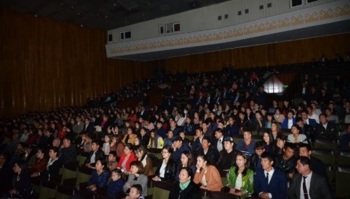
European Union Cooperation in Uzbekistan: Visibility Events in 2017 and 2018
- 2017 – 2019
- under € 500,000
- Uzbekistan
Objective:
Implementation of a comprehensive set of actions to enhance the visibility of the European Union and its contribution to development cooperation in Uzbekistan.
More specifically, this contract contributed to gradual establishment of improved EU visbility and communication on EU assistance and cooperation with Uzbekistan guided by agreed overall messages.
The contract was understood as a complement to the communication efforts of each specific EU-funded project and added value to these efforts by highlighting the scale and impact of EU development assistance as a whole and thus increased visibility of EU.
Final Evaluation of the Contract FED 2014/339637 'Support to the Liberian Decentralization Support Programme'
- 2019 – 2019
- under € 500,000
- Liberia
The main objectives of this evaluation were to provide the relevant services of the European Union, the interested stakeholders with:
- an overall independent assessment of the EU contribution to the Liberian Decentralisation Support Programme, paying particular attention to its results measured against its expected objectives; and the reasons underpinning such results;
- key lessons learned, conclusions and related recommendations in order to improve future EU Actions.
In particular, this evaluation served to understand the performance of the Action, to understand the performance of the Action as to inform the planning of eventual future EU interventions and Actions in the same sector.
EU added value:
- The extent to which the Action brought additional benefits to what would have resulted from Member States' interventions only.
- Coherence of the Action itself. With the EU strategy in Liberia and with other EU policies and Member State Actions as other relevant DPs (UN agencies and Usaid):
- The extent to which was the action complementary to other intervention in the Country.
Relevance:
- Appropriateness of the action approach via LDSP programme for the achievements of National Policy on Decentralization and Local Governance (NPDLG).
- The extent to which the action has been designed in line with the readiness and capacity of LDSP Programme stakeholders.
Effectiveness:
- The extent to which the deconcentration of services at local level (CSCs) have been improved.
- The extent to which programme modalities were effective for the implementation of the Program (DPs pool fund managed by UN Agency, NIM/DIM),
Efficiency:
- The extent to which was the action's implementation choice (DPs pool fund managed by UN Agency, NlM/DlM) efficient;
Sustainability:
- The extent to which mechanisms have been set in place by the action to support the Government of Liberia to sustain improvements in deconcentrated services (CSCs) made through this action;
Impact:
- The extent to which it was possible to describe the impact of the action in term of positive or negative; directly or indirectly.

End of term evaluation of ACP-EU Building Safety and Resilience in the Pacific (BSRP)
- 2019 – 2019
- under € 500,000
- Fiji
In particular, this evaluation served to ++understand the performance of the three actions++, their ++enabling factors++ and those hampered or hampering a proper delivery of results as to ++inform the planning of future EU interventions++ and actions in similar sectors.
The main users of this evaluation are:
- the Regional Authorising Officer (PIFS - Pacific Islands Forum Secretariat);
- the ministries responsible for DRR and Climate Change in the BSRP countries;
- the implementing agencies of the actions;
- the EU Delegation;
- any other development partners involved in these sectors.

Joint Nordic Evaluation of the Nordic Development Fund (NDF)
- 2018 – 2019
- under € 500,000
- Denmark, Finland, Iceland, Norway, Sweden
The Joint Nordic Evaluation of the Nordic Development Fund (NDF) aimed to assess the performance of the NDF in relation to its mandate and the fund’s potential future role as a joint Nordic financing instrument, assessing how strong its added value is from an international perspective. Thus, the study pursued two intertwined aims: i) assessing NDF’s past and current performance (“aim 1”); ii) assessing NDF’s potential future role as a joint Nordic financing instrument for development (“aim 2”).
The evaluation was conducted ten years after the establishment of the NDF’s new mandate – a period sufficiently long to take stock of what has worked and why, and what has been less successful.The analysis covers the period 2009-2018 and NDF’s entire portfolio. Although the NDF has focused on climate change, the analysis also looked at NDF’s potential future role beyond this theme.
In parallel to the NDF evaluation, an evaluation of the Nordic Climate Facility (NCF) was undertaken. With its specific set up and operations, the NCF faces particular challenges and potentials and, in conjunction with the NDF, it was therefore decided to evaluate the facility separately, however by the same evaluation team (Particip GmbH). The results of the two assignments were presented in the same evaluation report. The final report is available online: https://eba.se/en/rapporter/joint-nordic-organisational-assessment-of-the-nordic-development-fund-ndf/11350/
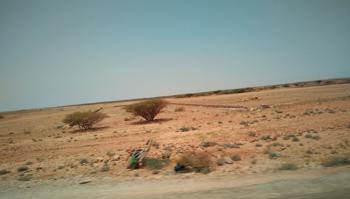
Third Party Monitoring and External M&E Support for Somalia Country Programme
- 2016 – 2019
- € 1 – 2 million
- Kenya, Somalia
The main objective of the assignment was to help ensure that Somalia Country Programme results are achieved as planned. This advisory support purpose was two-fold:
- Particip provided continuous systematic, structured and strategic management information based on the Somalia Country Program, including the Thematic Programmes and the Development Engagements (DE), as well as the ++Monitoring & Evaluation systems++ of the DE partners.
- Particip increased the capacity of the Embassy’s DE partners with regards to ++Results Based Management++, including M&E and risk management.
Other project objectives included:
- Support the “whole of country programme” approach by identifying the need for, and facilitating the operation of, networks/groups drawn from across the programme and engagement partners to address specific development problems including those identified through M&E reports.
- Monitor, over the life of the programme, the effectiveness of the design and management arrangements for the Country Programme, and ++develop and disseminate learning tools++ (papers, guidelines, toolkits etc.) to inform future country programme design in Somalia.
- Provision of technical follow up on specific issues/problems identified through M&E reports, as requested by the programme committee and subject to resource availability; such as value for money audits; investigation and analysis of under-performance; mentoring of partner staff in M&E techniques.
- Support to the refinement and revision of the ++results framework++, in close association with programme partners, including ++assuring realistic and measurable indicators++ so that programme progress can be accurately documented at the outcome level. At the impact level, the M&E Support Team will support the development of the needed methodologies to ensure that the Danish contribution to the national level impact indicators is possible to assess.
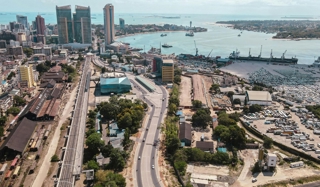
Governance helpdesk in Tanzania
- 2017 – 2019
- under € 500,000
- Tanzania
The overall objective of this assignment was to establish a Helpdesk in the area of democratic governance with the aim to support the NAO office and EUDEL in the formulation and implementation of governance portfolio. Special attention was given to translating the priorities of the new European Consensus on Development into consistent projects and programmes under formulation.
The specific purpose of the assignment was to provide regular support to the NAO Office and EUDEL in the area of democratic governance, providing ad hoc support for identification, formulation and monitoring of governance-related programs/projects and exercises.
The experts identifies complementarities and synergies amongst different instruments and programs (EDF and budget lines) and across different focal sectors (governance, agriculture, energy) and in terms of peace related issues.

Technical Assistance to the Trade Enhancement and Facilitation Project (TEFaP)
- 2016 – 2019
- € 1 – 2 million
- Ethiopia
The overall objective of the Trade Enhancement and Facilitation Project, of which this contract was part, was to support the integration of Ethiopia into the world economy to enhance the contribution of trade to the country's growth and transformation. The provision of Technical Assistance was an integral part of the TEFaP. The purpose of this service contract was to make available a TA team that would:
- Support and strengthen the capacity of the Ministry of Trade ( MoT) and that of the Ethiopian Revenue and Customs Authority ( ERCA) in overall TEFaP project coordination (including monitoring, communication and visibility of the entire project),
- Provide technical support and advise to MOT and ERCA as well as all other beneficiaries of the TEFaP in the design, timely implementation, as well as monitoring and evaluation of all components of the project , and,
- Support and advise in the administrative management of the TEFaP in line with EDF procedures
The results achieved within this contract included:
++Result 1++: Supported MOT and ERCA to ensure an efficient management and overall project coordination of the TEFaP
++Result 2++: Supported MOT and ERCA to ensure proper application of EDF procedures in the design and management of Programme Estimates (PEs) for all components of the project, as well as the design and management of specific commitments foreseen under the TEFaP
++Result 3++: Supported the strengthening of the capacity of key trade stakeholders
++Result 4++: Support to improve awareness and understanding of WTO accession process
++Result 5++: Support to improve effectiveness of export promotion measures
++Result 6++: Supported the procurement, installation as well as the successful implementation of the new Customs Management System (CMS)

Program of Support to Administrative Reform, Decentralization and Regional Economic Development (PARADDER) - Final Evaluation
- 2019 – 2019
- under € 500,000
- Mali
This evaluation was mainly intended to provide the relevant services of the European Union, interested stakeholders with the following information:
- a comprehensive and independent analysis of PARADDER's performance, paying particular attention to its results, in comparison with the expected objectives, and the reasons supporting these results;
- lessons learned, conclusions, associated recommendations and added value of EU interventions;
- to formulate future actions, which may include different and / or innovative approaches and approaches, such as (non-exhaustive):
- the integration of the administrative reform and decentralization components into the EU's sectoral programs.
- the territorial approach to local development
- approaches that directly target the Territorial Communities
- links with civil society and democracy programs
- the harmonization with the interventions of the other TFPs
In particular, this evaluation served to:
- to verify and assess the relevance of the program's objectives with regard to the activities carried out (capacity building, granting of grants, technical assistance, studies, etc.) in the post-crisis context and their relevance in the current Malian context
- to formulate concrete recommendations and proposals for institutional anchoring and sustainability issues and prospects for possible future support, taking into account the priorities of the EU's action for the period 2020-2024 and the provisions of the Peace Agreement, hence the flagship element is a new institutional architecture around in-depth decentralization based on greater regional empowerment. The signing of the Agreement commits stakeholders to its implementation in accordance with the agreed timetable.
The main users of this evaluation are the EU Delegation in Mali, the EDF National Authorizing Officer, the Malian Ministry responsible for Decentralization and Administrative Reform (currently the Ministry of Territorial Administration and Decentralization and the Ministry of Territorial Administration). Reform of the Administration and Transparency of Public Life).
The overall objective was to contribute to the reduction of poverty through the continued implementation of the Institutional Development Program and the National Decentralization Policy Framework Document. The specific objective was to support the continued effective implementation of state reform and decentralization policies including the regional economic development of the Northern Regions and the Niger Delta and the decentralized sectors (health, education , hydraulics and environment).

Evaluation of the European Union’s Regional Level Cooperation with Latin America (2009-2017)
- 2017 – 2019
- under € 500,000
- Latin America & Caribbean
The Evaluation of the European Union’s Regional Level Cooperation with Latin America (2009-2017) evaluated the design and the implementation of policies, strategies and sector programmes of the EU’s past and current development cooperation support to Latin America.
The main objectives of the evaluation were:
- to provide the relevant external co-operation services of the EU and the wider public with an overall independent assessment of the EU’s past and current development co-operation with LA; and
- to identify key lessons and produce recommendations in order to inform the responsible decision makers, notably in the EEAS and DG DEVCO , on how to improve the current and future EU strategies, programmes and actions.
The following key issues / evaluation criteria were assessed:
- the relevance and coherence of the EU’s regional-level development co-operation;
- the coherence of the co-operation strategy with the EU overall political framework;
- the coherence, complementarity and synergies between the regional programmes and the EU’s other development interventions in the region;
- the consistency between programming and implementation;
- the results of the EU’s regional development interventions, focusing on effectiveness, impact, sustainability and efficiency;
- the value added and leverage effect of the EU’s regional development interventions; and
- the 3Cs: the coordination and complementarity between the EU and other donors (focusing on EU Member States) and the coherence between the EU’s development co-operation interventions and other EU policies affecting the LA region, in particular interventions under the Partnership Instrument.
The evaluation included an in depth analysis of the contribution of EU support to development outcomes in the following sectors:
- Security and Peace,
- Environment and climate change,
- Social equity,
- Inclusive growth,
- Science, Technology and Higher Education.
The report is available on: https://ec.europa.eu/europeaid/evaluation-eus-regional-development-cooperation-latin-america-2009-2017_en

Nordic Climate Facility (NCF) External Evaluation
- 2019 – 2019
- under € 500,000
- Denmark, Finland, Iceland, Norway, Sweden
The Nordic Climate Facility (NCF) is a challenge fund set up and administered by the Nordic Development Fund (NDF) to finance innovative climate change projects. The overall objective of the evaluation was to provide NDF with an independent assessment of NCF as a facility.The first aim was to assess the performance of NCF in accordance with the objectives and outputs stated in the most recent NDF Board approval document of NCF 7-9, including assessment of the effectiveness and efficiency of the management of NCF. The second aim was to assess NCF’s relevance and value addition as a challenge fund to NDF, and provide concrete recommendations for potential future directions and development of NCF, including i) assessing the alternative of setting-up up NCF as a trust fund; ii) assessing the use of other types of financing than grants.
In parallel to the NCF evaluation, an evaluation of the Nordic Development Fund (NDF) was undertaken. With its specific set up and operations, the NCF faces particular challenges and potentials and, in conjunction with the NDF, it was therefore decided to evaluate the facility separately, however by the same evaluation team (Particip GmbH).
The results of the two assignments were presented in the same evaluation report. The final report is available online: https://eba.se/en/rapporter/joint-nordic-organisational-assessment-of-the-nordic-development-fund-ndf/11350/