
Our projects
Explore Particip’s project experience across countries, sectors and areas of expertise.
Our references provide an overview of completed and ongoing assignments, including their objectives, geographic scope, duration and contract value.
Showing 551–560 of 796 references
Evaluation of Finland's Country Strategy Modality in Fragile Situations
- 2019 – 2020
- € 500,000 – 1 million
- Afghanistan, Myanmar, Palestine, Somalia, Syria
The evaluation assessed the applicability and feasibility of the Country Strategy instrument in fragile contexts, given their specific challenges and requirements. It will draw evidence from the experience of Country Strategies in five contexts, namely Afghanistan, Myanmar, the Occupied Palestinian Territory, Somalia and Syria/Iraq, to draw wider findings and conclusions. It will cover the period 2012-2020, with the emphasis on more recent activity (2016 onwards) and its main body of work will be completed during the period March 2019-April 2020.
The evaluation’s specific objectives are as follows:
- To assess the coherence between the five country strategies and MFA internal strategies and multilateral influencing plans, as well as with the Finnish Development Policy Programme 2016;
- To assess the relevance of Finland’s co-operation in fragile situations, as supported by Country Strategies, to the needs of beneficiaries and to the complexities of the context, including adaptation over time (e.g. the ‘triple nexus’);To assess role of Country Strategies in supporting the appropriateness and feasibility of Finland’s policy dialogue in fragile contexts;
- To assess the appropriateness of multi-bi cooperation as the main channel for delivery in fragile contexts;
- To assess the extent to which Finnish development priorities, as articulated in Country Strategies, are prioritised within planning and implementation of multi-bi co-operation, including in ensuring that crosscutting objectives (the rights of the most vulnerable, gender equality and climate change preparedness and mitigation) are integrated as appropriate/feasible;
- To assess the extent to which Country Strategies have supported co-operation to be conflict sensitive and to adhere to international commitments relevant to fragile situations, such as the International Humanitarian Principles, Do No Harm and Accountability to Affected Populations;
- To assess the role of Country Strategies in supporting results achieved by Finnish co-operation, as far as they can be determined;
- To assess the role of Country Strategies in supporting Finland’s approach to partnership (including relationship-building, predictability and the adoption of a principled approach) in fragile contexts, particularly as perceived by external partners.
The report and other material are available at: https://um.fi/development-cooperation-evaluation-reports-comprehensive-evaluations/-/asset_publisher/nBPgGHSLrA13/content/evaluointiraportti-ulkoministeri-c3-b6n-maaohjelmien-soveltuvuus-hauraissa-maissa-ja-konfliktiymp-c3-a4rist-c3-b6iss-c3-a4-teht-c3-a4v-c3-a4-c3-a4n-ke/384998
Strengthening communication and visibility of the EU-Republic of Congo cooperation
- 2018 – 2020
- under € 500,000
- Congo (Brazzaville)
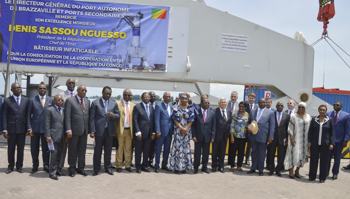
The overall objective of this project was to increase knowledge about the EU and the EU-Congo cooperation among the Congolese population.
The specific objectives of this contract were the following:
- To assist the Delegation of the European Union in Congo in implementing its communication strategy
- To facilitate the Congolese public's understanding of the role played by the EU and its values through its cooperation with Congo
- Making the impact of EU-Congo cooperation activities more visible and measurable
Visibility & communication for the European Union in Cambodia
- 2018 – 2020
- € 500,000 – 1 million
- Cambodia
At global level, the contract aimed to achieve the following objectives:
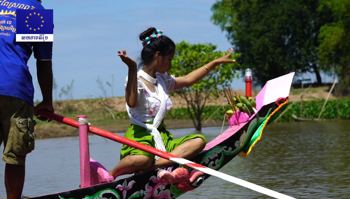
- the gradual establishment of an improved EU visibility in Cambodia as a key player in providing development cooperation assistance that promotes EU values such as good governance, democracy, human rights, and the rule of law, focusing on quality service delivery to all and finally inclusive and sustainable development– results;
- present the EU's achievements in the last 21 years towards making a difference in the lives of the common people in Cambodia;
- project a clear picture of the EU's image and the manner, in which the EU's global identity impacts on relations with Cambodia, through agreed overall messages, as well as specific thematic messages derived from the policy areas in which the EU is active;
- effective communication of the EU's development cooperation actions in Cambodia and the use of EU funds.
The specific objectives of this contract were:
- to develop, in consultation with the EU Delegation management, staff, and relevant stakeholders, a 'Communication and Visibility Strategy' with clearly defined goals, objectives, and achievable action plans, together with measurable indicators that can be monitored and measured over time.
- to support implementation of the Communication and Visibility Strategy by developing innovative approaches to showcase the EU's visibility in Cambodia guided by agreed overall messages and showcase through specific thematic messages covering EU policies and EU's projects and programmes.
- to enhance communication skills for EUD staff and EU implementing partners/organisations to deliver communication products that are of quality for Cambodian and European audiences.
- to contribute to change in perceptions of EUD staff and EU implementing partners/organisations towards the importance of the communication and visibility for the EU in Cambodia.
The EU Development Communication Network
- 2018 – 2020
- € 500,000 – 1 million
- Austria, Belgium, Cyprus, Estonia, Germany, Ireland, Italy, Poland, Slovakia, Slovenia, Spain
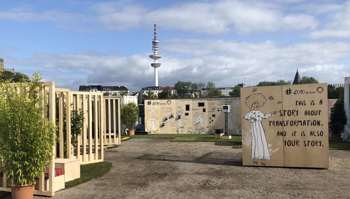
The EC seeked to establish a Europe-wide Communication Network gathering EU and EU Member States’ development cooperation departments for enhancing their awareness building activities on development issues. The aim was to establish a more coordinated approach between EU and Member States towards communication on development, and to create the basis for more effective partnerships with stakeholders, civil society and partner countries.
The general objective of the assignment was to increase outreach to the general public on development cooperation policies and activities, with a focus on young people.
++Specific objectives:++
- Establish, manage and coordinate the EU Development Communication Network (incl. organisation of annual steering committee meeting and creation of a closed social media group);
- Design, creation and management of a password-accessed web-based digital platorm for the network members;
- Organisation of an annual Europe-wide event to promote development cooperation policies and activities of the EU, directed to the general public.

TC measure: promotion of dual education in Egypt
- 2018 – 2020
- € 2 – 5 million
- Egypt
The main objective of the contract is to enable VET staff of state and private actors of the dual system to better fulfill their tasks in the implementation of dual training. This should improve the quality of education. In addition to imparting theoretical, practical and didactic competencies as well as the necessary competences for the management of dual training, the team should also train individuals and organizations to enter into competent and prepared dialogue with other actors.
The project focuses on Egyptian trainings for jobs with high employment potential, as are expected to occupations in the following areas:
- Textiles and Clothing, especially the clothing industry,
- Metal, in particular production, as well as maintenance and servicing,
- Electrical engineering, especially electrical installation and electronics,
- Office and administration, especially administrative and commercial professions.
Technical Assistance to support SADC Secretariat on EU development cooperation matters
- 2018 – 2020
- under € 500,000
- SADC region
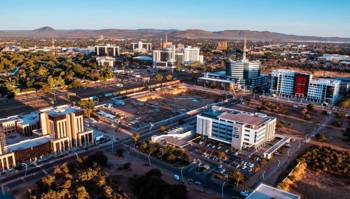
The objective of this assignment was to strengthen the SADC-EU cooperation relationship and to effectively contribute to SADC's engagement with the European Union to enhance implementation of the revised Regional Indicative Strategic Development Plan (RISDP).
The specific objectives of the assignment included the following:
- Engage with SADC Secretariat to provide speedy, effective and efficient quality policy reactions and strategic guidance concerning the preparation and implementation of EU financed programmes;
- Engage with SADC Secretariat to enhance the policy dialogue with the EU, especially in relation to programming and implementation of co-operation programmes;
- Engage with SADC Secretariat to enhance resource mobilization through effective use of EU instruments, regional funding initiatives and development bank financing modalities;
- Engage with SADC Secretariat to oversee the implementation of EU-funded and supported programmes;
- Engage with SADC Secretariat to strengthen SADC visibility and corporate image with the EU, through improved corporate and thematic visibility and communication strategic interventions at regional and international platforms.
Follow-up to the Youth Plug-In Initiative
- 2018 – 2020
- under € 500,000
- Africa
Global objective:
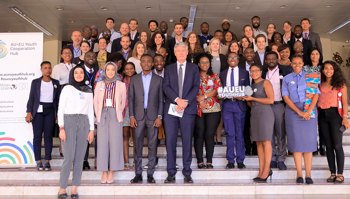
The overall aim of the contract was to facilitate the first phase of follow-up to the Youth Plug-In Initiative. The aim of the follow-up process was to test innovative solutions to common challenges on both continents as presented in the AU-EU Youth Agenda.
Specific objectives:
1. Supported the EU and AU Services, in collaboration with continental youth networks, to identify and select youth to take part in the advisory process, on the basis of lessons learned from the YPII selection process;
2. Assisted in preparations for the CfP, including facilitation of a consultative meeting with youth representatives; inputs to the Guidelines of the CfP; and workplans for the six clusters;
3. Proposed and implemented a communication strategy for the AU-EU Youth Initiative;
4. Built partnerships with interested stakeholders.
Visibility of EU activities in regional/rural development and institutional capacity in Azerbaijan
- 2018 – 2020
- under € 500,000
- Azerbaijan
The Government of Azerbaijan declared the development of the non-oil economy and the reduction of socio- economic regional disparities as the main priorities for the coming years, as clearly outlined in the Strategy Vision 2020 and other strategic government documents. In order to support the Government in its efforts to develop regions and to implement reforms under the current EU-Azerbaijan agreements and future agreements under the Eastern Partnership, the EU identified two components under the Annual Action Programme:
++Component 1. Support Regional and Rural Development in Azerbaijan (SRRD)++
The overall objective of this programme was to contribute to the diversification of the economy and sustainable regional development in Azerbaijan, while reducing socio-economic disparities between regions.
++Component 2. Framework programme in support of EU-Azerbaijan Agreements++
The overall objective of this framework programme was to build the institutional capacity of selected public administration institutions in Azerbaijan. Main activities foreseen included technical assistance and Twinning projects in support to the implementation of the EU- Azerbaijan ENP Action Plan and the implementation of CIB.
To ensure adequate visibility, each project implementing the programme had its own communication and visibility component and budget, according to the Communication and Visibility Manual for EU External Actions. In addition, funds were reserved to ensure overall visibility of the actions under this present project.
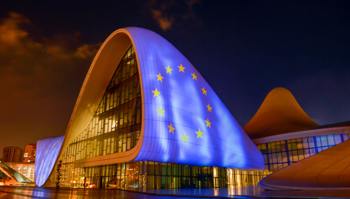
The overall objective of the present contract therefore was to increase the visibility of EU-funded projects in Azerbaijan in general, with a specific focus on
- Increasing the ++visibility of the EU assistance in regional and rural development++ in Azerbaijan, and
- ++Awareness raising about the EU activities in institutional capacity building++ in Azerbaijan through Institution Building Instruments: Twinning/TAIEX/Sigma.
These visibility goals were achieved by using a large variety of communication tools over a duration of 2 years. Activities are carefully planned to ensure a harmonised approach where all elements and campaigns build upon each other. This will maximise the impact and ensure a continued presence of relevant information on EU activities in the Azerbaijani media.
The requested services were split up into three groups:
- Component 1. Support Regional and Rural Development in Azerbaijan (SRRD)
- Component 2. Framework programme in support of EU-Azerbaijan Agreements
- Component 3. General visibility measures

Supporting the Mainstreaming of peace, shared analysis and conflict sensitivity with the appropriate tools and practices
- 2018 – 2020
- under € 500,000
- ACP (Africa)
Preventing conflict, preserving peace and eradicating poverty is a key priority in the EU’s foreign engagement. The objective of this project is to strengthen the implementation of the EU’s key policies in this area for ACP and OCT regions, namely the EU Global Strategy for foreign and security policy (EUGS), the New EU Consensus on Development, the 2017 Resilience Communication, the Security-Development Nexus, and the Integrated Approach.
The project was commissioned to assist DEVCO-B2 to respond to growing demands to mainstream peace and strengthen internal capacity for the EU to meet its goal to preserve peace and prevent conflict as part of its foreign policy. The purpose of the project was to produce studies to consolidate and integrate existing contributions into a global product by topics and by country; to demonstrate both implementation and progress of the New European Consensus for development and the Integrated Approach; and to contribute to the mainstreaming of peacebuilding and inclusivity, ensuring in-depth analysis together with in-house tools on resilience, peacebuilding and conflict prevention, also through the production of field cases studies and will ensure knowledge transfer, both in- house and for the targeted countries.
Development of research approaches to provide Case Studies for evidence-based learning
- 2018 – 2020
- under € 500,000
- Ghana, South Africa
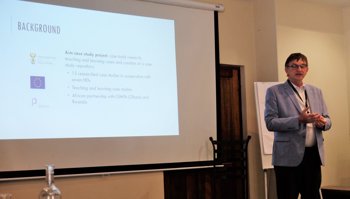
The overall objective of the project was to contribute towards building a capable state, responsive to the needs of all its citizens and the promotion of national interest, accountability and transparency in service delivery, and utilising public resources in an effective and efficient way.
The specific objectives of the project were the following:
- Develop fifteen (15) researched case studies (2 from Ghana and 13 from South Africa) utilising the case method for public service teaching and learning.
- Work with at least five (5) assigned higher education institutions (HEI) in South Africa to assist and develop their capacity to develop and use the case study method for public service teaching and learning.
- Dissemination of the case studies via at least ten (15) sector workshops at the NSG
- Preparation of the materials as publications for journals / manual and book chapters so that the NSG can take these forward.