
Our projects
Explore Particip’s project experience across countries, sectors and areas of expertise.
Our references provide an overview of completed and ongoing assignments, including their objectives, geographic scope, duration and contract value.
Showing 511–520 of 796 references

Evaluation of the EU's external action support in the area of migration (2008-2018)
- 2019 – 2021
- under € 500,000
- ACP (Africa), Asia, ENI East, ENI South, IPA
The purpose of this evaluation is to provide an independent assessment and evidence on the contribution of EU external action support in aspects of the policy area of migration. Its specific objectives are the following:
- To assess in both qualitative and quantitative terms the relevance, conditions of implementation and performance of EU external action support to migration in the areas defined in the evaluation’s focal areas.
- To address coherence of the EU external action projects/programmes framed also in the international context (e.g. UN related and non-EU Member States) and achievement by the EU and the candidate countries for EU membership, the potential candidates and the partner countries of their respective commitments in these policy areas.
- To assess how EU external action support in the area of migration in the geographical focal areas, has changed in the aftermath of the 2015 structural shift associated with the so-called “refugee crisis.” The assessment shall also take into account complementarity of EU external action support with that of other donors and actors, including EU Member States.
- To assess whether the EU's policy and operational response to the external dimension on migration triggered new approaches and rendered programmes and actions more effective, targeted and efficient.
It furthermore aims to provide lessons learnt and recommendations for the improvement of the programming and implementation and shall:
- lead to the identification of conclusions based on objective, credible, reliable and valid findings;
- highlight lessons learnt;
- provide the Commission and the European External Action Service (EEAS) with a set of operational, targeted and useful forward-looking recommendations.
The three overarching thematic focal areas examined by this evaluation are the following: Legal (labour) migration, Smuggling of Migrants (SoM), and Trafficking of Human Beings (THB).
Report available here: https://ec.europa.eu/neighbourhood-enlargement/sites/default/files/eval_eu_support_migration_area_-_final_report.zip

Mid-term evaluation of the Environmental Diplomacy in G7/G20 project
- 2019 – 2021
- under € 500,000
- Global
Systematic and timely evaluation of its programmes and activities is an established priority of the European Commission. The focus of evaluations is on the assessment of achievements, the quality and the results of Actions in the context of an evolving cooperation policy with an increasing emphasis on result-oriented approaches and the contribution towards EU foreign policy objectives and the implementation of the SDGs. From this perspective, evaluations should look for evidence of why, whether or how these results are linked to the EU intervention and seek to identify the factors driving or hindering progress. Evaluations should provide an understanding of the cause and effect links between: inputs and activities, and outputs, outcomes and impacts. Evaluations should serve accountability, decision making, learning and management purposes.
The main objectives of this evaluation are to provide the relevant services of the European Union and the interested stakeholders with:
- an overall independent assessment of the past performance of the Environmental Diplomacy project, paying particular attention to its intermediate results measured against its expected objectives; and the reasons underpinning such results;
- key lessons learned, conclusions and related recommendations in order to improve current and future Actions.
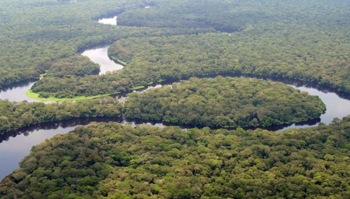
Support of the DRC in the Process of Negotiations Under The Framework Convention Of The United Nations On Climate Change
- 2020 – 2021
- under € 500,000
- Congo (Kinshasa)
The general objective of the project of which this market is part is to contribute to an active role of the DRC in the processes of negotiation, development of policies and the implementation of commitments within the framework of the United Nations Framework Convention on Climate Change (UNFCCC) and the Convention on Biological Diversity (CBD).
The specific objectives of this contract are as follows:
In relation to the UNFCCC:
- Support the DRC team of negotiators involved in the UNFCCC negotiation processes
- Follow the negotiations of Article 6 of the Paris Agreement, namely, the "concerted steps to raise the level of ambition''
- Promote long-term climate action in the DRC by supporting the Ministry of the Environment and Sustainable Development in its reflection for the transformation of the commitments of the national determined contribution (CDN) of the DRC into actions of mitigation and adaptation and their integration into national planning.
- Identify possible synergies and establish partnerships with existing initiatives for the mobilization of resources and the sharing of experiences necessary for the rapid and effective deployment of the NDC.
Compared to CBD:
- Actively follow the negotiations for the preparation of the post-2020 Global Framework for Biodiversity, scheduled for COP-15, in coordination with the African Group, the CBD Secretariat, the European Union and others stakeholders.
- Support the contribution of the DRC and African states to the Post-2020 Global Framework Working Group and to the COP-15, based on the strategy agreed with the main stakeholders.
Transversely:
- Contribute to a stronger involvement of national stakeholders (civil society, indigenous peoples, private sector, etc.) in the implementation of the commitments and instruments proposed by the two conventions, at the national, regional and continental levels.
- Work for a better synergy in the commitments between these two multilateral conventions, as well as vis-à-vis the 2030 Agenda and the Sustainable Development Goals (in particular goals 13, 14 and 15).

Monitoring, Evaluation and Capitalisation Policy of Expertise France: Design and implementation of the agency’s Monitoring and Evaluation components
- 2019 – 2021
- under € 500,000
- France
This project aimed to design and support the implementation of the Monitoring and Evaluation components of Expertise France's Policy on Monitoring, Evaluation and Capitalisation.
The specific objectives were as follows:
- Definition of an internal monitoring and evaluation policy for Expertise France;
- Strengthening of the agency's capacities in project monitoring and evaluation.
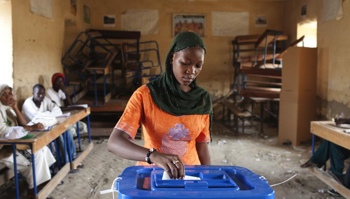
EIDHR — Framework contract (FWC) for support to electoral missions - Lot 2
- 2017 – 2021
- € 500,000 – 1 million
- Global
The Framewok contract related to the implementation of the logistics, security, administrative and financial aspects and the delivery of outputs of specific electoral missions (Electoral Exploratory Missions, Electoral Expert Missions and Electoral Follow Up Missions).
The specific purpose was to:
- ensure adequate expertise and a cost-efficient implementation of electoral missions;
- ensure the availability of a limited number of selected service providers capable of implementing EU electoral missions in often complex environments while ensuring the highest logistical, financial and security standards, on the widest geographic scope; and
- encourage further development, improvement and innovation in the implementation of EU electoral missions.
Evaluation Management Services
- 2017 – 2021
- € 2 – 5 million
- Global
The Evaluation Management Services (EMS) was a service contract which consisted in the implementation of strategic level and policy evaluations, meta-evaluations and syntheses of centralized and decentralized evaluations for the Ministry for Foreign Affairs of Finland (MFA). It corresponded to a new commissioning model that is based on evaluation services commissioned to one service provider rather than outsourcing the implementation of each evaluation as a single assignment. The purpose of this assignment was to increase the quality of outsourced evaluations and also to increase flexibility, efficiency and effectiveness of the Ministry for Foreign Affairs (MFA) of Finland in planning and commissioning evaluations. In addition to a number of decentralised evaluations from various geographical units, all MFA centralised evaluations were prepared and implemented through the EMS.
The evaluations that were implemented under this service contract are the following:
- 2017-2018 Evaluation on Improvement of Women’s and Girls' Rights in Finland's Development Policy and Co-operation (2012-2017)
- 2017-2018 Meta-evaluation of project and programme evaluations (2015-2017)
- 2018 Analysis of centralised evaluations
- 2018 Review on Human Rights Based Approach in Finland's Development Policy
- 2018 Evaluation of the Finnish Fund for Industrial Cooperation Ltd.
- 2018-2019 Evaluation of the Agriculture, Rural Development and Forest Sector programmes in Africa
- 2018-2019 Evaluation on Forced Displacement and Finnish Development Policy (2012-2018)
- 2018-2019Evaluation: How do we learn, manage and make decisions in Finland´s development policy and cooperation?
- 2019 Mid-Term Evaluation: Rural Village Water Resources Management Project Phase III
- 2019-2020 Evaluation of Finnish Development Policy Influencing Activities in Multilateral Organisations
- 2019-2020 Evaluation of Finland's Country Strategy Modality in Fragile Situations
- 2020-2021 Evaluation on Economic Development, Job Creation and Livelihoods
The evaluation reports are available here: https://um.fi/development-cooperation-evaluation-reports-comprehensive-evaluation
OPEN Neighbourhood — media hub: networking, on-the-job training and support to media professionals across the EU Neighbourhood area
- 2015 – 2021
- € 5 – 10 million
- ENI
This project is a continuation of the journalist training project which was part of the previous Regional Communication programme. It aims at contributing via the training of journalists and media professionals and the support to production of audio-visual and on-line material (i) to the development of independent media in the Neighbourhood and (ii) to a more accurate presentation of the EU policies and support to the region by the media as well as a better understanding of these policies and support and of their impact in the partner countries of the Neighbourhood area by the general public.
Ultimately it will contribute to the establishment of a culture of transparency, dialogue and mutual understanding between EU citizens and those from its partner countries in the Neighbourhood region.
The purpose of this contract is as follows:
- To provide skills to Neighbourhood journalists to improve independent and objective reporting;
- To provide skills to Neighbourhood media editorial and management staff to run independent media outlets;
- To reinforce a network of Neighbourhood journalists and media professionals and ensure it is actively used as professional resource and networking platform.
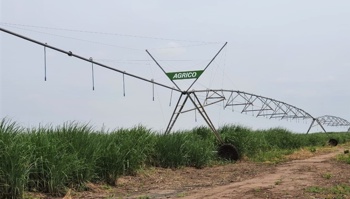
Evaluation of the DRIVE Project 'Chemba Serviços de Irrigação Lda – Irrigation Infrastructure for Organic Sugarcane'
- 2019 – 2021
- under € 500,000
- Mozambique
'Chemba Serviços de Irrigação Lda – Irrigation Infrastructure for Organic Sugarcane' was funded by the Development Related Infrastructure Investment Vehicle (DRIVE) of the Ministry of Foreign Affairs of the Netherlands. The project was located in the Chemba district of Mozambique and aimed to put an agricultural infrastructure in place for small-scale farmers (members of cooperatives) to sustainably grow high-quality organic sugarcane and food crops, which should ultimately enhance the income and food security of farmers and their communities.
The infrastructural outputs of the project, all operated by a utility company through a public-private partnership, included: (i) a bulk water supply infrastructure for irrigation, (ii) an electricity island for power supply to the irrigation system, (iii) a road grader and (iv) a weighbridge for the sugar cane delivered by cooperative members.
The purposes of the evaluation were accountability and learning (for continuous improvement) through insight into the nature and magnitude of effects (direct and indirect, positive and negative, intended or unintended) that could be attributed to the Chemba project. The evaluation determined whether the project contributed to private sector and human development as the overall objectives of the DRIVE facility. It also sought to contribute to the assessment of the feasibility of financing of other irrigation projects through DRIVE.
The evaluation used a mixed-methods contribution analysis that triangulated primary and secondary data. Specifically, it was based on a literature review, a household survey of members of beneficiary cooperatives, and qualitative stakeholder consultations (key informant interviews, focus group discussions, participatory workshop).

Evaluation on Economic Development, Job Creation and Livelihoods
- 2020 – 2021
- under € 500,000
- Kenya, Tanzania, Zambia
This evaluation assessed how Finland’s objectives related to economic development, job creation and livelihoods, manifested in the Priority Area 2 (PA2), but not only limited to it, are being fulfilled through the various thematic approaches, cooperation modalities and funding instruments. An essential aspect of the evaluation was to provide guidance on how Finland might tailor its efforts, elaborating on what Finland’s strengths and “unique competencies” are in the division of labour in the donor community. Included in the Evaluation were also Finland’s Private Sector Instruments (PSI), i.e. Finland’s Development Finance Institution, Finnfund, the seed-funding and match-making programme Finnpartnership (FP), the innovation focused Business with Impact (BEAM) programme and the mixed credit scheme Public Sector Investment Facility (PIF).
The evaluation’s specific objectives were as follows:
- To assess to what extent and how the objectives of the Priority Area 2 on economic development, jobs and livelihoods are being achieved and how relevant and effective the interventions have been in relation to partner country needs.
- To determine what the Ministry of Foreign Affairs can learn from its peer organisations, especially the Nordics as well as from emerging international 'best practices' for more relevant, effective and coordinated support for economic development, jobs and livelihood opportunities.
- To suggest how the effectiveness of Finnish development cooperation related to economic development can be be further developed, including if and how the Results-based Management system can be strengthened.
The evaluation entailed the following:
- Mapping of the PA2 portfolio and the Private Sector instruments in order to investigate what Finland in fact has been doing 2016-2019 in this respect;
- Assessing what have been the results of these interventions in terms of improved economies and more jobs and livelihood opportunities in particular for women, youth and the poor;
- Looking deeper into certain sectors/themes of the PA2 portfolio of specific interest either due to overall significant resource flow under PA2 (energy); perceived comparative advantage by Finland (innovation); policy concern by MFA (women economic empowerment and taxation).
The final report is available here: https://um.fi/publications/-/asset_publisher/TVOLgBmLyZvu/content/evaluointiraportti-suomen-tuki-kumppanimaiden-talouden-vahvistamiseksi-ty-c3-b6paikkojen-luomiseksi-ja-toimeentulon-parantamiseksi/384998
EU Policy and Outreach Partnership
- 2016 – 2021
- € 2 – 5 million
- Russia
This project is part of wider EU public diplomacy and outreach activities towards audiences in Russia and it complements other cooperation programmes of the EU and its member states in Russia.
The overall objective of this action is to support the achievement of the EU’s policy objectives through public diplomacy activities that engage meaningfully with targeted audiences and stakeholders in order to build trust and mutual understanding.
The purposes of this contract are:
- to offer a platform for dialogue and debate on a number of bilateral and global issues for selected Russian and EU experts and interlocutors who can function as moderators/facilitators of a balanced and positive dialogue between EU and Russia;
- to expose selected Russian target audiences to the EU, EU policies and positions and to engage them into a dialogue on a number of bilateral and global issues;
- to expose wider public in Russia to different positions and points of view on a number of bilateral and global issues, as well as to more complete information about the EU, EU policies and positions.
This action consists of five main components which are mutually reinforcing:
- Component 1: EU-Russia Experts Network (on foreign policy). EU-Russia Experts Network brings together experts, analysts and alumni from a variety of institutions and academic centers from Russia and EU member states to discuss actual foreign policy issues (such as economics, EU affairs and human rights) with the aim of coming up with concrete recommendations for a new modus operandi for EU-Russia relations. EU-Russia Experts Network meets on a quarterly basis.
- Component 2: 12 Roundtables/debates on other policy areas to bring together different business representatives networks, journalists, researchers and NGOs representatives. The debates are organised in partnership with selected Russian universities and academic institutions including the EU-supported Jean Monnet centres around Russia, alumni networks from EU and Russian universities, business organisations and representatives of international organisations.
- Component 3: Provision of EU speakers to public events in Russia. A network of experts is established for dedicated events in Russia. The visiting EU speakers are expected inter alia to speak at conferences organised by the Russian Association of European Studies, the European Studies Institute at MGIMO-university, the Jean Monnet Centres of Excellence, the EU information centres, as well as events organised by different think tanks, non-governmental organisations and foundations.
- Component 4: Visiting Russian practitioners to the EU. The visits are addressed to journalists, representatives of civil society organisations as well as civil servants, local government officials, think tanks/analysts, alumni networks and business representatives. 50 Russian professionals benefit from this opportunity each year.
- Component 5: Cross cutting activities, including dissemination to wider audiences through audiovisual products, media relations, awareness raising and PR activities.