
Our projects
Explore Particip’s project experience across countries, sectors and areas of expertise.
Our references provide an overview of completed and ongoing assignments, including their objectives, geographic scope, duration and contract value.
Showing 41–50 of 796 references

Monitoring of civil society assistance in the Eastern Partnership region
- 2022 – 2027
- € 2 – 5 million
- Armenia, Azerbaijan, Belarus, Georgia, Moldova, Ukraine
Systematic analysis of the monitoring data should result into recommendations to improve the implementation and design of assistance to civil society and to the EU monitoring to reach the overall objective to contribute to civic resilience and grassroots democracy in the Eastern Partnership. Trainings should be developed and conducted for a sustainable learning experience. The data and analysis should also be presented for communication on the achievements of the civil society assistance and contribute to various reporting exercises.
The outputs of the monitoring on the ground and analysis should enhance the ability of EU project managers to contribute to regular reviews of action progress and operational plans. The concise feedback resulting from the monitoring of an action should allow EU project managers to have more assurance in assessing the content and quality of monitoring reports from CSOs which would allow them to suggest corrective measures or to support efficient and effective implementation. Further to this, the analysis provided should guide future programming
The expected outputs of this contract are as follows:
- Monitoring system of EU-funded civil society projects that will complement existing EU systems of project monitoring maintained and improved;
- Analysis and knowledge sharing products to support decision-making generated and disseminated;
- Capacity of EU project managers, CSOs staff to monitor and implement projects strengthened.
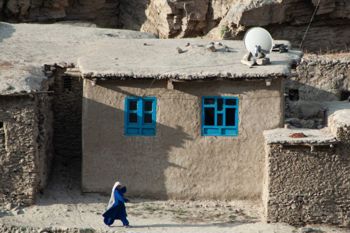
Long Term Arrangement for the Provision of Third-Party Monitoring Services to UNICEF Afghanistan
- 2023 – 2027
- under € 500,000
- Afghanistan
The overall objective of our services is to ensure the highest standards of programme delivery across Afghanistan. Given the unique challenges posed by the country's diverse and hard-to-reach regions, TPM aims to:
- Collect reliable field-level data
- Provide independent verification of programme outcomes
- Identify critical implementation issues
Key tasks TPM undertakes include:
- Training and deploying field monitors as well as ensuring they are equipped with the necessary skills and knowledge to perform their duties effectively
- Ensuring quality assurance
- Implementing supervision and quality checks, including GPS-embedded reports and photos, to validate field monitoring activities
- Submitting detailed monthly reports
By doing so, it is aimed to inform programme planning, improve delivery, and maintain accountability and transparency in all UNICEF initiatives.
GLOBAL GATEWAY AWARENESS RAISING
- 2024 – 2027
- € 500,000 – 1 million
- Djibouti
The aim is to reinforce the positive perception of the EU beyond its status as the largest donor (in donations), but also as a trusted partner with its partner countries. To achieve this, the DUE wishes to establish a new narrative of the EU in Djibouti as a key player in development and a long-term partner. With the paradigm shift brought about by the arrival of Global Gateway, the way the EU interacts with partner countries has changed. GG has made available innovative financing tools and opportunities, including EFDS+ guarantees. These elements will need to be translated into the new C&V strategy.
Specific objective(s)
1. To increase awareness and understanding of the positive impact of the EU and its member states among young people and other audiences with little knowledge of EU action, particularly in relation to the Global Gateway priorities in Djibouti.
2. Reinforce the visibility of the EU as a key and trusted partner in Djibouti among political decision-makers, the private sector, development players and civil society, by promoting the EU's fundamental values such as human dignity and human rights.
3. Develop and consolidate networks with the media, influencers and opinion leaders to improve the perception of the EU, with a particular focus on young people (15-30) and women to raise awareness of Global Gateway initiatives in Djibouti.
Cross-cutting objectives that should be reflected in C&V messages and activities:
1. Human rights
2. Gender equality
3. Environmental protection and promotion of sustainable, inclusive development
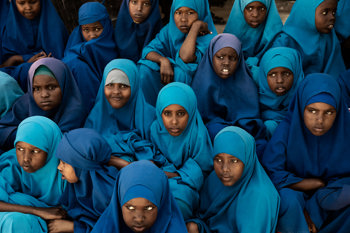
Strategic Communication and Public Diplomacy Facility
- 2023 – 2027
- € 2 – 5 million
- Somalia
The project aims to promote and strengthen the EU’s engagement and cooperation in Somalia in pursuit of the 2030 Agenda for sustainable development.
The specific objectives are:
- the promotion of understanding and awareness of the EU values, principles, interests and specific policies, including human rights, foreign and security policy, science and research, gender equality, green deal, digitalisation, Team Europe visibility, fight against disinformation, as well its multilateral agenda.
- increasing the profile, awareness, understanding and approval of the EU’s partnership with Somalia, by focusing on and showcasing the comprehensive EU support and development cooperation.
- strengthening networks and long-term relationships with key target audiences and partners (e.g. youth, students, academics, think tanks, CSOs, business, creative industries), including leveraging existing EU programmes, in order to facilitate future cooperation across policy areas.

Assistance to the Member States for the implementation of EU nature conservation policy and legislation, including the Nature Restoration Regulation
- 2024 – 2027
- € 1 – 2 million
- EU
Providing support to the EU Member States for the implementation of EU nature legislation in the following areas:
- Completing the Natura 2000 network of sites
- Improving the protection, restoration and management of Natura 2000 sites
- Improving the conservation of species and habitats though a more effective integration of their protection requirements into other national sectoral legislation and policies
- Improving the quality and usefulness of reported data under the nature directives (Art.17 Habitats Directive, Art.12 Birds Directive)
- Supporting the development of National Nature Restoration Plans under the Nature Restoration Law, in particular as regards the targets that build upon the Birds and the Habitats Directives
- Sharing successful projects and best practises in areas such as species and habitat protection or recovery, innovative approaches to site management, restoration of habitats and ecosystems, biodiversity monitoring, including in protected areas
The support to Member States shall be given primarily through the organisation of workshops, networking and training events covering the above-mentioned topics.
Policy Dialogue and Public Diplomacy Facility for Hong Kong and Macao
- 2024 – 2027
- € 500,000 – 1 million
- Hong-Kong
The overall objective (Impact) to which this action contributes is to enable the EU to address short and medium-term foreign policy goals and opportunities, in/with Hong Kong (and Macao) by deepening EU relations and dialogues, and by forging alliances and partnerships, through enhanced engagement.
The specific objectives (Outcomes) of this contract are as follows: Support multi-stakeholder EU-Hong Kong (and Macao) dialogues through further engagement and outreach in key domains for bilateral relations.
The expected outputs of this contract are as follows:
=EU-Hong Kong (and Macao) dialogue and public- and economic-diplomacy outreach supported with the aim to strengthen cross-sectoral engagement with key relevant stakeholders, including through people-to-people engagement, on topics of mutual interest and by identifying areas with potential for further enhancement of bilateral ties.
The foreseen set of activities under the intervention will consist of, but is not necessarily limited to
the following three components:
=++Provision of specialised technical assistance in the key existing and possible new priority
sectors++
=++Organisation of events and exchanges of experiences and best practices++
=++Awareness raising activities in thematic fields of strategic relevance to the partnership
through outreach to potential multipliers++

EU technical facility for biodiversity and ecosystems services (B4Life 2.0)
- 2023 – 2027
- € 5 – 10 million
- Global
The present contract consists of setting up and running a Technical Assistance Facility to provide support and expertise in the sector of biodiversity, ecosystem services and natural resources management. This facility is part of the European Green Deal Knowledge Hub, which aims at establishing several technical assistance facilities in the different sectors covered by the European Green Deal. The setting up of these facilities aims at supporting the implementation of the external dimension of the European Green Deal in partner countries, in line with the relevant sectoral strategies and policies and cooperation agenda. The overall objective (Impact) to which this action contributes is:
- to support the global transition to inclusive, nature-positive, climate-neutral, resilient, equitable and sustainable development pathways.
The specific objective (Outcome) of this contract is as follows:
- to improve the financial contribution as well as the quality, impact and sustainability of European Commission’s external actions in support of biodiversity and nature at a national, regional and global level in line with the EU Green Deal and EU policies and the recently adopted Global Biodiversity Framework GBF.

Strengthening the national regional linkages in SADC (SNRL) - Consultancies on regional integration based on SADC policies, facilitation of events, communication and visibility
- 2023 – 2027
- € 2 – 5 million
- SADC region
The overall objective of the project "Strengthening the national regional linkages in SADC (SNRL)" is to support the Southern African Development Community (SADC) in its efforts to promote regional integration in the member states (MS) for the benefit of the population in the SADC region.
The project is aligned with SADC's regional strategy (the Regional Indicative Strategic Development Plan 2020-30, RISDP) and supports its implementation.
In particular, it supports SADC and its MS on implementing Chapter 5 of the RISDP focusing on the strategic management objectives of the RISDP. By strengthening SADC as a regional organization and by supporting the implementation of the regional agenda RISDP, the SNRL project aims to facilitate the regional integration in the SADC region.
The objective of this contract is the provision of high-quality short-term expert (STE) advice in various topics relevant for enhancing the capacities of national stakeholders to vigorously and effectively pursue in their respective countries the regional integration protocols, policies and strategies of SADC.
The individual consultancy assignments are developed between GIZ and its partners and are based on a joint process and methodology aimed at identifying the needs in the SADC region and within individual member states.
The assignments focus on the scaling-up of best practices and should aim to share experiences and knowledge throughout the region (for example by aiming to standardize products developed as part of the assignment).
The following outputs are expected as a result of project implementation:
- ++Output 1:++ The institutional framework for the implementation of regional integration in the SADC region has improved in the member states;
- ++Output 2:++ Monitoring and evaluation systems for the implementation of regional integration are in place in selected member states;
- ++Output 3:++ The strategic communication capacities of SADC and member states for high profile communication around SADC activities and operations are strengthened.
Implemented projects include the following (project number and title):
- P1/2023 Consultancy to Support the SADC Secretariat to Develop and Pilot the Protocol Compliance Mechanism and Monitoring of the Trade Protocol;
- P2/2023 Perception Survey on the status of SADC regional integration in the Member States;
- P3/2023 Facilitator/Presenter and Group Work Moderators for Two Regional Workshops Supported by SNRL;
- P4/2023 Development of Model Law for the Establishment of SADC National Committees in Member States;
- P5/2023 Consultancy to develop communication products for publication purposes from the deliberations of SADC Member States at the Regional Learning and Exchange Symposium in Lesotho;
- P6/2023 Consultancy to develop presentation on the Status of SADC National Structures and their Financing at the Regional Learning and Exchange Symposium in Lesotho;
- P7/2023 Facilitation Operational Planning SNRL;
- P8/2023 Consultancy Services to Support the Publicity Products of The SADC Summit Public Lecture- Angola;
- P9/2023 Consultancy Services to Provide Rapporteuring of the Proceedings of The SADC Summit Public Lecture- Angola;
- P10/2023 Development of Peer Learning & Review Mechanism for national SADC coordination;
- P11/2023 Shadow monitoring on the extent of implementation of the SADC RAIP 2017 – 2022;
- P12/2023 Editing & Design of Eswatini’s New Industrial Policy;
- P13/2023 Capacity Building on SADC Regional Integration and Project Management for SADC National Contact Points Junior and Middle Staff;
- P14/2023 Updating and Finalising the Status of the SADC National Committees Desk Review Report;
- P15/2023 Consultancy Services to Support the Documentation of Proceedings at the SADC Integrated Regional Electronic Settlement System 10th Anniversary Celebrations;
- P16/2023 Consultancy Services to Support the Publicity Products of the SADC Integrated Regional Electronic Settlement Systems 10-year anniversary;
- P17/2023 Consultancy Services to Support the Rapporteuring of the SADC Integrated Regional Electronic Settlement Systems 10-year anniversary;
- P18/2023 Scoping Studies South Africa and Zimbabwe;
- P19/2023 Scoping Study Madagascar;
- P20/2023 SNRL II Operational Planning Workshop.
- P21 Team Retreat Facilitatior
- P22 Communication Guidelines
- P23 Lesotho National Policy on Regional Economic Integration
- P24 Scoping study and development of SA documentary
- P25 Production of SADC video podcasts
- P27 Development of a Resource Mobilisation Plan for the SNC of the Kingdom of Eswatini
- P28 Ops Manual, OP & Capacity Building Training on RI & PM - Eswatini
- P29 Communications Capacity Building in Botswana
- P30 SNRL II Team Retreat Refresher
- P31 CB& Strengthening Lesotho's SNCs - Project Management
- P33 Establishment of South Africa’s SADC National Committee
- P34 Graphic Design for Promotional Material - SADC Public Lecture in Zimbabwe
- P35 Rapportuering of the SADC Public Lecture Zimbabwe
- P36 Madagascar National Policy on SADC RI
- P37 Capacity Building & Strengthening SNC in Madagascar
- P38 CB & Training on SADC RI & PM for Zambia’s SNC staff
- P39 CB on Resource Mobilisation & Development of Resource Mobilisation Strategy in Zambia
- P40 Regional CB on Resource Mobilisation
- P41 Model Law on the Establishment of SNCs
- P42 Policy briefs on SADC-RTGS; role/significance of the SADC public lectures in promoting regional cooperation and integration in the SADC region.
- P43 Fact Sheets on SADC Protocols
- P44 Communications Strategy and Social Media Dissemination Plan for BGCIS in Botswana
- P46 RI Orientation & Induction for the SNC in Eswatini
- P47 SNRL II Operational Planning Workshop 2025
- P48 Rapporteur for Tanzania Event on SADC RAIP 2017-2022 Shadow Monitoring Report
- P49 Rapporteur for Malawi Event on SADC RAIP 2017-2022 Shadow Monitoring Report
- P50 Policy Brief, Factsheet & Press Release On he AML (Anti-Money Laundering) & CFT
- P51 Madagascar Resource Mobilisation Strategy and Action Plan
- P52 Piloting SNC Peer Learning and Review Mechanism (S-PLRM)
- P53 Establish Baseline Values on SADC Parliamentary Forum’s Operational Efficiency
- P54 Revise SADC Draft Communication, Awareness and Visibility Strategy
- P55 NSA Baseline Indicators
- P56 Interpretation Assignments
- P57 Facilitation of Consultation Workshop SNRL
- P58 Endline Perception Survey
- P60 Piloting M&E Framework for the SADC Protocol on Trade
- P61 SADC Parliamentary Forum M&E on Gender
- P62 Photography, Videography and Livestreaming _ Launch of SA's SNC
- P63 SADC PRU Comms Strategy Launch
- P64 Status of SNCs in the Member States
- P65 Training of Botswana SNC
- P69 Facilitation of SPLRM 1st Cycle
- P70 SPRLM Budget and Finance Plan
- P71 CfP Support
- P72 Facilitation of SNC Guidelines
- P73 SADC PF Publication and Dissemination
- P74 SADC PF Gender Assessment
- P75 SADC PF Mid-Term Evaluation
- P77 Review of Public Hearing
- P81 Communication Documentary Launch
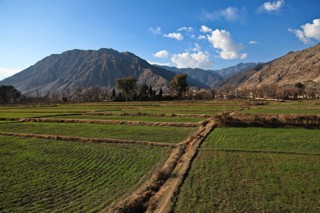
Third party monitoring services, Afghanistan
- 2025 – 2027
- € 500,000 – 1 million
- Afghanistan
In line with the Commission’s objectives and priorities, and the Conclusions of the Foreign Affairs Council of 21 September 2021 and 20 March 2023 which reaffirm the European Union’s principled commitment to supporting the people of Afghanistan, the EU contributes to the international efforts for addressing basic human needs in Afghanistan.
Since 2021, the Commission adopted the following special measures in favour of the people of Afghanistan:
- Commission implementation decision of 31.10.2022 C(2022) 7606 final, action “Support to basic services and livelihoods for the people of Afghanistan”
- Commission implementation decision of 28.11.2023 C(2023) 8215 final, action “Addressing basic needs and supporting livelihoods of the people of Afghanistan”
- Commission Implementation Decision of 26.7.2024, C(2024) 5243 final, action ‘Addressing basic needs and supporting livelihoods of the people of Afghanistan – 2024’
In June 2025, the portfolio of ongoing projects implementing the above mentioned actions is composed of ~ 28 projects, ~ EUR 330 millions, implemented by multilateral organisations and NGOs across all regions for a duration between 2 and 4 years.
Principles for delivery of aid include (but not limited to): 1) women, girls and persons belonging to minorities should be able to access services in a non-discriminatory fashion; 2) support can only be given through multilateral organisations, NGOs or the private sector. No funds can be channelled to or through the Taliban de facto authorities (DFA) neither in Kabul nor at the local level, neither directly nor through other actors; 3) implement assistance without undue influence by the Taliban DFA on the planning, implementation and management of the activities or selection of beneficiaries; and 4) a do-no-harm and conflict sensitive approach will be ensured.
The overall objective (Impact) to which this action contributes is to facilitate the implementation of national and regional programmes by providing funding for all necessary support operations.
The specific objectives (Outcomes) of this contract are as follows:
1. Monitor implementation of selected EU funded projects
2. Track effective implementation of the principled approach
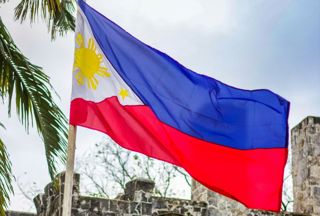
EU engagement with Civil Society and Youth in the Philippines
- 2025 – 2027
- under € 500,000
- Philippines
The global objective is to foster meaningful, inclusive, and rights-based participation of Filipino youth and civil society in shaping and implementing the partnership between the European Union and the Philippines.
The specific objective are:
- To strengthen the EU-Philippines’ Youth Sounding Board (YSB) and Civil Society Sounding Board (CSSB) to efficiently and effectively implement their role as soundboards for the EU in the implementation of the EU Multi Annual Indicative programme for the Philippines, 2021-2027 and of the Global Gateway strategy.
- To enhance inclusiveness and effectiveness of EU engagement with the Filipino civil society and youth, as important actors in the EU partnership with the Philippines.