
Our projects
Explore Particip’s project experience across countries, sectors and areas of expertise.
Our references provide an overview of completed and ongoing assignments, including their objectives, geographic scope, duration and contract value.
Showing 441–450 of 796 references

Communication & Visibility Services 2020-2022
- 2020 – 2022
- under € 500,000
- Mozambique
The overall objective of the project of this contract was to increase awareness and visibility of the EU-Mozambique cooperation partnership to the wider public, and improve the understanding of EU cooperation policies and partnership with Mozambique.
The purpose of this contract was to provide comprehensive visibility and communication services to the EUD to Mozambique. These communication services covered every aspect of the organisation and implementation of the EUD’s visibility and communications strategy, as directed by the management of the EUD.
South Africa – EU cooperation visibility campaign
- 2019 – 2022
- under € 500,000
- South Africa
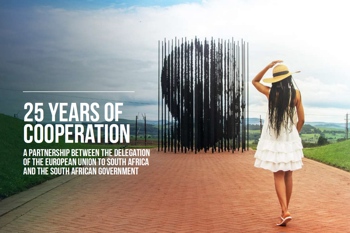
The overall objective of this project is to increase awareness, understanding and support for EU-South Africa development cooperation and its achievements in South Africa, particularly for South African audiences.
The specific objectives are:
- To communicate effectively EU-South Africa development cooperation, its activities and impact to the South African public.
- To collect and create success stories, case stories and results across sectors to enhance knowledge management and derive lessons learned for future cooperation.
- To sensitize South African partners working on Development Cooperation on the importance and practicalities of communication and visibility in the implementation of EU-SA cooperation programmes.
- To improve the impact of EU-funded project visibility activities.

Mapping, communication and monitoring tools for European projects
- 2020 – 2022
- under € 500,000
- ENI
The general objective of the mission was to provide the European Union Delegation (EUD) in Tunisia with a tool for managing information and geo-localized visualization on the activities of cooperation projects, and in particular their results and performance indicators, in order to improve the visibility of EU projects in Tunisia.
The specific objectives were as follows:
- To set up an information management system on EU projects in Tunisia and to feed it with information on the activities of EU projects in Tunisia with data from programmes and projects, in particular those relating to performance, which the provider extracts from the various documents and reports available;
- To develop an interactive mapping tool to visualize all these data from relevant by: a geographical location, sectors, partners or contractors of implementation, funding instruments, disaggregated indicators (e.g. by category of beneficiaries, age, geer);
- To produce regular reports, maps, theme sheets, diagrams, dashboards and monitoring the results of indicators (at project and thematic level) on the EU interventions in Tunisia.
The aim was to set up a web interface that allow communication, and production of information related to the interventions of the European Union in Tunisia.
The aim was to set up a web interface that make it possible to communicate, consult and produce information related to the interventions of the European Union in Tunisia.
Plurinational State of Bolivia: An Evaluation of WFP's Country Strategic Plan (2018-2022)
- 2021 – 2022
- under € 500,000
- Bolivia
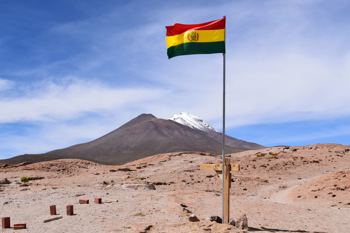
This independent evaluation of WFP Country Strategic Plan in Bolivia assessed the strategic positionning, added-value and results of WFP operations in the Country from 2018 to 2021.
The evaluation served the double purpose of accountability (performance and result assessment) and learning (why certain results occurred or not, lessons and evidence for decision-making about a potential scale-up). It is envisioned that the evaluation will inform the design of the new CSP for Bolivia, which is scheduled for Executive Board consideration in November 2022.
CSP key sectors and activities included:
- Emergency preparedness (incl. early warning systems) and response (including food for assets/
cash-based transfers)
- Nutrition (including nutritional education) and social protection
- Smallholder farmer support (including market support, training, and links with school feeding)
- Institutional capacity strengthening
Cross-cutting themes include: Gender equality and empowerment of women (GEEW), humanitarian
principles and protection, accountability to affected populations (AAP), WFP partnership strategy
The evaluation employed a mixed-method approach that triangulated qualitative and
quantitative from a variety of sources. For this purpose, the evaluation team conducted interviews with different stakeholders including WFP staff at HQ, regional and country level, WFP cooperation partners, ministries as well as focus group discussions with the beneficiaries.
Link to the publication: https://www.wfp.org/publications/evaluation-bolivia-wfp-country-strategic-plan-2018-2022
Communication and visibility of the European Union in Ivory Coast
- 2019 – 2022
- € 1 – 2 million
- Ivory Coast
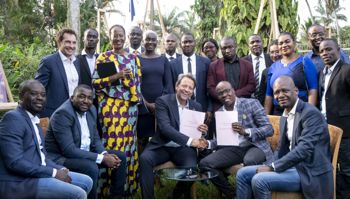
The global objective of the project was to raise awareness about the comprehension of the EU and its support and actions in Ivory Coast, particularly targeting the ivorian audience.
The specific objectives were the following:
- develop a global communication and visibility strategy for the EU-Ivory Coast partnership, including the annual strategy of the EUD in Ivory Coast and its project.
- effectively communicate about the EU's values and the benefits from the EU-Ivory Coast partnership to the ivorian audience.
- communicate and ensure visibility of the partnership that is i) integrating a real political dialogue about issues of common interest, beyond the cooperation aspects; ii) going beyond the classical cooperation (project type) to support the government's reform (budget support); iii) based on universally shared values and the living together
- raise awareness of the ivorian audience for the EU's programmes
- enhance the impact of visibility activities of EU financed project in the short, middle and long term on the living situation of population and the country's development.

Elaboration and implementation of the strategy and communication plan of the Resilient Cities Programme in the Republic of Congo
- 2020 – 2022
- under € 500,000
- Congo (Brazzaville)
The aim of this contract was twofold:
- To show the impact of EDF projects on the target audiences identified by the EU Delegation, and in particular the "Resilient Cities in the Republic of Congo" Programme.
- Demonstrate the added value of EU actions in the Republic of Congo, focusing on the added value of the "Resilient Cities in the Republic of Congo" Programme.
More sically
- Facilitate the understanding of the Congolese public on the EU intervention in the Republic of Congo.
Congo as a whole and in particular in the field of development support
decentralisation and urban sanitation
- Inform the beneficiaries of the "Resilient Cities" project of its progress and impact.
Increase ownership and stakeholder participation in the actions of
communicati
- Giving high visibility to EU communication campaigns

Mid-term evaluation of Partnership Instrument actions on Digital Cooperation
- 2021 – 2022
- under € 500,000
- Global
The main objectives of this evaluation are to provide the relevant services of the EU and the interested stakeholders with:
- an overall independent assessment of the past performance of the five PI Actions in the digital sphere to be evaluated, paying particular attention to their intermediate or final results measured against its expected objectives, and the reasons underpinning such results;
- key lessons learned, conclusions and related recommendations in order to improve current and future Actions, as well as on thematic level and on approaches taken to influence the related policies effectively.
The specific rationale for undertaking this evaluation is to assess policy coherence and relevance, outcomes and impact of PI activities in the field of international digital cooperation, as well as the added value of the PI activities, in strengthening the EU’s partnerships/alliances and its position in global fora
in the digital domain, as well as reinforcing multilateralism, as expressed in the specific objectives of the PI.
This evaluation contract covers five actions to be evaluated. The work to be covered under this contract is a hybrid evaluation of individual actions and, drawing thematic conclusions, recommendations and lessons learned, where possible, when looking at the package of these projects as a whole and the
approaches taken on how to influence effectively EU interests in international digital cooperation.
Monitoring and Reporting under the SDG-Contract to promote Investment and Job Creation in Ghana
- 2019 – 2022
- under € 500,000
- Ghana
The European Union (EU) and the Government of Ghana (GoG) jointly implemented a new budget support contract that aimed to support the implementation of Ghana's Medium-Term National Development Policy Framework ('The Agenda for Jobs: Creating Prosperity and Opportunity for All) with a view of achieving the Sustainable Development Goals (SDG). The following specific objectives had been identified as priorities: 1) Promote domestic and foreign private investment and enable all businesses to spearhead economic transformation and create more employment and decent work opportunities; and 2) Strengthen public financial governance and fight against corruption, and boost domestic revenue mobilisation.
As a response to the COVID-19 pandemic, the EU and the GoG agreed on a new single fixed tranche “Emergency EU Budget Support in response to COVID-19 crisis in Ghana” State Building and Resilience Contract (COVID-19 Emergency Response programme). This tranche was also supposed to absorb inter alia the undisbursed funds of the SDG-Contract.
The project services were hence extended to include support for the EU's disbursement decision for the COVID-19 Emergency Response programme, while continuing the monitoring of the Government's performance with respect to the SDG-Contract indicators, included as a commitment under the new Programme, and ongoing support for related policy dialogue on SDG-Contract and related budget support issues.
The global objective of this assignment was to support the GoG and the EU Delegation in the implementation of the SDG-Contract to promote sustainable investment and employment and to support the EU Delegation in the management of subsequent budget support interventions, including specifically the COVID-19 Emergency Response.
The specific objective of this contract was to provide support in three areas:
- Strengthening the monitoring and reporting for the disbursement of fixed and variable tranches of the SDG-Contract and the COVID-19 Emergency Response programmes;;
- Continued monitoring of, and reporting on, progress in the Government's achievement of the SDG-Contract indicators agreed for 2021 and 2022;
- Guidance for and contribution to an effective and efficient policy dialogue between the EU Delegation and the Government of Ghana in the context of the implementation of the SDG-Contract indicators and further agreed areas of support related to implementation of the "Agenda for Jobs";
- Improvement of communication and visibility around the SDG-Contract and the COVID-19 Emergency Response programmes indicators and related policy dialogue..
Mid-term Evaluation of the BOOST Project in the Regions of Nueva Segovia, Madriz, Estelí, Matagalpa, Jinotega and RACCN from August 2018 to June 2021
- 2021 – 2022
- under € 500,000
- Nicaragua
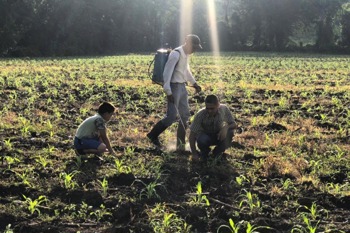
The mid-term evaluation of the project "Boosting Rural and Rurban Economy in Times of Crisis and Beyond" (BOOST) was commissioned by WFP Nicaragua. BOOST is expected to run from 2018 to 2024 and aims to promote sustainable and resilient agri-food systems in five departments and one autonomous region of Nicaragua. The support package includes three components (including gender-transformative approaches): support to smallholder farmers and their cooperatives in the production of basic grain and market access; links with the National School Feeding Programme; and support to the creation of home gardens by vulnerable (peri-)urban families. The European Union is the main donor of the project.
The evaluation served the double purpose of accountability and learning. The evaluation period covered the first three years of the BOOST project (August 2018 to June 2021), and the findings and recommendations were expected to inform the next phase of the project.
The evaluation adopted a theory-based mixed methods approach to answer the five evaluation questions linked to different evaluation criteria (effectiveness; relevance and coherence; sustainability; efficiency) and gender equality and empowerment of women. Data were collected remotely and during a two-week field mission. The evaluation team conducted interviews at national and local levels with WFP and other agencies, government institutions, the donor, cooperatives, and schools; as well as two dozen focus group discussions with beneficiaries; field visits; a comprehensive document review; and an analysis of existing M&E data.
In addition to the evaluation report, Particip produced a short video (produced by a film team in the field) for dissemination purposes. The evaluation report and the video are available at: https://www.wfp.org/publications/nicaragua-boost-project-nueva-segovia-madriz-esteli-matagalpa-jinotega-and-raccn-areas
Evaluation of EU Budget Support and Blending in the Kyrgyz Republic 2010-2019
- 2020 – 2022
- under € 500,000
- Kyrgyzstan
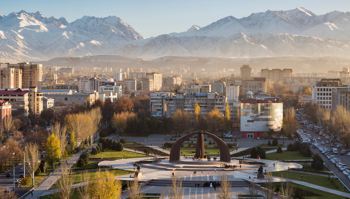
The purpose if this evaluation was the assessment of both budget support and blending operations of the EU in the Kyrgyz Republic between 2010 and 2019. The EU has implemented ten budget support programmes in the country. All programmes contain, in addition to the funds transferred to the national budget, funds covering the provision of technical assistance for institutional capacity development, support to the elaboration of coherent policies, and/or evaluation, visibility and communication activities. The EU is using blending as financing modality in Kyrgyzstan since 2011. The funds for the EU blending operations in Kyrgyzstan come from the envelope for regional cooperation and are channelled through the Investment Facility for Central Asia (IFCA). Almost 40% of the total portfolio of funds managed by the EU Delegation to the Kyrgyz Republic is channelled through the blending instrument. Furthermore, Kyrgyzstan is the main beneficiary of the IFCA funds, with 75% of these funds going to this country.
This evaluation entailed two components. First, it provided an assessment of EU budget support in the country applying the 3-Step approach of the OECD-DAC guidelines on the evaluation of budget support. In particular, building on smaller, more specific evaluations and other studies produced in recent years, it assessed to what extent EU budget support contributed to Kyrgyzstan´s achievements in terms of the outcomes and impacts of its education and social protection sectors and of the country’s latest electoral reform policy. The analysis focused on how EU budget support, by enhancing the efficiency and effectiveness of Kyrgyzstan’s policies, strategies, spending actions, administration capacities and PFM system, contributed to sustainable outcomes in the sectors supported and, in turn, to growth and poverty reduction.
Second, the evaluation focused on EU blending operations in Kyrgyzstan’s Energy and Water management sectors. Specifically, the evaluation looked into the overall logic of these operations as a whole and assesses to what extent their design and implementation are suitable to achieve the expected results of this instrument in said sectors.
Report available here: https://international-partnerships.ec.europa.eu/publications/evaluation-eu-budget-support-and-blending-kyrgyz-republic-2010-2019_en