
Our projects
Explore Particip’s project experience across countries, sectors and areas of expertise.
Our references provide an overview of completed and ongoing assignments, including their objectives, geographic scope, duration and contract value.
Showing 391–400 of 980 references
Technical Assistance on Impact Monitoring of EU Civil Society Support in Eastern Partnership Countries
- 2019 – 2023
- € 2 – 5 million
- ENI East
The project contributed to the introduction of results-based management in all the activities of DG NEAR. The ToR underlined the importance of taking account of all related systems and tools and of the reforms currently being introduced, which are listed exhaustively.
Indeed, the EC had embarked in a major transformation project with crucial implications on the way development cooperation is delivered and development cooperation professionals will work in the future. The aim was to introduce a performance and results culture promoting collaboration, accountability and access to knowledge, along with simplification and harmonisation of all processes and tools, combined in a holistic transparent system.
Result 1: Robust evidence was made available through the setup of an appropriate qualitative monitoring system for civil society projects in order to showcase the benefits of civil society support for citizens;
Result 2: Increased credibility of civil society projects was fostered through regular and more accurate monitoring of projects, following EU external monitoring policy.
Result 3: Increased capacity of EU staff to implement EU monitoring guidelines (and apply corrective measures, if needed) was increased through regular and structured on implementation of EU funded CS projects.
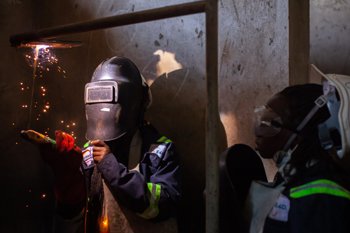
Employment and Skills for Development in Africa (E4D) - Promoting employability of youth, specifically young women, in technical professions
- 2021 – 2023
- € 1 – 2 million
- Kenya
The main goal of this project is to entail skills development through classroom and practical training in the training institution’s workshop after which the trainees will be matched to companies for attachments for real work environment practical training. Thereafter, trainees will be supported to transit into jobs.
The project targets to support the training of 720 youth in the KNQA level IV courses in the 3 years, at least 70% of whom must be women. It is implemented in 3 different regions of Kenya (Coast, Central and Nairobi region), where four institutions have been selected to offer the courses.
As a core element, the project works jointly with the TVET institutions to identify suitable cooperation formats with the private sector to increase labour demand and improve access to jobs and economic opportunities for the youth in Kenya, by establishing linkages and partnerships between vocational training institutions and companies.
++Work package 1: Community gender roles sensitization forums, mobilization of Trainees:++
In collaboration with TVET institutes, the project mobilises trainees to participate in competency-based education and training (CBET) courses. This includes engagement with community leaders and other influential groups to sensitize about the potential of women in TVET and technical career pathways.
++Work package 2: Sponsorship funds management:++
The project supports vulnerable trainees pursuing the CBET courses, covering tuition fees and stipends. This is made through local subsidies with thee four selected training institutions.
++Work package 3: Industry sensitization forums and job placements:++
The project organises sensitization workshops with local industry players in order to encourage them to provide practical training opportunities (attachments) and jobs for the graduates. The project organises job fairs and learning round tables to facilitate networking and share experience. The project provided training on entrepreneurship and work readiness skills to trainees to facilitate (self-)employment.
++Work package 4: Project sustainability:++
The project provides capacity building of training institutions on mobilisation and enrolment into the CBET courses. Lessons learnt and best practices are documented and shared at national government level.

CONSULTANCY TO DEVELOP A DRAFT SADC REGIONAL CONSUMER POLICY FRAMEWORK AND MODEL LAW.
- 2022 – 2023
- under € 500,000
- SADC region
Development of a regional consumer policy framework and model law to provide policy guidelines and facilitate development and implementation of the regional policy at national level, encourage common measures, common approaches, and common enforcement practices. The regional policy framework strengthen the network of national consumer protection authorities to promote cooperation and harmonisation of consumer regulation in the region as well as assist countries to implement consumer laws in conformity with the goals of the SADC region. The model law on consumer policy serve as a template for drafting and revising consumer legislation.
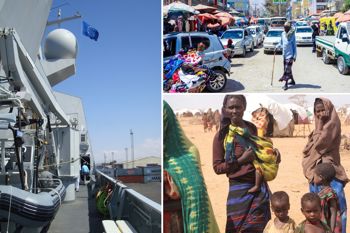
Evaluation of the European Union cooperation with the Federal Republic of Somalia (2014-2021)
- 2022 – 2023
- under € 500,000
- Africa (Eastern)
The evaluation focused on Somalia, including Somaliland, and had as overarching objectives to provide the relevant external co-operation services of the EU and the wider public with an overall independent assessment of the EU’s past and current cooperation with the Federal Republic of Somalia, and to identify key lessons and to produce recommendations in order to inform the responsible decision-makers.
The more specific objectives of the evaluation were:
- To take stock of the results achieved during the cooperation period 2014-2021 with Somalia, and to identify which factors have supported and contributed the achievement of results and have hindered or even blocked their achievement;
- To assess along the six OECD/DAC evaluation criteria, namely relevance, efficiency, effectiveness, coherence, impact and sustainability, plus the EU’s additional criterium of EU value added, the performance of the EU’s support in terms of non-spending (mainly policy dialogue) and spending activities (i.e., financial assistance);
- To investigate and assess the extent to which EU’s interventions financed from the 11th EDF were coherent, complementary, of added value and coordinated with other actions financed and supported by other EU instruments, or actions carried out by EU-MS, regional and international donors, i.e., state and/or international organisations;
- Looking forward, to nurture strategies and future interventions of the ongoing programming period (well noting that the broad programming lines for the funding period 2021 to 2027 have been defined, but recognising that there is space for adaptation and for further development of the cooperation portfolio); and
- To assess the extent to which the EU has been able to respond to security, peace, development and humanitarian challenges in the country and how the EU has positioned itself in Somalia in terms of the design, implementation, results and impact of its interventions.
Beyond that, the evaluation played significant role in the discussions on the EU’s wider strategy in the Horn of Africa as well as in discussions on the use of aid modalities, including budget support, in fragile and conflict-ridden country contexts, at a broader level.

Service contract 2 - Technical assistance to support the central government (MPCEI-P) for implementing activities related to Specific objective 2 (facilitated socio-economic recovery)
- 2022 – 2023
- € 500,000 – 1 million
- Ecuador
General objective: Developed a National Adaptation Plan (2023) to allow the Ecuadorian exporting productive sector to achieve an adequate and timely transition in line with the European Green Deal, through the design of strategies within the framework of quality infrastructure, production systems and regulatory Framework.
Specific objectives:
- Carried out a comprehensive analysis of the agro-industrial export chains and prioritised challenges to achieve compliance with the European Green Deal requirements
- As the European Union is one of Ecuador's main trading partners, it was necessary to know through a comprehensive analysis which were, in order of priority, the main adaptations that were to be considered within the agro-industrial chains framework. This allowed to define a baseline to focus the Ecuadorian production on the European Union as destination market
- Evaluated the Ecuadorian regulatory framework in order to identify priority reforms, within the international trade framework, which allowed to be aligned with the regulations derived from the European Green Deal. The evaluated regulatory framework affected the following products and value chains: bananas, fruits non-traditional, vegetables and greens, cocoa, coffee and fishery. For the Ecuadorian agricultural and agro-industrial sector, the European Union has become a preferential market for exports ; In line with the European Green Deal, the European Union regulatory framework is adapting and it was therefore essential to make such adjustments and reforms to the Ecuadorian regulatory framework.
- Evaluated the current situation of the quality infrastructure and monitoring mechanism, to ensure compliance with the requirements of the European Green Deal for the export of the selected products and value chains.
- For the strengthening of the Ecuadorian economy, one of the defined strategies was the diversification of the exportable offer. An analysis of the country's quality infrastructure helped to define updated mechanisms with the objective of guaranteeing compliance with the defined requirements to access the European market, especially with high value-added products.
- Identified requirements and general principles to guarantee the sustainability of productive systems applied in the bananas, non-traditional fruits, vegetables and greens, cocoa, coffee and fishery and aquaculture value chains and products
- Strengthened the marketing capacity of the selected value chains and products with a focus on the knowledge of the destination market, considering the changes in rules and requirements that the European Green Deal generated
- Prepared an Action Plan that focused on the quality infrastructure, production systems and regulatory framework, which allowed the agile adaptation to the requirements of the European Green Deal of the selected products and value chains.
- As to comply with the adaptation process derived from the European Green Deal, it was necessary to define an action plan for each of the prioritized value chains, based on the changes that they needed to manage to continue accessing the European market
- Established a plan for the socialization and validation of the Action Plans with the main actors of the public and private sectors of the prioritized value chains
- The process of adaptation to the European Green Deal, was to require reforms in national regulations and policies as established in the action plans for each of the prioritized production chains, which needed to be socialized with the private sector, unions, chambers and other related actors, to develop a validation and appropriation process of agreed plans, but mainly commitment to their implementation
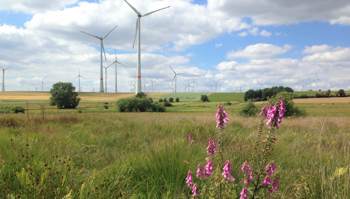
Inter-institutional single framework contract for the provision of support for the monitoring of LIFE projects (action grants and operating grants), communication about the LIFE programme and other related activities
- 2018 – 2023
- over € 10 million
- EU
LIFE is the main European Commission funding mechanism for improving the state of the environment in the European Union.
Particip GmbH was responsible for the management of the NEEMO EEIG. Particip provided the Administrative Team, the financial management, and one of the two Managing Directors of NEEMO EEIG, and was therefore responsible for ensuring an effective operation of business activities and the compliance with contractual requirements. The overall management tasks included budgeting, accounting and controlling, as well as guaranteeing high team performance and quality assurance.
The general objective of LIFE is to contribute to the implementation, updating and development of EU environmental and climate policy and legislation by co-financing projects with European added value. The general objectives of LIFE shall be pursued through two sub-programmes:
- Environment consisting of three strands; nature and biodiversity, environment and resource efficiency, governance and information
- Climate Action consisting of three strands; climate change mitigation, climate change adaptation, governance and information
The specific objectives of LIFE are:
- To contribute to the shift towards a resource-efficient, low-carbon and climate resilient economy, to the protection and improvement of the quality of the environment and to halting and reversing biodiversity loss, including the support of the Natura 2000 network and tackling the degradation of ecosystems;
- To improve the development, implementation and enforcement of Union environmental and climate change policy and legislation, and to act as a catalyst for, and promote, the integration and mainstreaming of environmental and climate objectives into other Union policies and public and private sector practice, including by increasing the public and private sector’s capacity;
- To support better environmental and climate governance at all levels, including better involvement of civil society, NGOs and local actors;
- To support the implementation of the 7th Environment Action Programme.
The NEEMO EEIG provided about 160 long-term experts specialised in monitoring and evaluation, in communication activities and in thematic fields related to EU environmental policy. The experts monitored more than 1000 projects that are financed via the LIFE instrument.

Communication and Visibility EU-Vanuatu Development Cooperation
- 2021 – 2023
- under € 500,000
- Vanuatu
The overall objective of this contract was to enhance the visibility of the EU – Vanuatu cooperation and promote greater awareness and understanding among key stakeholders in the public, private and civil society sectors on issues related to EU- Vanuatu development cooperation.
The specific objectives of the contract were:
- To better outreach citizens and key stakeholders both in the Pacific and Europe to show-case the tangible results of the EU – Vanuatu development cooperation;
- To strengthen understanding and engagement of the target audience in the various areas of development cooperation between the EU and Vanuatu.
Specific attention was paid to EU's efforts to promote development of value chains, climate change resilience, ocean governance, food security, and gender equality, inclusive growth and good governance.

Evaluation of Nepal WFP Country Strategic Plan 2019-2023
- 2022 – 2023
- under € 500,000
- Nepal
This independant evaluation of WFP Country Strategic Plan (CSP) in Nepal assessed the strategic positionning, added-value and results of WFP operations in the Country from 2018 to 2022.
The evaluation served the double purpose of accountability (performance and result assessment) and learning (why certain results occurred or not, lessons and evidence for decision-making). It is envisioned that the evaluation will inform the design of the new CSP for Nepal, which was scheduled for Executive Board consideration in November 2023.
CSP key sectors and activities included:
- Emergency preparedness and response, including cash-based transfers
- Nutrition and school feeding
- Social protection
- Livelihoods activities, including smallholder farmer support
- Resilience, disaster risk reduction and climate change
- Institutional capacity strengthening
Cross-cutting themes included: Gender equality and empowerment of women (GEEW), humanitarian principles and protection, accountability to affected populations (AAP), WFP partnership strategy
The evaluation employed a mixed-method approach that triangulates qualitative and quantitative data from a variety of sources. For this purpose, the evaluation team conducted interviews with different stakeholders including WFP staff at HQ, regional and country level, WFP cooperating partners, donors, UN agencies, government entities as well as focus group discussions with the beneficiaries.
Link to the publication: https://www.wfp.org/publications/evaluation-nepal-wfp-country-strategic-plan-2019-2023

Support the establishment of an Emissions Trading Scheme (ETS) in Ukraine: Capacity development of the Competent Authority
- 2020 – 2023
- under € 500,000
- Ukraine
The overarching goal of the project was to develop the institutional capacities for establishment of the ++Emission Trading System (ETS)++ in Ukraine on the basis of the EU experience in implementation of the Directive 2003/87/EC. The project focused its cooperation with MENR on the following output:
Institutional and ++capacity building++ of the Competent Authority and other stakeholders relevant for ETS based on the EU experience in implementing the Directive 2003/87/EC.
The consultancy ensured that the training materials for staff of the Competent Authority (CA) were available and used in trainings and that other capacity building measures were implemented to prepare staff of the CA to fulfil their tasks under ++Monitoring, Reporting and Verficiation (MRV)++ and ETS. In order to ensure a correct functioning of the MRV system, an extensive capacity building preceded the actual performance of the tasks by the CA. The capacity building assignment included the development of training materials on different levels of detail, the conduction of trainings, study tours, on-the-job trainings, etc.
This was accomplished by the following tasks:
Task 1: Development of ++capacity development program++ and training materials for the CA
Task 2: Implementation of the capacity development program
Support measures for implementation of Civil Society Facility programme 2021-2023 Turkey - assessment CfP
- 2023 – 2023
- under € 500,000
- Türkiye
The global objective of this assignment was to contribute to fostering a functioning, pluralistic, participatory and representative democracy and the consolidation of a resilient civil society by promoting a culture of fundamental rights and dialogue in Türkiye. As all EU funded actions, this has also contributed to promoting cross-cutting issues such as environment and climate change, rights based approach, gender equality rights of persons with disability and indigenous peoples.
The specific objective of this assignment was to assist the EU Delegation to Türkiye in assessing the concept notes (CN) submitted in the framework of the calls for proposals stemming from the following activities of the Civil Society Facility Programme 2021-2023 for Türkiye:
- Activity 5 - Support CSOs working on human and fundamental rights (EUR 5.5 million)
- Activity 15 - Civil Society Action towards European Green Deal (EUR 5 million)