
Our projects
Explore Particip’s project experience across countries, sectors and areas of expertise.
Our references provide an overview of completed and ongoing assignments, including their objectives, geographic scope, duration and contract value.
Showing 341–350 of 980 references

Third-party Monitoring & Evaluation of projects in Yemen in the areas of governance, human rights and civil society
- 2020 – 2024
- € 500,000 – 1 million
- Yemen
The overall objective was to contribute to poverty reduction and development in the Republic of Yemen through EU cooperation assistance as well as promoting EU cross-cutting objectives related to environment and climate change, rights based approach, persons with disability, indigenous peoples and gender equality. The specific objective was to conduct third-party monitoring and evaluation of EU projects in Yemen.
The outputs provided include:
- Requested output 1: A third-party monitoring report for each of the third-party monitoring assignments.
- Requested output 2: An evaluation report for each of the evaluation assignments.

Evaluation of Finland’s initiatives focused on enhanced domestic resources mobilization (DRM)
- 2022 – 2024
- under € 500,000
- Global
The main objective of the evaluation was to assess the results and effectiveness of Finland’s support to Domestic Resource Mobilisation (DRM) and provide recommendations for future actions, in view of the main developments that took place on the domestic and global front since 2016. It looked at the two Action Plans as guiding instruments, taking into account actions like coordination, financing and, policy dialogue and influencing. The mainstreaming of relevant cross-cutting objectives was also looked at.
Domestic resource mobilization (DRM) is the most important source for sustainable public financing of public services like education, health and security in partner countries. For this reason, DRM plays a major role in achieving the Sustainable Development Goals (SDGs) in the partner countries.
The evaluation was based on a theory of change. The main sources of data included relevant government policies, selected reports from implementing partners, and recent evaluations of DRM initiatives. Semi-structured interviews were held with relevant MFA departments, the Ministry of Finance, other Finnish actors, implementing partners, and selected international organisations and beneficiaries. A focus group with Finnish civil society was also organised. This strategic evaluation examined the overall DRM agenda and portfolio as well as consolidated achievements across broader results areas.

Information, Communication, and Visibility activities for the EU Delegation in Zambia
- 2019 – 2024
- under € 500,000
- Zambia
The objective was to enhance the visibility of the EU in Zambia and improve the awareness of the EU-Zambia partnership in all its dimensions (political, trade and economic, development and other major policy areas of common interest) with the Government of Zambia, NGOs, business community, academia, media, and the people of Zambia, through increased information, communication and visibility activities.
The specific objective of this contract was to support the EUD in the implementation of ICV activities and events, including the dissemination of informational and promotional material to enhance the visibility of the European Union and to increase awareness about the EU-Zambia partnership.
In order to attain the overall objective and purpose of the contract, we achieved the following results:
- Result 1: EUD disposes of a series of print, broadcast and digital media products to be shared with relevant stakeholders;
- Result 2: Enhanced knowledge of the target groups about the dimension and benefits of the EU partnership with Zambia;
- Result3: Developed capacity of staff involved in EU funded programmes/projects in terms of communication and visibility.

Election Expert Mission to Ecuador 2023
- 2023 – 2024
- under € 500,000
- Ecuador
The purpose of the Election Expert Mission (EEM) was to collect and analyse factual information, assess and report on the electoral process against international commitments, standards and good practice for democratic elections in line with the criteria contained in the Commission Communication on Electoral Assistance and Observation. The electoral experts also formulated recommendations to improve future electoral processes and assessed the state of implementation of recommendations made by previous electoral missions.

Good Financial Governance - Consulting service to support Internal Audit System
- 2021 – 2024
- € 1 – 2 million
- Tanzania
The Good Financial Governance II programme (GFG II, August 2020 – January 2024) built on the successful implementation of the GFG I programme (May 2016 – July 2020). The overall objective was to ensure the public finance system is strengthened in accordance with the principles of good financial governance, specifically transparency, efficiency and accountability.
The consortium implemented Field of Action 2 under the GFG II programme, which focused on strengthening the internal audit function across the Tanzanian public sector by enabling conditions for an effective internal audit in the public sector in Tanzania with the continued ambition that the internal audit reports of Internal Audit Units (IAUs) in Ministries, Departments, Agencies (MDAs) and Local Government Authorities (LGAs), may achieve international standards for Internal Audit. This was mainly done via support in two key areas, which were the provision of capacity building measures at organisational and individual level (on-the-job trainings, workshops and formal certification trainings) and the development / updating of audit guidance documents (Internal Audit, Risk Management, Quality Assurance and Improvement, Performance Audit, and Gender Audit)
Results achieved:
- 23 out of 30 internal audit units of ministries, departments, and agencies (MDAs) and local government authorities (LGAs) improved their internal audit reports’ conformance with international standards by one step (based on standards of the Institute of Internal Auditors, IIA)
- Conditions for an effective internal audit function improved in line with the MoFP's 'strategy for the further development of the internal audit system in the public sector of Tanzania'.
- 5 guidance documents were newly developed or revised to address recurrent issues of the Internal Audit strategy, of which 3 were adopted and 2 were in the approval process by the Ministry of Finance and Planning (MoFP) by the end of the contract.
- 3 measures for improved knowledge management were developed for the Internal Audit General Division (IAGD) and Internal Audit Units of partner LGAs/MDAs.
- 3 measures, agreed upon in a MoFP action plan to establish independent and effective audit committees in the Tanzanian public sector were developed.
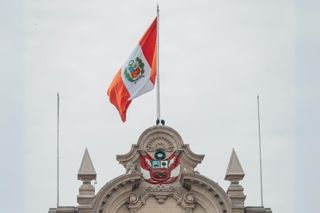
EFM PERU 2024
- 2024 – 2024
- under € 500,000
- Peru
The overall objective of this assignment was to contribute to improving the electoral and democratic framework of Peru during the inter-election period and raising awareness and understanding of the EU EOM recommendations and technical issues related to their implementation. In general, an EFM supports the consolidation of democracy, institution-building and democratic elections in Peru in the context of the implementation of the 2020 EU EOM recommendations.
The specific objectives of the Mission included:
- Assess the state of play of the implementation of the recommendations of the 2020 EU EOM to Peru.
- Assess any electoral reforms adopted since the last EOM or which are under consideration (e.g. draft legislation) or planned and the degree to which these reflect EOM recommendations and their alignment with international standards for democratic elections;
- Identify which EOM recommendations are most relevant to the prevailing country situation and the current phase of the electoral cycle;
- Generate additional impetus for – or contribute to ongoing debates on – electoral reform;
- Identify areas of agreement and disagreement on EU EOM recommendations among the stakeholders and any political, technical, financial obstacles to electoral reform;
- Propose actions to overcome obstacles to electoral reform, including measures to develop support for and national ownership of the recommendations;
- Assist the EU Delegation, EEAS and INTPA in their assessment on whether ongoing cooperation and conflict prevention projects are addressing the recommendations made by EU EOMs. Based on a brief overview of existing programmes, provide needed information to support identification of potential additional election/democracy support action that could contribute to strengthening the implementation of the recommendations and/or to the overall improvement of the electoral framework;
- Contribute to analysis by the EU Delegation, EEAS and INTPA with information to originate any other possible EU actions that could contribute to strengthening the implementation of the recommendations and/or to the overall improvement of the electoral framework;
- Prepare/update with EU Delegation a follow-up plan to EU EOM recommendations.
EFM Honduras 2023
- 2023 – 2024
- under € 500,000
- Honduras
Particip aimed to contribute to improving the electoral and democratic framework of Honduras during the inter-election period and raising awareness and understanding of the EU EOM recommendations and technical issues related to their implementation. In general, an EFM supports the consolidation of democracy, institution-building and democratic elections in Honduras in the context of the implementation of the 20231 EU recommendations.
Particip's specific objectives included:
- Assessing the state of play of the implementation of the recommendations of the 2021 EU EOM to Honduras;
- Assessing any electoral reforms adopted since the last EOM or which are under consideration (e.g. draft legislation) or planned and the degree to which these reflect EOM recommendations and their alignment with international standards for democratic elections;
- Identifying which EOM recommendations are most relevant to the prevailing country situation and the current phase of the electoral cycle;
- Generating additional impetus for – or contribute to ongoing debates on – electoral reform;
- Identifying areas of agreement and disagreement on EU EOM recommendations among the stakeholders and any political, technical, financial obstacles to electoral reform;
- Proposing actions to overcome obstacles to electoral reform, including measures to develop support for and national ownership of the recommendations;
- If helpful and requested, assisting the EU Delegation, EEAS and INTPA in their assessment on whether ongoing cooperation and conflict prevention projects are addressing the recommendations made by EU EOMs. Based on a brief overview of existing programmes, providing needed information to support identification of potential additional election/democracy support action that could contribute to strengthening the implementation of the recommendations and/or to the overall improvement of the electoral framework;
- Contributing to analysis by the EU Delegation, EEAS and INTPA with information to originate any other possible EU actions that could contribute to strengthening the implementation of the recommendations and/or to the overall improvement of the electoral framework;
- Preparing/updating with EU Delegation a follow-up plan to EU EOM recommendations.

Third-party Monitoring & Evaluation of resilience projects in Yemen in the areas of migration, TVET and financial inclusion
- 2020 – 2024
- € 500,000 – 1 million
- Yemen
The overall objective was to contribute to poverty reduction and development in the Republic of Yemen through EU cooperation assistance as well as promoting EU cross-cutting objectives related to environment and climate change, rights based approach, persons with disability, indigenous peoples and gender equality. The specific objective was to conduct third-party monitoring and evaluation of EU projects in Yemen.
Two main outputs delivered for this project:
- Requested output 1: A third-party monitoring report for each of the third-party monitoring assignments.
- Requested output 2: An evaluation report for each of the evaluation assignments.
Capacity development on monitoring and evaluation for enlargement and neighborhood regions (PROMEL)
- 2019 – 2024
- € 2 – 5 million
- ENI, IPA
The overall objective of the intervention is to support DG NEAR to strengthen the linkages between the planning/programming, monitoring and evaluation of EU support (policy dialogue and financial assistance) in the context of the neighbourhood and enlargement policies.
The three purposes of this contract are as follows:
- to provide methodological support to DG NEAR staff and implementing partners for the design of strategic documents (e.g. indicative strategy papers, single support frameworks, sector planning documents), and of programming documents e.g. action documents, annual action programmes) in particular the elaboration of context analysis, definition of problems, the elaboration of intervention logic diagrams, and the definition of relevant indicators;
- to provide methodological support to DG NEAR staff and implementing partners for the design of monitoring and evaluation systems/arrangements at sector/policy/action levels and the implementation of the monitoring activities and evaluations of EU support;
- to promote a monitoring, evaluation and learning culture within the DG and in the partner countries/beneficiaries.

Support to the identification and formulation of a complementary support (top up) to the MOUSSAWAT program
- 2022 – 2024
- under € 500,000
- Morocco
The general objective of this program (2018-2024) was to contribute to gender equality in Morocco through a human rights approach, with the specific objectives of:
- increasing women's empowerment and enjoyment of their rights;
- combating violence against women and promoting a culture of equality;
- ensuring gender mainstreaming in sectoral public policies and local governance.
The general objective of the project was to contribute to the implementation of the cooperation strategy of the European Union with the Kingdom of Morocco, in particular in terms of promotion of gender equality.
The specific objectives were to proceed to the identification and formulation of a top up to the MOUSSAWAT Support Program (phase II)
++SO1: Combat all forms of gender-based violence in the public and private spheres, online and in the workplace++
- Support policies and programs to prevent gender-based violence
- Ensure the protection and care of victims of gender-based violence
- Strengthen the effective criminalization of gender-based violence
++SO2: Contribute to the empowerment (emancipation) and realization of economic, social and labor rights of girls and women++
- Promote women's access to education at all levels, to vocational training and support their professional integration
- Improve women's access to decent work
- Facilitate women's access to productive resources, financing and entrepreneurship
++SO3: Contribute to women's equal rights and opportunities to participate in political processes and governance at all levels++
- Support the strengthening and/or modification of legislative and regulatory frameworks for gender equality in political participation
- Support women's and girls' participation at the national and local levels
- Promote women's leadership in public administration (national and territorial) and the private sector
++SO4: Promote a culture of equality++
- Fight against discrimination and gender stereotypes
- Support gender responsive budgeting at the institutional level