
Our projects
Explore Particip’s project experience across countries, sectors and areas of expertise.
Our references provide an overview of completed and ongoing assignments, including their objectives, geographic scope, duration and contract value.
Showing 331–340 of 980 references

CONSULTANCY FOR THE DEVELOPMENT OF GENDER SENSITIVE, SOCIAL COHESION STRATEGY
- 2022 – 2024
- under € 500,000
- SADC region
The overall objective of the project of which this contract will be a part of is as follows:
Under the overall authority of the Support to Peace and Security in the SADC Region (SPSS) Programme Coordinator and the Senior Officer of the SADC Politics and Diplomacy Sector, the individual consultant will undertake an assessment on the progress and challenges in building and consolidating gender sensitive social cohesion at regional and national levels.
Result 1: Assess SADC Member States’ resilience and social cohesion of local populations in conflict-affected communities and post-conflict situations at regional and national levels.
Result 2: Identify specific challenges and lessons–learned by SADC Member States regarding the promotion of resilience and social cohesion and make recommendations on addressing the challenges.
Result 3: Submit a report (both soft and hard copy) on Member States’ progress on the building and consolidation of social cohesion in conflict-affected communities, with guidelines, including the development of Regional Social Cohesion Strategy by SADC Member States.
The scope of the study is to:
Conduct an analysis of Resilience and Social Cohesion in Conflict–affected communities in the SADC region;
Provide effective and meaningful recommendations to SADC Member States regarding the building and consolidation of social cohesion;
Consult with SADC Member States and SADC Secretariat staff from relevant directorates and units to secure their inputs;
Present the draft and/or final report at technical meetings for validation.
The study will focus on all Member States. A specific focus will be adopted on 16 Member States that are affected by sexual and gender–based violence (SGBV) and conflict-affected communities who are not socially cohesive

Evaluation of Budget Support in Albania (2014-2020)
- 2022 – 2024
- under € 500,000
- Albania
This evaluation had two overarching objectives. Firstly, to provide the relevant external co-operation services of the European Union (EU) and the wider public with an overall independent assessment and evidence of the EU's past and current budget support operations in Albania. And secondly, to identify factors contributing to, or limiting, the success of budget support programmes and identify good practices and lessons learnt, in particular in view of the possible future preparation of budget support programmes in Albania. In addition, the specific objectives for this evaluation were:
- Assess the performance (relevance, efficiency, effectiveness, coherence, impact,
sustainability and EU value added) of EU budget support operations (policy dialogue and financial assistance);
- Provide recommendations for the next programming period.
The thematic scope of the evaluation covered: Reforms in public administration and public finance management, good governance, rule of law, inclusive economic growth, employment and social policies, and the transport sector. The evaluation assessed how and to what extent EU assistance delivered through budget support has contributed to the improvement of institutional capacities, strategies and budget spending thereby giving means to the Government of Albania to implement the reforms necessary to progress on the EU accession path. Moreover, it assessed the contribution of EU budget support and complementary assistance to capacity building, coordination and policy dialogue mechanisms and processes, monitoring of policies, sustainability of policies, and assessed the complementarity and synergies between other aid modalities and donors’ interventions with EU budget support operations.
It provided advice to EU external action actors, informed them about the result and impact of EU budget support, and contributed to improved programming, monitoring, reporting and implementation of EU interventions in Albania.

Final Evaluation of the African Union-European Union Digital for Development Hub Project (or AU-EU D4D Hub Project)
- 2023 – 2024
- under € 500,000
- Africa
This end term evaluation (ETE) of the AU-EU D4D Hub Project programme both summative and formative with a general purpose to identify all project outcomes and generate learning for the next phase of the European Union and African countries cooperation on digitalisation. The purpose of accountability shall be completed by the Project Management Unit as part of the envisaged Final Narrative Report, which is due in Q4 2024.
The review considered all pillars of the Project and its diversity in activities. Therefore, the scope is:
• Temporal: the ETE covers the whole the implementation period, hence from December 2020 to first Quarter of 2024, complementing the findings of the MTR (covering December 2020 to May 2022).
• Geographical: the ETE covers all countries and regions in Africa where activities took place.
• Thematic: the ETE covers all Project intervention areas and outcomes within intervention areas
• Institutional: the ETE involved stakeholders from INTPA, the Operational Steering Committee (OSC), the D4D Hub Secretariat and notably its Africa Branch, as well as EU Delegations and African strategic partners.
The key methods employed were:
• Outcome Harvesting (OH). This methodology emphasises the collection and interpretation of evidence regarding the achieved outcomes of a project or program. Unlike traditional evaluation methods that rely on predefined indicators and theories of change, OH is participatory and qualitative in nature. It involves identifying and documenting outcomes by engaging with stakeholders and collecting evidence retrospectively, allowing for a more comprehensive and contextually grounded understanding of project impact.
• The Most Significant Change (MSC) approach. This methodology involves generating and analysing personal accounts of change and deciding which of these accounts is the most significant – and why. MSC can be very helpful in explaining how change comes about (processes and causal mechanisms) and when (in what situations and contexts) along the change pathways (see Program Theory of Change).
• Capitalisation (C). This refers to the systematic and intentional process of capturing, organising, and sharing knowledge derived from experiences, activities, and outcomes of a project or program. It emphasises transforming both explicit and tacit knowledge into accessible and usable formats to promote organisational learning, inform decision-making, and contribute to broader knowledge-sharing within and beyond the project

Capacity Building for Peacebuilding Civil Society Organisations
- 2021 – 2024
- under € 500,000
- Israel, Palestine
The global objective is to enhance the capacities of civil society organisations involved in the EUPI to contribute to a sustainable resolution of the Israeli-Palestinian conflict.
The specific objectives are:
- Increasing the capacity of EUPI beneficiary organizations to monitor, evaluate, and adjust activities and outputs in service of results.
- Leveraging the EUPI, as a platform, to identify opportunities for coordination and cooperation between beneficiary organizations
- Increasing the capacity of EUPI beneficiaries to advocate to their respective publics and decision makers.

Evaluation of the EU Budget Support Operations in Jamaica (2008-2021)
- 2022 – 2024
- under € 500,000
- Jamaica
This evaluation had two overarching objectives. Firstly, to provide the relevant external co-operation services of the European Union (EU) and the wider public with an overall independent assessment of the EU's past and current budget support operations in Jamaica. And secondly, to identify key lessons and to produce recommendations in order to inform the responsible decision makers, notably in DG INTPA and the EEAS, on how to improve the current and future budget support operations of the EU.
In addition, the specific objectives for this evaluation were:
- Assess the performance (relevance, efficiency, effectiveness, coherence, impact,
sustainability and EU value added) of EU budget support operations (policy dialogue and financial assistance);
- Provide recommendations for the next programming period.
The thematic scope of the evaluation covered: Reforms in Public Finance Management (PFM), Macro-economic Stability, Debt Reduction and Growth, Security Sector Reform, Justice Sector Reform, Environment and Climate Change (Forest Management), Income and Non-income Poverty Reduction. The evaluation will assess how and to what extent gender, human security, in particular for youth and women, human rights, and environment, have been mainstreamed through Budget Support operations in Jamaica.
It provided advice to EU external action actors, informed them about the result and impact of EU budget support, and contributed to improved programming, monitoring, reporting and implementation of current EU interventions in Jamaica.
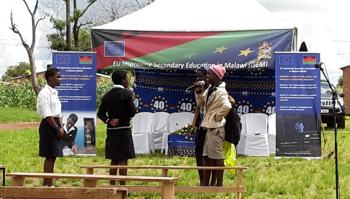
Provision of Technical Assistance to Improving Secondary Education in Malawi (ISEM)
- 2016 – 2024
- € 2 – 5 million
- Malawi
The overall objective is to contribute to the strengthening of Malawi's education sector and its capacity to satisfy the economy's need for educated youth through the expansion and improvement of equitable access to inclusive quality education.
The target groups are the students in the selected CDSSs (particularly girls and other vulnerable students), Science teachers and School Managers as primary beneficiaries. The programme will also target Education managers at various levels in the system, and some support will be provided to the MoEST education institutions such as the Malawi College for Distance Education (MCDE) and the Malawi Institute for Education (MIE).
Particip provides the Government of Malawi, and in particular the Ministry of Education, Science and Technology (MoEST), the Education Divisions, Districts and Secondary Schools, with technical assistance to deliver on its desired objectives of promoting equitable access to secondary education, improving the quality and relevance of secondary education, and strengthening of governance and management capacity of secondary education institutions.
Through technical and administrative support, Particip will deliver the following results:
Result 1: Improved teacher training and technical skills to deliver the new secondary school curriculum, thus contributing to quality education.
Result 2: Successful and effective implementation of programme activities in close collaboration with the MoEST. This will also include identification and provision of solutions to emerging challenges in the sector related to delivery of the programme.
Result 3: Strengthened capacity of education managers at various levels for effective governance and management of the secondary education sub-sector, also including the area of public finance management.

Technical assistance mission for the coordination of regional infrastructure projects and the preparation of project files for blending finance in Central Africa
- 2022 – 2024
- € 500,000 – 1 million
- Central African Republic
The general objective of this technical assistance was to support the CEMAC Commission in the coordination and monitoring of infrastructure projects financed through blending mechanisms under the Support Programme for the Governance of Regional and National Infrastructure in Central Africa (PAGIRN).
From a specific perspective, the technical assistance supported the specialized structures of the CEMAC and ECCAS Commissions in:
- The coordination and monitoring of infrastructure projects financed through blending mechanisms for the beneficiary states of PAGIRN in Central Africa;
- The search for financing for regional infrastructure projects using blending mechanisms and providing coaching on financial structuring for proposals deemed eligible by CEMAC/ECCAS Member States and Development Partners (including development financial institutions);
- Ensuring the ownership, by the specialized structures of the CEMAC and ECCAS Commissions, Member States, and the private sector, of the financing instrument through blending mechanisms.
The following results were to be achieved by the service provider:
- Financing proposals for priority infrastructure identified by Member States, with concrete interest from financial institutions, were prepared and negotiated;
- Staff from the two RECs were trained in the coordination and monitoring of infrastructure projects financed through blending mechanisms;
- Member States, as well as the private and financial sectors, were sensitized to the blending financing modality for infrastructure;
- The directory of regional infrastructure projects financed through blending mechanisms was consolidated to facilitate their monitoring;
- PAGIRN Steering Committee (COPIL) meetings were held (at least once a year);
- An operational coordination mechanism by the CEMAC Commission for regional infrastructure projects eligible for blending financing in Central Africa was established.

Election Expert Mission to Madagascar 2023
- 2023 – 2024
- under € 500,000
- Madagascar
The purpose of the Election Expert Mission (EEM) was to collect and analyse factual information, assess and report on the electoral process against international commitments, standards and good practice for democratic elections in line with the criteria contained in the Commission Communication on Electoral Assistance and Observation. The electoral experts also formulated recommendations to improve future electoral processes and assessed the state of implementation of recommendations made by previous electoral missions.

External Review and Evaluation Services of forest programmes in Tanzania
- 2020 – 2024
- € 500,000 – 1 million
- Tanzania
The main purpose of this project was to conduct reviews and evaluations alongside the implementation of three different Forestry Programmes in Tanzania. These are:
- Participatory Plantation Forestry Programme phase 2 (PFP2),
- Forestry and Value Chain Development Programme (FORVAC) and
- Tree Outgrowers Support Programme (TOSP).
The Finnish support to PFP2, FORVAC and TOSP aimed at increasing rural income, social and environmental benefits in Tanzania thereby reducing poverty and inequality. This is achieved through developing sustainable plantation forestry, sustainable management and utilization of natural forests, and value addition including employment creation in the entire forest production value chain. The interventions support sustainable land-use planning, plantation, community-based forest management, facilitation of local organisations, including Tree Growers Associations (TGAs), and capacity building of tree growers, small and medium sized enterprises (SMEs), service providers and other stakeholders involved in the forest value chain.
The reviews and mid-term evaluations were conducted for accountability and learning purposes as well as for supporting strategic and adaptive management of MFA Finland funds.
The services were carried out in 2020–2023. They included the following:
- Annual reviews of the three programmes
- Mid-term evaluation of FORVAC and PFP2
- Socio Economic Assessment
- Final synthesis report
The evaluation team implemented an annual field mission in the beginning of the calendar year and the analysis fed into the preparation of the programme annual plans. The synthesis report summarised the analysis, recommendations and lessons learned throughout the assignment.

Study on Economic Impact of EU Sanctions
- 2022 – 2024
- under € 500,000
- EU
The global objective of this study is to develop a methodology for assessing the economic impact of EU sanctions and to apply that methodology to a number of selected cases to demonstrate the feasibility of the proposed framework.
The specific objectives of the proposed study are to
- provide a review and critical evaluation of the existing research related to the topic of the study;
- develop a detailed methodology for analysing the economic impact of EU sanctions, including a description of the concrete steps, options and approaches, that can be replicated and adapted to different types of sanctions and sanctions combinations; and
- test this methodology on a number of selected case studies to demonstrate its usefulness and highlight the related conditions, limitations and issues identified or foreseen.
The ‘economic impact of EU sanctions’ is understood as meaning the impact of EU sanctions on: (1) the economic development of third countries with listed persons and entities directly affected by EU sanctions; (2) the wider economic sectors of which those listed persons and entities by EU sanctions are part of in those third countries; (3) the listed persons and entities themselves; (4) trade patterns between the EU and third countries directly concerned; and (5) EU companies operating in or with third countries directly affected by EU sanctions.