
Our projects
Explore Particip’s project experience across countries, sectors and areas of expertise.
Our references provide an overview of completed and ongoing assignments, including their objectives, geographic scope, duration and contract value.
Showing 321–330 of 980 references

FPI Project implementation and monitoring support - PIMS
- 2022 – 2024
- under € 500,000
- Global
++Global objective:++
=The overall objective of the assignment is to further strengthen the capacity of the staff of the EC (including FPI, line DGs, EEAS and EUDs) and the Implementing Partners involved in the design, monitoring and implementation of FPI-funded actions in line with results-based management principles.
++Specific objective(s)++
++The specific objectives are to:++
- Increase the capacity of EC and Implementing Partners' staff to design, implement and monitor EU-funded actions managed by FPI;
- Improve the quality of interventions and the achievement and reporting of their respective results.
The consultant is requested to perform the following services:
- ++Task 1.++ Training for FPI Operational Managers, implementing partners and line DGs on the LogFrame Matrices (LFM), indicators, monitoring and reporting.
- ++Task 2++ Coaching for FPI Operational Managers and Implementing Partners.
- ++Task 3++ Ad-hoc guidance and technical assistance to FPI Operational Managers and implementing Partners.
- ++Task 4++ Support to the continued enhancement of the monitoring system and results reporting to FPI.4
++Deliverables++
- 3-monthly reports summarising feedback received and issues identified as well as proposed recommendations for improvement, and where relevant, support to implement the solutions retained;
- Any necessary guidance document.
++Required outputs++
- The number of staff from FPI and implementing partners with programming, monitoring and evaluation expertise is increased;
- The quality of the design of programming/action documents is improved;
- The quality of action/intervention level and FPI-level reporting on results is improved.

Evaluation of the Syrian Arab Republic WFP Interim Country Strategic Plan (2022-2023)
- 2022 – 2024
- under € 500,000
- Syria
The evaluation of the WFP Interim Country Strategy Plan (ICSP) in Syria assessed the strategic positioning, added-value and results of WFP operations in the country from 2018 to 2023.
The evaluation served the double purpose of accountability (performance and result assessment) and learning (why certain results occurred or not, lessons and evidence for decision-making). It is envisioned to enable the Syria WFP Country Office (CO) to use the evidence on past and current performance for the design of the new Syria CSP. The early findings of the CSPE also fed into the development of the extension of the ICSP until end of 2024.
ICSP key sectors and activities included:
- Emergency preparedness and response, including cash-based transfers
- Nutrition and school feeding
- Social protection
- Livelihoods activities
- Institutional capacity strengthening
Cross-cutting themes included: Gender Equality and Women's Empowerment (GEWE) and Accountability to Affected Populations (AAP), centrality of protection, humanitarian principles and access, inclusion of people with disabilities (PWD), social cohesion, and capacity strengthening.
The evaluation was theory-based and relied on a mixed-method approach that triangulates qualitative and quantitative data from a variety of sources. For this purpose, the evaluation team conducted interviews with different stakeholders including WFP staff at HQ, regional and country level, WFP cooperating partners, donors, UN agencies, government entities as well as focus group discussions with the beneficiaries.

End Term Evaluation of the Project "Skilled Young Palestine - Improving Resilience and Job Creation for Youth"
- 2024 – 2024
- under € 500,000
- Palestine
End-Term Evaluation of the Enabel-funded 'Skilled Young Palestine - Improving Resilience and Employment Opportunities for Youth' (SYP) project which aimed to strengthen the resilience of Palestinian youth in vulnerable areas by improving their employability and entrepreneurship skills (2019-2024, EUR 7 million).
The evaluation guided future strategic and operational decisions with evidence-based recommendations. Its findings, conclusions and recommendations were drawn from a comprehensive desk analysis and from key informant interviews and focus group discussions with implementing partners and beneficiaries across the West Bank and East Jerusalem.

Building Resilience to Climate Change in Papua New Guinea: Project Implementation Support Consultants
- 2018 – 2024
- € 2 – 5 million
- Papua New Guinea
The Government of Papua New Guinea has obtained a Grant from the Asian Development Bank to implement the proposed ++“Building Resilience to Climate Change” (BRCC - the project)++. The project will provide ++technical assistance++ in order to implement PNG’s ++Strategic Program for Climate Resilience++ (SPCR) 1 aimed at achieving transformational change in addressing the ++current and future threats from climate change++ and ++related hazards++. This will be achieved by ++mainstreaming climate resilience++ into development planning and addressing country priorities that focus on ++vulnerable communities++ of Bougainville, East New Britain, Manus, Milne Bay and Morobe provinces comprising 21 priority ++vulnerable islands/atolls++ identified through a participatory process across four sectors including (i) infrastructure, (ii) ++natural resources++, (iii) health, and (iv) agriculture, against potential impacts from ++climate change and variability++.
The project impact is: ++increased resilience to the impacts of climate change and climate variability.++ The outcome is: ++improved capacities of vulnerable islands/atoll communities++, government agencies, and civil society to plan and ++respond to the impacts of climate change++. The direct beneficiaries include approximately 13,000 inhabitants of the 21 vulnerable islands. The nationwide benefits include ++increased capacity to manage climate change risks++ through ++establishment of early warning systems++, access to finance by communities, and development of national databases and knowledge management systems.
The purpose of this assignment is to support the Project Management Unit (PMU) in
- Project implementation and administration
- Developing the necessary ++capacity development including training and transfer of skills++ to PMU personnel to improve their project management and implementation skills, and
- ++Strengthening CCDA’s overall capacity++ for future management and implementation of similar projects.

Appraisal of the “Forestry, Land Use and Value Chains Development in Tanzania” (FORLAND) programme
- 2024 – 2024
- under € 500,000
- Tanzania
The objective of the appraisal was to assess the feasibility of the new draft programme, called “Forestry, Land Use and Value Chains Development in Tanzania” (FORLAND). It offered a thorough assessment of the draft project document's potential to serve as a practical and achievable guide for programme implementation. This assessment encompassed an examination of the overall feasibility, feasibility of management, implementation and financial arrangements, sector-specific factors, and the sustainability of the program. Furthermore, the appraisal determined whether the project adequately catered to the needs of its main beneficiaries and stakeholders. It also entailed identifying any potential challenges and proposing viable solutions or alternative methods to address them.
In addition, the appraisal reviewed the result orientation of the programme and likely effectiveness in Tanzania, as well as the integration of human rights based approach and cross-cutting objectives into the programme plan.

Final Evaluation of the Global Climate Change Alliance - Haiti (AP3C)
- 2022 – 2024
- under € 500,000
- Haiti
In particular, this evaluation served to:
- determine the extent to which the AP3C programme (programme to support the integration of climate change into Haiti's development) has achieved its intended results, in particular by contributing to the implementation of the national strategies of the governments concerned in the NCCP (National Climate Change Policy) and NDC (Nationally Determined Contribution), by proposing opportunities for improving the implementation of national procedures and policies;
- pay attention to other aid modalities of the EU and other international partners (trust funds/pooled funds, projects), in order to assess the complementarity and synergy (or divergence) of these modalities with the AP3C programme;
- assess the ownership of the project results by the Haitian authorities;
- assess the effects of the AP3C programme on the monitoring and evaluation systems in the sectors supported by the programme;
- assess the way in which the gender dimension has been integrated and operationalised in the project and its results;
- take stock of what has been achieved in order to draw lessons and recommendations, and to be able to inform stakeholders on:
- the conditions under which the AP3C programme has had an effect (or not), and the possible intensity and nature (positive or negative) of this effect in Haiti in the environmental sector and more specifically in the fight against climate change;
- the design and implementation of future budget support operations in Haiti in the environmental sector and more specifically in the fight against climate change;
- improvements that the EU (or other international partners) should make to maximise the impact of AP3C measures in Haiti in the environmental sector and in particular in the fight against climate change;
- any limitations arising from public policies, institutional structures and administrative arrangements in Haiti that may hinder/have hindered the effectiveness of budget support on expenditure, or on the targeted public policies and reforms;
- and the extent to which the AP3C programme has mainstreamed gender in the implementation of the programme and what recommendations would be made to other similar programmes to mainstream gender.
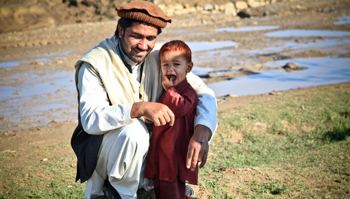
Third-Party Monitoring of ICRC Hospital support program
- 2021 – 2024
- € 2 – 5 million
- Afghanistan
ICRC’s Hospital Support Program architecture deliberately included strong coordination with MoPH, including by setting up joint mechanisms on drug procurement and salary harmonization. With limited HR resources on the ground, the ICRC tabbed into the Government accountability mechanisms that were impossible to duplicate through parallel system in the short term and deprived the ICRC of an exit strategy and Afghanistan of a sustainable health sector.
- Carried out process monitoring of agreed activities of the project partners including indicators progress validated by field monitoring visits and cross checking through analytical reviews of deployed resources with proper record maintenance. The data collection and monitoring were under 4 modules: Hospital functionality verification, human resources, finance and patient satisfaction.
- Performed monthly evaluations to assess the project performance towards its defined milestones with feedback and validation from project beneficiaries and other stakeholders as per agreed work plan.
The objectives and monitoring needs of the ICRC were as follows:
- To create an independent Third-Party Monitoring platform for project progress and reviews.
- Monitor partner organisations’ performance through standardised monitoring tools and provide input for timely and accurate payments.
- Conduct a financial monitoring where hospitals are monitered by a checlist by budget line (stationary, HMIS forms, consumables, etc).This allowed to cross check money spent for different budget lines reported by each health facility against available receipts.
- Identify any shortcomings in the project delivery as per project framework.
- Support ICRC in achieving and enhancing effectiveness of the project through process monitoring and periodic reviews.
- Develop new monitoring tools / mechanism with mutual understanding to improve project monitoring and evaluations.
- Monitoring compliance with specified standards for input and key performance indicators to ensure program quality.
- Sample based quality assurance of project supplies and beneficiaries through survey.
- Interviews and surveys of intermediaries on sample basis with suitable intervals
- Beneficiary surveys for monthly reviews/evaluations;
- Review of financial and procurement records on monthly basis;
- Analytical reviews of data generated from various sources on monthly basis.
Main staff provided:
- Senior consultant Hospital Functionality Verification 264 wds
- Senior consultant Data management 264wds
- Senior consultant Drug Quality Assessment 264 wds
- Senior consultant Logistic and Administration Management 264wds
- Senior supervisor minilab testing 276wds
- Project Director 130wds
- Senior consultant Field work management 264wds
- Technical Coordinator 240wds

Support with gender mainstreaming in the European Union's cooperation programmes in Tunisia - Phase II
- 2021 – 2024
- under € 500,000
- Africa (Northern)
The overall objective of this contract is to improve gender mainstreaming, including gender equality and women's empowerment, in the European Union's cooperation programs in Tunisia.
The specific objectives of this contract are:
1. To contribute to the taking into account of the objectives and indicators of the GAP 3 in the annual and multi-annual programming of the EUD in Tunisia to go towards the achievement of the target of 85% of the projects and programs with G Marker G1 or G2.
2. Contribute to the coordination, monitoring and reporting on FPIC implementation and support the integration of gender into other strategic documents of the EUD and the MS (such as the civil society support roadmap).
3. Support the institutional communication activities of the DUE Tunisia on the gender theme.
4. Deliver ad hoc training and coaching sessions to the staff of the EUD and possibly the MS.

CSO-EIDHR Support Measures
- 2022 – 2024
- under € 500,000
- Rwanda
The purpose of this contract was to support the work of the Delegation of the European Union to Rwanda in enhancing the capacity of CSOs working in the country to act as actors of development through the organisation of trainings, workshops and specific events designed to build their capacity. In order to achieve this objective, the following services were provided:
- enhancing CSOs’ capacity through the organisation of capacity building workshops and creation of networking opportunities for CSOs, with a focus on enhancing their understanding of project design and EU procedures (especially for human rights projects); peer learning among CSOs; and exchange on key topics (NGO Law, the media and legal environment, UPR, Tax, etc.);
- increasing awareness of the EU and EU development cooperation programmes in Rwanda and their impact
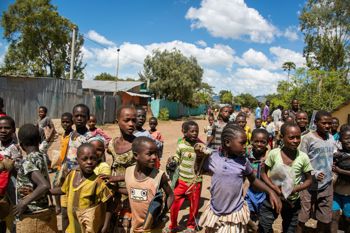
Project appraisal: Strengthening inclusive education system in support of Ethiopia's general education sectoral programme
- 2023 – 2024
- under € 500,000
- Ethiopia
The purpose of the appraisal was to assess the feasibility of the Programme as defined in the draft Programme Document (PD), and to make sure that the PD is an adequate basis for tendering the consultant company for implementation.
The Programme that was appraised will focus on capacity development for inclusive education. It builds on previous experience gained from Finland’s Technical Assistance support to GEQIP-II and GEQIP-E, namely developing inclusive education resource centres (IERC), supporting a development of Model IERCs for developing locally relevant inclusive practice. The support enhances teacher education by focusing on developing teacher competences for inclusion through pre-service teacher education and practice, as well as strengthening pedagogical and practical knowledge and skills on inclusive education.
The key issues of the appraisal were the Programme’s relevance to beneficiaries and main stakeholders in the country; feasibility of the proposed implementation strategy, organisational structures, TA support, work plans, resource allocations and budget; sustainability as well as the result orientation and likely effectiveness in Ethiopian context. The appraisal also assessed the integration of human rights based approach and MFA cross-cutting objectives into the programme plan.