
Our projects
Explore Particip’s project experience across countries, sectors and areas of expertise.
Our references provide an overview of completed and ongoing assignments, including their objectives, geographic scope, duration and contract value.
Showing 311–320 of 980 references

Technical Assistance for engaging assessors for Call for Proposals under Civil Society Facility Programme 2021-23
- 2022 – 2024
- under € 500,000
- North Macedonia
The objective of the assignment was assisting the European Delegation to the Republic of Macedonia in selecting the best-quality proposals (concept notes and full application) to be received in the frame of calls for proposals under the IPA Civil Society Programme 2021-2023.
The specific objective of the calls for proposals was providing a support to civil society and media organisations to contribute to the EU related sector reforms in a number of pre-defined sectors/thematic priorities based on all-inclusive consultations with civil society and other national and international stakeholders in the country.
Areas covered included:
- Rule of Law and Anti-Corruption;
- Gender Equality and Anti-discrimination;
- Youth, Protection of Rights and Disability inclusion;
- Socioeconomic development and social economy;
- Green Agenda, Energy Efficiency and Climate Change;
- Freedom of speech and media integrity;
- Digital technologies;
- European Accession - Civil Society Platforms and Networking for EU Dialogue;
Final Evaluation of PI/2017/383-969 – Cooperation on Competition in Asia
- 2023 – 2024
- under € 500,000
- Asia
The main objectives of this evaluation are to provide the relevant services of the European Union, the interested stakeholders and the wider public with:
- an overall independent assessment of the past performance of the “Cooperation on Competition in Asia”, paying particular attention to its results measured against its expected objectives; and the reasons underpinning such results;
- key lessons learned, conclusions and related recommendations in order to improve future Actions.
In particular, this evaluation will serve as a stocktaking exercise for a flagship project, on a very important
policy area of the EU, to understand the performance of the Action, its enabling factors and those hampering a proper delivery of results as to inform the planning of the future EU interventions and Actions in the same sector, which may be taken over from the Service for Foreign Policy Instruments (FPI) by other EU services, such as Directorate-General for International Partnerships (DG INTPA). Thus, a comprehensive evaluation, reflection, and recommendation also considering different mandates will be of significant value.
The main users of this evaluation will be FPI, DG COMP, and to some extent DG INTPA, EEAS including relevant EU Delegations, to inform the design of future activities, as well as to take note of working dynamics and partnership with counterparts in project countries. The evaluation will assess the Action using the five standard DAC evaluation criteria, namely: relevance, effectiveness, efficiency, sustainability and early signs of impact. In addition, the evaluation will assess two EU specific evaluation criteria:
- the EU added value (the extent to which the Action brings additional benefits to what would have resulted from Member States' interventions only);
- the coherence of the Action itself, with the EU strategy in ASEAN and the Indo-Pacific and other key programming documents, and with other EU policies and Member State Actions.
The evaluation team shall furthermore consider whether gender, environment and climate change were mainstreamed; the relevant SDGs and their interlinkages were identified; the principle of Leave No-One Behind and the rights-based approach methodology was followed in the identification/formulation documents and the extent to which they have been reflected in the implementation of the Action, its governance and monitoring.

Evaluations of two AFD policy-based loans (Energy and health/social welfare) for the Government of Georgia and AFD
- 2023 – 2024
- under € 500,000
- Georgia
Two evaluations for the Government of Georgia and AFD:
- Mid-term evaluation of an AFD policy-based loan in the energy sector in Georgia.
The evaluation focussed on the formulation of the policy-based loan and its effects on policy formulation and implementation.
The purpose of the evaluation was to assess to what extent the inputs provided by AFD group and Government of Georgia under the terms of the policy-based loan (funds, policy dialogue, and technical assistance) have impacted policy formulation and/or implementation regarding health and social welfare, and the supported public institutions. The evaluation covered the period from 2017-2022. The period covered was not limited to the disbursement period; it includes the period over which policy dialogue was conducted and technical assistance was implemented.
- Joint ex-post evaluation of an AFD policy-based loan in the health and social welfare sectors in Georgia.
AFD and Government of Georgia jointly carried out this ex-post evaluation. This evaluation assessed whether some areas of policy supported through the policy-based loan (PBL) resulted in the expected outcomes and linked the changes to the PBL.
The purpose of the evaluation was to assess to what extent the inputs provided by AFD and Government nof Georgia under the terms of the policy-based loan (funds, policy dialogue, technical cooperation) have impacted policy formulation and/or implementation regarding the energy sector. The evaluation thus examined AFD’s financial contribution as well as all technical cooperation activities. The type, scope, and methods of the dialogue regarding relevant policies also fell within the scope of the support provided and required special attention during the evaluation process. The evaluation covered the period from 2018-on going. The period covered was not limited to the disbursement period; it included the period over which policy dialogue was conducted and technical cooperation was implemented.

Thematic evaluation of the EU support to Confidence Building Measures
- 2023 – 2024
- under € 500,000
- Moldova
The main objectives of this evaluation were to provide the relevant services of the European Union, the interested stakeholders with:
- an overall independent assessment of the performance of the interventions ENPI/2013/024-401 Confidence Building Measures (Moldova AAP 2013), ENI/2018/041-309 EU Support to Confidence Building Measures V (2019-2022), ENI/2020/042-967 Scale up EU Support to Confidence Building Measures V (2019-2022), paying particular attention to the levels of achievement of results measured against its expected objectives;
- key lessons learned, conclusions and related recommendations in order to improve current and future interventions in the same domain.
In particular, this evaluation served the purpose to assess the impact of the last 10 years of EU support to Confidence Building Measures, from 2013 to 2023. As per EU Logical Framework approach, aligned with the OECD-DAC definition, the impact was “the overall objective of the Action entailing positive and negative, primary and secondary long-term effects produced by a development intervention, directly or indirectly, intended or unintended.” The impact was the long-term expected effect of the action fulfilling the overall objective to which the action contributes at country, regional or sector level, in the political, social, economic and environmental global context which will stem from interventions of all relevant actors and stakeholders.
The evaluation reported comprehensively and transparently on EU support to Confidence Building Measures in the Republic of Moldova.
It drew lessons that can be replicated in other EU interventions to support Confidence Building Measures in Moldova, and potentially in other countries in the Eastern Partnership Region. It informed decision-making on the appropriateness and thematic priorities of future phases of the same (or similar) intervention in the Republic of Moldova.

Provision of expertise and tools to support Recovery and Peace Building Assessments and Post-Disaster Needs Assessments
- 2017 – 2024
- € 2 – 5 million
- Global
The Particip-led “Post Crisis Assessment and Recovery Planning: Support Office of the EU“ provided systematic support to all stages of disaster- and conflict-related needs assessment missions.
As part of the 2008 Joint Declaration on Post-Crisis Assessments and Recovery Planning, the World Bank (WB), United Nations (UN), and European Union (EU) have committed to providing joint support for assessing, planning, and mobilising efforts toward recovery, reconstruction, and development in countries affected by crises. This tripartite agreement was executed via the mechanism of joint Recovery and Peacebuilding Assessments (RPBA), Post-Disaster Needs Assessments (PDNA), and Pandemic Recovery Needs Assessments (PRNA).
The activities of the advisory team included:
- Provision of support to EU Delegations around the world and EU Services in Brussels in the planning, undertaking and reporting of post crisis assessments: RPBA: support to peacebuilding through short- and longterm support to specific EUDs. Trainings and and workshops for local authorities, ministries and EU staff. PDNA: post-disaster assessments and support to recovery including trainings and workshops. CRNA/PRNA: COVID/pandemic recovery needs assessments and support to recovery including trainings and workshops.
- Support to third countries to build their capacity to carry out RPBAs, PDNAs, and PRNA this includes institutional strengthening and inter-institutional coordination such as the HLAG (High-level-Advisory-Group) composed of WB, UN and EU;
- Facilitate coordination of EU and tripartite input to the implementation of the joint declaration (conceptual work and RPBA/PDNA/PCNA missions);
- Elaborate a preliminary early and longer-term framework (which identifies key recovery sectors, peacebuilding priorities, etc.)– in close cooperation with the EU Delegation and other relevant EU services, including identification/definition of sectors requiring additional EU support (whether provided through short-term assistance under the present project or not), essential cross-cutting issues, a tentative recovery calendar, recovery information management systems, the existing capacity in-country and institutional and ++legal arrangements for national Authorities++, recovery support anticipated, etc.;
- Deployment of experts in RPBA/PDNA/PRNA missions, and
- Revise and/or updating the methodologies as necessary.
++Recovery and Peacebuilding Assessments (RPBAs)++ offered countries a standardised and internationally recognised approach to identify the underlying causes and impacts of conflict and crisis. The RPBA had three primary purposes:
- to help governments identify, prioritise and sequence recovery and peacebuilding activities,
- to provide an inclusive process to support political dialogue and participation of stakeholders,
- to coordinate international support through a joint assessment and a joint recovery and peacebuilding plan as well as a monitoring system.
++Post-Disaster Needs Assessment (PDNA)++ assisted governments with assessing the full extent of a disaster’s impact on the affected country and, on the basis of these findings, producing an actionable and sustainable Recovery Strategy for mobilizing financial and technical resources. The internationally recognised PDNA methodology is a key commitment mentioned in the the Joint Declaration on Post-Crisis Assessments and Recovery Planning. In May 2020, in order to respond to the COVID-19 pandemic, the PDNA methodology was adapted to elaborate a COVID-19 Recovery Needs Assessment (CRNA) methodology.
++Recovery and Peace Building Assessment (RPBA)++
Myanmar (Jan 2018); Burkina Faso (Jun 2019-June 2021); Mozambique (RPBA Nov 2020-Nov 2021); Azerbaijan (Joint Recovery Needs Assessment - falls outside the RPBA framework, Scoping Mission March 2022); Libya (Stocktaking 2018-2019, RPBA 2022)
++Post-Disaster Needs Assessment (PDNA) & Disaster Risk Framework (DRF)++
Myanmar (Jan 2018); Syria (Feb 2018); Ivory Coast (July-Sept 2018); Tunisia (Oct 2018); Bangladesh (2018); Georgia (2018); Tonga (2018); Fiji (2018); Mozambique (Apr–Aug 2019);
Central African Republic/CAR (July 2019); Somalia (Drought Impact Needs Assessment/DINA, July - Aug 2018); Albania (Dec 2019-Feb 2020); Lebanon (Rapid Damage Needs Assessment/RDNA, Aug 2020); Lebanon (DRF, Sep 2020-2021); Saint Vincent and the Grenadines (June–Aug) 2021); El Salvador (June-Dec 2021); Haiti (Sep-Oct 2021); Haiti (DRF, Nov-Dec 2021); Pakistan (Sep-Nov 2022); Pakistan (DRF, Nov-Dec 2022); Belize (Jan-Feb 2023); Turkey (Feb-Mar 2023); Ukraine Khakhova dam (June 2023), Myanmar (CMRNA , Sep 2023); Libya ( RDNA, Sep 2023); Afghanistan ( Oct 2023); Afghanistan ( AFPR-PDNA like Refugee support assessment, Nov 2023)
++COVID-19 Recovery Needs Assessment (CRNA)++
Ecuador (July 2020-Apr 2021); El Salvador (July-Sept 2020); Dominican Republic (Dec 2020-Feb 2021); Zambia (Feb-Aug 2021); Eswatini (Dec 2020-Nov 2021)
++Trainings: Recovery and Peace Building Assessment (RPBA)++
Bangkok, Thailand (Dec 2017); Lebanon (Apr 2018)
++Trainings: Post-Disaster Needs Assessment (PDNA) & Disaster Risk Framework (DRF)++
Dominican Republic (Nov 2017); Fiji (Mar-Apr 2018); Vanuatu (Apr 2018); Somalia (May 2018); Myanmar (Aug 2018); Mauritius (Oct 2018); Djibouti & Ethiopia (Feb 2019); Chad (Apr 2019); CAR & Congo (July 2019); India (Aug 2019); Kenya (Sept 2019); Caribbean (Nov 2019); St. Lucia (Nov 2019); Balkans (Sarajevo, Bosnia & Herzegovina, Feb 2020); Mexico (Feb 2020); Liberia (Mar 2020); Senegal (May 2021); Europe and the Commonwealth of Independent States/ECIS region (Jun 2021); University of West Indies (Training of Trainers/ToT, Dec 2021); Panama (PDNA/DRF, Latin American countries/LAC, Mar 2022); Belgrade (ECIS DPPI-SEE, Jun 2022); Regional ECIS (DRF, June 2022); Columbia (PDNA/DRF, July 2022); Costa Rica (PDNA/DRF, July 2022); Barbados (Caribbean countries, Mar 2023); Training Togo Regional ECOWAS (PDNA/DRF, May 2023); Antigua and Barbuda, Saint Johns (DRF, Sept 2023)
++Trainings: COVID-19 Recovery Needs Assessment (CRNA) & Pandemic Recovery Needs Assessment (PRNA)++
Sahel Region Academia (Nov 2020); Sahel Region government staff and regional organisations (Dec 2020); Ghana (Mar 2021); India (PRNA, Mar 2023)
++Other Events++
Fragility Forum (RPBA, Mar 2018); Paris Peace Forum (RPBA/PDNA 2019); Paris Peace Forum (RPBA/PDNA, Nov 2020); EU Information Session (Oct 2021); EU Information Session: Asia/Pacific Hub (April 2022); World Reconstruction Conference 5 and Global Platform for Disaster Risk Reduction/GPDRR (Apr 2022); International Society for Photogrammetry and Remote Sensing (ISPRS) Congress (satellite, June 2022); EU Information Session: Caribbean Region (online, June 2023); Slow Onset Event Damage and Loss Workshop ( Nov 2023); Cyclone Mitch 25 year Commemoration ( Oct 2023)

Central project evaluation of the projects “Regional support for COMIFAC” (PN 2017.2210.7) and “Support of the transboundary national park BSB Yamoussa” (PN 2017.2211.5)
- 2022 – 2024
- under € 500,000
- Africa (Central)
The main task is to process the knowledge generated by the evaluations to precisely facilitate decision-making. The goals are:
- To improve evidence of effectiveness
The new evaluation system is intended to put GIZ in a better
position to observe long-term results and the sustainability and mainstreaming of approaches in the partner
structures. In addition, evaluations should be conducted at a time when statements about results and
sustainability are possible and appropriate, and should be designed using the appropriate methodologies
and procedures to ensure this is the case.
- To enhance credibility of evaluation findings
Increase the credibility of our evaluation findings by strengthening the independence of project evaluations. Project evaluations will accordingly be managed by and under the responsibility of the Evaluation Unit, which reports directly to the Management Board and is separated from operational business. Implementation is carried out by specialist external evaluators. Evaluations will be conducted in line with recognised national and international standards and quality criteria, and the evaluation reports will be published.
- To gear project evaluations to new challenges
Central evaluations should take into account the growing complexity of projects and implementation contexts, the increased requirements for accountability and the evaluation challenges arising from the 2030 Agenda and the Joint Procedural Reform.
Policy Dialogue Support Facility India
- 2020 – 2024
- € 1 – 2 million
- India
The overall objective of this project was to contribute to strengthening and expanding the EU-India strategic relationship in line with the EU Global Strategy, the EU Strategy on India, the EU-India Agenda for Action/Roadmap 2025, bilateral Summit conclusions, and other relevant agreements and documents.
The specific objectives of this project were:
- to support the ongoing and planned sectoral EU-India policy dialogues and partnerships on topics of mutual interest; and
- to contribute to policy convergence of EU-India policy approaches in the global arena.
The following results to be achieved were:
++R1:++ A solid basis established operationalisation of the EU-India strategic partnership (inter alia through support provided to the sectoral policy dialogues in the form of studies, technical assistance, etc.).
++R2:++ People-to-people contacts were strengthened.
++R3:++ Dissemination of relevant and updated information to target audiences on the EU-India strategic partnership, and more specifically on topics of key relevance to the sectoral policy dialogues was improved.
++R4:++ Additional thematic areas for EU-India sectoral cooperation were identified, explored, and developed.
++R5:++ Mutual understanding, trust, and knowledge of policy objectives and strategic interests between the EU and India were further strengthened.
Final Evaluation of the Support to the Protection of the Most Vulnerable Migrants in West Africa (PROMISA)
- 2023 – 2024
- under € 500,000
- Africa (Western)
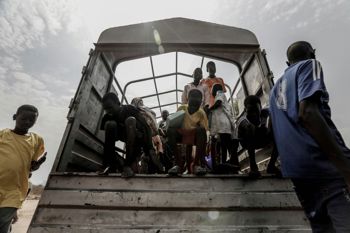
The main objectives of this evaluation were to provide the relevant EU services and interested stakeholders with overall independent analysis of the performance of the intervention T05-EUTF-SAH-REG-13, with particular attention to its different levels of results compared to its intended objectives, and the reasons for these results. The resulting good practices, key lessons, conclusions and recommendations for improving future interventions.
In particular, this evaluation :
- Served to inform the reflection for the next strategic programming in the sector and draw replicable lessons to other EU interventions in the protection of migrants sector and in the Sahel/Lake Chad region and countries targeted by the intervention and this evaluation.
- Reported on the use of EU resources in relation to the results of the intervention T05-EUTF-SAH-REG-13.
- Identified the relevance, added value and success of implementing a regional approach to the protection aspects of migrants, as well as the limitations of this approach.
- Learnt about the added value and limitations of cooperation with national/local authorities in partner countries (with a view to their ownership and capacity-building in this sector), as well as with the United Nations and in particular IOM.
- Learnt about the added value and limitations of the instruments, approaches and modalities used in the implementation of the intervention and its three respective contracts; and also about how to make future interventions more sustainable in the sector and maximise the positive effects of interventions in the sector of action.
Technical assistance to the Tunisian Ministry in charge of the Civil Service in the management of change and the deployment of HRM modernization systems
- 2021 – 2024
- € 500,000 – 1 million
- Tunisia
a) Train and disseminate concepts, methods and tools related to forward-looking employment, staffing and skills management (French: GPEEC) through awareness-raising and introductory activities through four main topics: the fundamentals of GPEEC, the GPEEC "toolbox", management of jobs and skills, and the transition from GPEEC to proactive human resources management (French: GPRH);
b) Make the "interministerial mobility exchange" system known and accepted in order to ensure it is deployed throughout the State administration and becomes the only tool for ministerial and interministerial mobility, particularly between local and national levels; to bring real transparency to the mobility process, to attract the right profiles to vacant positions in the ministries and to enhance the skills of existing public servants who wish to advance in their professional careers;
c) Support the Tunisian administration in matching the tasks of its various ministerial departments, and support these entities in updating the regulatory texts and the actual organization of structures through functional reviews.

Evaluation of the Technical Assistance to Civil Society Organisations in the Western Balkans and Turkey – TACSO programme
- 2023 – 2024
- under € 500,000
- Western Balkans
The main objectives of this evaluation were to provide the relevant services of the European Union and the interested stakeholders with:
- an overall independent assessment of the performance of the TACSO programme (in its three phases), paying particular attention to its different levels of results measured against its expected objectives; and the reasons underpinning such results
- key lessons learned, conclusions and related recommendations in order to improve current and future interventions.
In particular, this evaluation served:
- To inform the implementation of the programme fourth phase, which will be implemented through an extension of the current contract (TACSO 3);
- To inform the decision-making on the appropriateness of a potential fifth phase of the programme, to be launched with the next programming exercise (CSF 2024-2026);
- To inform the potential programme exit strategy to ensure the sustainability of its results.
The main users of this evaluation are the relevant EU services (DG NEAR HQ and EU Delegations of the targeted region) and the implementing partners.