
Our projects
Explore Particip’s project experience across countries, sectors and areas of expertise.
Our references provide an overview of completed and ongoing assignments, including their objectives, geographic scope, duration and contract value.
Showing 161–170 of 980 references
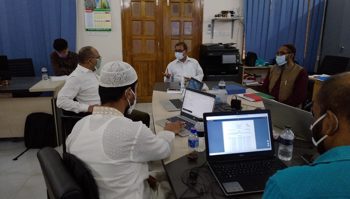
Technical Assistance to support the Human Capital Development Programme for Bangladesh 2021
- 2019 – 2026
- € 5 – 10 million
- Bangladesh
In accordance with the EU's Multi-Annual Indicative Programme for Bangladesh 2014-2020, that aims to contribute to a better educated, trained and qualified population through improved education and skills development, the Human Capital Development Programme for Bangladesh 2021 (HCDP 21) was designed. The programme added value by extending the current budget support modality in primary education and the area of TVET under one single Sector Reform Performance Contract (SRPC) with an overall allocation of EUR 200 million, EUR 150 designated for primary education and EUR 50 million for TVET.
Under this contract, complementary services to the SRPC were provided to enhance policy dialogue for long-term strategic system strengthening of the sector, to support performance assessment and to strengthen the institutional capacity of the relevant government bodies to bring about policy reforms, while ensuring full ownership and sustainability of these reforms. The contract also encouraged the GoB to continue to strengthen governance and PFM systems at sector level, in complementarity with other EU-funded programmes in PFM in the country.
The purpose of this contract was:
- To support the EUD and relevant Government bodies in the more effective delivery of quality
primary education services, through targeted technical assistance that will provide institutional
strengthening support, capacity building, policy advice and evidence-based research, as required;
- To support the EUD and relevant Government bodies in the more effective delivery of TVET services, through targeted technical assistance that will provide institutional strengthening support, capacity building, policy advice and evidence-based research, as required. Support to the establishment of a SWAP in TVET, through enhanced results-based planning, management and assessment and improved coordination across the TVET sector;
- To support the relevant Government bodies responsible for Finance and Procurement in improving the Public Financial Management (PFM) system in ensuring adequate and equitable financing and management of funds.
- To support the EUD in (i) facilitating more effective policy dialogue with MoE and MoPME by providing technical inputs for strategic thinking on further policy analysis, development and implementation within the education sector in Bangladesh; (ii) periodic monitoring and assessment of overall sector performance and progress in the implementation of the NEP, Sector Budget Support (SBS) eligibility criteria and assessment of progress towards the HCDP21 disbursement linked indicators (DLI) targets of the TVET sector and, if required, for the primary education sector.
The key results to be achieved by the contractor were as follows:
- Develop the necessary enabling environment to reinforce institutional capacities to undertake effective, timely and evidence-based primary education system reforms: through well-targeted institutional capacity development interventions, support the relevant government departments (DPE, BNFE, NCTB…) in achieving the results under each of the targeted PEDP-4 components (Quality, Access and participation and Governance, financing and management);
- Develop the necessary enabling environment for a strengthened public TVET system: Effective and timely support to TMED's TVET services, particularly in respect to strengthening the institutional capacity of key central departments (including TMED, DTE and BTEB) and facilitate better coordination with other stakeholders. A particular focus will be put on successfully supporting the relevant government departments in attaining the DLI targets;
- EU policy dialogue, conditionalities and capacity building activities are more strategic, better coordinated and more conducive for implementation of government strategies/policies that contribute to progress in the education sector as a whole, in line with the SDG agenda.

Support EUDEL Honduras in organising structured dialogues with civil society on the EU Global Gateway Investment Agenda
- 2026 – 2026
- under € 500,000
- Honduras
The overall objective of this contract was to support the work of the EU Delegation to Honduras in enhancing the capacity of CSOs working in the country to act as actors of development and in their role as watchdogs and contributors to the GGIA’s 360-degree approach.
The specific objectives were:
- To ensure that structured dialogue on GGIA implementation in Honduras includes the participation of civil society and leaves no one behind.
- To ensure that the 2026 EU call for proposals for civil society is aligned with the current needs of Honduran CSOs and complements ongoing EU and EU Member State actions, contributing to the GGIA’s 360-degree approach.

Appraisal for bilateral project: Community-Led Accelerated Water, Sanitation and Hygiene in Ethiopia, Phase V (COWASH V) in Ethiopia
- 2025 – 2026
- under € 500,000
- Ethiopia
The objective of COWASH is to increase and sustain coverage of safe water supply, sanitation and hygiene in rural areas of the selected woredas.
COWASH V builds on the results and lessons learned from the previous phases and aims to ensure the sustainability of the achievements to date. The preparation process was a joint effort by the Government of Ethiopia (GoE) and the Government of Finland. Finland’s development cooperation, guided by Finland’s development and government policy, is based on partners’ development policies and priorities and is aligned with partners’ planning and management systems.
The planning process, of which the appraisal and the finalisation of the Project Document were the final steps, also established the foundation for operationalising and achieving poverty reduction, sustainable development and the cross-cutting objectives of Finland’s development policy.
This appraisal provided an independent view of the feasibility and implementability of the planned project and supported the finalisation of the Project Document. The issues under review offered a comprehensive assessment of whether the PD provided feasible and practical guidance for implementation. Potential problem areas were identified and workable solutions were proposed.
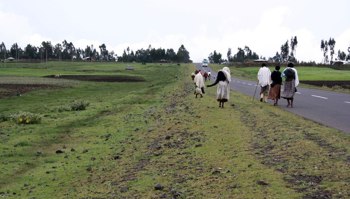
Ethiopia Country Programme Monitoring and Communication Consultancy
- 2020 – 2026
- € 1 – 2 million
- Ethiopia
The overall objective of the Country Programme 2018-22 was to contribute to inclusive sustainable growth and improved governance in Ethiopia by supporting the vision of building a Climate-Resilient Green Economy and reaching lower middle-income status by 2025. These were high political priorities of the Government of Ethiopia that Denmark wished to support. The four thematic programmes through which this was to be done are the following: Agricultural Commercialisation Clusters; Coherence between humanitarian responses and development cooperation; Climate-Resilient Forest Livelihoods; and Governance and Human Rights.
At present, there are six Development Engagements (DEs), as follows:
- Agricultural Commercialisation Clusters Programme, a partnership with the governmental Agricultural Transformation Agency (ATA). Budget: DKK 350 million. Expiry: Mid-2023
- Productive Safety Net Programme, with the World Bank. Budget: DKK 300 million. Expiry: End 2022
- Sustainable Livelihoods and Food Security Programme, with the World Food Programme. Budget: DKK 100 million. Expiry: End 2022
- Climate-Resilient Forest Livelihoods Programme, with the Ministry of Finance. Budget: DKK 45 million. Expiry: Mid-2023
- Governance and Democratic Participation Programme, with UNDP. Budget: DKK 20 million. Expiry: End 2011
- Ensuring Gender-Responsive Democratisation and Preventing Violence against Women and Girls, with UN Women. Budget: DKK 20 million. Expiry: End 2021.
The objective of the monitoring and communication assignment was to support the Danish Embassy in Addis Ababa in
(a) establishing and facilitating a functioning monitoring and risk management system for the Country Programme and other development engagements that will help improve programme effectiveness, facilitate learning and ensure informed decisionmaking by the Embassy and its partners, and maximise transparency and accountability regarding the development of the programme;
(b) communicating to both the Ethiopian and Danish general public and certain specific target groups relevant achievements and results obtained by the Country Programme and other partnerships in the Embassy’s country portfolio.

Evaluation of the EU Development Cooperation with the Federal Republic of Nigeria
- 2024 – 2026
- under € 500,000
- Nigeria
With this Evaluation the EU intends to reflect on its cooperation approach with Nigeria in the
last ten years. This includes the thematic and geographical focus as well as the choice of
implementing partners, EU interests and the objectives of the cooperation with Nigeria, from
the point of view of both strategic partnerships and jointly developed policies, and the positioning
of the EU and Member States in the current political and socioeconomic context of Nigeria.
As per the Terms of Reference (ToR), the purpose of the evaluation is:
- To provide the EU Delegation in Nigeria, the relevant INTPA units and other concerned
services with ‘lessons learnt’ and with recommendations in order to inform more evidence-
based intervention identification, design and implementation in the future; and
- To identify ‘opportunities’ within the general shift towards ‘Global Gateway’ as a strategic
programming direction under the current MIP areas with potential for developing
strategic partnership for EU-Nigeria mutual interest, and good practices to develop orientations
and guidelines for the identification and implementation of current as well as
future cooperation programmes.
The Evaluation is commissioned for accountability purposes (the last country evaluation was
conducted in 2010), and at the same time has a strong learning and forward-looking element.
The Evaluation covers interventions falling under the EU’s Global Gateway (GG) policy and
priority sectors identified in the relevant INTPA programming documents: i) Sustainable Economic
Development covering digitalisation, climate-smart agriculture, energy efficiency (in the
11th EDF: Sustainable energy and access to electricity); (ii) Peace and Security including good
governance and migration (in the 11th EDF: Rule of Law, governance and democracy); (iii)
Human Development including health and education, and youth empowerment (in the 11th
EDF: Health, nutrition and resilience); gender equality and HRBA as crosscutting issues.

Building Resilience to Climate Change in Papua New Guinea: Project Implementation Support Consultants Provision of two Experts: Team Leader and M&E Specialist
- 2026 – 2026
- under € 500,000
- Papua New Guinea
The Government of Papua New Guinea has obtained a Grant from the Asian Development Bank to implement the proposed ++'Building Resilience to Climate Change in Papua New Guinea (BRCC) Project'++. The project will help implement PNG’s Strategic Program for Climate Resilience (SPCR) 1 aimed at achieving transformational change in addressing the ++current and future threats from climate change++ and ++related hazards++.
The purpose of this assignment is to support the Project Management Unit (PMU) in
- Project implementation and administration
- Developing the necessary ++capacity development++ including training and transfer of skills to PMU personnel to improve their project management and implementation skills, and
- Strengthening CCDA’s overall capacity for future management and implementation of similar projects.
Experts provided:
++1) Team Leader - Implementation Coordinator:++ The team leader provides support and assistance in leading and managing all project implementation activities under the BRCC Project. This includes support to planning, supervision, reporting, and ensuring that safeguards and monitoring standards are met. The scope covers:
- Supervision and coordination of PISC specialists.
- Oversight of physical and financial progress.
- Ensuring safeguards compliance (environmental and social).
- Facilitating communication with ADB and relevant national and provincial stakeholders.
- Preparing and submitting key project reports, including progress and completion reports as
specified in this ToR.
- Supporting field monitoring, mission preparations, and reviews.
- Ensuring performance tracking and results-based management of project components
++2) International M&E Specialist:++ The Specialist leads implementation of the Project Performance Monitoring System (PPMS), ensuring alignment with ADB’s requirements and PPCR frameworks. Tasks include ++developing the endline survey methodology++, ++designing data collection tools++, processing instruments, and ++evaluation templates++, and ++analyzing data to determine project outcomes++ and the likelihood of achieving the desired impact. The role also covers mentoring of the PMU’s M&E Officer, supporting quarterly and annual reporting, and integrating findings into the overall project management and learning processes.

Strengthening the technical, organisational and operational authorities in the fight against money laundering and the financing of terrorism
- 2024 – 2026
- under € 500,000
- Congo (Kinshasa)
The objective of the mission will be to strengthen the capacities of COGEBISCO and other actors involved in the asset recovery chain.
The general objectives of the project are:
- to strengthen the technical capacities and skills of staff by implementing continuous training programs for staff to improve their knowledge of recovery techniques and legislative developments;
- to improve of the organizational and legal framework;
- to implement of effective procedures by developing clear and appropriate procedures for asset recovery, incorporating modern tools and best practices;
- to strengthen inter-institutional cooperation by proposing measures to strengthen functional relationships between COGEBISCO and other key stakeholders, particularly authorities responsible for prosecuting cases related to fraud and criminal prosecution;
- to the use of new technologies by adopting advanced technological solutions for asset recovery and management.
'External Monitoring & Evaluation mechanism for the EU Regional Trust Fund in Response to the Syrian Crisis' – II phase
- 2020 – 2026
- € 2 – 5 million
- Iraq, Jordan, Lebanon, Türkiye
++Overall objective++
The Overall Objective of the project of which this contract was: to support the implementation of a comprehensive and effective Monitoring and Evaluation mechanism, established by the EU Trust Fund in Response to the Syrian Crisis.
++Purposes++
- 1. To provide evidence-based knowledge on progresses achieved by EUTF in Response to the Syrian Crisis financed projects, and to inform on their management, through regular and ad-hoc Results Oriented Monitoring (ROM).
- 2. To measure the effectiveness of EUTF actions, through centralized data collection and analysis, based on disaggregated quarterly results reporting.
- 3. To evaluate the sustainability, efficiency and effectiveness of EUTF-funded Programmes at thematic and geographic level and to assess potential prospects of impact, through portfolio evaluations.
The monitoring and evaluation technical services mobilised under the present multi-sector action aimed to continue assessing the extent to which the strategic objectives of the EUTF were achieved. The project built on the existing M&E system put in place by the EUTF in December 2016 and served to complement the regular M&E activities carried out by the EUTF operational team at headquarters as well as the internal monitoring conducted by EUTF local officers, at country level.
++Target group++
The target group of this contract were EUTF project partners, management, donors, other involved EU services, direct beneficiaries, as well as the general public.
++Results achieved++
- R1 An independent and real-time EUTF ROM mechanism put in place and continuously improved, in line with the increasing monitoring needs of the EUTF.
- R2 The EUTF system for regular results reporting remained in place and was continuously improved in line with the increasing reporting needs of the EUTF.
- R3 A portfolio evaluation framework remained in place and was continuously improved in line with the evolving needs of the EUTF.

Evaluation of the African Development Bank’s Regional Integration Strategy Paper for Southern Africa (2020-2026)
- 2025 – 2026
- under € 500,000
- Angola, Botswana, Eswatini, Lesotho, Madagascar, Malawi, Mauritius, Mozambique, Namibia, São Tomé & Príncipe, South Africa, Zambia, Zimbabwe
The evaluation focuses on the African Development Bank’s Regional Integration Strategy for Southern Africa (SA-RISP) 2020–2026, with coverage of the period 2020–2024. Its primary purpose is to assess how far the strategy has progressed towards achieving its intended results and to provide lessons and recommendations for the design of the next regional integration strategy. The evaluation will review both lending operations, sovereign and non-sovereign, and non-lending activities such as policy dialogue, analytical work, and technical assistance.
Key objectives include examining the relevance and design of the SA-RISP as a framework for advancing regional integration, its coherence with regional and continental frameworks such as SADC, COMESA, and the AfCFTA, and its effectiveness, efficiency, impact, and sustainability. The evaluation will also analyse factors that have enabled or constrained implementation, including operational, institutional, and policy challenges, as well as cross-cutting issues. Ultimately, it aims to draw out lessons learned and practical recommendations to strengthen AfDB’s future engagement in supporting regional integration in Southern Africa.
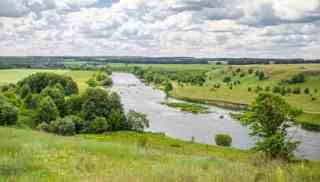
Consultancy services to support the protection of biodiversity and natural ecosystems (Emerald Network) in Ukraine
- 2024 – 2026
- under € 500,000
- Ukraine
The regional EU4Environment programme aims at helping the EU’s Eastern partner countries (EaP) preserve their natural capital and increase people's well-being. This is done by supporting environment-related action, unlocking opportunities for greener growth, and setting mechanisms to better manage environmental risks and impacts. The programme is implemented through (i) country-specific work tailored to the needs and commitments of each partner country and (ii) regional cooperation. Bilateral commitments, the commitments assumed within the Eastern Partnership framework, and alignment with the EU environmental legislation and, lately, the European Green Deal, are guiding programme implementation. In June 2022, Ukraine and Moldova have both been granted EU candidate status. Simultaneously, Georgia was given a European perspective. Policy and regulatory reforms are needed for these countries to become fully aligned with EU legislation and standards. Programme activities also consider and contribute to the implementation of the Sustainable Development Goals (SDGs) and the Paris Agreement, as well as relevant multilateral environmental agreements. It also contributes to implementing the ambitious global agreement reached at the 15th Conference of the Parties to the Convention on Biological Diversity in Montreal, in December 2022 (the Kunming-Montreal Agreement).
Result Area 4 is implemented by the World Bank and focuses on four main components: i) support to protect biodiversity and natural ecosystems (Emerald Network); ii) promoting sustainable natural resources management, economic development and participation at the local community level; iii) support to the promotion of legal trade and preventing illegal trade in wood products; and iv) enhancing strategic financing to the forest and natural resource management sectors. The objective of this assignment is to provide technical advisory support to the Government of Ukraine, to the Ministry of Environmental Protection and Natural Resources (MEPNR) in particular, to advance the establishment of the Emerald Network in the country.
The Consultant will provide technical assistance to relevant Ukrainian counterparts focused on developing methodological capacities for ensuring the long-term survival of species and habitats listed in the Bern Convention Resolutions. The focus of the work will be on developing methodological guidelines for assessing anthropogenic (including military) impacts and developing methodological guidelines for preparing the management plans for Emerald sites in line with European standards and best international practices.