
Our projects
Explore Particip’s project experience across countries, sectors and areas of expertise.
Our references provide an overview of completed and ongoing assignments, including their objectives, geographic scope, duration and contract value.
Showing 81–90 of 980 references

Technical Assistance to support the National Agricultural Export Development Board (NAEB) for the European Union Deforestation Regulation - EUDR Compliance in Rwanda’s Coffee Sector: Eastern Province Traceability and National Governance Platform.
- 2026 – 2027
- under € 500,000
- Rwanda
- SO1: Support the institutionalisation of a coordinated national governance mechanism for EUDR compliance in the coffee sector.
- SO2: To contribute to Rwanda’s georeferenced data of the coffee sector in the Eastern Province.
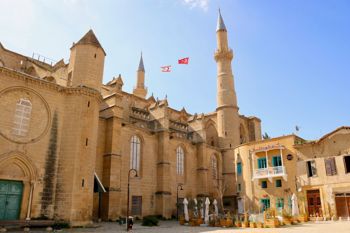
EU Legal and Linguistic Support Phase 2 for the Turkish Cypriot community
- 2024 – 2027
- € 500,000 – 1 million
- Cyprus
The overall objective of the project is to facilitate the delivery of EU funded support under the Aid programme in view of preparing the Turkish Cypriot community for the implementation of the acquis communautaire following a comprehensive settlement of the Cyprus problem.
++Specific Objective 1: To improve the interpretation and translation sectors in Cyprus in line with EU standards ++
1.1 To provide technical support and guidance in using CAT (Phrase) Software and for legal translation/interpretation
1.2 To provide technical assistance for setting up the internal structures of the Bicommunal Professional Association of Translators and Interpreters in Cyprus and implementing activities targeting professionals and youth.
++Specific Objective 2: To improve the “legislative processes” in the TCc in view of TAIEX supported legal texts and bring them in line with EU standards++
2.1 To provide support for the process and procedures of legal texts drafting.
2.2 To improve awareness and understanding of EU policies, especially for the most active sectors of TAIEX support as per EU acquis in the Turkish Cypriot community, in addition to improving the understanding on the general functioning and structures within the Commission.
2.3 To provide support for the use of the Database developed by the previous EU Legal and Linguistic Support Project for TAIEX supported legal texts.
++Specific Objective 3: To promote Cypriot linguistic heritage, network and solidarity amongst professionals and youth++
3.1 To conduct awareness raising and networking events, in view of promoting Cypriot linguistic heritage
3.2 To improve interest for interpretation and translation profession, as well as multilingualism and to improve the network and solidarity amongst the professional interpreters and translators
Framework Agreement for Decentralized Evaluations and Reviews (FADER) - Lot 1
- 2023 – 2027
- € 2 – 5 million
- Ethiopia, Indonesia, Kyrgyzstan, Nepal, Tajikistan, Tanzania, Ukraine, Uzbekistan, Viet Nam
The Framework Agreement for Decentralized Evaluations and Reviews (FADER) LOT 1 covers different types of appraisals, evaluations and reviews of development cooperation projects and programmes funded by the Ministry for Foreign Affairs of Finland (MFA).
The main users of the FADER are the regional departments of the MFA, which have regional and country specific development cooperation programmes/projects in Africa, the Middle East, Asia, Eastern Europe and Central Asia.
The following assignments are implemented by Particip GmbH:
- Project appraisal: Strengthening inclusive education system in support of Ethiopia's general education sectoral programme,
- Appraisal of the Local Adaptation to Climate Change- Project in Nepal,
- Project appraisal: Rural Economic Development (RED) Phase I in Ethiopia,
- Appraisal of the “Forestry, Land Use and Value Chains Development in Tanzania” (FORLAND) programme,
- Appraisal of Tax Sector Support to Tanzania (TAXTAN) programme.
Monitoring and Learning System for the North of Africa Window of the EUTF
- 2021 – 2027
- € 2 – 5 million
- Algeria, Egypt, Libya, Morocco, Tunisia
- ++Result 1++: MLS-NoA methodology – ensuring the overall MLS stability and continuing to address
NoA specific needs – is reviewed to provide for an increased level of harmonization with the MLS
in place in HoA and SLC with any necessary revisions agreed upon by all parties involved.
- ++Result 2++: NoA capacity-building strategy – providing tailored technical support to both the EUTF
teams and implementing partners – is developed and executed according to a need-based analysis.
- ++Result 3++: NoA monitoring reports – analysing progresses of the EUTF-NOA portfolio against both
EUTF strategic objectives and principles of interventions as well as EUTF-NoA intervention logic
– are regularly produced and publically disseminated.
- ++Result 4++: NoA learning strategy – based on cross-country analysis of MLS data, cross-regional
analysis of EUTF main thematic areas, qualitative case studies of best practices and contextual
analysis – is developed with its findings publically presented to the relevant audience agreed upon.
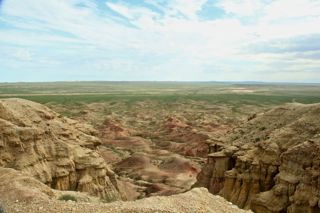
Strategic Evaluation of the EU partnership with Chad (2015-2025)
- 2025 – 2027
- Global price
- Chad
This strategic evaluation has two overarching objectives: (i) to provide EU services and stakeholders with an independent, comprehensive assessment of the performance of the EU-Chad partnership, with particular attention to results achieved against expected objectives and the underlying drivers of these results; and (ii) to identify key lessons, conclusions, and forward-looking recommendations to support decision-makers in improving current and future EU strategies, instruments, and interventions in Chad.
In particular, this evaluation aims to assess the relevance, coherence, effectiveness, efficiency and sustainability of the EU’s engagement in Chad over 2015–2025, and the EU’s added value in a highly fragile and geopolitically sensitive environment. It will analyse the EU’s combined use of instruments and modalities, and the extent to which EU actions contribute to expected strategic objectives at country level. Findings will be grounded in a theory‑based approach and strong triangulation, and will be translated into practical recommendations for the second half of the 2021–2027 period and beyond.

DUKINGIRE IBIDUKIKIJE - Conservation and enhancement of natural ecosystems and their biodiversity for green growth of rural communities in Burundi
- 2022 – 2027
- € 1 – 2 million
- Burundi
This project is part of the program “DUKINGIRE IBIDUKIKIJE – Conservation and enhancement of natural ecosystems and their biodiversity for green growth of rural communities in Burundi” which supports the preservation of natural ecosystems (including two protected areas) in the context of integrated landscape management and wants to help enhance their goods and services.
This program will contribute to sustainably improving the living conditions of the population of the areas of intervention, including displaced persons and returnees, as well as economic and social development from the country. Particular attention will be given to the communities living around the areas protected so that human pressure on them is reduced and that these communities contribute to their sustainable management.
The program is structured around three components:
- Component 1 – Governance and sustainable and inclusive / participatory management of areas protected areas, in particular the Kibira and Rusizi National Parks, are improved.
- Component 2 – Integrated land restoration and management practices and mechanisms and water resources are improved.
- Component 3 – Organization, monitoring and management of the water supply service for drinking water in rural areas are improved for the benefit and thanks to the participation of local populations, with a focus on groups in vulnerable situations.
This program will be implemented in the Kibira and Rusizi National Parks, their buffer zones, as well as in micro-basins which feed the Rusizi River and which will be identified in start of the program on the basis of environmental vulnerability criteria (the program will therefore cover the provinces of Cibitoke and Bubanza, and a municipality in the province of Bujumbura rural).
The specific objective of this contract is as follows:
Contribute to strengthening the efficiency and effectiveness of actions for the protection and enhancement of ecosystem services in the Rusizi river basin, implemented under the program “DUKINGIRE IBIDUKIKIJE - Conservation and enhancement of natural ecosystems and their biodiversity for green growth of rural communities in Burundi”.
This will involve the provision of a team of experts who will accompany and support the implementation and monitoring of actions, facilitate sector coordination and provide quality technical expertise to the entire program.

Technical assistance to the partnership between the EU and the DRC
- 2024 – 2027
- € 5 – 10 million
- Congo (Kinshasa)
The general objective (impact) of this action is to contribute to the sustainable economic and social
development of the Democratic Republic of Congo, through the EU's strategy in the DRC which aims at (i) the sustainable stabilisation of the country, (ii) the reduction of inequalities, and (iii) the contribution to the preservation of global public goods, as specified in the Multiannual Indicative Programme 2021-27. The specific objective of this contract is to strengthen the partnership between the EU and the DRC through actions designed to support and complement interventions carried out under the MIP or regional and global programmes in the DRC.
The products expected from this contract are as follows:
- ++Product 1:++ The preparation (identification and formulation) and implementation of the EU-DRC MIP is improved, as is its complementarity with regional or global programmes.
- ++Product 2:++ Political dialogue between the EU and the DRC is better informed and coordinated with the other partners, in particular the Member States, on joint programming and Team Europe Initiatives, at both strategic and operational levels.
- ++Product 3:++ Knowledge of issues relating to the EU's action and presence in the DRC, including outside the MIP's priority areas, is deepened.
- ++Product 4:++ The management and technical capacities of programme implementation partners are
strengthened.
- ++Product 5:++ The programme monitoring, evaluation and audit system has been strengthened.
- ++Product 6:++ Information on the investment and economic governance framework in the DRC and on specific investment themes or projects, particularly in relation to the Global Gateway strategy or the EIP, is improved.
- ++Product 7:++ Technical assistance missions in support of improving the business climate or implementing the Global Gateway strategy or the EIP in the DRC are encouraged.
- ++Product 8:++ The visibility of EU-DRC cooperation, the EU's overall objectives and its multilateral agenda
among the authorities and the general public is improved.
- ++Product 9:++ Cultural cooperation between the EU and the DRC is being stepped up.
- ++Product 10:++ Actors or entities that contribute to the achievement of the EU's strategic objectives in the DRC and worldwide, and do not fall within the scope of multi-annual programming, are supported on an ad hoc basis.
This contract covers all the products of the Technical Cooperation Facility. However, for related products 8 and 9, specific contracts outside the present contract will be concluded by the Delegation, which should be able to cover the vast majority of culture and communication and
visibility actions.
Framework Agreement for the Provision of Evaluation Consultancy Services - Lot 2: Expert services in evaluation in anglophone countries
- 2023 – 2027
- Global
This public contract consists of the provision of evaluation expertise services by means of a framework contract. The following type of assignments are included in this framework contract:
- Intervention-level evaluation;
- Country, regional or thematic portfolio evaluations;
- Cross-cutting evaluations in a specific theme, sector or approach implemented by Enabel.
Enabel’s portfolio covers institutional support programmes as well as implementation. Enabel operates at the national (country) level, regional (one or several districts) level as well as local (decentralised) level. The geographical scope of this public contract covers all countries where Enabel intervenes with its partners as well as Belgium.
To date, the following evaluations and assessments were implemented or are currently implemented:
- End-term review of the Sustainable Agriculture Kigoma Regional Project (SAKIRP)
- Mid-term Review of the European Union Trust Fund (EUTF) Support Programme for Refugee Settlements in Northern Uganda (SPRS-NU): Livelihood and Labor Market Relevant Skills Development for Refugees and Host Communities
- Joint End-Term-Review of i) UGA180371T - (EHA) Roll out the National Results Based Financing Policy in the Acholi Sub-Region and ii) UGA20003 - (LSF) Leveraging strategic health financing for Universal Health Coverage
- Mid Term Review of the project 'Renewable Energy for Rural Development – Phase 2' implemented by the Belgian Development Cooperation
- Mid-term Review of the Beekeeping Value Chain Support (BEVAC) Programme in Tanzania
- Final Evaluation of the African Union-European Union Digital for Development Hub Project (or AU-EU D4D Hub Project)
- Final Evaluation of the Cooperation programme 2019-2024 between Rwanda and Belgium.

Support to tri-partite cooperation on crises assessments (RPBA, PDNA, PRNA)
- 2024 – 2027
- € 2 – 5 million
- Global
The overall objective (Impact) to which this action contributes is to support third countries to build up their capacity to carry out RPBA/PDNA/PRNA, through provision of technical expertise. Various activities are foreseen, including deployment of experts in RPBA/PDNA/PRNA missions, and provision of training and capacity building activities to national authorities and regional/international organizations, tripartite training events, as well as information sessions for EU entities.
The specific objectives/outcomes of this contract are as follows:
- To assist, together with the UN and the WB, countries affected by crisis with identifying, developing, and implementing recovery activities through RPBA/PDNA/PRNA processes. This will often consist of supporting joint RPBA/PDNA/PRNA missions in-country/in region (in coordination with EU Heads of Delegations, the European Commission, and with the European External Action Service). While such support could cover any relevant technical field (longer-term and shorter-term expertise), it is foreseen that a particular emphasis is put on expertise in mission planning and development of final reports/recovery frameworks;
- To support further development of the joint RPBA/PDNA/PRNA methodologies, tools, training programmes;
- To promote the values and principles of the EU as a global actor;
- To ensure inclusiveness of RPBA/PDNA/PRNA processes.

Framework Contract Services for the Implementation of External Aid 2018 ('FWC SIEA 2018') Lot 1 – Sustainable management of natural resources and resilience
- 2018 – 2026
- over € 10 million
- Global
The objective of the FWC is to provide, via individual assignments defined and contracted through Specific Contracts, expertise which can be mobilised at short notice. The expertise may be required at any stage of the project cycle (except financial audits) and may cover the following sectors related to Sustainable management of natural resources and resilience:
Agriculture
1.1. Crop production, storage, conservation, transformation, and marketing /value chains
1.2. Vegetable, fruit and cash crop productio
n storage, conservation, transformation and marketing /value chains
1.3. Legal aspects
1.4. Alternative production systems (organic farming, agroforestry, permaculture)
2. Livestock
2.1. Livestock regeneration plans
2.2. Veterinary, animal health, animal identification, quarantine and border inspection posts
2.3. Trade of animal products
2.4. Production, conservation, storage and marketing of animal products
2.5. Legal aspects
3. Sustainable Forestry management and conservation
3.1. Forest inventories, forest management plans, forest establishment and plantation management
3.2. Agroforestry, community and environmental development programmes
3.3. Strategic and operational resource development and wood supply plans
3.4. Forestry industry development plans
4. Fishery and aquaculture
4.1. Marine and fresh water aquaculture
4.2. Assessment of fish stocks and sustainable fish resources exploitation
4.3. Legal aspects
5. Land management
5.1. Land use planning, Land information systems and applications,
5.2. Land reform policies
5.3. Land registration and cadastre, Land market development, estate economic assessments
6. Food security & nutrition
6.1. Assessment of national stocks
6.2. National statistics on food production
6.3. Forecasts of famine and early warning systems
6.4. Transitory and chronic food insecurity
6.5. Nutrition
7. Food safety
7.1. Tracing, food control
7.2. Legal aspects
8. Extension/Training/Human Resources Development/Institutional development
8.1. Extension services
8.2. Training of personnel
8.3. Sectoral organisations (farmers, producers, traders)
8.4. Institutional strengthening
9. Rural Infrastructure
9.1. Rural infrastructure planning, development and rehabilitation (Market infrastructure, irrigation and drainage, etc.)
10. Climate Change
10.1. Climate change: resilience, adaptation and mitigation
11. Sustainable Natural Resource management
11.1. Sustainable management and protection of natural resources, biodiversity and ecosystems (soil erosion/salinization/fertility, national parks ecosystem protection, fight against desertification, etc.)
11.2. Sustainable Water management including planning (e.g. integrated river basin management), supply, waste water treatment (incl. waste water reuse and energy generation)
11.3. Environmental protection
11.4. Pollution including chemicals, plastics, waste, air pollution and greenhouse gases emissions
11.5. Green economy (incl. sustainable and resource efficient production and consumption), Blue Economy
11.6. Ocean governance including marine/coastal zones protection
12. Disaster Risk Reduction
12.1. Disaster Risk Reduction, including climate and environmental risks/disaster management
The expertise may cover any geographic area in the world, either inside or outside the EU.
The Specific Terms of Reference (Specific ToR), which form part of each Specific Contract, shall describe the objectives and required outputs of each individual assignment.