
Our projects
Explore Particip’s project experience across countries, sectors and areas of expertise.
Our references provide an overview of completed and ongoing assignments, including their objectives, geographic scope, duration and contract value.
Showing 641–650 of 980 references
Undertaking a comprehensive review of existing institutional arrangements within SADC
- 2019 – 2020
- under € 500,000
- SADC region
The overall objective of this assignment was to undertake a comprehensive review of existing institutional arrangements within SADC with a view of recommending changes in order to rationalize, streamline decision-making and enhance effectiveness and efficiency.
More specifically, this assignment was expected to examine structures within SADC including the Secretariat and the Organ and characterise, among other issues, their functions, roles and responsibilities vis-à-vis the overall SADC vision and mandate; their capacities, operational and management processes in relation to their functions, roles and responsibilities; the linkages (or lack of); and the gaps within and among with the view to recommending a more efficient and effective institutional arrangement that will drive the SADC regional integration agenda.
The Specific Objective of this assignment was to undertake a comprehensive review of existing institutional arrangements within SADC by examining the key structures with the view to recommending more effective institutional arrangements to drive the SADC regional integration agenda.
The results of this assignment contributed to the development of the implementation plan and roadmap of the Conclusions of the Strategic Ministerial Retreat. It is essential to note that running parallel to this study were other studies including that on effective mechanisms to ensure compliance to SADC Protocols and other legal instruments and regional commitments at Member State level. That study and this assignment were closely linked and therefore concerted effort at collaboration between the two was most important.
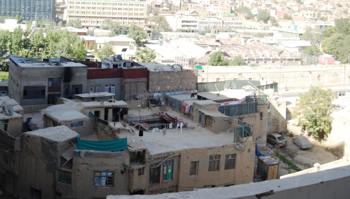
Provision of Structural and Functional Review of Independent Directorate of Local Governance – Afghanistan (IDLG)
- 2019 – 2020
- under € 500,000
- Afghanistan
The United National Development Programme (UNDP) and Independent Directorate for Local Governance (IDLG) have been working on subnational governance together since the inception of the IDLG through the Afghanistan Sub National Governance Programme (ASGP).
The Local Governance Project-Afghanistan (LoGo) is a project, build upon the lessons from the ASGP. The project build on a theory of change aimed at improving service delivery by enhancing the accountability and transparency of the local governments to the women and men of Afghanistan and building the capacity of the local governments to plan, budget and monitor service delivery effectively with the ultimate aim of increasing the legitimacy of the government and the trust between the state and society.
The following areas are the main focus in this project:
• The improvement of the capacity of PGOs and Provincial Councils for the accountability and transparent service delivery.
• The ability for municipalities to generate more revenues and deliver improved services in a transparent, accountable and participatory manner. As well as the improvement of the oversight of civil society and citizens capacity of local governance.
• The improvement of IDLG’s ability to develop and implement policies to strengthen the local government accountability and service delivery
This structural and functional review is intended to be based on the future functions foreseen for IDLG in the new roadmap and those foreseen in decrees issued by the President of Afghanistan. The organizational review proposes a strategic framework in line with the new framework for sub-national governance reform for the IDLG and provides proposals for organizational and business process changes.
The results achieved are the following:
• A functional review of IDLG at the central level and local levels to prepare IDLG for the implementation of reforms foreseen in the new sub-national governance reform framework.
• Identification of new organizational structure for each directorate/department of IDLG at central, province and district level, taking into account, the new strategy and assuming zero Taskheel growth, followed by recommendations aligned with IDLG’s updated mandate.
• Identification of roles, responsibilities and business processes required at the strategic management and Unit/directorate levels, for the effective management of the modernized management of local governance affairs.
• A gap analysis that determines the extent to which IDLG is providing policy guidance and performance management for PGOs, DGOs, Municipalities and PCs.
• Identification of a performance framework for the transformed IDLG that identifies key outputs and outcomes, performance indicators and targets in line with the updated mandate.
• Provide a clear identification of the role of IDLG in the structure of the government of Afghanistan in line with its mandate, authorities and responsibilities.
• Mechanisms for the on-going development and performance management improvement of IDLG.

Framework contract COM 2015 — evaluation, communication and event organisation
- 2016 – 2020
- over € 10 million
- Global
The objective of the FWC was to provide, via individual assignments defined and contracted through Specific Contracts, short-term expertise which can be mobilised at very short notice. The quality of this expertise was guaranteed by the retained Framework contractors disposing of the appropriate internal resources as well as of access to external technical skills.
Technical assistance may cover any geographic area, within or outside the European Union.
The Specific Terms of Reference, part of each Specific Contract, shall describe accurately and in details the objectives and required outputs of each individual assignment.

Completion and validation of the study on the establishment of a regional migration observatory in Central Africa
- 2019 – 2020
- under € 500,000
- Africa (Central)
The general objective of this mission was to contribute to the strengthening of regional integration in Central Africa through the improvement of capacities for the management of migration flows. In other words, it involved improving the research capacities of the ECCAS General Secretariat with a view to improving the situation of migrants and strengthening the migration/development relationship.
The specific objectives of this mission were to support the beneficiaries in :
- Carry out a study with a view to establishing a regional observatory on migration in Central Africa. It complements the actions planned under the RIP, 11th EDF, aimed at strengthening the economic and commercial integration of Central Africa.
- Facilitate the sharing of experience between experts from the ECCAS General Secretariat and the CEMAC Commission with other regions in Africa or in the world which have proven experience in setting up and managing a migration observatory.
- Organize validation meetings for the study on the establishment of a migration observatory in Central Africa.

Mid-Term Evaluation for the PACED (Rule of Law Project) in PALOP and Timor-Leste
- 2019 – 2020
- under € 500,000
- Angola, Cape Verde, Guinea-Bissau, Mozambique, São Tomé & Príncipe, Timor-leste
The main objectives of this evaluation were to provide the relevant services of the European Union and the interested stakeholders with:
- an overall independent assessment of the past performance of the PACED, paying particular attention to its intermediate results measured against its expected objectives; and the reasons underpinning such results;
- key lessons learned, conclusions and related recommendations in order to improve current and future Actions.
In particular, this evaluation served to understand the performance of the Action, its enabling factors and those hampering a proper delivery of results in order to adjust its design or implementing modalities;
The main users of this evaluation were the EU Delegations, the NAO's, the Central Banks, the ministries of Finance and Plan and other relevant national partner institutions in PALOP/TL involved in the implementation of the Action evaluated.
The specific Evaluation Questions as formulated below were indicative. Based on the latter and following initial consultations and document analysis, the evaluation team discussed them with the Evaluation Manager and proposed in their Inception Report a complete and finalised set of Evaluation Questions with indication of specific Judgement Criteria and Indicators, as well as the relevant data collection sources and tools.
Once agreed through the approval of the Inception Report, the Evaluation Questions became contractually binding.
Relevance:
To what extent activities implemented, and to be implemented, were consistent with beneficiaries' requirements and country needs?
Effectiveness:
To what extent services provided have contributed to expected results making the best use possible of the available resources?
Efficiency:
To what extent outputs were achieved with the lowest possible use of resources/inputs (funds, expertise, time, administrative costs, etc.)?
Perspectives of impact:
To what extent activities implemented had the positive and durable expected impact? Can it be said that the activities and outputs logically allowed the objectives to be achieved?
Coherence of the Action:
Were there contradictions between the different levels of objective? Were there duplications between the activities/components of the Programme? Were there duplications between the PACED and other interventions (from the beneficiary or other donors)? Were complementarities between PACED and other interventions duly capitalized?
The questions coverd the following fields of analysis:
- a) Evaluation of the preliminary results of the action, including factors that have determined its success and failures;
- b) Assessment of the impact of the activities implemented within the beneficiary institutions;
- c) Assessment of the adequacy of the measures adopted to counter delays and deadlocks in the implementation of the action;
- d) Evaluation of the index of appropriation of the results of the action by the beneficiaries;
- e) Evaluation of the beneficiaries’ perception of the results of the action (methodology applied, successes, failures, solutions encountered, etc.); Identification of measures taken by beneficiaries to ensure the sustainability of the results of the action.
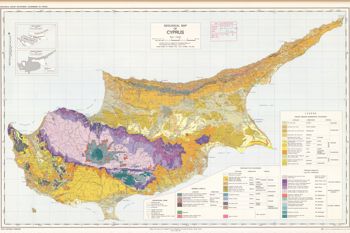
Technical Assistance for providing information services aiming to bring the Turkish Cypriot community closer to the European Union through running an EU InfoPoint in the northern part of Nicosia
- 2015 – 2020
- € 2 – 5 million
- Cyprus
The overall objective of the Aid Programme of which this EU Infopoint is part is to facilitate efforts regarding a settlement of the Cyprus problem leading to the reunification of the island and to bring the Turkish Cypriot community closer to the European Union.
The EU Infopoint’s purpose was to improve the public knowledge, awareness and understanding of the European Union, its values, policies and programmes within the Turkish Cypriot community. This was achieved through organizing EU-related activities, interactions with the community and through giving information, advice, assistance and answers to questions about the EU.
In particular, the aim of the EU Infopoint was to inform about the values of the EU and promotion of both active citizenship and the EU Aid Programme for the Turkish Cypriot community. Regular outreach activities, cultural events and visits to remote rural communities and specific target groups in the northern part of Cyprus were organized so to reach a high number a people: youth, university students, teachers, academia, opinion leaders, the Turkish Cypriot leadership, CSOs and NGOs, local media, potential beneficiaries of EU assistance.
The EU InfoPoint public space has had a total of 6,689 visitors, including walk-in visitors, participants at mobile public space events and participants at workshops or events, well exceeding the set target of 4,750.
The InfoPoint’s website was launched and updated regularly with the latest news, calendar of events, past event news, press releases, latest publications, monthly newsletters and EU-related articles.
A total of 233 events were organized during the project, including a large-scale Europe Day with over 2000 participants.
To address the information gaps, the EU Infopoint produced and translated a number of EU publications and distributed nearly 25,000 information products during the implementation period.
The media relations activity of the EU Infopoint was successful, receiving very positive and extensive coverage in the Turkish Cypriot media, including 2,276 media articles and 244 TV spots which have significantly contributed to the amount and quality of information about the EU and its image among the Turkish Cypriot community.

Evaluation of IcSP actions supporting the Colombian Peace Process
- 2018 – 2019
- under € 500,000
- Latin America & Caribbean
The main objectives of this evaluation were to provide the relevant services of the European Union and the interested stakeholders with:
- an overall independent assessment of the past performance of the four Financing Decisions including its Actions, paying particular attention to its ‘intermediate’ and ‘final’ results measured against its objectives
- key lessons and recommendations in order to improve current and future Actions
In particular, this evaluation served to assess the contribution made by the IcSP (financial and political) to the EU's support to the Colombian Peace Process from 2015 until now, i.e. nearly two years after the signature of the final Peace Agreement, being the first two years critical for advancing in the implementation and contributing to sealing and protecting the gains achieved. The period of the evaluation therefore covered both the negotiation phase at its most difficult point in time and included the delicate period from the signature of the first Peace Agreement (26th September 2016), until the signature and ratification of the Final Agreement (24th November 2016) and its implementation.
The evaluation served to measure the impact, timeliness and pertinence of the IcSP interventions and their results.
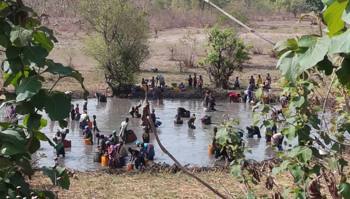
Evaluation of the Belgian Fund for Food Security (BFFS), the integration of food security and the multi-stakeholder approach within the Belgian Development Cooperation
- 2018 – 2019
- under € 500,000
- Benin, Burundi, Guinea (Conakry), Mali, Mozambique, Tanzania
The objectives of the evaluation were as follow:
- Draw lessons learned from the implementation of the FBSA from the results observed in terms of food security with its 4 dimensions (summative evaluation).
- Assess the measures that have been taken to integrate the issue of agriculture and food security into Belgian cooperation.
- Assess the specificity and added value of the multi-stakeholder and multi-dimensional approach for Belgian Cooperation in the field of food security.
Thus, the evaluation is i) backward-looking, covering the implementation of the BFFS in its multidimensional approach based on the four pillars of food security (FAO) and its multi-actor approach; and ii) forward-looking, covering the food security dimension of the new programming of Belgian cooperation. The temporal scope extends from 2010, the year of the creation of the BFFS, to the time of the evaluation in 2019.
The evaluation team conducted 6 country case studies, notably for the five countries in which a BFFS multi-actor programme was carried out from 2012 to 2019: Mali, Mozambique, Burundi, Tanzania and Benin. A sixth case study was carried out on Guinea where a new bilateral programme had been launched, in order to meet the second objective which is to assess the measures taken to integrate agriculture and food security into the new programming of Belgian cooperation. In addition, an online survey was conducted among all actors involved in the implementation of the BFFS programmes.
The published report can be found here: https://diplomatie.belgium.be/sites/default/files/downloads/fbsa-fr-digital-complet.pdf

Support to the operations of the BIOPAMA Observatories of Protected Areas by developing and tailoring tools and services to enhance conservation outcomes
- 2018 – 2019
- under € 500,000
- ACP region
The Global objective of the present assignment is to reinforce the decision-making process on conservation and natural resource management & governance.
The Specific objective is to support the development of the Regional Reference Information System (RRIS) within the BIOPAMA2 Observatories, in particular of Central and Western Africa, to build on the lessons learnt from BIOPAMA1 and on the key recommendations of the BIOPAMA Mid Term Review (MTR) on the development and use of support tools for PAs management.
The goal of the project entails improvement of the tools elaborated in BIOPAMA1 and development of ad hoc tools on planning, monitoring (self-) evaluation, scaling-up analysis on governance and management enhancement of the PAs.
Migration of LogFrame for Result Reporting MFF 2014-2020
- 2018 – 2019
- € 500,000 – 1 million
- EU
The overall objective of the project is to support DEVCO, DG NEAR and FPI in migrating data over period 2014-2020 (MIPs indicators, Logframes across projects and programmes).
The project team consists of non-key experts and serves the purposes of this contract set as follows:
Purpose:
- Establish the strategy of migration across DEVCO, DG NEAR and FPI;
- Establish lists of indicators and logframes to be migrated and collect logframes;
- Implement the migration.
A) as a first step into an excel template which corresponds to the needs of OPSYS and the business rules which have been developed
B) as a second step into OPSYS from excel and through a dedicated IT application which will be developed by DIGIT