
Our projects
Explore Particip’s project experience across countries, sectors and areas of expertise.
Our references provide an overview of completed and ongoing assignments, including their objectives, geographic scope, duration and contract value.
Showing 1–10 of 166 references

EU Outreach and Partnership Facility for the GCC
- 2026 – 2029
- € 2 – 5 million
- Bahrain, Belgium, Kuwait, Oman, Qatar, Saudi Arabia, United Arab Emirates
As outlined in the Joint Communication, the Gulf is a dynamic neighbouring region and an important gateway between Europe, Asia and Africa. Likewise, the EU has a lot to offer to the Gulf partners, as the world’s biggest single market, trading bloc and investor, a leader in research and innovation, and an important mediator and promoter of multilateralism, social transformation including human rights, gender equality, diversity and inclusion. As both regions navigate an increasingly complex global landscape, their partnership will continue to be shaped by economic interdependence, shared security interests, and a commitment to addressing global challenges collaboratively.
The overall objective to which the project contributes is to ++consolidate the EU-GCC partnership at regional and bilateral level, and improve the EU’s perception in the region.++
The specific objectives of the project are as follows:
1) Strengthen the position of the EU as a key partner in the GCC region in areas of mutual interest.
2) Support the implementation and monitoring of EU–GCC partnership and cooperation initiatives.
3) Foster deeper cooperation and mutual understanding between non-state actors, academia, civil-society and citizens in the EU and the GCC region.
The expected outputs of the project are as follows:
++1) Outcome 1:++ Strengthen the position of the EU as a key partner in the GCC region in areas of mutual interest. ++Output:++ Increased awareness, exchange and collaboration between EU and GCC stakeholders in key strategic areas with a focus on joint initiatives, dialogues, and collaborative projects.
++2) Outcome 2:++ Support the implementation and monitoring of EU-GCC partnership and cooperation initiatives. ++Output:++ Enhanced analysis, knowledge, and expertise to support the implementation and monitoring of joint policy priorities.
++3) Outcome 3:++ Foster deeper cooperation and mutual understanding between non-state actors, academia, civil-society and citizens in the EU and the GCC region. ++Output:++ Expanded opportunities for people-to-people diplomacy, including joint cultural initiatives, academic exchanges, and cross-regional collaborations on mutually strategic sectors.
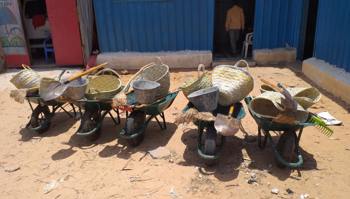
Third Party Monitoring Evaluation and Learning (TPME&L) and Accountability to Affected Populations (AAP) in Somalia
- 2021 – 2029
- € 5 – 10 million
- Somalia
The current objective is to improve the performance of the Swiss HoA programme. This will be achieved thanks to a broad shift in posture, achieved through four highlevel outcomes: (a) improved monitoring and risk governance of the SDC HoA programme, (b) increased benefits for the most vulnerable people, including in hard-to-reach areas, through better targeting by Swiss Agency for Development and Cooperation (SDC), (c) increased number and improved quality of partnerships with local actors, and (d) improved state-led national development plan (NDP) and sustainable development goals (SDG) monitoring.
To better achieve this it is believed that third-party monitoring should be applied at the project, portfolio and strategy level, backed up by community feedback mechanisms to increase accountability to beneficiaries, and implementing partner risk assessments, audit field spot checks, in addition to training and capacity building of implementing partners. SDC will therefore be able to improve the tracking of its projects in Somalia, and also to extend the mix of aid modalities, and allow the management of projects to focus to a greater extent on risk management and trust.
Through its Whole-of-Government Regional Cooperation Strategy Horn of Africa (CS Horn of Africa) 2018-2021, Switzerland has the following priorities:
- Geographic target: At risk regions of the Horn of Africa, mainly Somalia (including Somaliland), and the Arid and Semi-Arid Lands (ASAL) of Kenya (i.e. North-Eastern Kenya) and Ethiopia (i.e. South-Eastern Ethiopia). Switzerland aims at stronger focusing its intervention to rural and harder-to-reach areas.
- Population target: pastoralists, agro-pastoralists, most vulnerable parts of population (including displacement-affected communities). Switzerland aims at better including marginalized and disadvantaged groups, such as minority groups in Somalia.
- Thematic target: Governance, Food Security, Health, Protection/Migration.
- A new Regional Cooperation Programme for the Horn of Africa will be developed in 2021 for the period 2022-25. It is expected that only minor adjustments to the mentioned geographic, population and thematic targets will occur.
Project Components and Phases. FRAP is made up of the following elements:
a) Third-Party Monitoring (TPM) (subject of this tender) and a Digital Platform
b) Support to the International NGO Safety Organization (INSO)
c) Possibly support to the Somalia UN Risk Management Unit (UN RMU)
d) Possibly direct or indirect support to the National Bureau of Statistics of Somalia
As part of the first element, the Kulmis Support Team (KST) works with SDC, implementing partners and digital platform developers to ensure all SDC M&E tools and IP progress data are accurately transferred to the digital platform. This task also including supporting implementing partners during this transaction process, as providing trainings, supporting on filling and uploading specific progress monitoring tools, undertaking the initial QA-QC in data management, etc. In addition to that, KST regularly provides feedback to developers to ensure the digital platform is user friendly and reflects the accurate data, along with regular updates on data protocol to be adopted.
Expert Support Platform for Resilience (Support measures)
- 2025 – 2029
- € 2 – 5 million
- ACP (Africa), Africa, ALA region, ASEAN region
The overall objective (impact) to which this action contributes is: to increase the Commission’s capacity to strengthen resilience and better link humanitarian, development and peace actions (HDP nexus approach) in a conflict-sensitive way in fragile and conflict-affected countries, and in partner countries affected by a sudden shock.
The specific objectives (Outcomes) of this contract are as follows:
- To support the preparation and implementation of the resilience component of the RRP and the mainstreaming of resilience in geographic and thematic projects and programmes.
- To strengthen coordination and synergies between DG INTPA, DG ECHO, FPI, EEAS, and wherever relevant and possible “Team Europe” following a HDP nexus approach. Similarly, strengthen coordination and synergies with other humanitarian, development and peace actors on the ground.
- To support the Commission efforts to ensure that all actions in fragile and conflict affected countries are conflict sensitive, as per NDICI-GE and good international practice.
- To support the Commission´s effort to advance different policy areas related to resilience, peace and security and their implementation.

Inclusive Lesotho - monitoring & evaluation FWK
- 2025 – 2029
- under € 500,000
- Lesotho
Overall objective of the project is to enhance the effectiveness and efficiency of the “Inclusive Lesotho” Action’s implementation by setting up a tailored monitoring & evaluation framework for the programme. The “Inclusive Lesotho” Action aims to achieve systemic, participatory improvements in the way elections are conducted by promoting targeted civic education, enhancing transparency measures, and supporting broad-based participation, particularly among underrepresented groups such as women, youth, people with disabilities, and those experiencing multidimensional poverty, as well as to improve the voter registry and to enhance the capacity of the Independent Electoral Commission to administer fair, transparent, and inclusive elections through targeted capacity building.
Specific objectives of the monitoring & evaluation assignment are as follows:
- To design and implement a monitoring system at action level, based on the action’s logical framework, on the basis of the agreed data and information collected in collaboration with the project implementers (International IDEA and UNDP);
- To set up a learning mechanism that provides feedback to involved stakeholders at regular intervals, and allows progressive adjustments of the programme when needed;
- To provide a mid-term review of the programme, including support to the implementing partners in the definition of a sustainability/exit strategy.
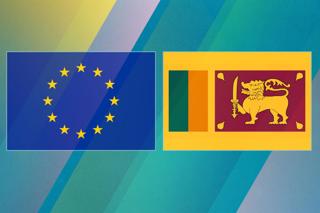
Technical Assistance for Strengthening the Sri Lankan Civil Society as Actors of Development and Governance
- 2025 – 2028
- under € 500,000
- Sri Lanka
The project is designed to strengthen civil society organizations (CSOs) in Sri Lanka in their diverse roles, contributing to the enhancement of democratic governance and sustainable development. The framework service contract is aimed at providing technical assistance to facilitate civil society's involvement in governance processes and ensure their capacity to engage effectively with public authorities. This project aligns with the European Union's priorities for Sri Lanka under the Multiannual Indicative Programme (MIP) 2021-2027.
General Objective:
The overall objective of the framework service contract is to strengthen Sri Lankan civil society actors, in their full diversity, in their roles to enhance democratic governance and promote sustainable development. By doing so, the project seeks to empower CSOs to effectively participate in policy dialogue, promote inclusive development, and ensure a more accountable and transparent governance system in Sri Lanka.
Specific Objectives:
1.) Establish and Maintain an Inclusive Structured Dialogue:
The first specific objective is to establish and maintain an inclusive structured dialogue between the EU, Member States, and civil society. This dialogue aims to improve the analysis and monitoring of the enabling environment and development cooperation landscape in Sri Lanka. Furthermore, it will feed into future EU political and policy dialogues with public authorities and EU services, ensuring that civil society's perspectives are included in shaping development policies and governance reforms.
2.)
Enhance Partnership Between CSOs and the Government:
The second specific objective focuses on enhancing the partnership between CSOs (including associations representing women, youth, and persons with disabilities) and the Sri Lankan government, including provincial and local authorities. This objective aims to strengthen the collaboration and coordination between civil society and public authorities at various levels, creating a more inclusive and participatory governance structure in Sri Lanka.
Support Facility on the Implementation of country allocations of the Human Rights and Democracy Thematic Programme
- 2026 – 2028
- under € 500,000
- Global
Project overview:
This project supports the European Union in the implementation of country allocations under the Human Rights and Democracy Thematic Programme, financed through NDICI – Global Europe. The assignment establishes a flexible support facility to assist DG INTPA, EU Delegations, and, where relevant, programme beneficiaries in the effective implementation, monitoring, and reporting of EU-funded actions promoting human rights, democracy, the rule of law, and support to civil society in partner countries.
The Human Rights and Democracy Thematic Programme is one of the EU’s key instruments for promoting and protecting universal values worldwide. A significant share of the programme envelope is implemented directly by EU Delegations through country allocations, mainly via grants awarded through Calls for Proposals. These allocations are intended to respond to country-specific human rights and democracy challenges, support local civil society, and ensure that actions are closely aligned with the needs of rights-holders and local actors.
The project therefore provides technical and operational support across the full implementation cycle of the programme. This includes the assessment of proposals submitted under EU Calls for Proposals, capacity-building and information sessions for EU staff, civil society organisations, and beneficiaries, quality checks of project data and results encoded in OPSYS, and ad hoc studies, analyses, or evaluations related to programme implementation and monitoring. The assignment is mainly home-based, with possible field missions for trainings, capacity-building activities, or specific studies.
General objective:
The general objective of the project is to enhance the implementation of EU actions promoting and protecting human rights and democracy in partner countries under the NDICI Human Rights and Democracy Thematic Programme.
Specific objectives:
The specific objectives of the project are to:
- Provide technical support to EU staff and beneficiaries in the implementation of the Human Rights and Democracy Thematic Programme.
- Support the assessment of proposals received under Calls for Proposals launched by EU Delegations or DG INTPA Headquarters, including the evaluation of concept notes and full applications through PROSPECT.
- Organise and facilitate capacity-building activities, information sessions, consultations, networking events, and related support for EU Delegations, civil society organisations, grant beneficiaries, and other stakeholders.
- Ensure timely and accurate quality checks of Human Rights and Democracy Thematic Programme projects encoded in OPSYS, including the use of appropriate indicators, thematic classifications, and programming priorities.
Produce ad hoc studies, analyses, and evaluations related to the results, monitoring, implementation, and capitalisation of grants and other actions funded under the programme.
- Contribute to the consistent application of the EU’s human rights-based approach, gender mainstreaming, and results-oriented reporting requirements across programme interventions.
Scope of activities
The project covers four main areas of support. First, it provides technical assistance for the assessment of Calls for Proposals. External assessors evaluate concept notes and full applications according to the relevant Guidelines for Grant Applicants and EU evaluation grids. The assessments are carried out using the EU’s PROSPECT system, under the guidance of the Contracting Authority. A Team Leader coordinates the assessment process, ensures that assessors are properly briefed, provides guidance on the interpretation of call documents, performs quality control of draft assessment grids, and supports the preparation of reports on each call.
Second, the project supports the organisation and facilitation of capacity-building activities, information sessions, consultations, and networking events. These activities may target EU Delegation staff, DG INTPA Headquarters, local civil society organisations, future applicants, or grant beneficiaries. Topics may include EU grant management, Commission procedures, Project Cycle Management, the Logical Framework Approach, the design and assessment of grants, and best practices in the implementation of the Human Rights and Democracy Thematic Programme. Activities may be delivered virtually or through field missions.
Third, the project includes quality reviews of project data and results encoded in OPSYS. A Data Analyst reviews the quality and consistency of reporting, including the use of corporate indicators, thematic designations, programming priorities, and other relevant reporting elements. This work supports more accurate corporate reporting and contributes to better monitoring of the results achieved under the programme. The Data Analyst also prepares reports on issues encountered and methodological notes to improve reporting practices.
Fourth, the facility may deliver ad hoc analyses, studies, and evaluations at the request of DG INTPA. These assignments may focus on the implementation and monitoring of the Human Rights and Democracy Thematic Programme, data analysis, results measurement, capitalisation of lessons learned, or thematic and project-level evaluations. Depending on the nature of the request, these activities may be conducted remotely or through field missions.
The project is managed by DG INTPA Unit G1 “Gender Equality, Human Rights and Democratic Governance” and implemented through a team consisting of a Team Leader, Core Expert Assessors, Reserve Expert Assessors, and a Data Analyst and Coordination Support expert. The outputs include proposal assessments, short performance reports after each call-related assignment, a tracking table of requests and working days, training and capacity-building materials, OPSYS quality review reports, methodological notes, interim progress reports, and final reporting. Overall, the project contributes to more coherent, transparent, and high-quality implementation of EU support to human rights, democracy, and civil society worldwide.
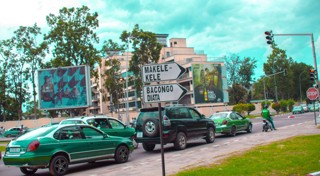
Technical assistance for the support programme for civil society in the Republic of Congo and its contribution to gender equality for inclusive socio-economic development
- 2024 – 2028
- € 500,000 – 1 million
- Congo (Brazzaville)
The general objective of this technical assistance is to promote and facilitate the participation of civil society organisations (CSOs) in general, and women in particular, at all levels of the country's public and socio-economic spheres, through the structural and operational strengthening of Congolese CSOs and those working specifically on the promotion and enhancement of women and young people, including support for the consolidation of women's leadership. The aim is to support and build the capacity of Congolese civil society organisations (CSOs), and of women's and youth organisations in particular, as players in sustainable development and inclusive growth.
SO1: Strengthen the capacities of Congolese civil society, its structuring and networking around existing joint actions financed by the EU, including organisations managed by women and/or working on the promotion and enhancement of women's rights;
SO2: Facilitate the representativeness and contribution to social, economic and political dialogue of organisations, particularly those managed by women and/or working on the promotion and enhancement of women's rights;
SO3: Strengthen the capacity of Congolese civil society organisations, particularly women's organisations, to participate in public debate, and in drawing up and monitoring national policies and socio-economic development programmes;
SO4: To improve knowledge of civil society in general and women's organisations in particular, and the visibility of their actions.